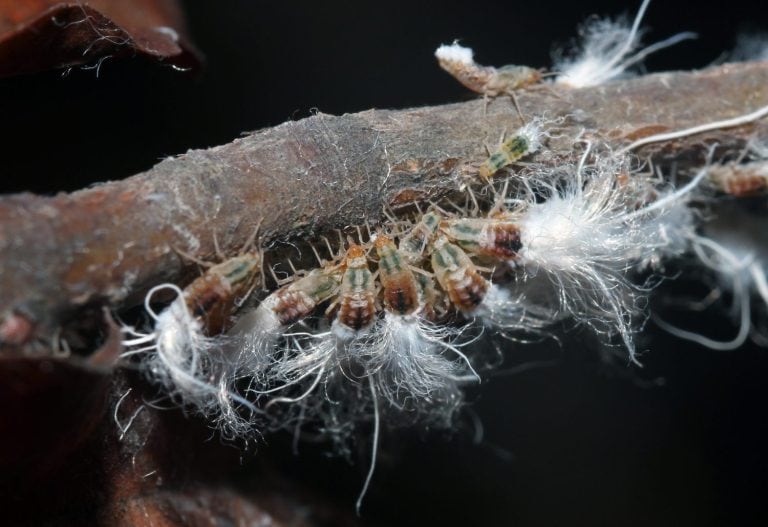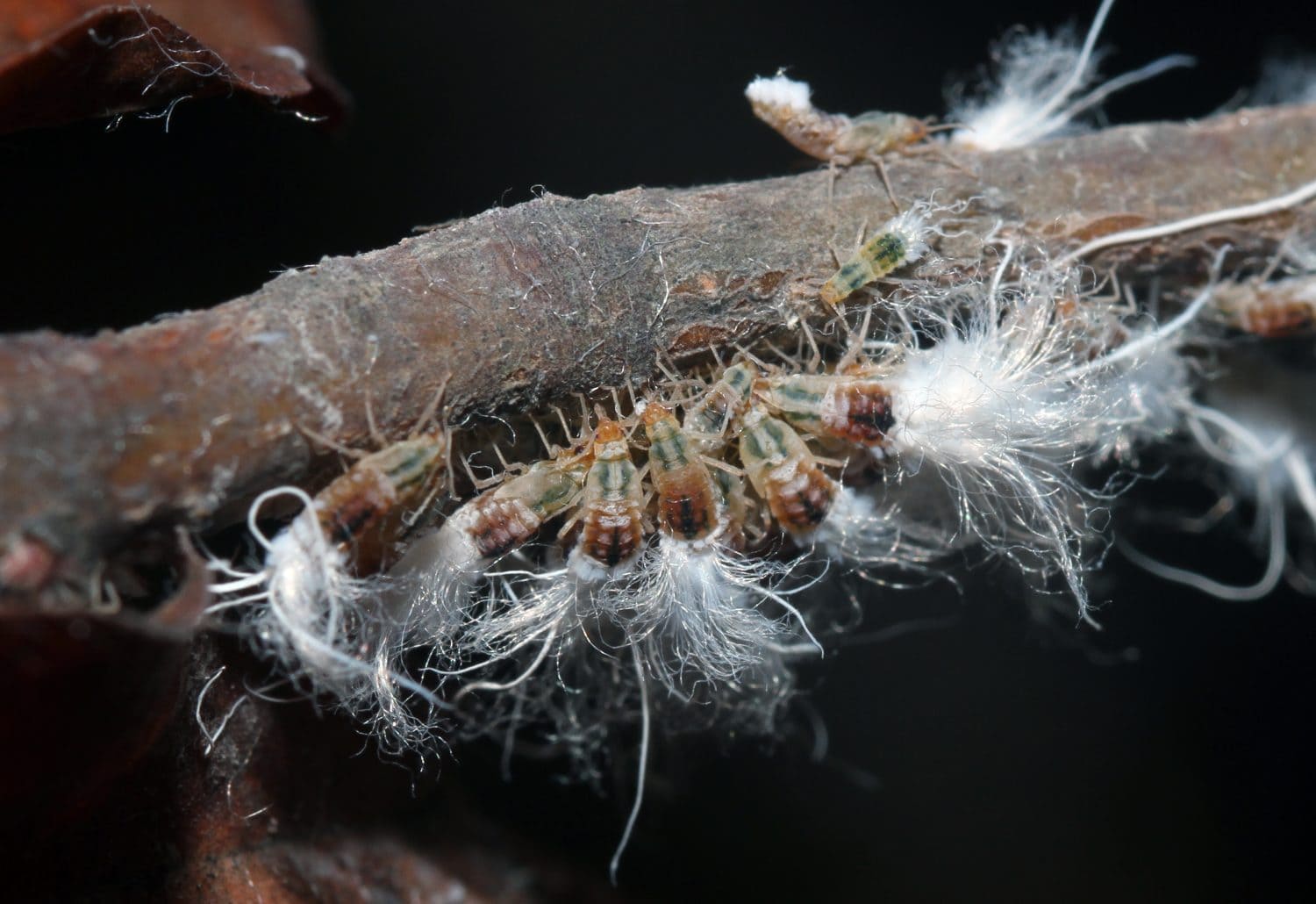

Nature is full of interesting creatures. But have you ever seen bugs that dance? With all the different insects out there, there’s bound to be at least one species that has cool moves. Thanks to social media, video footage of some of these insects is going viral. This Instagram post by @naturereliance shows aphids gyrating in a group all on a branch, but what does this dance mean? Read here to learn more.
©Michael Benard/Shutterstock.com
Dancing Aphids
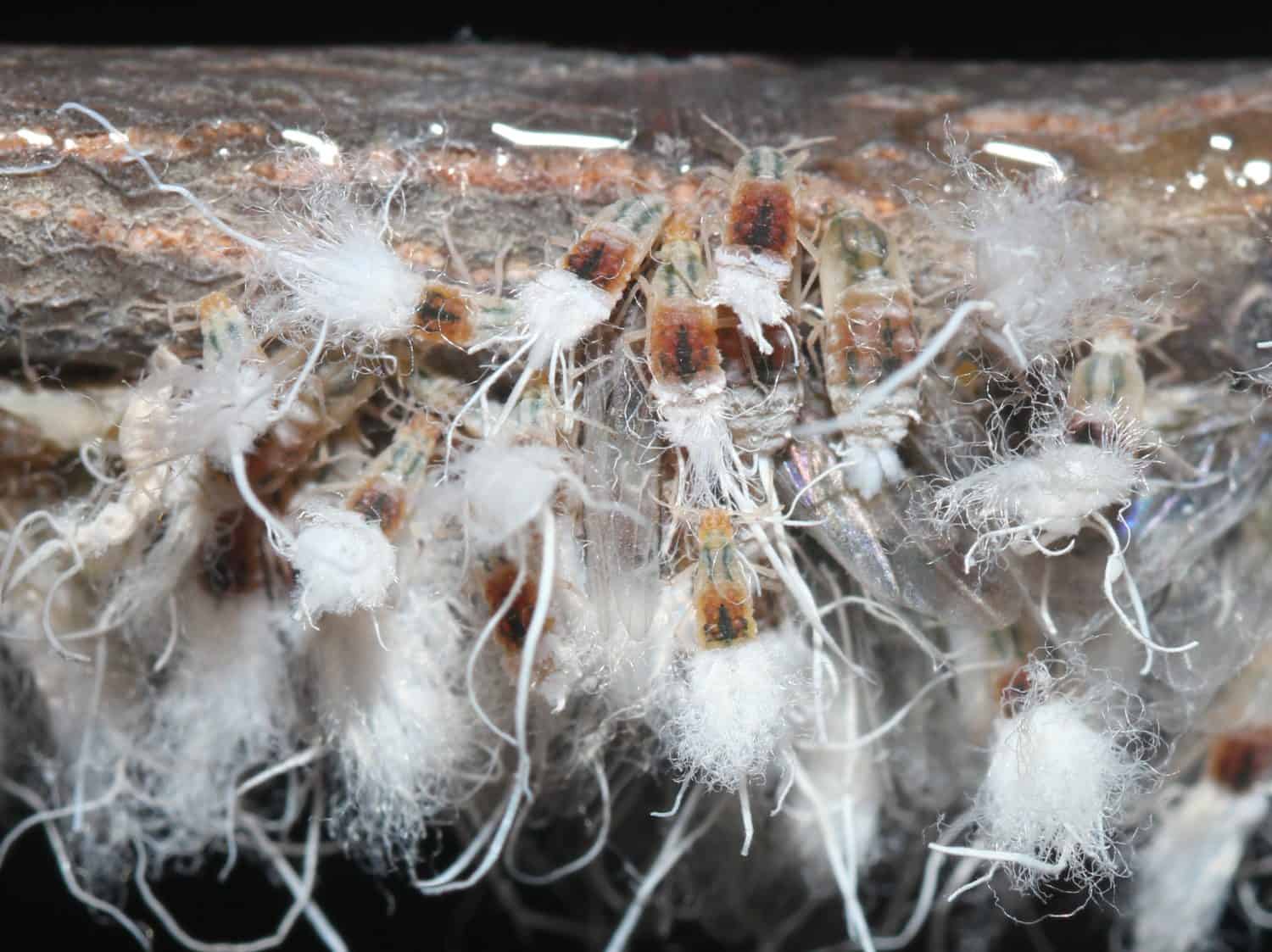
Beech blight aphids, known scientifically as Grylloprociphilus imbricator, are a fuzzy-looking bug native to North America. Specifically inhabiting the American Beech tree, these bugs cluster on the branches and leaves of the trees. Aphids, as a group, are known for their woolly appearance as they are covered in a waxy, white filament. They huddle in groups for multiple reasons, mostly for feeding and defense. Since they all feed on the sap of the same tree, they can work together. These bright white clusters may look like fresh snow at first glance, even in the dead of summer. Given the large amount of sap they consume, they excrete honeydew, which helps grow fungi needed by other species (such as bees for making honey).
So, what are their little dances all about? Aphids’ dancing is a defense mechanism to ward off predators. Due to their small size, they are easily preyed upon by other insects and forest animals. If the branch they occupy is disturbed in any way, they wiggle their rear ends side to side in a coordinated way, appearing to dance. This is where they get their nickname, “boogie-woogie aphid!”
This swaying can confuse predators and deter them. But these tiny white fluffs are fairly harmless; they are not dangerous to humans, and they aren’t particularly harmful to the host trees they inhabit. They’re simply peaceful insects that break out in dance every once in a while. Next time you’re out in nature, maybe you can spot these amazing insects on a branch and even see them groove for yourself.