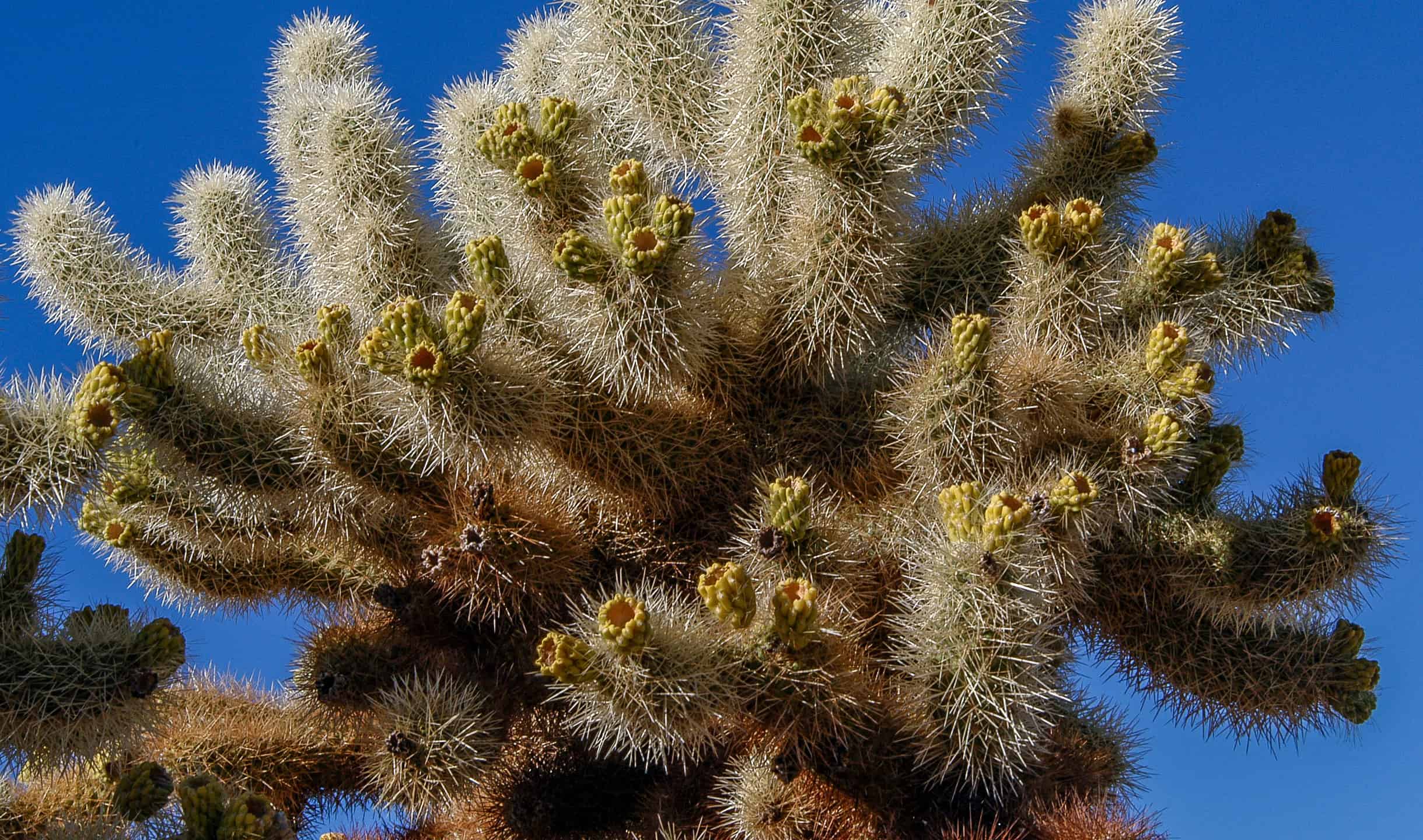

Unless you regularly study plants, scientific names are not always easy to remember. So, there are more common names that help you identify plants and other organisms. The name of the most dangerous cactus in the world is quite the oxymoron. Learn what it is, and discover what happened when a curious man braved it with a gloved hand.
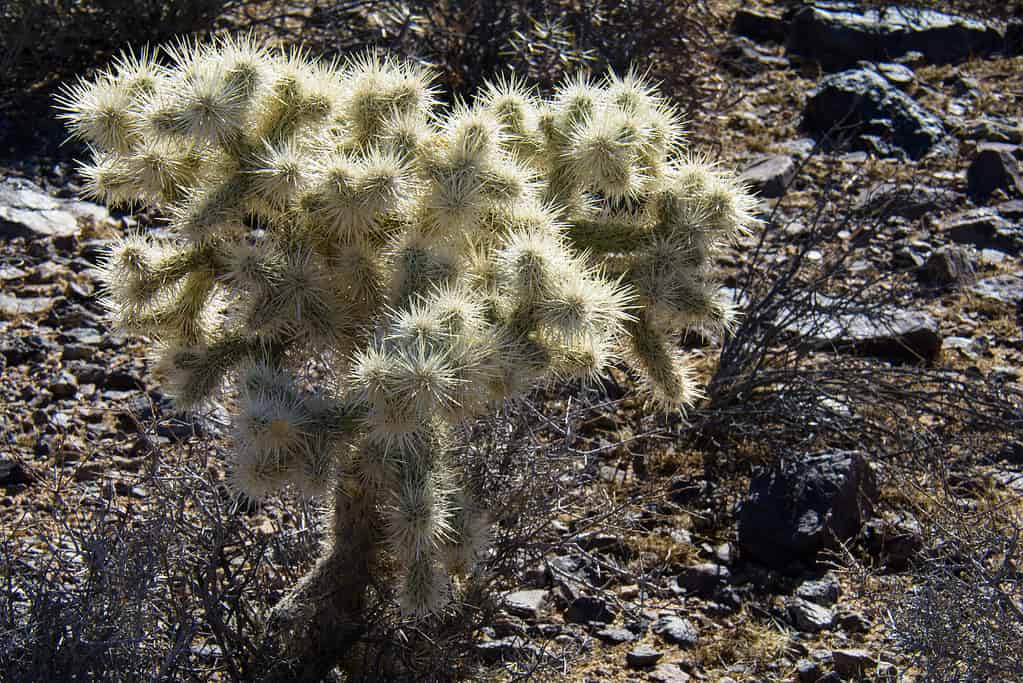
The greater trouble is the cactus plant’s fishhook tip which delivers a painful and truly memorable experience should you ever find yourself too close.
©iStock.com/Nicholas Motto
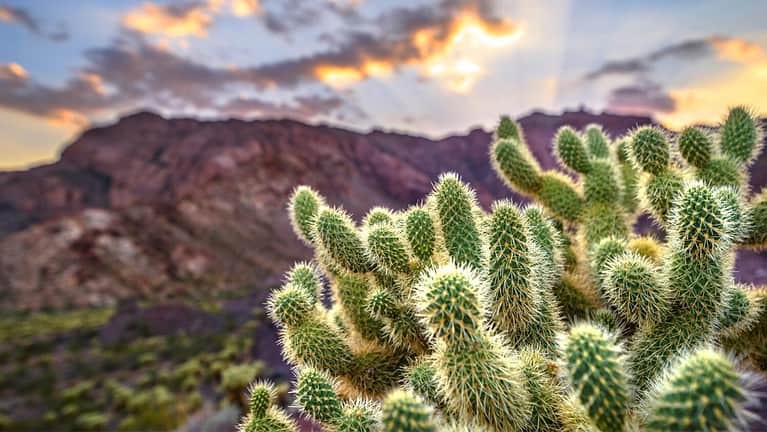
Discover the Teddy-Bear Cholla
There is a dangerous plant that thrives in the desert — the most dangerous of all — and yet its name renders images of fuzzy, cuddly, plush toys from childhood. To be fair, when you first lay eyes on it, it does look quite soft, almost inviting you to touch it. However, the spikes on this cactus plant are violent. It’s one thing if the spikes are sharp, that’s expected from a cactus plant. The greater trouble is the cactus plant’s fishhook tip which delivers a painful and truly memorable experience should you ever find yourself too close.
The Teddy-Bear Cholla (scientific name Cylindropuntia bigelovii)is native to the northwestern region of Mexico up to the deserts in Nevada, Arizona, and California. These plants can grow up to eight feet tall and be as wide as six feet. The branches of the plant splay out from the center as the trunk serves as a strong, stable foundation. As the plant ages, its coloration changes and gets a bit darker. It’s common for some of the branches closer to the trunk to fall as well. The vicious spikes are actually leaves and around May and June, the plant boasts yellow-green flowers.
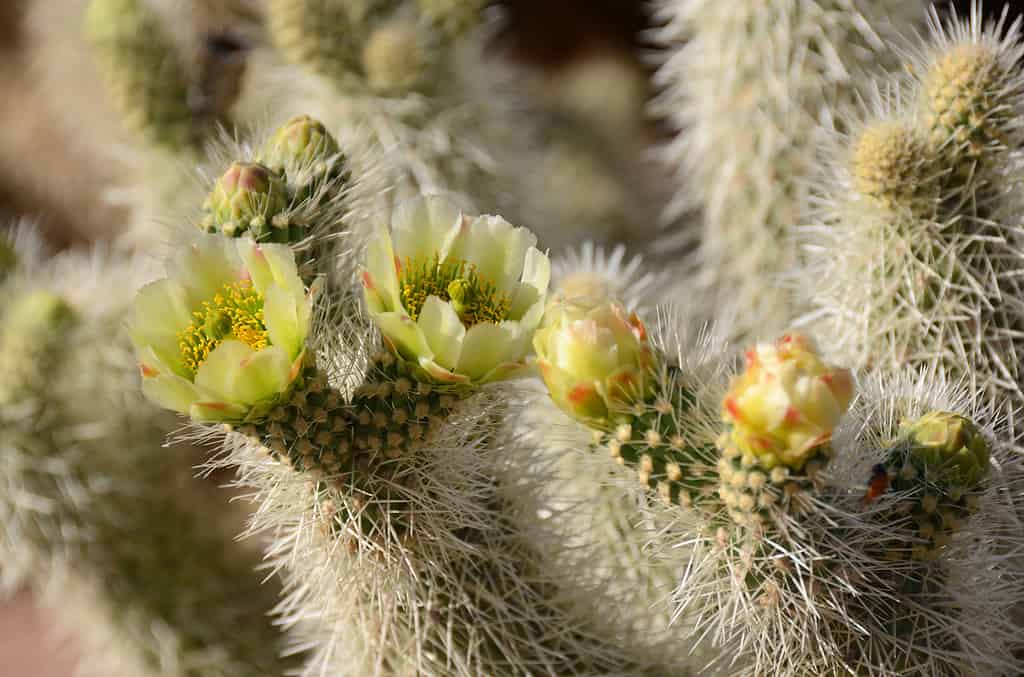
The vicious spikes are actually leaves and around May and June, the plant boasts yellow-green flowers.
©Jerry Horbert/Shutterstock.com
Well-Known Broadcaster Has Unfortunate Encounter with Teddy-Bear Cholla
David Attenborough, a British Broadcaster was out filming a documentary entitled The Green Planet when he came across the most dangerous cactus in the world. Although he knew exactly what he was dealing with upon approaching the plant, he adamantly followed through with touching it. Now, he does say he’s well aware of how dangerous it is and that he “wouldn’t dream of” getting anywhere near it unless he was equipped with the proper gloves.
He then protects himself with a thick red and yellow glove and goes for it. It wasn’t a soft, gentle touch. It was more of a direct wanting-to-feel-it and testing-the-waters touch. Although the glove was supposed to protect him, immediately he yelps out, indicating that there has definitely been some contact between the plant’s spines and his skin. With their hooked ends, the spines are very hard to get out once they’ve pierced the skin. Although he knew what he was doing, he still had to suffer a bit in the end.