Quick Take
- One insect on this list isn't an ant at all, despite the name and the fuzzy look.
- A rite of passage turns the most painful sting into a test of manhood. The catch is in the rules.
- One wasp hunts prey many times its own weight, and its victim's fate is grimmer than you'd guess.
- An entomologist's survival advice for the worst sting is oddly simple, and he has colorful ways to describe the pain.
For their small size, insects can cause excruciating pain when they sting. Insect stings, most commonly from bees, wasps, hornets, yellow jackets, and ants, can inject venom that causes immediate, localized pain, burning, redness, and swelling. For most people, these symptoms are uncomfortable or intensely painful for a short time but fade within hours or a couple of days with basic care. However, stings can become life-threatening if a person experiences a severe, whole-body allergic reaction called anaphylaxis, which can trigger airway swelling and trouble breathing within minutes. Multiple stings or stings in the mouth or throat can also pose serious risks, making rapid emergency care and epinephrine crucial. Read on to learn about six insects that have painful stings.
Bullet Ant
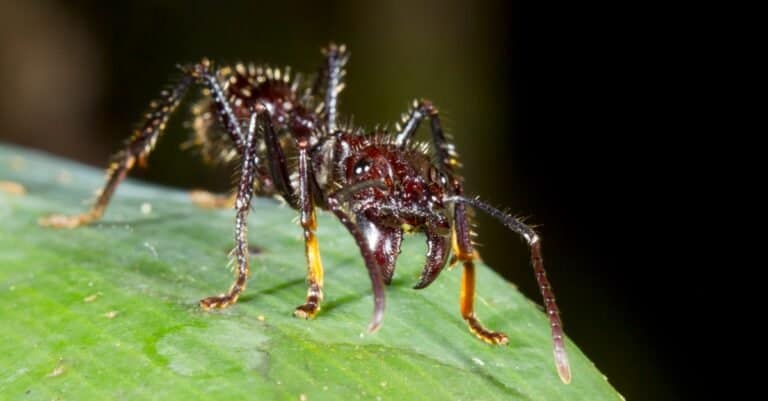
The bullet ant (Paraponera clavata), native to Central and South America, is approximately 1.2 inches long. Those who have experienced its sting say it feels like a gunshot, hence its name. Waves of burning, excruciating pain can last for 24 hours.
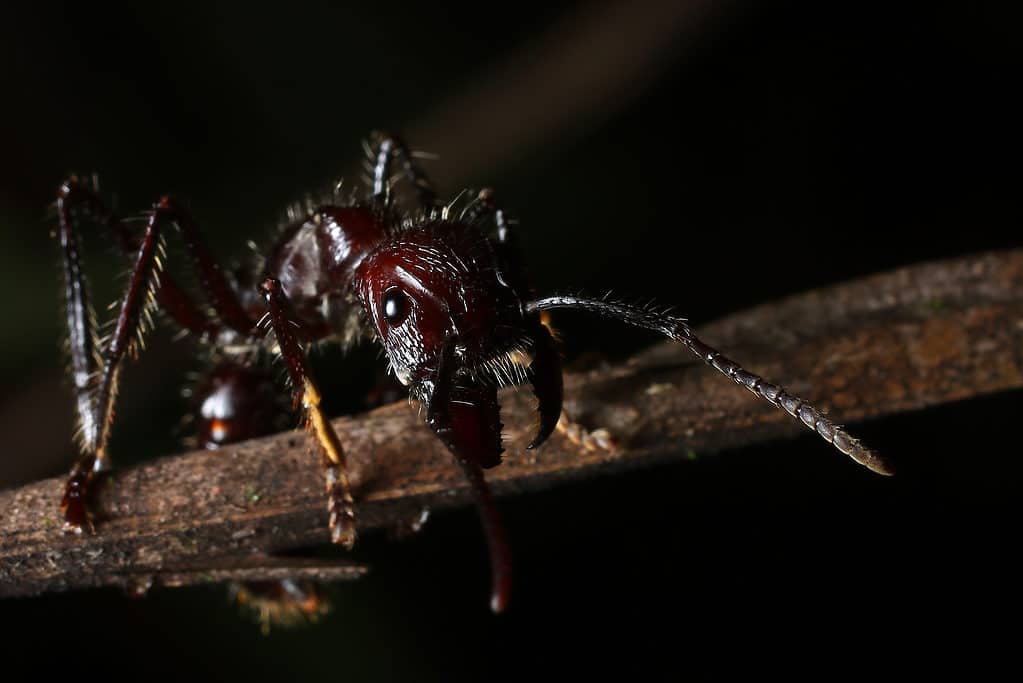
The bullet ant is one of the largest ant species in the world.
©Dan Olsen/Shutterstock.com
Bullet ants are generally not considered an aggressive species.
A Brazilian tribe uses bullet ants as a rite of passage. Young men prove their manhood by wearing a glove with bullet ants affixed, stingers pointed inward. The goal is to avoid showing any sign of pain.
Tarantula Hawk
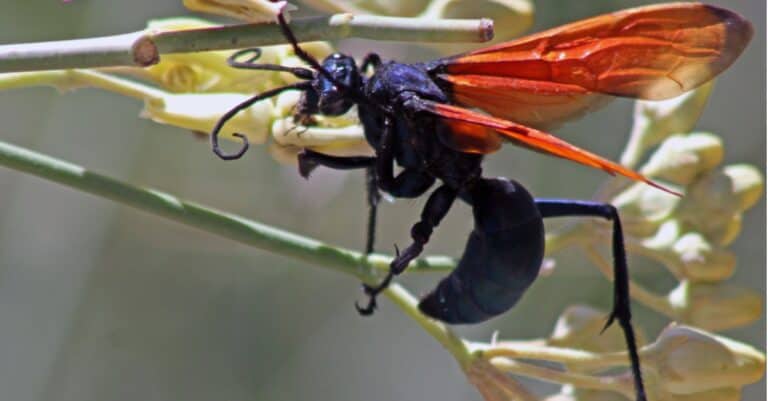
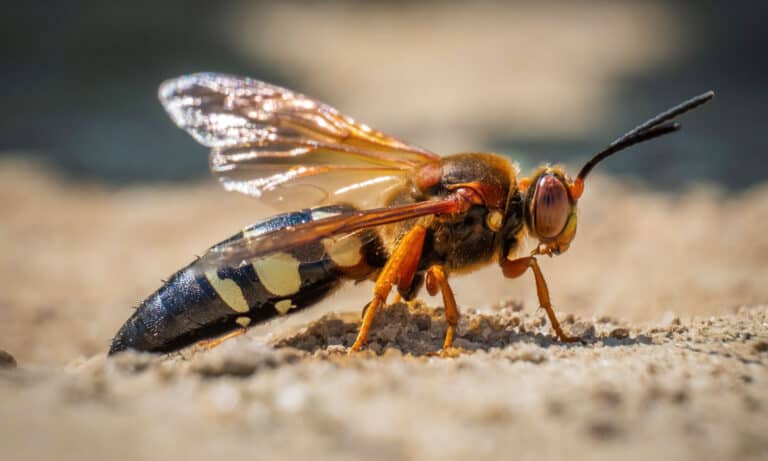
The tarantula hawk (Pepsis grossa) is an enormous wasp up to 2 inches long. Pepsis grossa is native to the Americas, with a geographic range stretching from the southern United States (as far north as Kansas and Utah) through Mexico, Central America, and the Caribbean, down into northern South America.
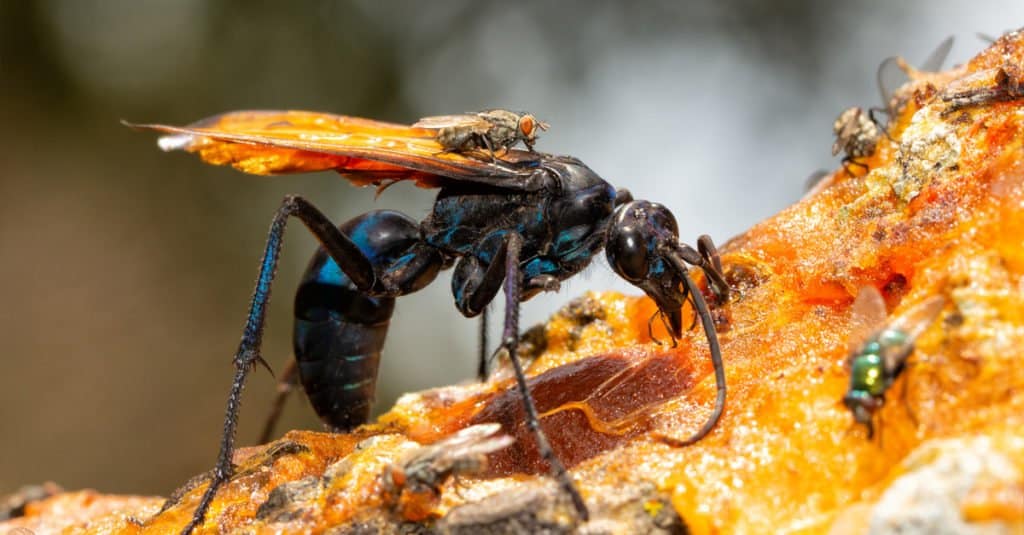
Tarantula hawks are found in warm, dry climates.
©Sari ONeal/Shutterstock.com
Tarantula hawk wasps prey on tarantulas, including ones that are up to eight times their weight. To accomplish this, the tarantula hawk stings the spider, paralyzing it with venom before dragging it back to its nest. Tarantula hawk wasps are not aggressive toward humans unless provoked. Their powerful sting has been described as similar to an electric shock.
Renowned entomologist Justin O. Schmidt gave the tarantula hawk wasp a top rating of 4.0 on his pain index and famously described the sensation as “Blinding, fierce, shockingly electric. A running hair dryer has just been dropped into your bubble bath.” His advice for anyone stung by one: “lie down and scream.”
Northern Warrior Wasp
The northern warrior wasp (Synoeca septentrionalis) is an aggressive, territorial paper wasp species found in tropical parts of Central and South America. When the nest is threatened, the entire colony will drum on the nest in rhythm by scraping their mandibles against its walls, sounding remarkably like marching troops.

Warrior wasps have black or dark blue bodies with metallic accents.
©iStock.com/ViniSouza128
Northern warrior wasps can be up to an inch long and have powerful jaws and a potent sting. Their venom produces severe shooting pain and swelling. Individuals stung by warrior wasps often require medical attention, especially because these wasps defend their nest in a terrifying swarm.
Velvet Ant
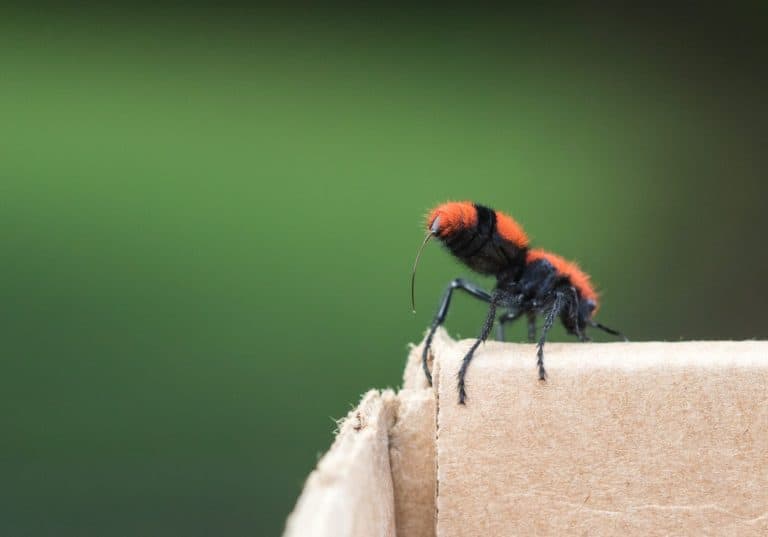
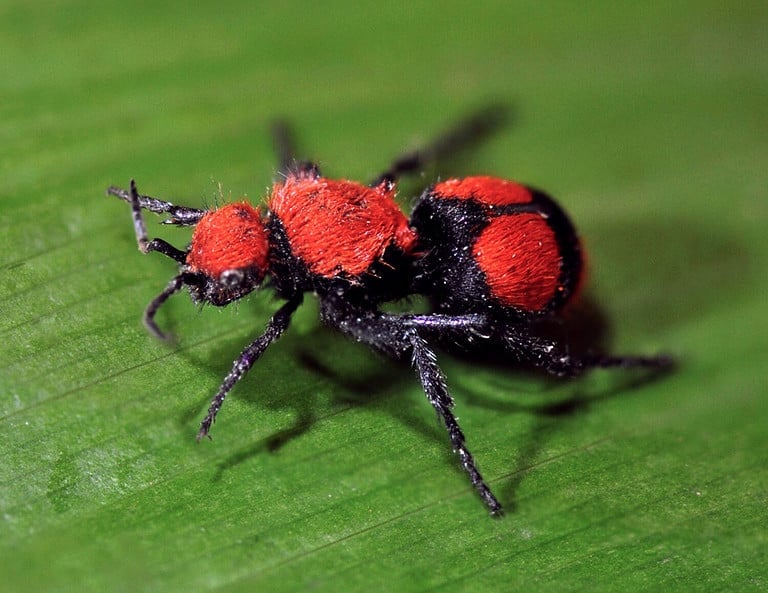
Velvet ants (Dasymutilla klugii and Dasymutilla occidentalis), also called cow killers, are not really ants at all. They are wingless female wasps with black bodies covered in soft-looking red, yellow, orange, or brown setae (hairs).

Only female velvet ants can sting.
©Tarsal Claw/Shutterstock.com
Schmidt gave the velvet ant a 3.0 out of 4.0 on his pain index and described the sting as:
“Explosive and long-lasting, you sound insane as you scream. Hot oil from the deep fryer spilling over your entire hand.”
Executioner Wasp
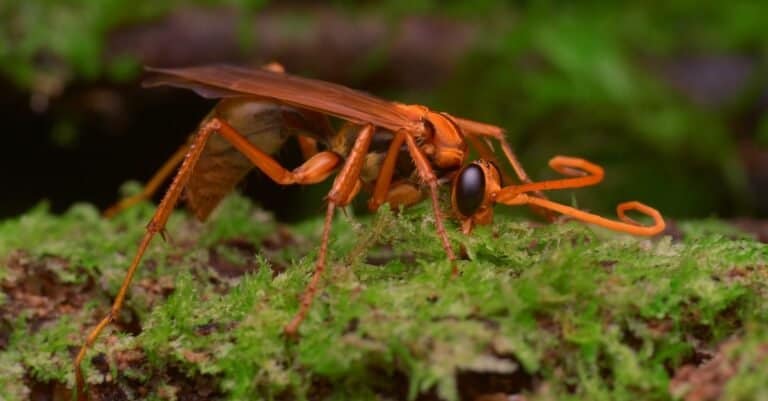
The executioner wasp (Polistes carnifex) is the largest neotropical paper wasp in its genus, typically measuring about 1 inch in length and featuring a bright yellow body with brown-and-black banding. Native to the Neotropics, it ranges from southern Texas and Arizona down through Mexico and Central America into South America as far south as Paraguay and northern Argentina.
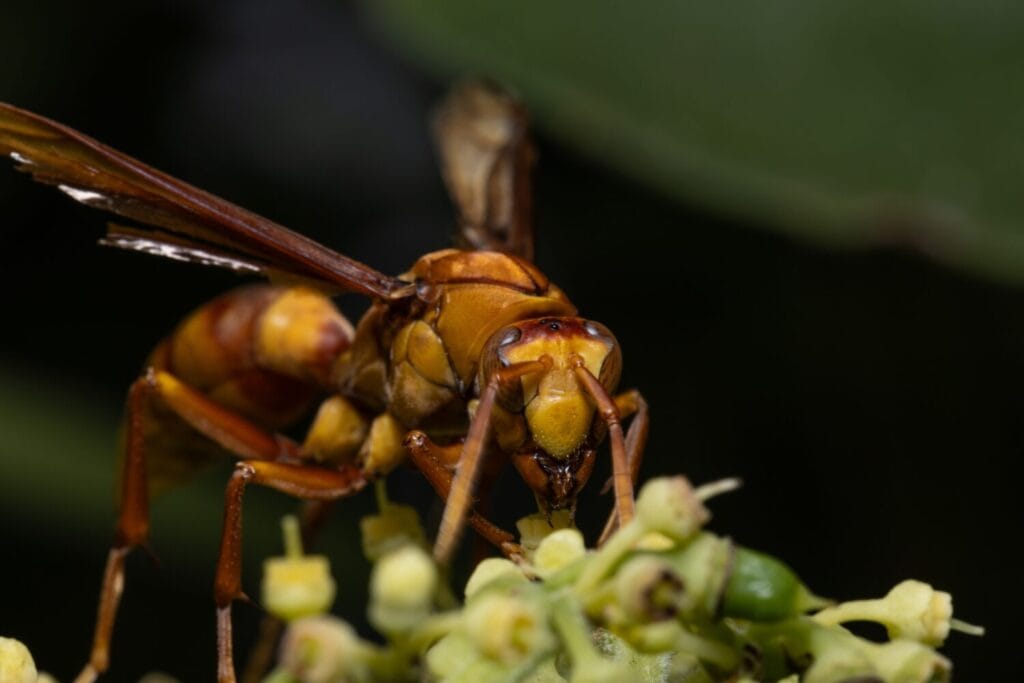
The executioner wasp delivers one of the most painful stings of any insect.
©Jose Luis Enriquez Toro/Shutterstock.com
Wildlife educator Coyote Peterson has rated the executioner wasp’s sting at the very top of the pain scale, describing immediate, searing, electric-like agony accompanied by intense swelling and localized tissue damage that can leave a small, crater-like scar. However, executioner wasps are relatively non-aggressive unless their nest is threatened.
Florida Harvester Ant
Of the 22 species of harvester ants in the United States, the only species found east of the Mississippi River is the Florida harvester ant (Pogonomyrmex badius).

The Florida harvester ant’s sting is reputed to be one of the most painful of any ant species.
©iStock.com/Dan Rieck
The sting of the Florida harvester ant delivers a potent, neurotoxic venom that produces an unusually intense, lingering, deep-burning pain, ranked at a level 3 out of 4 on the Schmidt Sting Pain Index. Schmidt compared the sting of the Florida harvester ant to someone using a power drill to excavate an ingrown toenail. Rather than fading quickly like a typical bee or fire ant sting, the throbbing pain tends to worsen over the first 20 to 30 minutes and can radiate through the surrounding nerves and lymph nodes for four to eight hours.