Snakes have a way of making people panic, especially in the summer when more of us are outside hiking, gardening, or walking wooded trails. But in Virginia, only a small number of snake species are actually venomous. In reality, Virginia’s snakes are far less interested in attacking humans than they are in being left alone. Still, summer is prime snake season across the Commonwealth, and knowing which species are venomous, where they live, and how they behave can make outdoor adventures a lot less rattling. (Pun very much intended.)
According to Virginia Department of Wildlife Resources State Herpetologist John (J.D.) Kleopfer, only three of Virginia’s 32 snake species are venomous. Despite the internet folklore that surrounds them, snakes are rarely as dangerous as people think.
“I don’t like to use the word ‘dangerous’ because it’s too subjective,” Kleopfer explains. “According to the CDC, on average, only about five people die each year in the U.S. from snake bites. In comparison, about 22 people die each year in the U.S. from cows, and about 30 people from dog bites.”
Still, Virginia’s venomous snakes deserve some healthy respect, especially during the warmer months when both humans and reptiles are spending more time out in the elements.
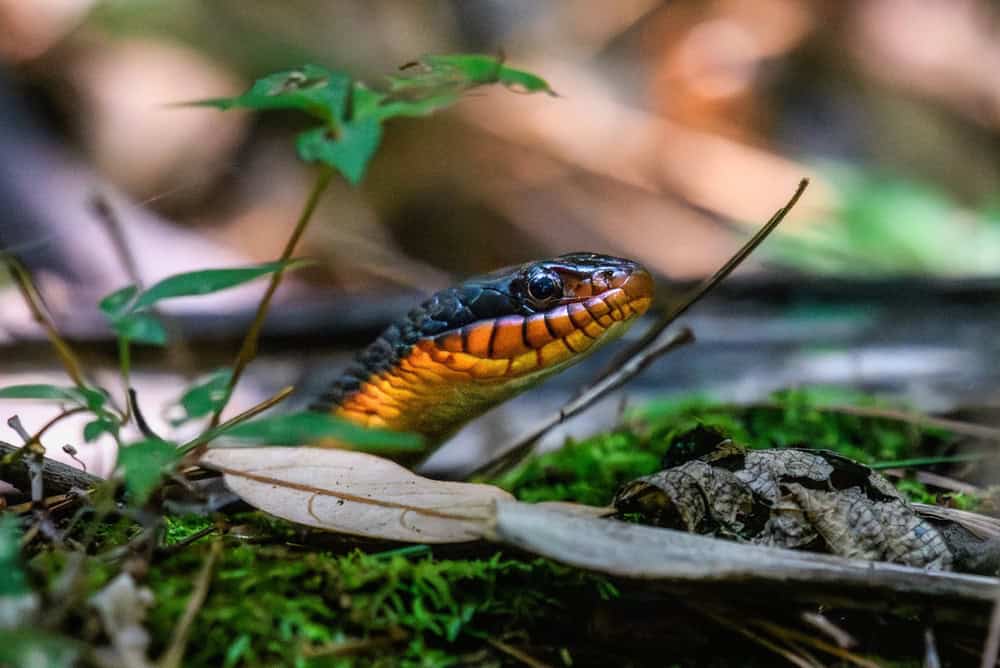
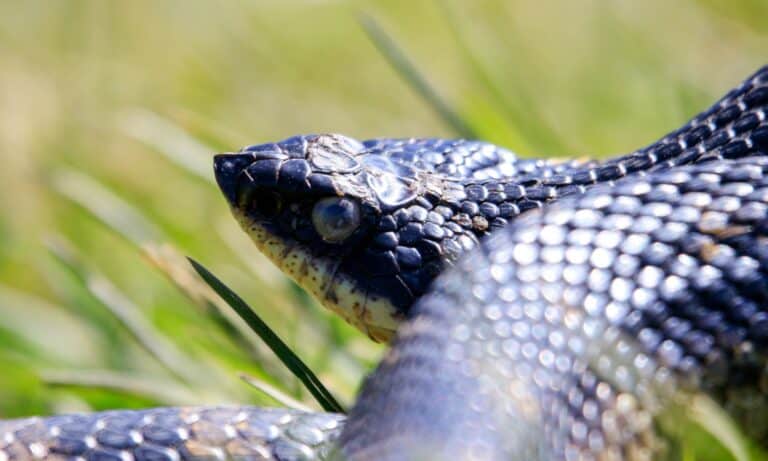
This guy might look dangerous, but he’s just a harmless watersnake. Get ready to meet the three most dangerous snakes in Virginia! Image: amberjphotography, Shutterstock
©amberjphotography/Shutterstock.com
Eastern Copperhead
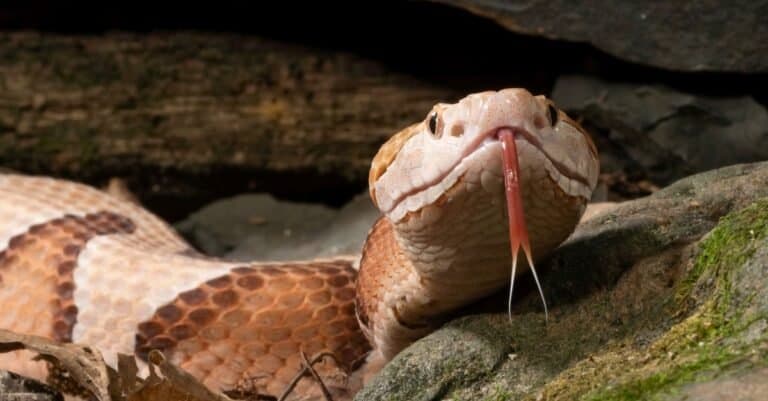
The Eastern Copperhead is by far the venomous snake you’re most likely to encounter in Virginia. In fact, it’s the only venomous snake you can find throughout the entire state.
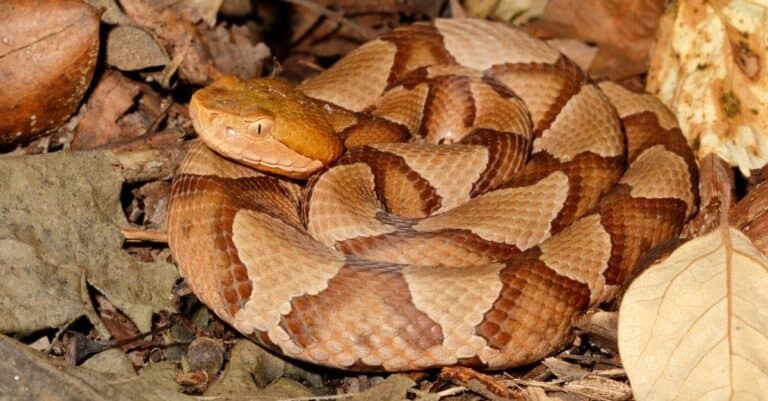
Copperheads are masters of camouflage, blending almost perfectly into leaves, wooded trails, suburban forest edges, rocky hillsides, and even backyard spaces. Their copper-colored heads and hourglass-shaped bands help them disappear into the landscape so effectively that people often step dangerously close before noticing them.
“Only the copperhead is found statewide, and they occupy a wide variety of habitats from suburban forested neighborhoods and swampy areas to rocky ridgelines,” Kleopfer says.
But while copperheads are venomous, they aren’t considered particularly lethal. Bites can still be painful and medically serious, of course, but fatalities are super rare.
Copperheads tend to become especially active in late summer, particularly on humid evenings after rainstorms. Unfortunately, that timing overlaps perfectly with people walking dogs, taking evening strolls, or heading outside barefoot to water plants.
Only the copperhead is found statewide, and they occupy a wide variety of habitats from suburban forested neighborhoods and swampy areas to rocky ridgelines.
John (J.D.) Kleopfer, state herpetologist for the Virginia Department of Wildlife Resources
Regardless of the snake species, Kleopfer hopes people will stop believing one persistent myth he hears all too often. “It’s a false belief that ‘baby’ snakes are more lethal because they can’t control their venom dosage,” he says. “In reality, adult snakes deliver a larger dosage and are therefore more lethal.”
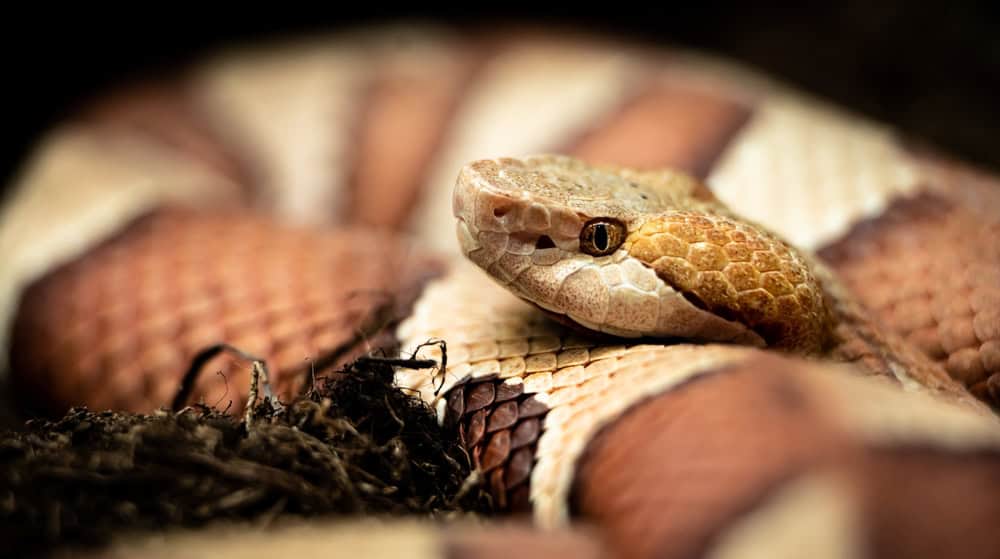
With their copper-toned heads and leaf-like camouflage, Eastern Copperheads can disappear almost completely into Virginia’s forest floors and back yards. Image: vadviz.studio, Shutterstock
©vadviz.studio/Shutterstock.com
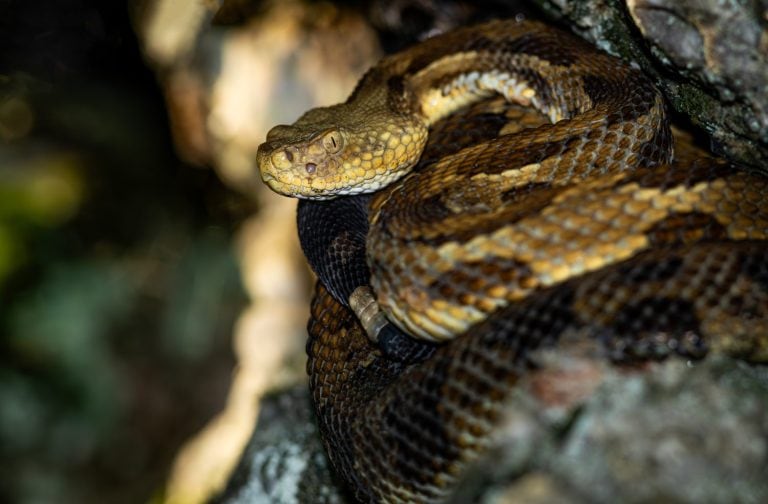
Timber Rattlesnake
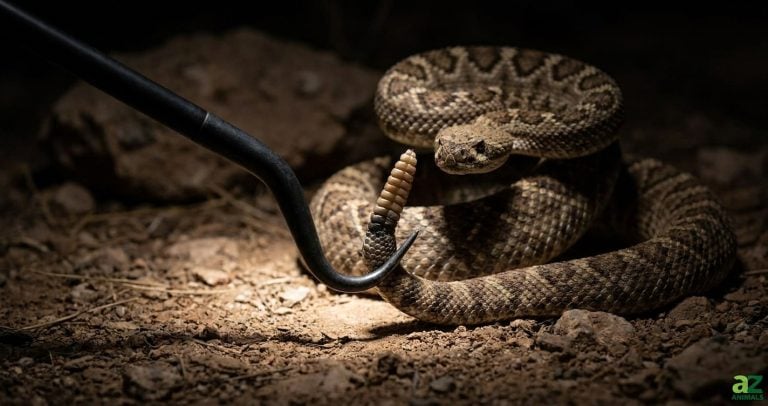
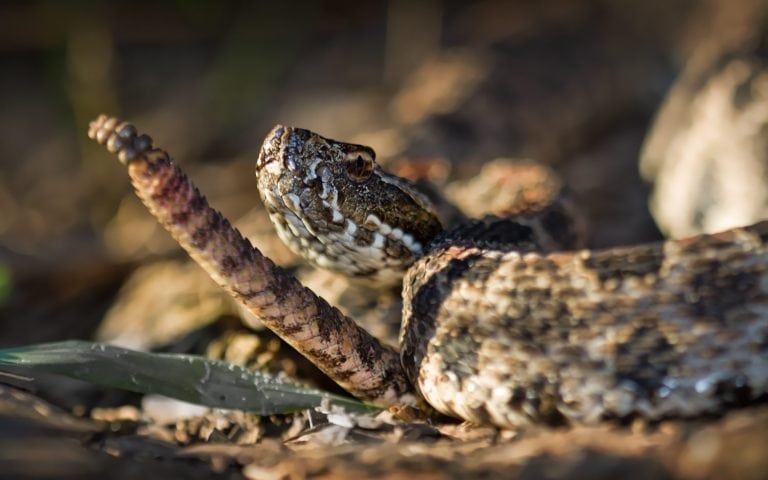
If there is one snake in Virginia that truly commands respect (and caution), it’s the Timber Rattlesnake. Timber Rattlesnakes roam Virginia’s mountainous regions and parts of the Coastal Plain, announcing themselves with their signature rattle and impressive size.
“Of the three venomous snakes in Virginia, the Timber Rattlesnake is the most lethal, particularly the Coastal Plain variety commonly referred to as the Canebrake Rattlesnake,” Kleopfer says. “Although they are generally docile and not aggressive unless threatened, their venom is extremely potent, featuring hemotoxic and, in some populations, neurotoxic components that can cause severe tissue damage, hemorrhage, or fatal respiratory distress.”
Like all of Virginia’s venomous snakes, Timber Rattlesnakes belong to the pit viper family. “All three of Virginia’s venomous snakes belong to the family Viperidae, so called because they have highly developed paired heat-sensing organs (pits) on the anterior side of the head,” Kleopfer says. “Hence the name ‘pit-viper.’ These pits allow them to more effectively locate and strike prey.”
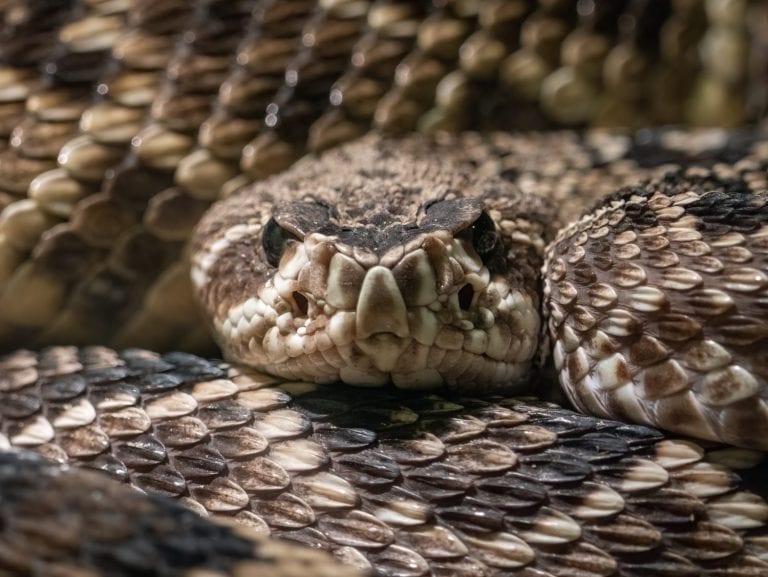
Fortunately, rattlesnakes usually advertise their discomfort before striking. That iconic rattle is essentially the reptile’s equivalent of a neon sign asking us to back away.
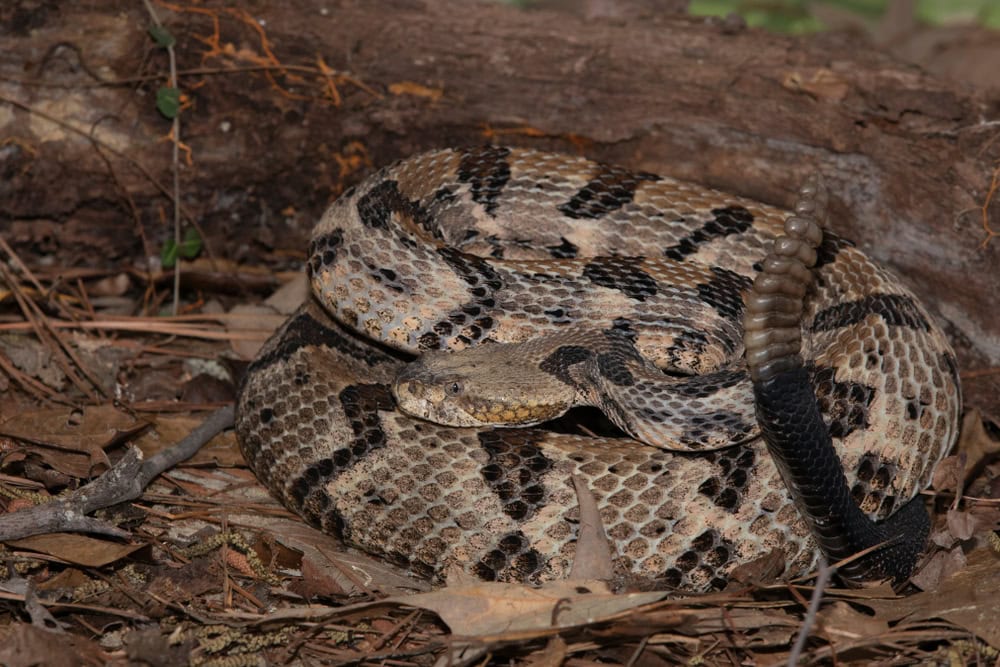
The Timber Rattlesnake’s notorious rattle is less about aggression and more about its message, warning us to keep our distance. Image: Dennis W Donohue, Shutterstock
©Dennis W Donohue/Shutterstock.com
Northern Cottonmouth
The Northern Cottonmouth, sometimes called a water moccasin, lives primarily in southeastern Virginia near wetlands, swamps, marshes, and slower-moving waterways. And according to Kleopfer, this snake may have the worst reputation issue of the bunch.
People frequently portray cottonmouths as hostile snakes that charge humans on sight, but wildlife experts say that simply isn’t true. “It’s complete folklore that cottonmouths are aggressive and will chase people,” he says.
Like most snakes, cottonmouths prefer avoidance over confrontation and typically strike only when cornered or threatened. “These snakes are very reluctant to bite and will only do so when they feel threatened,” Kleopfer says. “Their primary defensive strategy is to remain still and hidden. As such, strikes are a defensive behavior and not an indication of aggressiveness.”
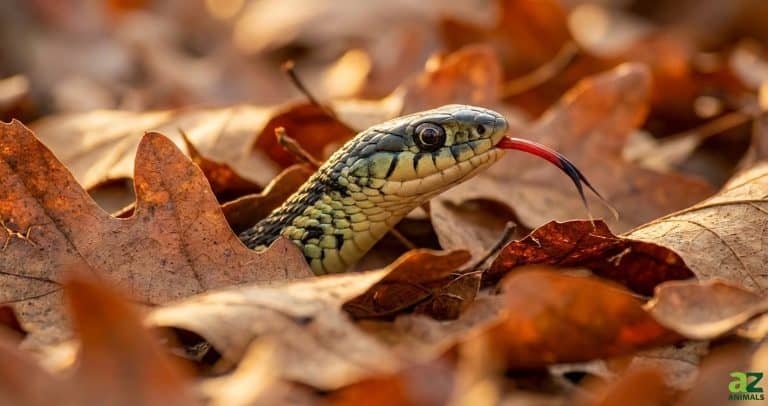
People often confuse cottonmouths with harmless water snakes, which leads to numerous unnecessary snake deaths each year.
“There are lots of nonvenomous snakes that are often mistaken for venomous species,” Kleopfer says. “However, the most commonly misidentified nonvenomous snake is the Common Watersnake (Nerodia sipedon). Countless numbers of watersnakes are killed every year because they are mistaken for cottonmouths (aka ‘water moccasins’).”
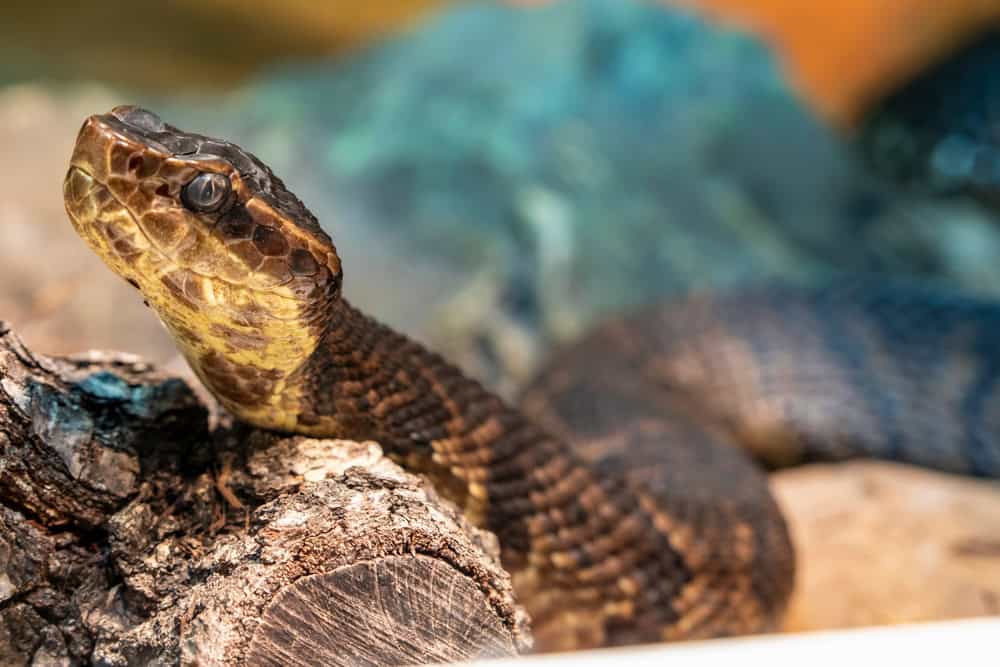
Northern Cottonmouths, often found near wetlands and slow-moving waterways, have a reputation that wildlife experts say is exaggerated. Image: Danny Ye, Shutterstock
©Danny Ye/Shutterstock.com
What To Do If You Encounter a Snake
The safest response to any snake encounter is also the simplest: give it space. “Just leave it alone,” Kleopfer advises, “or call a reputable wildlife removal company that is specifically experienced with snake removal.”
Trying to kill or handle snakes dramatically increases the risk of being bitten, so don’t try to play the hero! In Virginia, intentionally killing snakes is also illegal in many situations. “In Virginia, the wanton killing of snakes is an unlawful activity,” Kleopfer says.
Most bites happen because someone attempted to touch, move, trap, or kill the snake in the first place. A snake that’s stretched across a hiking trail, minding its own business, is usually just trying to regulate its body temperature, not launch an attack on passersby.
And despite the fear they inspire, it’s important to remember that snakes play an important role in Virginia’s ecosystems.
“Snakes are not out to get you, and many of the stories you have probably heard are misinterpretations of their behavior or blatantly false,” Kleopfer tells us. “They serve a valuable ecological role as predator and prey for other animals. And during a time when Lyme’s disease is becoming more prevalent, anything that assists with rodent control is a good thing.”
The good news? Most snakes in Virginia want absolutely nothing to do with humans. A little awareness, keeping a safe distance, and avoiding the spread of myths about snakes can make summer outdoor activities safer for everyone.