
Quick Take
- Its name sounds like a vegetable, its looks like a dessert, but the chocolate chip sea cucumber is something far stranger, and it's alive. Meet this strange creature →
- Those dark 'chocolate chip' spots aren't what they appear to be. Their true nature is surprisingly biological. Discover what the spots are →
- This creature navigates an entire lifetime within a tiny patch of ocean floor, and it accomplishes all of this without a brain. See its brainless behavior →
- Touch one and you'd get a very different sensation than its dessert-like appearance suggests. Explore its true texture →
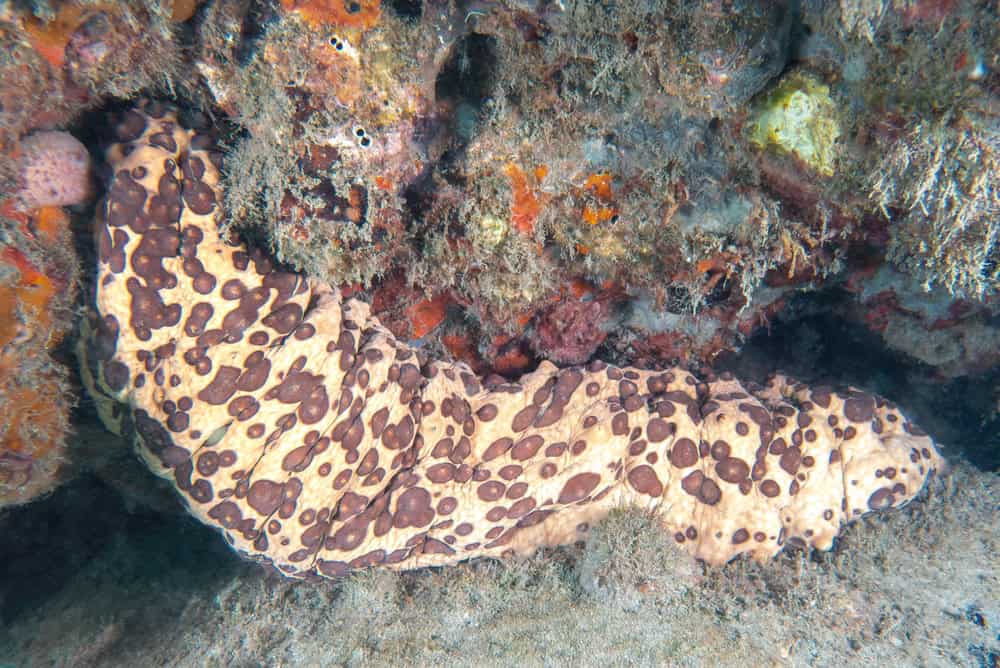
You’d be forgiven for wanting to take a bite out of the object in this Instagram post. After all, the chocolate chip sea cucumber earned its name for a reason. The subject of the post is actually a sea creature with some fascinating characteristics.
Meet the Chocolate Chip Sea Cucumber
This sea creature has an array of quirky names. It is sometimes called the four-sided sea cucumber due to its angular shape. It is also called the chocolate chip sea cucumber and the sea pudding due to its dessert-like appearance.
Its scientific name is Isostichopus badionotus, and it is a member of the order Synallactida. These animals are known as sea cucumbers due to their sedentary lifestyles and elongated shapes. Though they have a mouth and anus, they lack a brain.
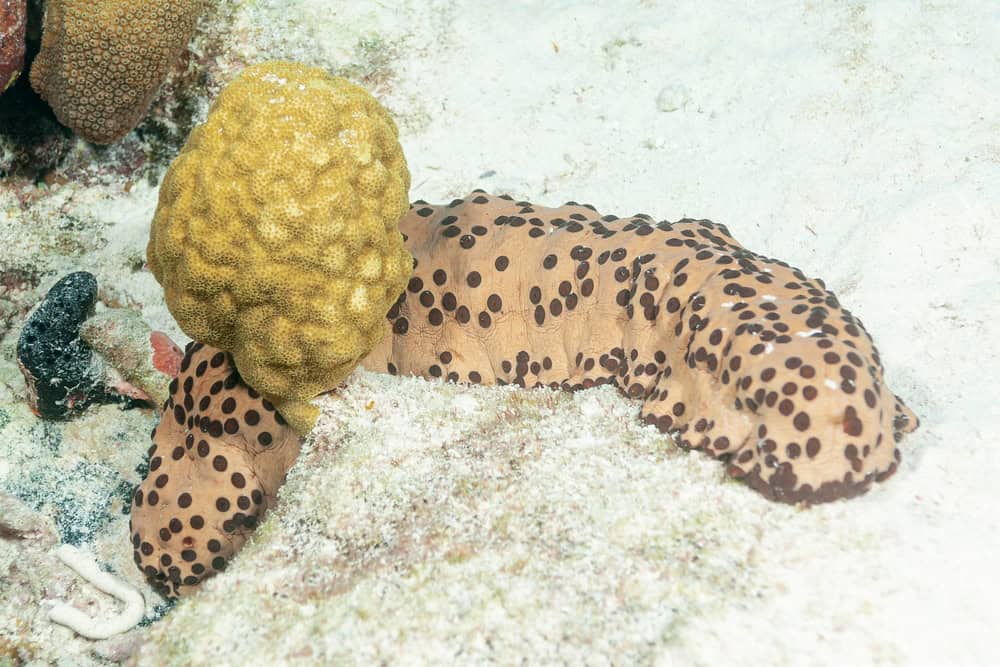
Sea cucumbers are actually animals.
©Jesus Cobaleda/Shutterstock.com
The chocolate chip sea cucumber is primarily found in the warmer parts of the Atlantic Ocean, ranging from North Carolina through the Caribbean to Brazil and West Africa. Ideally, it likes to live on the sea floor at shallow depths of less than 300 feet. However, they will also live on hard surfaces such as rubble, concrete, and dead coral. They also have a preference for shaded areas, making seagrass meadows a perfect habitat.
These marine animals are neither speedy nor adventurous. They either remain completely still or move sluggishly by changing their length. They stay within the same small area throughout their lifetime.
What Are the Chocolate Chip-looking Dots?
The chocolate chip sea cucumber has an elongated, cylindrical body that looks like a loaf! Their body wall is quite thick and leathery but feels soft to the touch. They can grow up to about 18 inches long. Most of them are solid dark brown or black but some have the lighter brown color with darker brown ‘spots’ that you see in the Instagram post. These dots are only found on its dorsal (upper) surface, and they are actually collections of pigment cells.