
Quick Take
- This jellyfish lookalike shares more DNA ancestry with you than with an actual jellyfish. See their tunicate classification →
- The sea salp's role as one of the ocean's most powerful filters is entirely accidental. Discover how filtration works →
- Its transparent body is basically a live window into what it last ate, a fact that the color shifts prove. See the transparent body facts →
- The same motion that moves a sea salp forward also cleans the water around it, though not in the way you would expect. Explore their jet-propulsion movement →
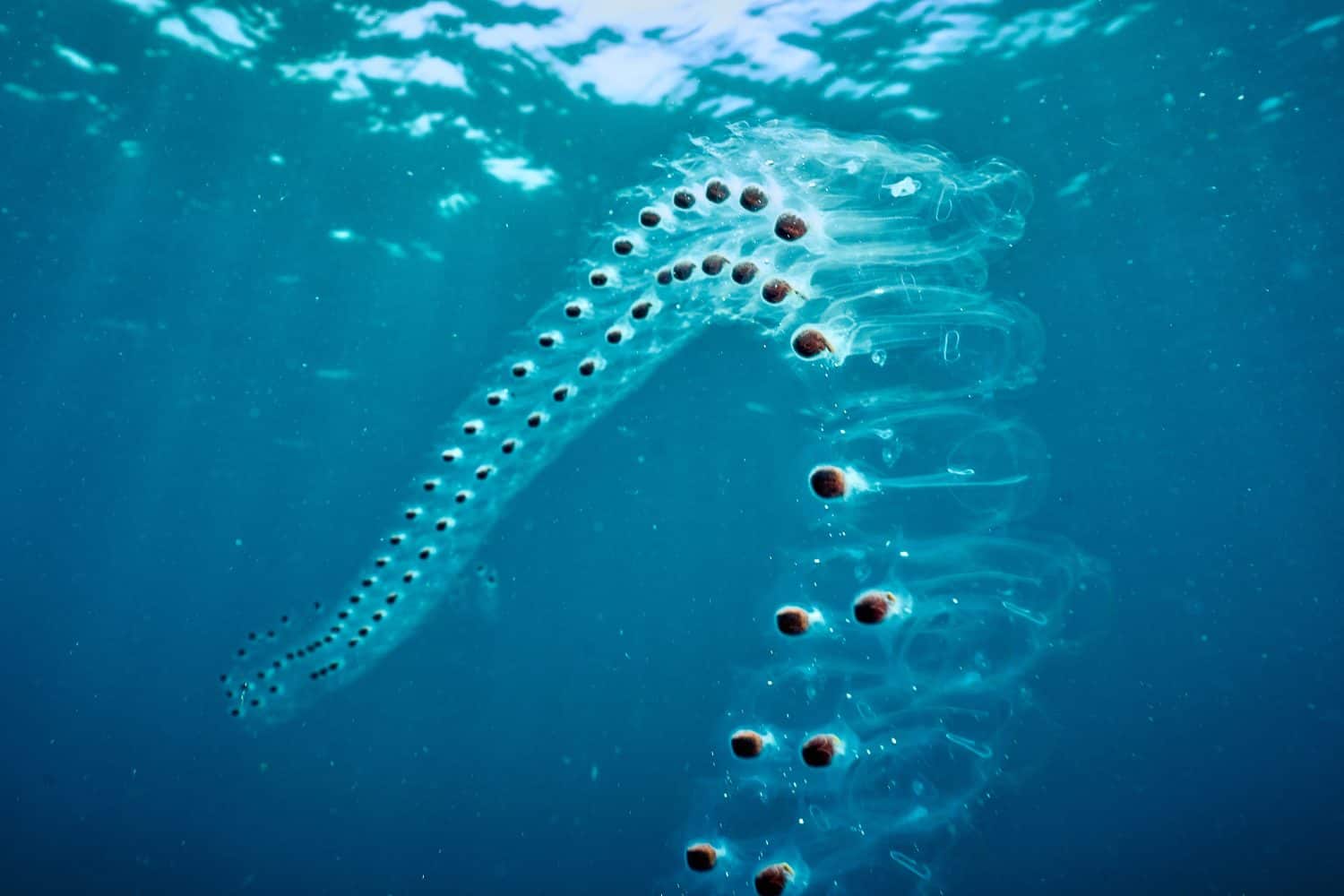
One of the coolest parts about the ocean is how diverse its ecosystem is. With so many different animals, it feels like new species are discovered every day. One little known marine animal is the sea salp, a small and transparent creature that resembles a jellyfish. This Instagram post by @mattrockhold shows salps up close and their remarkably clear bodies.
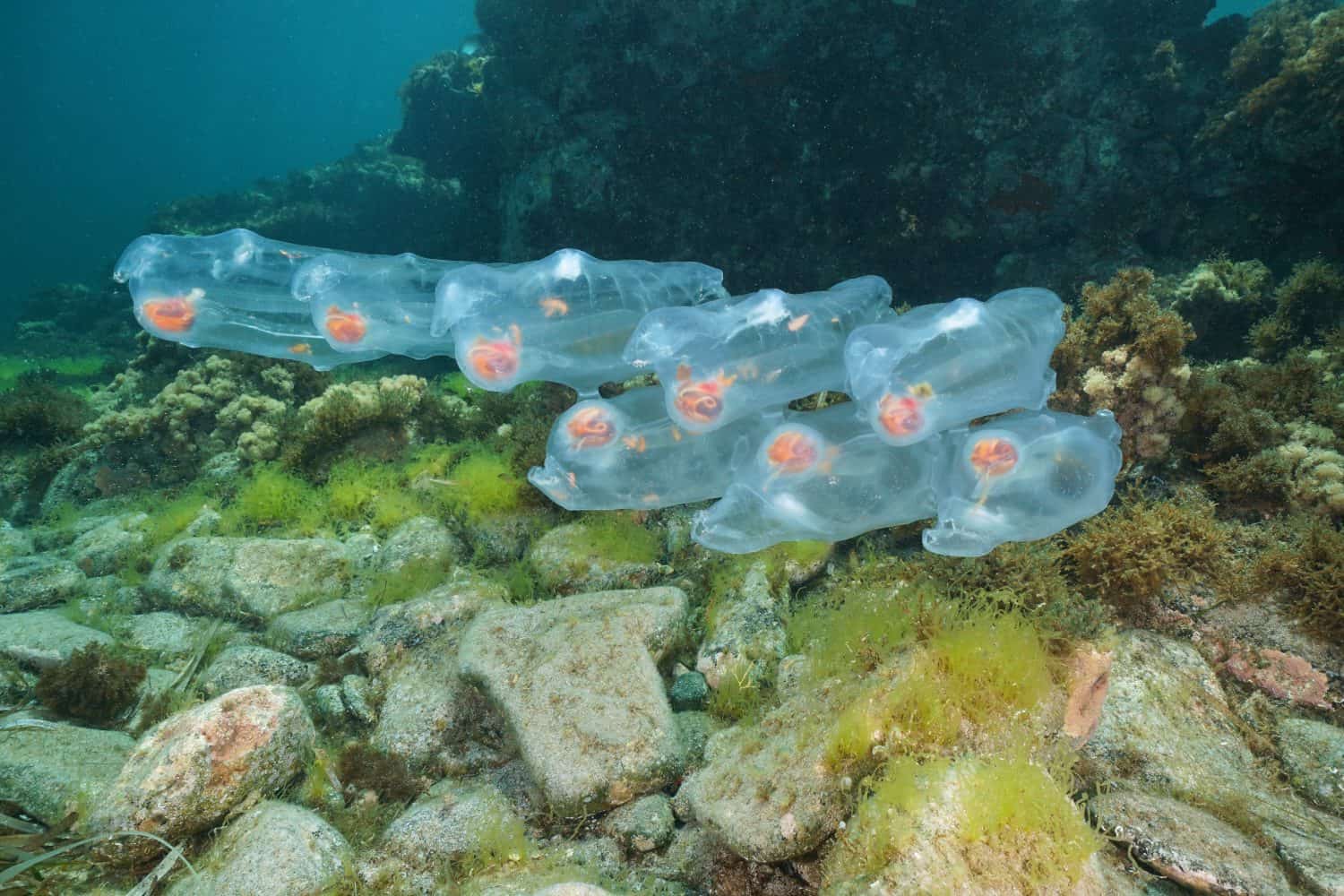
Sea salps are the ocean’s natural filter, as they trap particles in the water inside mucus in their bodies.
©Damsea/Shutterstock.com
About Sea Salps
Sea salps are one of the most interesting-looking creatures in the ocean. Despite being translucent like jellyfish, they are tunicates, a group of marine invertebrate animals. Actually, salps are more closely related to humans than to jellyfish! As seen in the video above, they look almost like plastic bottles. Salps have barrel-shaped bodies with an opening at each end. Thanks to their translucent body, you can see their internal organs clearly. The orange blob is their digestive system, where food is eaten and processed. The color of their digestive system can even change based on diet, with salps that feed on red plankton having bright red organs instead. Salps can be found worldwide, floating through the open ocean. Habitats range from tropical warm oceans to polar Arctic waters. While they may look similar to jellyfish, salps are not dangerous at all. Instead, they are a benefit to their ocean habitats, continually filtering the water.
Sea salps have a very important job: keeping the ocean clean. They efficiently filter water of debris by simply contracting the muscle around their bodies and sucking water in through one opening. The water then passes through a chamber full of mucus, to which debris will stick. The filtered water is then expelled out the other end of their body. These muscle contractions serve the dual purpose of both movement and feeding simultaneously. When they expel water, they are propelled forward. So, while the filtering is a simple byproduct, it is still important for the ocean’s ecosystem.