
Quick Take
- Over 100 critically endangered rays gathered in one spot for a reason that had nothing to do with natural behavior. See what was discovered →
- The rays were doing something researchers had never recorded them doing before, a behavior that a tuna farm had apparently prompted. Explore the unusual behavior →
- Fish farms attract wild animals, but the consequences for those animals are far more complicated than free food. Weigh the risks and benefits →
- A record-breaking wildlife sighting just exposed a vulnerability scientists are genuinely worried about. See the conservation concern →
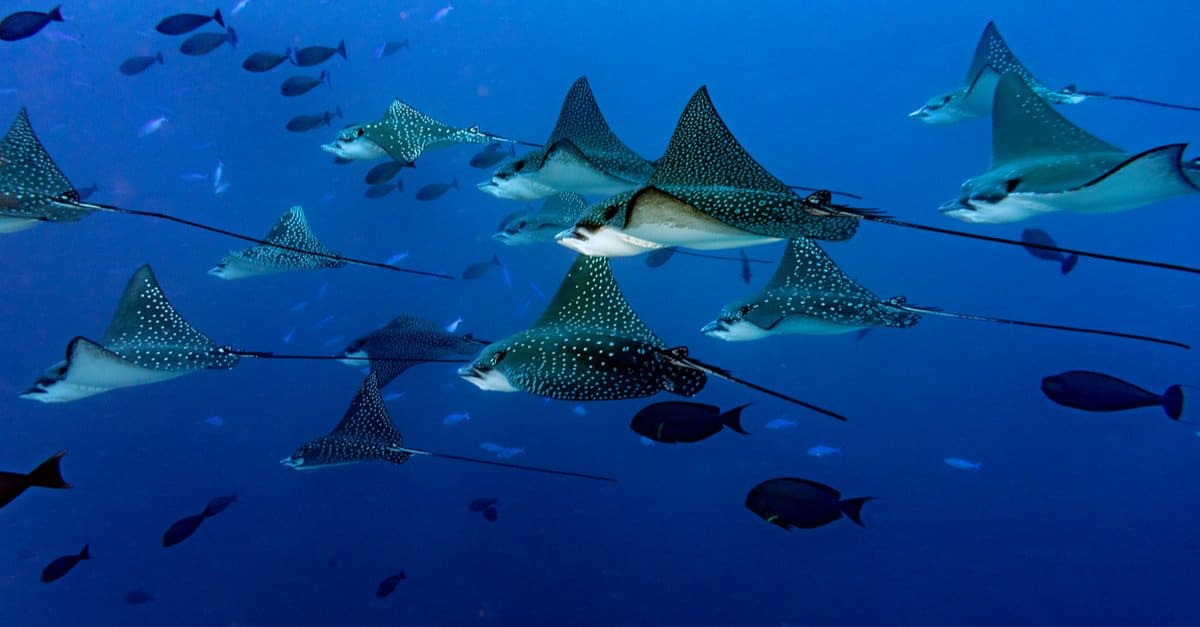
Researchers conducting a routine seabed inspection in 2024 off the northeast coast of Malta found far more than they ever expected. They encountered a huge mass of common eagle rays feeding off the seafloor below a tuna farm.
While underwater exploration often means encountering random marine life, it is rare to find so many individuals of a large species congregating together. So why were more than one hundred eagle rays circling a small patch of sand? It turns out what exists near the surface directly above that area had everything to do with it.
What the Researchers Found
For researchers, conducting a twice-yearly examination of the seabed near tuna cages off Malta’s coast is routine. The team uses a remotely operated vehicle (ROV) to collect data for an environmental monitoring project.
During the inspection in question, the team was tasked with examining eight of the farm’s 24 cages, plus four reference sites away from the tuna farming operation. During the course of the inspection, the ROV encountered an estimated 100 to 150 common eagle rays under a single cage. Another 10 to 15 common stingrays were hovering nearby.
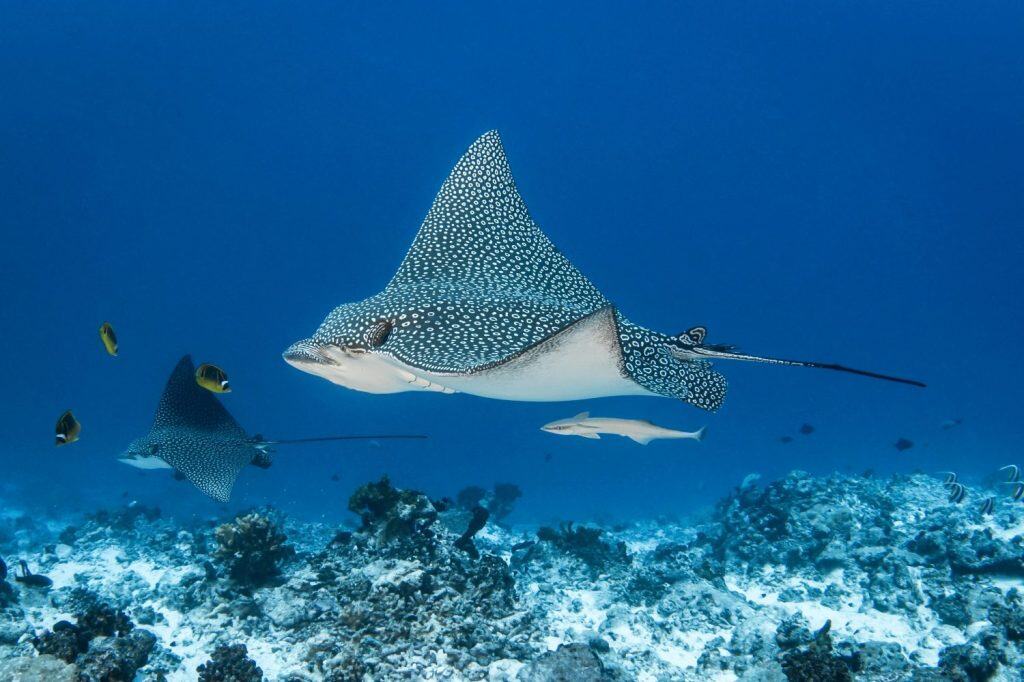
100 to 150 eagle rays were gathered in a small spot just above the seafloor.
©Tropicalens/Shutterstock.com
There were so many eagle rays that researchers couldn’t count them on the live feed. Instead, they manually went through still shots from the video to get an accurate count. The eagle rays ranged from full-size adults to small juveniles.
The typical adult common eagle ray has broad, winglike fins, a pointed snout, and a wingspan of more than five feet from wingtip to wingtip. The smaller juveniles measure as little as about seven and a half inches at birth.
Why Were They All in One Spot?
It turns out the rays selected that spot for a very good reason. They were consuming leftover baitfish that had fallen from the cages above. The researchers found no rays underneath cages where baitfish were unavailable, or at any of the four reference sites.
While the findings were unexpected, they weren’t necessarily surprising. Maltese tuna farming raises wild-caught bluefin tuna in floating pens. They feed the captive tuna whole baitfish including mackerel and sardines. Whatever baitfish the tuna don’t eat filters slowly to the seabed under the pens.

Several stingrays were also spotted nearby.
©Jesus Cobaleda/Shutterstock.com
The video taken by the ROV showed rays actively swimming down to the bottom to feed. The video even captured several larger rays playing tug-of-war over a long piece of baitfish.
Researchers were not only surprised to find so many rays, but also by their choice of food. Rays typically eat shellfish and other bottom-dwelling marine life. The rays scavenging for baitfish showed a shift in behavior that intrigued the researchers.
Common Eagle Rays at Risk
Sightings of eagle ray groups are not common. Reported sightings over the years included 20-30 rays off the Azores in 2015, 30 off Sicily’s Egadi Islands in 2021, and groups of around 50 recorded by fishermen in the Adriatic Sea. For researchers to see more than one hundred common rays in a single group goes well beyond any other recorded sightings.
The species is at risk. The IUCN Red List shows common eagle rays are listed as Critically Endangered as of 2021. This follows an earlier Mediterranean-specific assessment from 2016 that listed the species as Vulnerable.
When endangered species congregate together in large numbers in easily accessible spots, it exposes the species to additional risks, like fishing boats targeting the site. Thankfully for this group of rays, there is no active ray fishery in any Maltese waters.
Do Commercial Fish Farms Help or Hurt Wild Animals?
Floating fish farms, like the one in Malta, act like magnets for wild marine life. The protection the structures offer and the free flow of food attract wildlife and pull marine animals off their natural migratory paths.
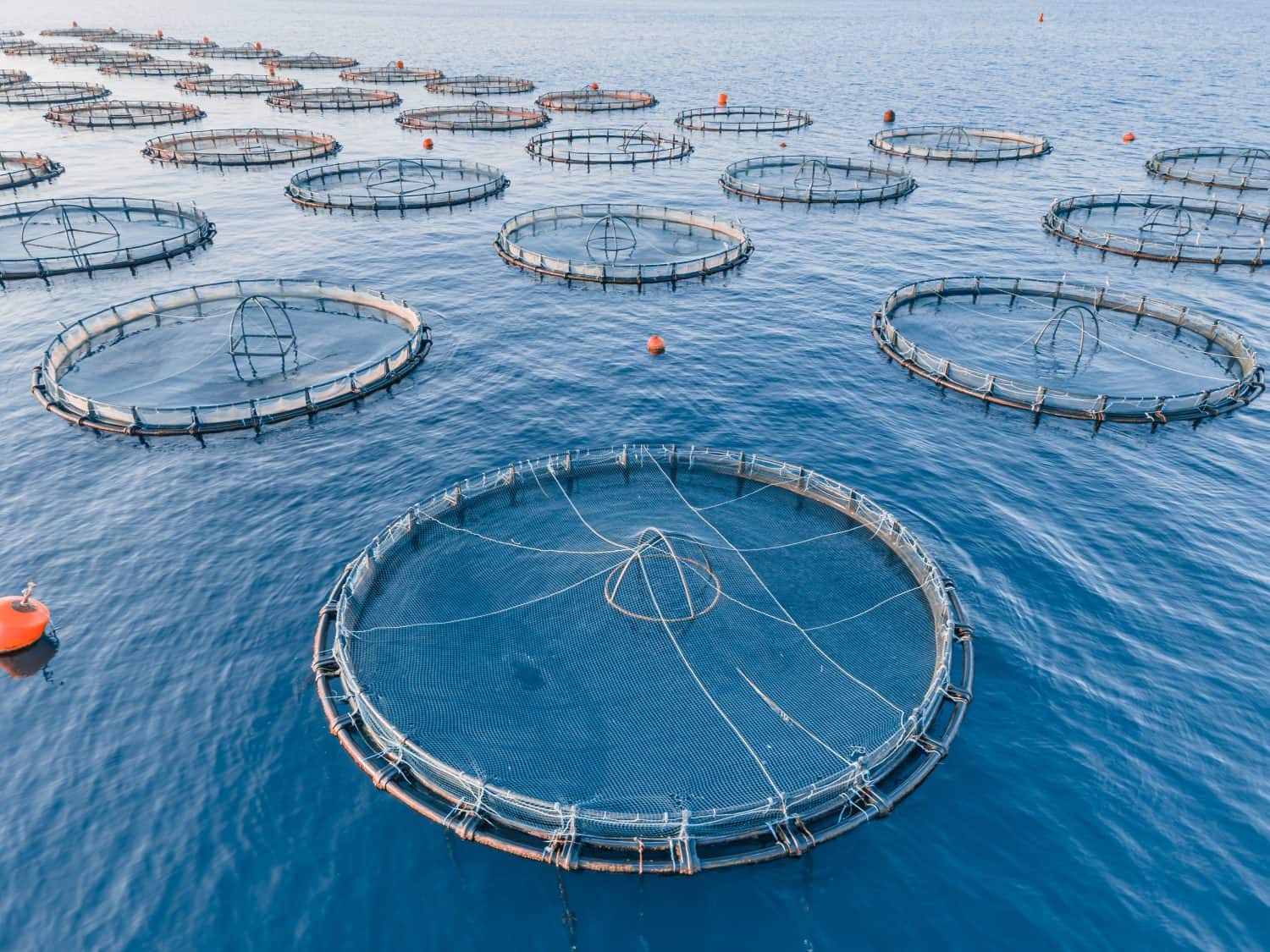
Commercial fish farms have a direct impact on marine wildlife.
©Leonid Sorokin/Shutterstock.com
This also has another unintended consequence. It teaches wild species that free food can always be found beneath the farm. This could undermine the wildlife’s ability to find food by hunting.
One other risk is that the captive fish in close proximity to wild sea life increase the chance that disease may be spread among both populations. This can have devastating effects.
What’s Next for the Maltese Fish Farm Rays?
At this point, nobody knows what will happen. The researchers say they can’t be sure if the gathering of so many rays was a one-off event, a seasonal behavioral pattern they just happened to witness, or something tied to a nearby ray nursery area they have not yet identified.
They plan to do additional monitoring to find out. For the time being, they expect that once the baitfish food source is gone, the rays will return to open water and resume normal behavior. They plan to keep an eye on the seafloor below the cages to see if and when the eagle rays return.