
The art of bonsai is a beautiful way to get hands on with plant care. This fascinating traditional art is one of the few crafts that works with living organisms and lasts for decades.
Ginseng ficus bonsai trees are often recommended to beginners interested in starting bonsai. In this article, we’ll discuss ginseng ficus bonsai care basics and maintenance instructions to help your bonsai tree flourish.
Let’s dig in!
| Top Ginseng Ficus Bonsai Tree Questions | Important Information |
|---|---|
| Botanical Name | Ficus microcarpa; Ficus microcarpa ‘Ginseng’ |
| Origin | Southeast Asia |
| Sunlight Requirements | Full sunlight |
| Soil Types | Well-draining; bonsai soil |
| Watering Frequency | Water regularly for consistent moisture |
| Ideal Placement | In a sunny window or direct overhead sunlight |
| Beginner-Friendly? | Yes, recommended often for beginners |
| Pairs Well With | Crafting aerial roots, other ficus bonsai varieties |
Caring for Your Ginseng Ficus Bonsai Tree
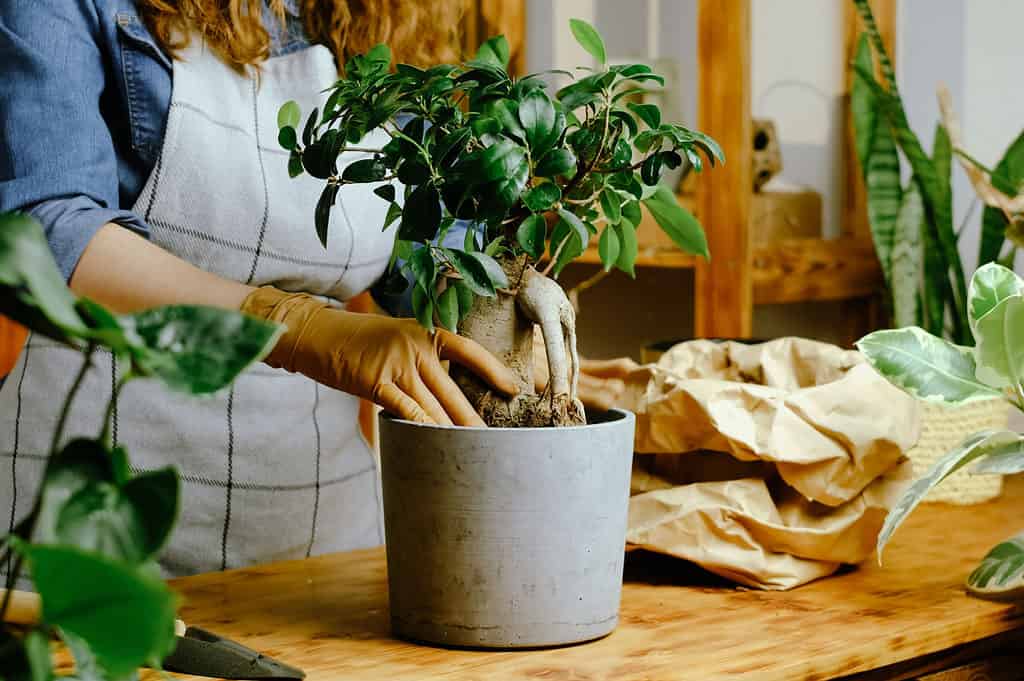
Your ficus bonsai tree likely needs repotting every couple of years.
©Meteoritka/Shutterstock.com
Ginseng ficus bonsai trees are relatively easy to care for, requiring minimal maintenance and upkeep. This easy-going quality makes it a highly recommended starter tree for bonsai beginners.
Sunlight
The ginseng ficus bonsai tree requires a lot of sunlight to thrive. Unlike some sunlight-loving plants that are prone to scorching, this beauty prefers direct, full sun exposure for 12 or more hours per day. If you can’t provide this naturally, consider investing in a grow light for support.
If you choose to move your ginseng ficus bonsai outdoors in the summer, take the time to transition it from partial sun to full sun. This plant does best in USDA zones 7-9, so be cautious if you live in a hotter climate. Opt for less direct sun exposure if you can’t maintain soil moisture.
Soil Type
Like other bonsai trees, the ginseng ficus prefers a well-draining mix with a dash of water retention. Consider a pre-mixed bonsai soil or make your own with organic matter (compost), Akadama (clay), and grit (pumice or perlite).
Bonsai trees will die if their root system dries out. Be sure to find a soil blend that suits the climate in your area—the drier the region, the higher the ratio of clay you’ll want for water retention.
Water
Water and mist your ginseng ficus regularly, ensuring the soil is consistently moist. Choose a pot with sufficient drainage to ensure the soil is never oversaturated, as this can lead to root rot.
Placement
Place your ginseng ficus bonsai tree in the sunniest window in your home. If you don’t have a window that gets consistent sunlight throughout the day, supplement with a grow light.
Fertilizer
Your ginseng ficus will appreciate a diluted liquid fertilizer throughout the growing season. Avoid feeding during the winter when your tree goes into a dormant or semi-dormant state.
Pruning Your Ginseng Ficus Bonsai Tree
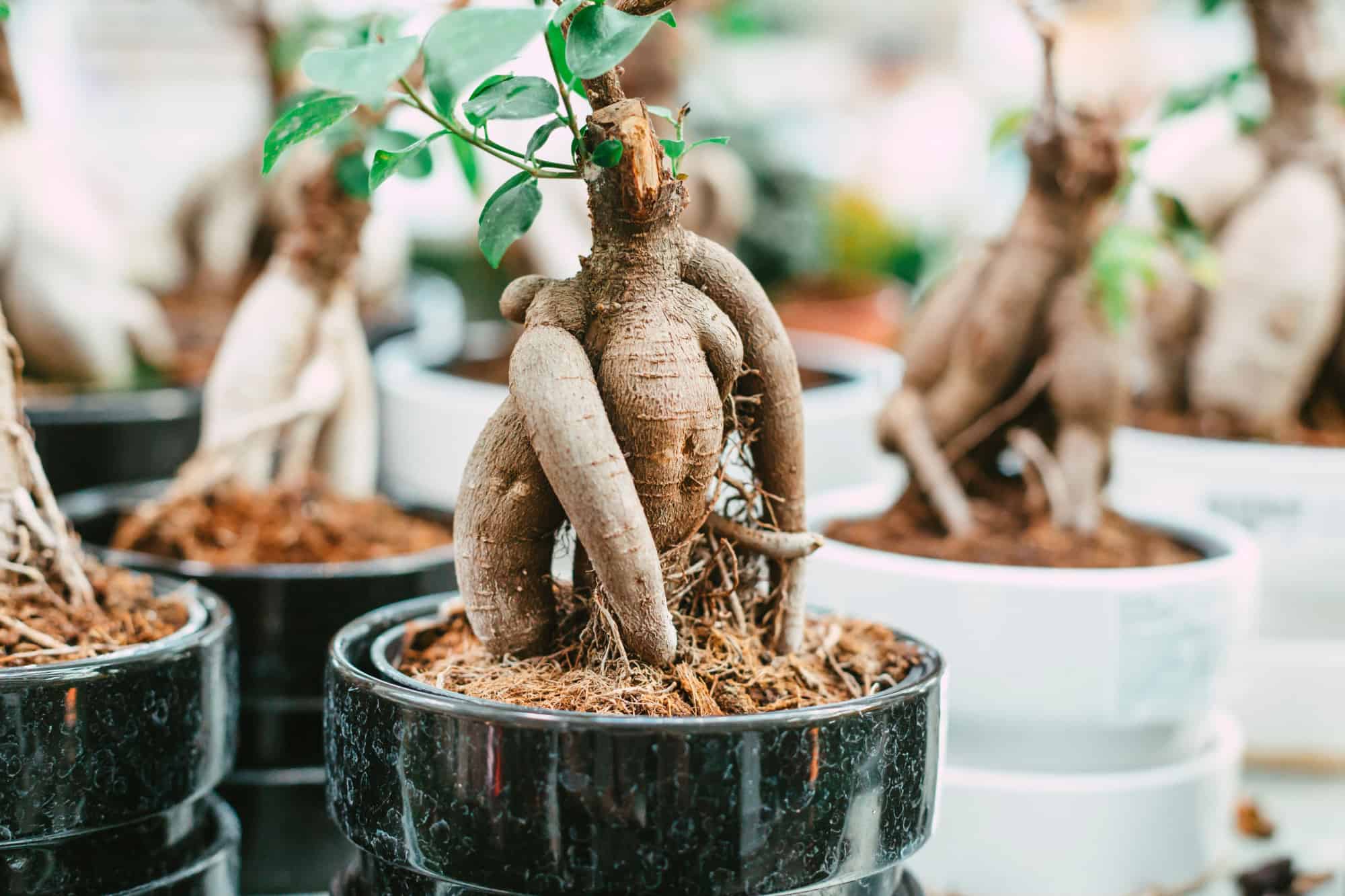
Ginseng ficus is known for its thick, eye-catching trunks. This look is achieved by forgoing pruning during the first few growing seasons. When you decide to prune, do so at the beginning of the growing season to promote ample time for recovery and growth.
Start by pruning back leaves, leaving 1-2 for photosynthesis. You can shape thin branches and wire them as you see fit. The ginseng ficus is also eligible for approach grafting, which fuses segments together via prolonged contact. Try this and remove wires from thinner branches before they start cutting in deep.
If you notice wounds on your tree, treat them with bonsai wound paste.
Propagating Your Ginseng Ficus Bonsai Tree
Propagate the ginseng ficus through stem cuttings. Use clean, sharp trimmers to cut an established branch, dip it in rooting hormone, and plant it in bonsai soil. This process works best at the beginning of the growing season.
More experienced bonsai artists also propagate via air layering. The ginseng ficus is a great option for learning this advanced process. Do this by applying a tourniquet to an established branch or a ring carving to promote new root growth. Monitoring the health of your tree is crucial during this process.
Common Problems with Ginseng Ficus Bonsai Tree
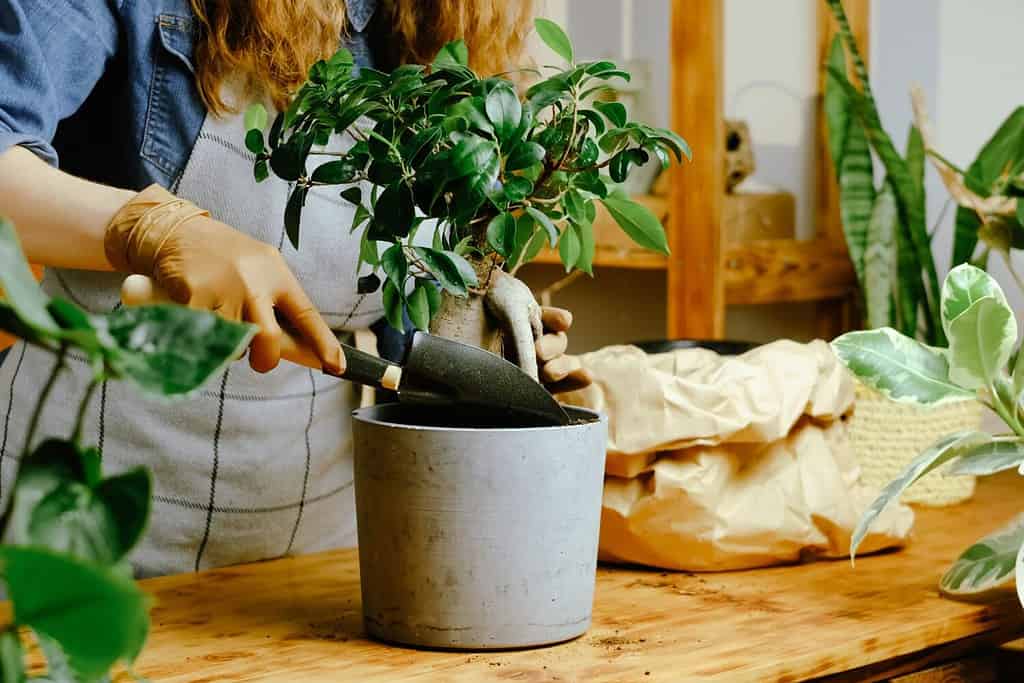
The ginseng ficus is considered low-maintenance and beginner-friendly.
©Meteoritka/Shutterstock.com
Ginseng ficus is susceptible to many of the pests that attack other indoor plants. A few common offenders to watch for include scale insects, spider mites, mealybugs, and aphids. You can treat your tree with a fungicide or neem oil or manually remove the pests and wipe the leaves and branches down with a moist cloth and mild detergent.
Lack of sunlight is the most common issue for this resilient bonsai tree. If your ginseng ficus drops leaves, it could be experiencing a cold draft or lack of sunlight. Readdress its placement if this occurs.
Ginseng Ficus Bonsai Tree Alternatives
Ficus microcarpa and Ficus retusa are often referred to interchangeably as ginseng ficus plants. However, they’re two different species of ficus. Still, many bonsai artists prefer Ficus retusa as an alternative to Ficus microcarpa.