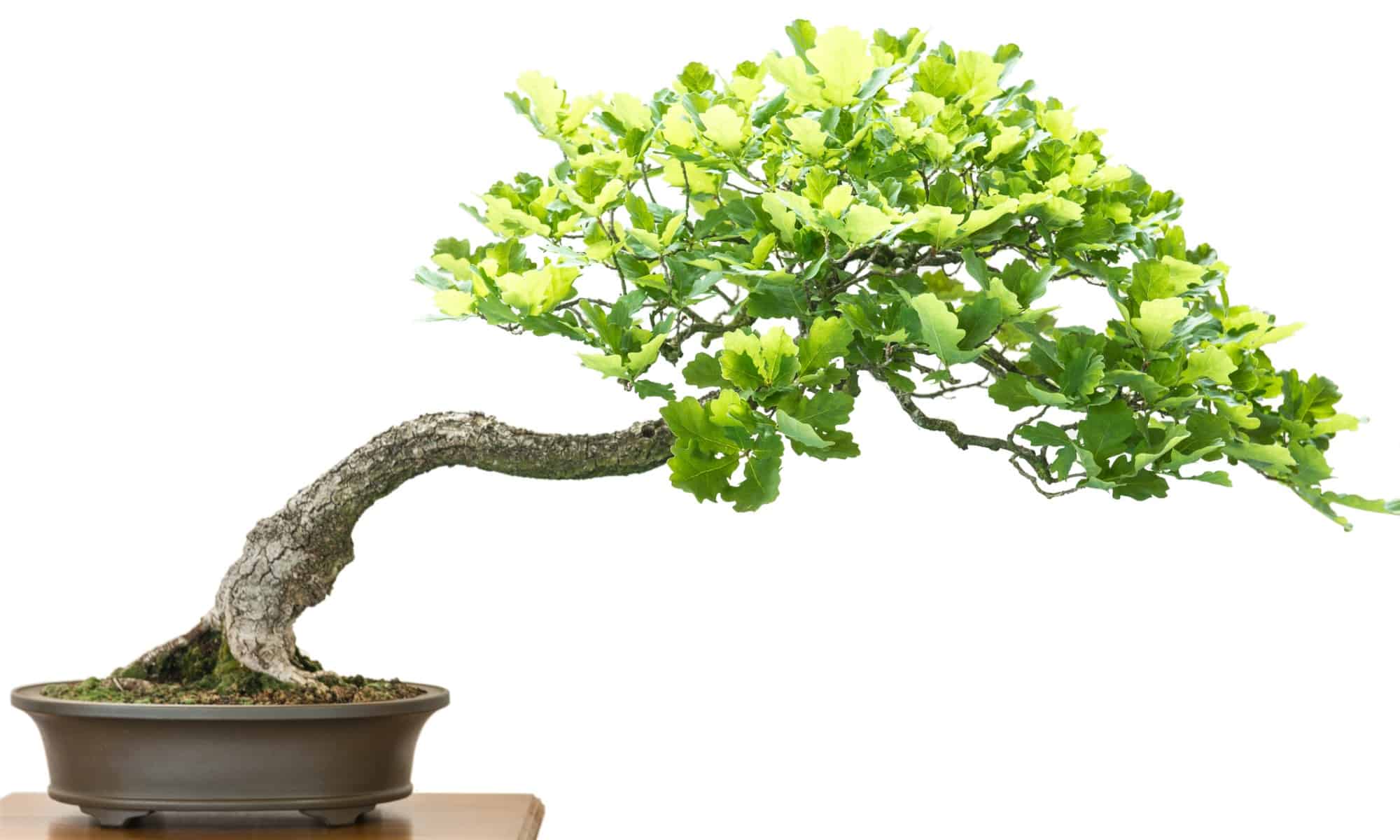

Oak trees are challenging yet rewarding bonsai trees. Unlike other bonsai varieties, oak leaves remain large and bold, in alignment with their mighty symbolism.
White oak bonsai trees have an aesthetically pleasing ashy tone. In this article, we’ll cover how to care for a white oak bonsai tree and share some helpful upkeep tips to keep your tree thriving.
Let’s dig in!
| Top White Oak Bonsai Tree Questions | Important Information |
|---|---|
| Botanical Name | Quercus alba |
| Origin | North America |
| Sunlight Requirements | Full sunlight |
| Soil Type | Well-draining; Bonsai mix |
| Watering Frequency | Consistent moisture |
| Ideal Placement | Sunny window or sheltered area outdoors |
| Beginner-Friendly? | No, oak trees are challenging to bonsai |
| Pairs Well With | Natural ground cover, contrasting bonsai foliage |
Caring For Your White Oak Bonsai Tree
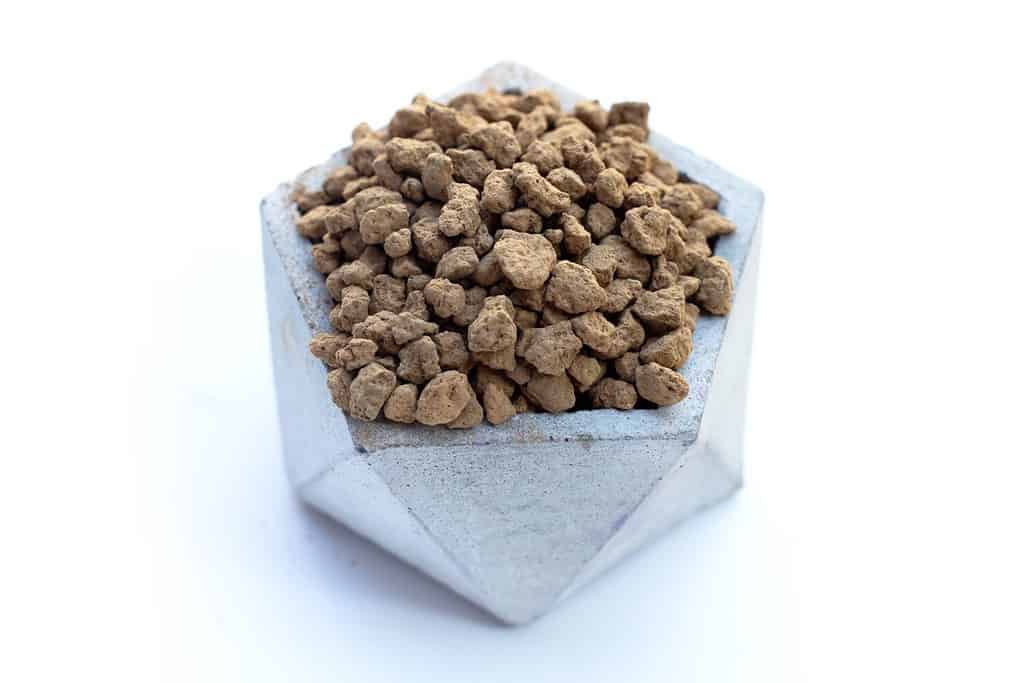
Bonsai trees prefer well-draining soil with Akamada, a type of clay.
©Bowonpat Sakaew/Shutterstock.com
The general care and upkeep for white oak bonsai trees is straightforward; the challenge comes with pruning and shaping this finicky bonsai species. Beginners should start with an easier bonsai, like the Ginseng Ficus bonsai tree.
Sunlight
White oaks prefer full sun exposure, though they’ll tolerate a bit of shade. As the white oak bonsai matures, it will require increased amounts of sunlight and become less shade-tolerant to get sufficient energy to support its growth.
Fortunately, this hardy bonsai is cold tolerant, and you can place it outdoors in USDA zones 3-9. You can supplement indoor growth with a grow light.
Soil Type
Choose a bonsai soil mix for your white oak, or create your own with a balanced blend of organic matter, clay, and grit. Most bonsai mixes have a blend of compost, Akamada, and perlite or pumice.
Adjust your blend based on your local climate and home heating. If you have a dry environment, increase the ratio of Akamada for better moisture retention.
Water
Like most bonsai trees, the white oak requires regular watering and consistently moist soil. If the root ball dries out, your tree will die.
However, there’s a fine line between consistent moisture and overwatering. Choose a planter with plenty of drainage holes to prevent waterlogging and root rot.
Placement
Place your white oak bonsai in a sunny window so it can photosynthesize and thrive. If you place this cold-hardy bonsai outdoors, choose a place with plenty of shelter from high winds. This placement is crucial if you plan on leaving your white oak outdoors over the winter.
Pruning Your White Oak Bonsai Tree
Pruning a white oak bonsai is a challenge for several reasons. First, this tree produces full-size leaves, even in bonsai form. You’ll have to prune the leaves regularly to keep the desired miniature appearance. It’s also important not to remove all the leaves; otherwise, your white oak will fail to thrive.
Plan to prune the leaves in the spring when buds appear. Oak trees are known for apical dominance, meaning the crown of the tree grows faster than the lower branches (they have more exposure to light). As such, you must be more vigilant in pruning the top of your established white oak bonsai.
Oak bonsai varieties respond well to wiring but are sensitive to wounds from leaving wires on too long. Experts recommend using a guy wiring technique to avoid damage.
Propagating Your White Oak Bonsai Tree
Unlike other bonsai varieties, white oaks don’t respond well to air layering or stem cuttings. Instead, you’ll need acorns to propagate from seed. It can take years for an established oak bonsai to produce acorns. You can plant these acorns to grow new oaks and start the bonsai process from scratch.
Common Problems With The White Oak Bonsai Tree
In addition to being demanding and high-maintenance, white oak bonsai trees are susceptible to the usual indoor plant pests and common oak attackers when placed outdoors.
Indoors, watch for signs of mealybugs, scale insects, and spider mites. These can be treated with neem oil or manually removed with a damp cloth or cotton swab. Use a gentle pesticide if needed.
Outdoors, be mindful of powdery mildew, leaf scorch, and aphids. Aphids and other pests can be removed manually, and powdery mildew can be washed away with a soapy solution.
White Oak Bonsai Tree Alternatives
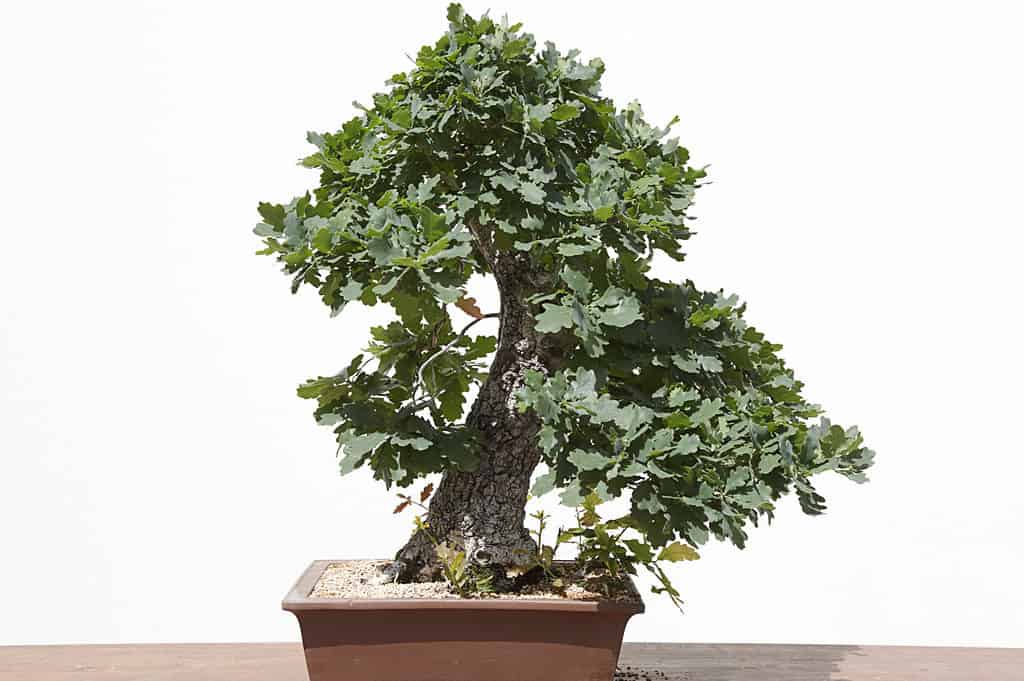
English oak trees make great Bonsai tree specimens.
©Raquel Pedrosa/Shutterstock.com
There are several other types of oak tree bonsai options if the white oak isn’t to your taste.
Chestnut oaks are known for their resilience and ability to grow in unfriendly terrains. This alternative is a good option if you live in a dry area where maintaining soil moisture may be challenging.
English oaks have the traditional oak look with dark wood and lovely green foliage if the white trunk doesn’t appeal to you.
Red oaks look incredible in the fall. However, some subspecies are fast growers and not ideal for bonsai.
Bur oaks are slow-growers, making them easier to maintain in bonsai form.
Finally, pin oaks are more heat tolerant than other oaks but are known as fast growers, making them higher maintenance than other varieties.