
Quick Take
- Some 17-year cicadas appear early as stragglers due to environmental factors.
- Soil temperature, especially around 64°F, triggers emergence timing.
- Stragglers may form new “shadow broods” with shifted life cycles.
- Observing and reporting sightings helps scientists track changes in cicada patterns.
As a kid growing up in Virginia, I have vivid memories of the 17-year cicadas. They were enormous, dangerous-looking insects—1.5 to 2 inches long with wingspans up to 3 inches—yet harmless enough for us kids to handle. The farm cats and dogs would play with them, and the chickens went crazy over the all-you-can-eat bonanza. The folks went crazy for a different reason: the buzzing sound they made was deafening to the point of producing headaches—no exaggeration—as cicadas covered every tree and crawled across the ground by the hundreds of thousands per acre. They were an interesting novelty at first, but their welcome quickly wore out. So, when I recently discovered that cicadas may be emerging in Virginia more frequently, I just smiled wanly to myself and said, “Oh, yay,” unenthusiastically.
This spring, there have been isolated reports of some 17-year periodical cicadas already emerging, long before their big 2030 appearance. These noisy little creatures offer clues about how temperature, climate, and local environments can nudge a famously precise life cycle offbeat, even leading to the formation of new “shadow broods” that follow their own timetable.
How Do Cicadas Survive So Long?
Cicadas are insects best known for their loud summer calls and long life cycles. Some species, called periodical cicadas, emerge every 13 or 17 years, while others appear more regularly in smaller numbers. After hatching, the young nymphs burrow into the soil and attach to tree roots, where they remain hidden for years. When they finally emerge, they do so in huge numbers, becoming a rich food source for birds and other wildlife. This sudden abundance can temporarily boost predator populations and alter local ecosystems.
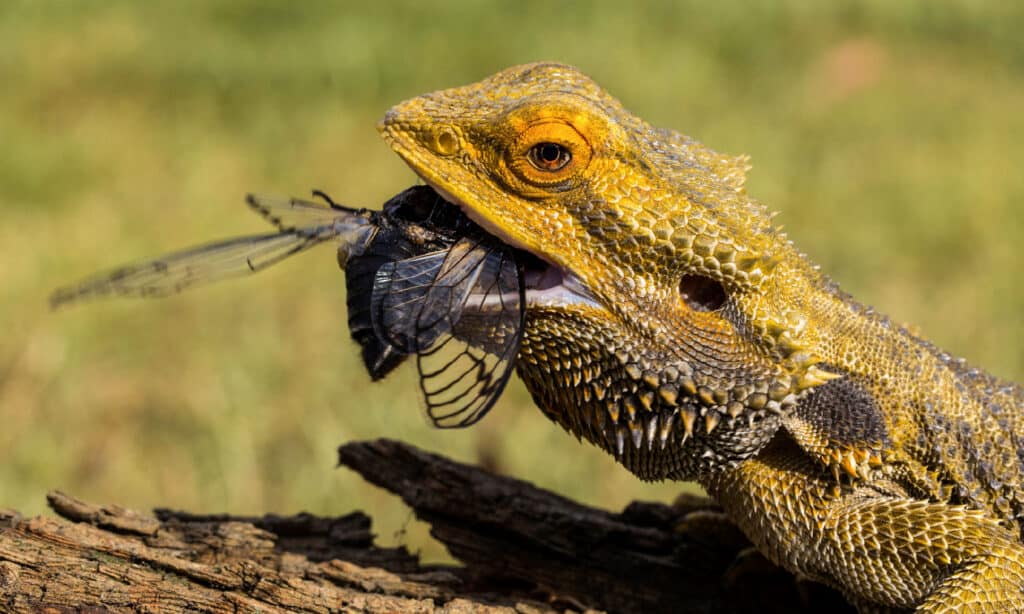
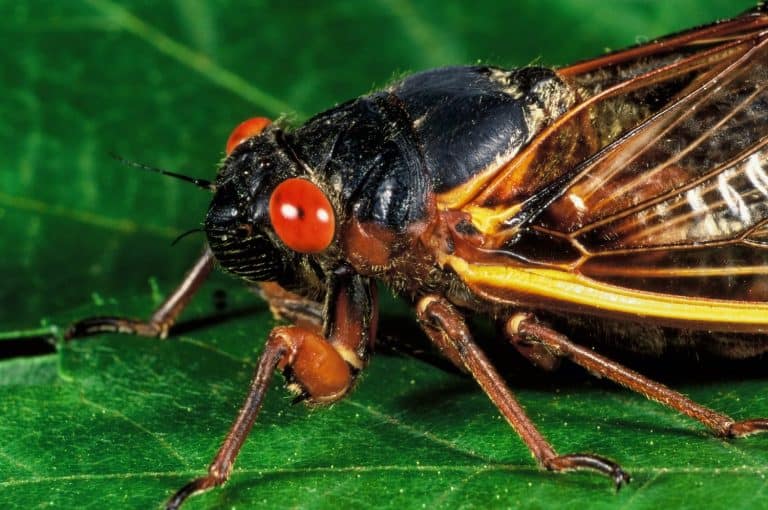
Cicadas are food for many species.
©iStock.com/Ken Griffiths
They survive so long by living in a low-energy state. Underground, cicada nymphs move very little and feed on a steady supply of xylem fluid from roots. This simple diet supports slow growth and keeps their metabolism low. Over time, they develop through several stages before emerging all at once. Their extended timeline helps them appear in large numbers, which increases their chances of survival when they finally reach the surface.
They Won’t Bite You, But You Can Bite Them
Cicadas may arrive in overwhelming numbers, but they are mostly harmless. The droning, buzzing sound is produced by males flexing organs called tymbals on the sides of their abdomen, creating a clicking noise. When millions do this continuously, it creates a machine-like sound often compared to the humming of power lines. And it’s LOUD: over 100 decibels, audible from a mile and a half away. They do not damage crops in a significant way, as they feed lightly on plant fluids. The main impact comes from females laying eggs in small tree branches, which can harm young or newly planted trees, especially fruit trees. Mature trees and established plants usually recover with little lasting damage.
They also pose no real threat to people. Cicadas do not bite or sting, and they are safe to handle. At most, one might land on you or cling briefly to your clothing, which can be surprising but is not dangerous. In many cultures, people eat cicadas, describing the taste as similar to nuts or shrimp when cooked. Those with shellfish allergies should avoid eating cicadas, as they are related to shellfish. Pets should also avoid these critters. If they eat one cicada, it’s not a problem, but if they eat too many, they could get an upset stomach.
The “Early Birds” of Brood II
Periodical cicadas are best known for their synchronized mass emergences every 13 or 17 years, but Brood II is one of the 17-year groups that has earned a reputation for producing noticeable stragglers. These cicadas spend almost their entire lives underground as nymphs, sipping on tree root fluids and slowly growing in the dark. When their internal clock and the environment line up, they tunnel out in huge numbers, transform into winged adults, sing, mate, lay eggs, and die within a few weeks.
Brood II normally emerges across parts of Connecticut, Georgia, Maryland, North Carolina, New Jersey, New York, Pennsylvania, and Virginia in years like 1996, 2013, and the upcoming 2030 event. But in several of those states, observers have occasionally reported individuals and small clusters surfacing years early. These stragglers are still the same species—primarily Magicicada septendecim, M. cassini, and M. septendecula—but they’ve somehow been nudged off the main schedule.
The Magic Number: 64°F in the Soil
To understand why the stragglers are here now, you need to look beneath your feet rather than at the calendar. Periodical cicadas time their emergence using soil temperature, not air temperature, and research shows that the key threshold is around 64 degrees Fahrenheit at a depth of about eight inches. When the soil warms up to that point, the cicadas’ bodies also warm, triggering a physiological reaction that tells them it is time to head for the surface.
In classic experiments during the 1960s, biologist James Edward Heath documented that 17-year cicadas across multiple locations tended to emerge when soil temperatures at about 20 centimeters deep averaged close to 64 degrees, regardless of the actual date. Warm spring days in the 70s and 80s, especially when followed by soaking rains, speed up the warming of the soil and can spark particularly intense emergences. For stragglers, this same temperature trigger still applies, but local conditions—such as the way sunlight hits a slope, nearby pavement, or tree cover—can cause a small subset of cicadas to reach that threshold earlier than the rest of their brood’s generation.

Cicada nymphs spend most of their lives underground.
©Hank Asia/Shutterstock.com
How Cicadas Lose Track of Time
If the soil temperature rule is so strict, why don’t all Brood II cicadas emerge at the same time? Scientists think that periodical cicadas keep an internal count of the seasons while they are underground, but that count can be influenced by growth rates and environmental factors such as food quality and climate. In some cases, individuals grow faster than the majority, reaching their final developmental stage one or more years before the group.
These early developers still wait for the right spring conditions—especially that 64°F soil threshold—but once they hit it, they emerge even if most of their broodmates are still immature. That creates stragglers that appear four years early or one year early, both of which have been recorded in this brood. Because the cicadas are so numerous and tightly synchronized under normal conditions, scientists can easily notice when small pockets show up outside the expected year. These pockets serve as natural experiments, revealing how flexible the cicada lifecycle really is.
Where to Listen for 2026 Stragglers
If you want to spot early Brood II cicadas this spring, you need to be in the right region and pay attention at the right time. Brood II’s historical range stretches along the eastern seaboard from New England down into the southern Appalachians. In 2026, based on past straggler patterns, there may be scattered activity in many of the same states: Connecticut, Georgia, Maryland, North Carolina, New Jersey, New York, Pennsylvania, and Virginia.
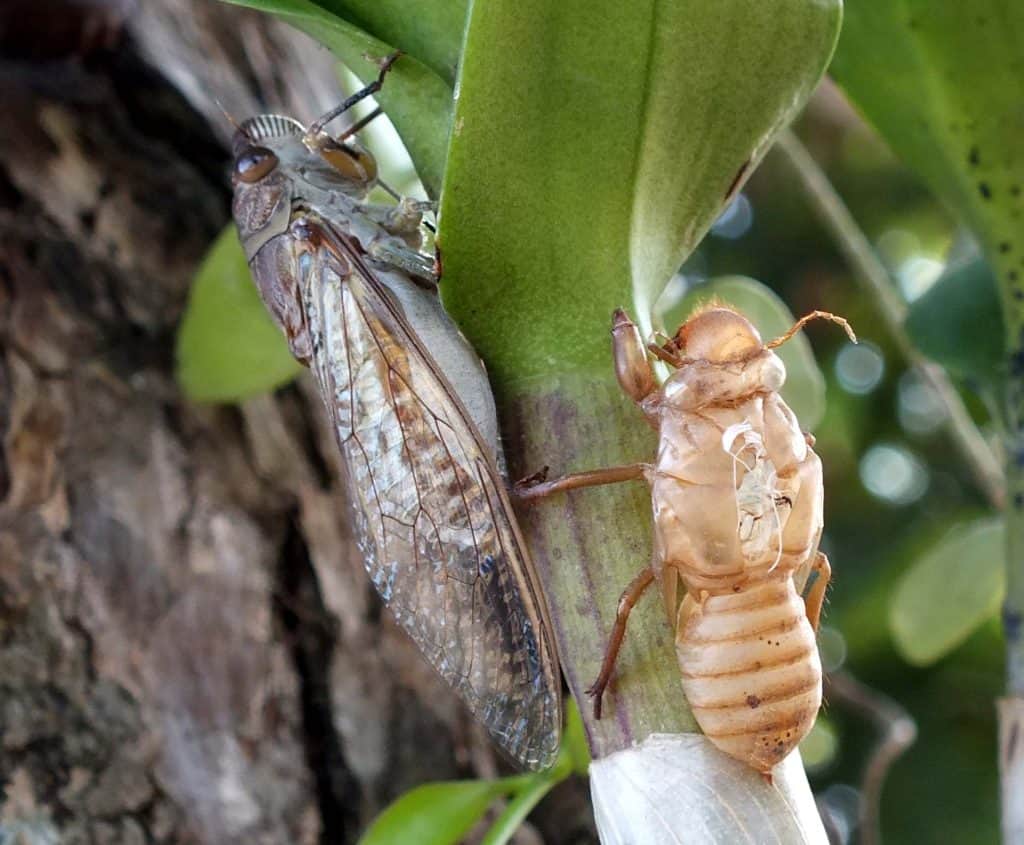
Cicada exoskeleton
©Len Worthington, CC BY-SA 2.0 , via Wikimedia Commons – Original / License
Cicada watchers suggest looking between late April and late May, when the soil has had time to warm, and trees have fully filled out. You might first notice “cicada chimneys”—small towers of mud around exit holes—or find nymphs hiding under rocks, logs, and landscaping timbers before they climb up nearby vegetation to molt. Once the males’ buzzing chorus starts, it is hard to miss; even small emergences can sound like power lines humming in the distance. If you live near known Brood II hotspots in New Jersey, New York’s Hudson Valley, or parts of Virginia’s Piedmont, you have especially good odds of hearing the early cicada chorus.
What Are “Shadow Broods”?
Most of the time, stragglers are scattered and sparse, appearing as a few individuals mixed into a different brood’s emergence or popping up alone in quiet neighborhoods. Occasionally, though, there are so many early risers in one area that they can find each other, mate successfully, and leave behind a dense cluster of eggs. When that happens, the next generation of their offspring will naturally emerge on the altered schedule of their parents, essentially forming a new, offset brood.
Researchers refer to these off-cycle populations as “shadow broods.” One of the most talked-about examples is a proposed Brood XV forming around towns like Fanwood, Mountainside, and Westfield in northern New Jersey. Scientists are still gathering data to confirm whether these cicadas truly function as a distinct brood, but the idea shows how a few early risers, multiplied over generations, can rewrite the local cicada calendar.
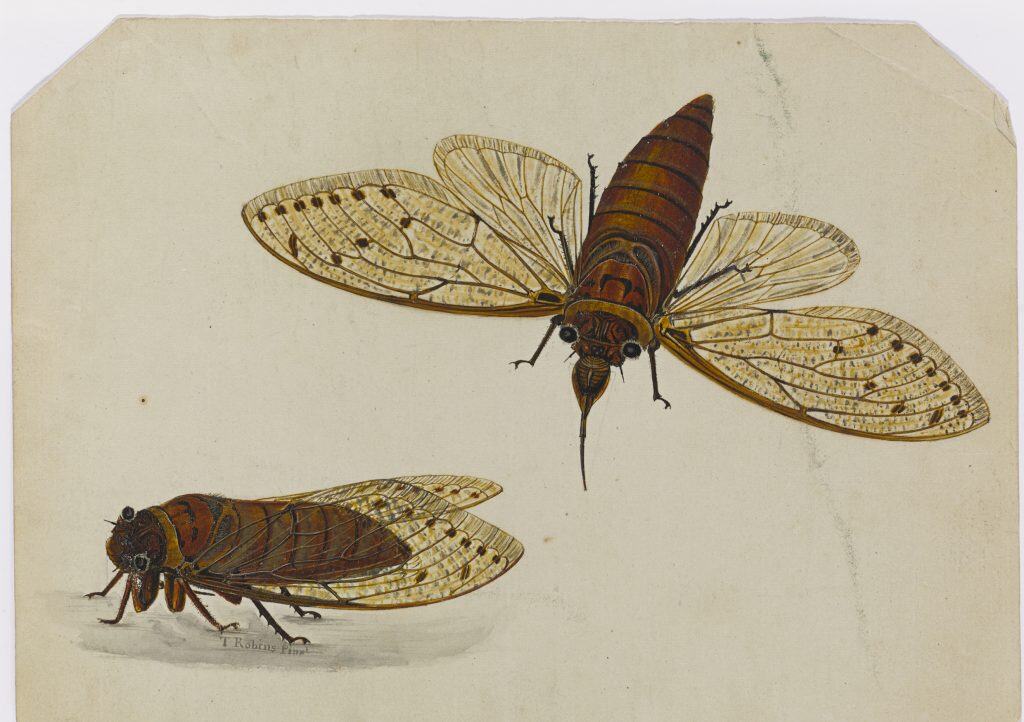
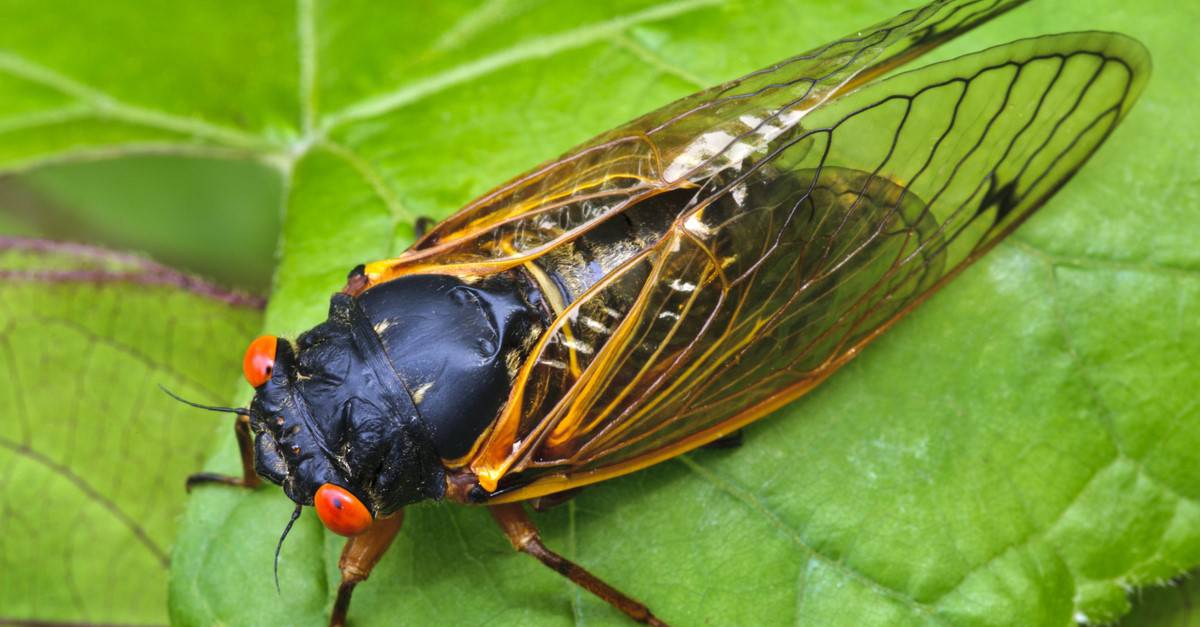
Cicadas are large insects with transparent wings.
©Ann Lee, Public domain, via Wikimedia Commons – Original / License
New Jersey’s Off-Beat Cicada Clock
New Jersey has become an outdoor laboratory for observing shadow broods, as the state hosts several 17-year cicada groups, including Brood II and Brood X, with different regions dominated by each. In recent years, towns such as Mountainside, Plainfield, and Westfield have reported off-cycle cicada emergences. These patterns have led some experts to propose an informal “Brood XV,” likely formed when early Brood II stragglers reproduced together and established a shifted 17-year cycle, causing cicadas to appear years ahead of schedule.
Virginia’s Growing Chorus of Stragglers
Virginia, with its mix of mountains, valleys, and coastal plains, is another hotspot for cicada complexity. The state experiences emergences from several different 17-year broods, including I, II, IX, X, and XIV, and each one claims its own slice of the map and schedule. This overlapping pattern means that stragglers from one brood can sometimes appear alongside the main emergence of another, turning some springs into true insect festivals.
Predictions of Brood II stragglers in the Roanoke area and other parts of Virginia highlight how local microclimates and elevation shifts may be nudging some cicadas ahead of the pack. Warmer urban zones, south-facing slopes, or areas where pavement and buildings trap heat can all push soil temperatures to the magic 64°F threshold earlier in the season. If enough early emergers concentrate in such zones and successfully breed, Virginia could eventually host its own shadow brood, adding yet another layer to the state’s already busy cicada calendar.
What Stragglers Mean for Science
For scientists, these early risers are more than just a curiosity; they are natural experiments that test the flexibility of periodical cicadas. Traditional thinking emphasized their almost clock-like, predator-swamping strategy: emerge in huge numbers at rare intervals so predators can never fully adapt. Stragglers and shadow broods demonstrate that the story is more complicated. They reveal how local conditions and evolutionary pressures can shape different timing strategies in different places.
Research combining field observations, temperature records, and mathematical models suggests that emergence timing is controlled by both an internal developmental schedule and external cues like soil warmth. Stragglers highlight the role of microclimates, small differences in shade, slope, or land use that can result in different soil-warming patterns over short distances. By tracking these off-beat emergences using citizen-science apps and long-term mapping projects, researchers can better understand how climate change and urbanization might shift cicada patterns in the future.
How You Can Join the Straggler Hunt
You don’t need a lab coat to help scientists study Brood II’s early birds. Many cicada projects rely on everyday observers who report sightings, upload photos, and share recordings from their neighborhoods. Websites and apps such as iNaturalist and Cicada Safari collect these reports, allowing researchers to map exactly where and when stragglers appear. By noting the date, location, and rough number of cicadas you see, or even just whether they’re calling, you can contribute valuable data.
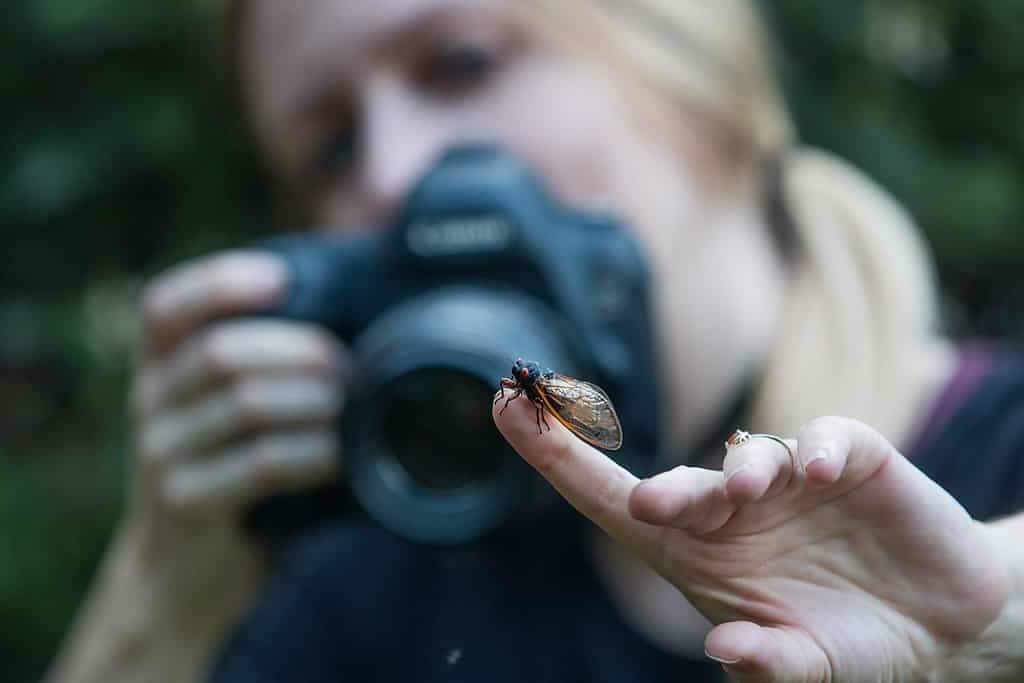
Cicadas are big and noisy, but harmless to people.
©Nicole Glass Photography/Shutterstock.com
If you head out on a cicada hunt, remember that these insects are harmless to people and pets, and they play a beneficial role in forests and yards. When cicadas tunnel out, they aerate the soil and help water move more easily through the ground. Their decaying bodies also return nutrients to the ecosystem. The best practice is to observe without disturbing: take photos of chimneys and exoskeletons, listen to the chorus at sunset, and maybe even check a soil thermometer to see how close your yard is to that 64°F trigger.
A New Cicada Schedule Taking Shape
The possible early appearance of Brood II cicadas in 2026 is a reminder that nature’s clocks are both precise and surprisingly flexible. Stragglers responding to warm soils are forming “shadow broods” in places like New Jersey and potentially parts of Virginia, gently rewriting the rhythm of the 17-year cycle. As climate patterns shift and continue to reshape local temperatures, future generations may hear cicada songs in years that once would have been quiet. For now, if you hear the buzz rising from your trees a few years “too soon,” you are witnessing a life cycle in the midst of change.