The quetzal is a striking forest bird native to the tropical and cloud forests of Central America, where it lives high in cool, misty mountain canopies. Best known for the male’s shimmering plumage and long tail feathers, it has played an important ecological role as a fruit eater and seed disperser, as well as a cultural role in ancient Mesoamerican societies. Although visually spectacular, the quetzal is not a strong flyer and depends heavily on healthy, undisturbed forests for survival.
Four Amazing Facts
- Quetzal is native to the tropical rainforests of Central America.
- Widely considered to be one of the most beautiful birds in the world, quetzals are most known for the tail feathers of the males.
- Quetzal birds were considered sacred by the Aztecs and Mayas.
- Not known to be good flyers — Quetzal mostly hops between tree branches, making them easy prey.
Classification and Evolution
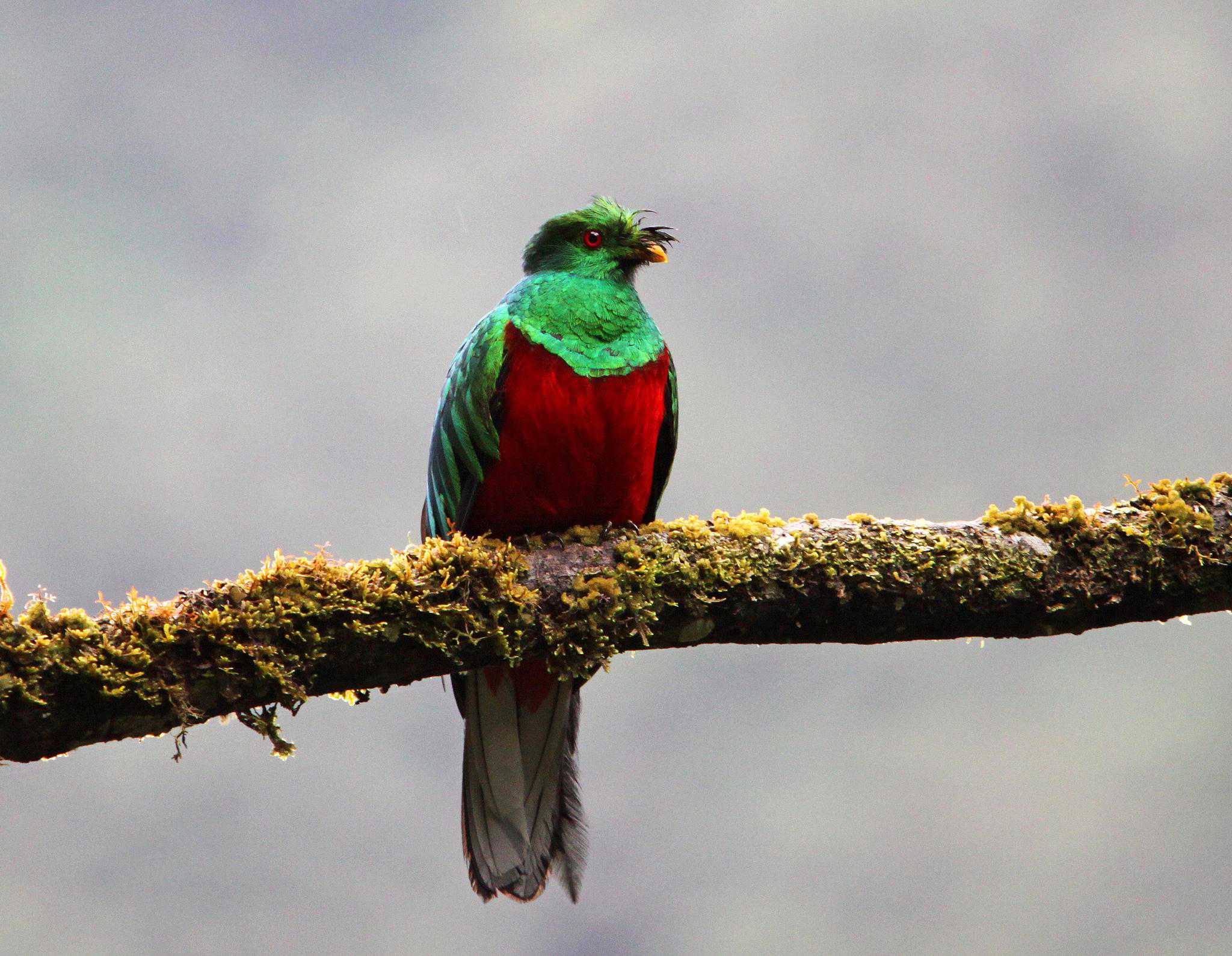
A Quetzal is a medium-sized bird found in Central America.
©vil.sandi / Flickr – Original
The Quetzal is a medium-sized bird that inhabits the moist, tropical rainforests of Central America, from southern Mexico to Panama.
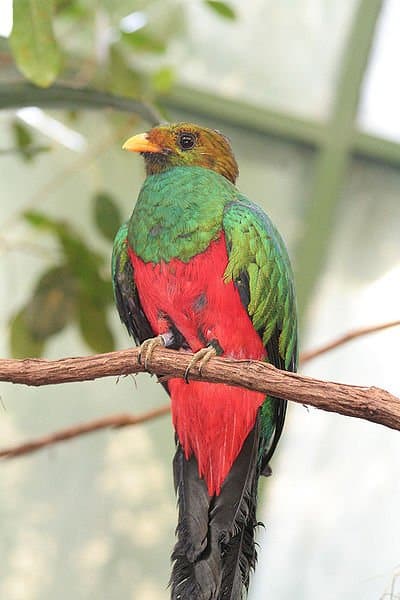
There are five or six species of quetzal, including the Crested Quetzal (Pharomachrus antisianus), Golden-headed Quetzal (Pharomachrus auriceps), White-tipped Quetzal (Pharomachrus fulgidus), Pavonine Quetzal (Pharomachrus pavoninus), Eared Quetzal (Euptilotis neoxenus), and the most famous Resplendent Quetzal (Pharomachrus mocinno), all of which belong to the Trogon family of birds. The Pavonine Quetzal is native to South America, while the Eared Quetzal is found in Mexico and the southwestern United States.
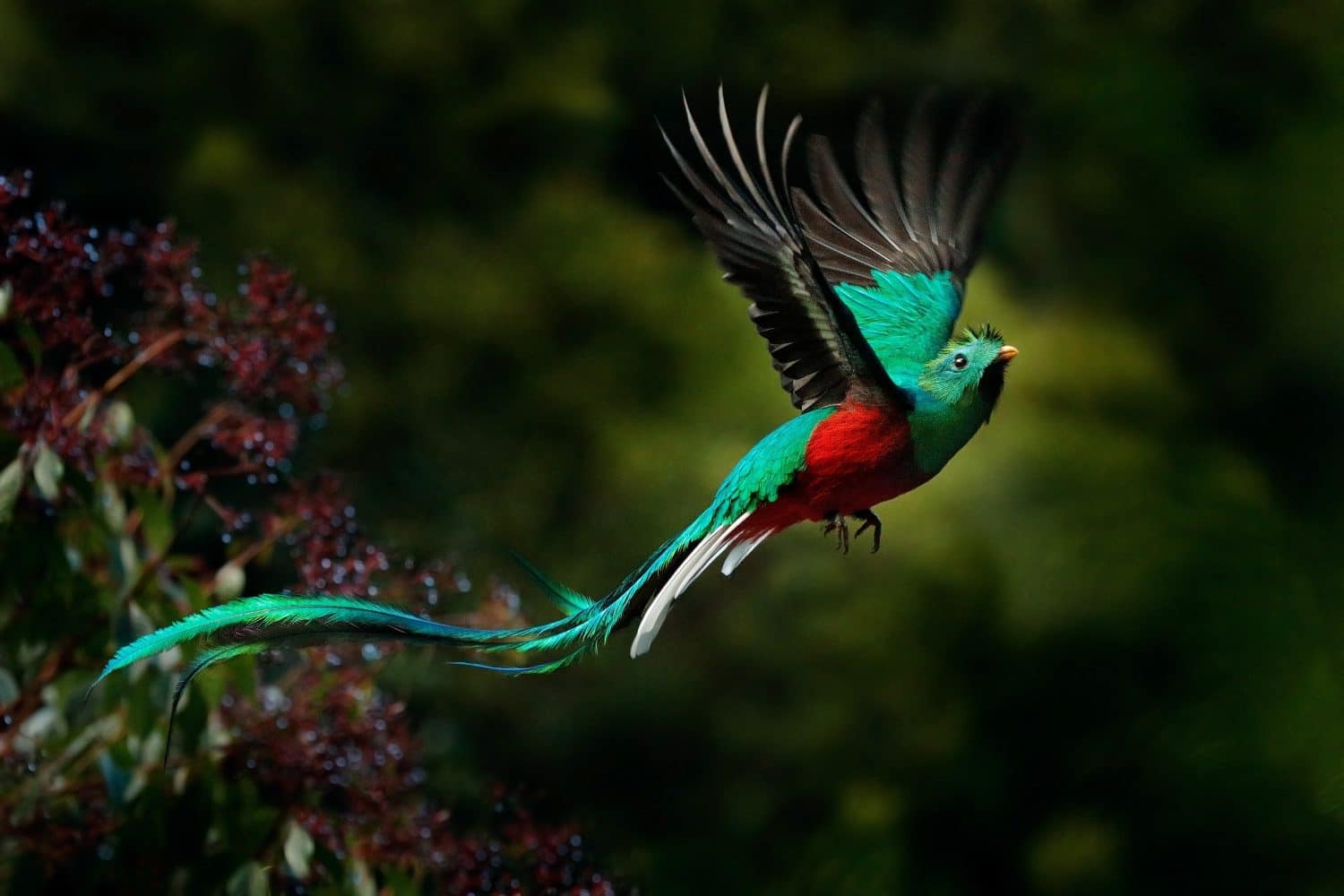
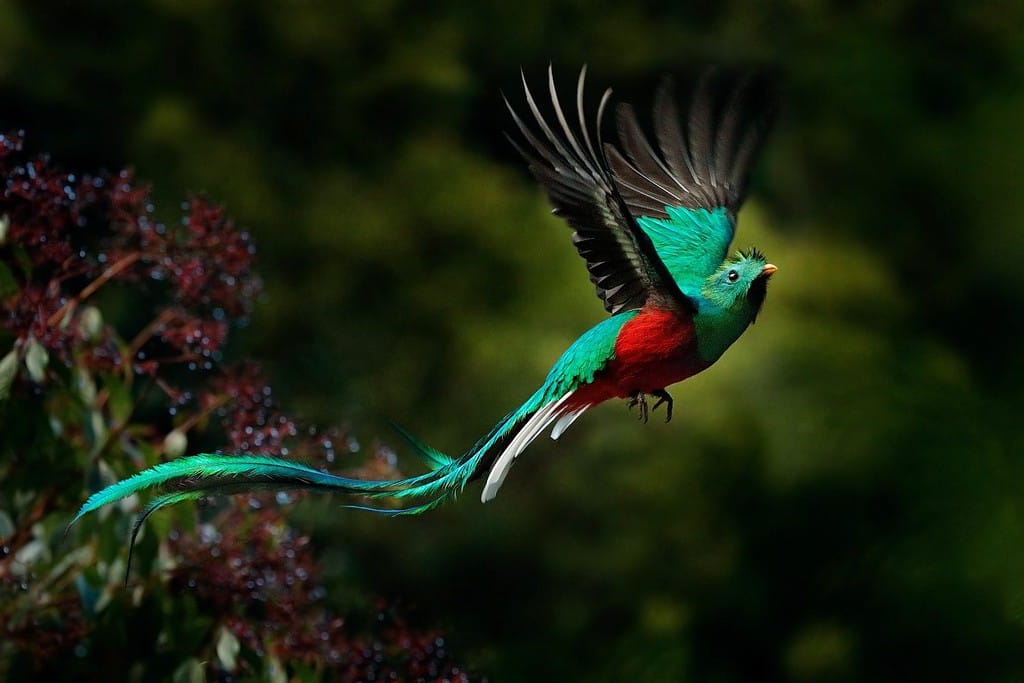
The Quetzal is an immensely colorful bird with metallic plumage and is widely considered to be one of the most strikingly beautiful birds in the world. They are most well known for the long tail feathers of the males.
Anatomy and Appearance
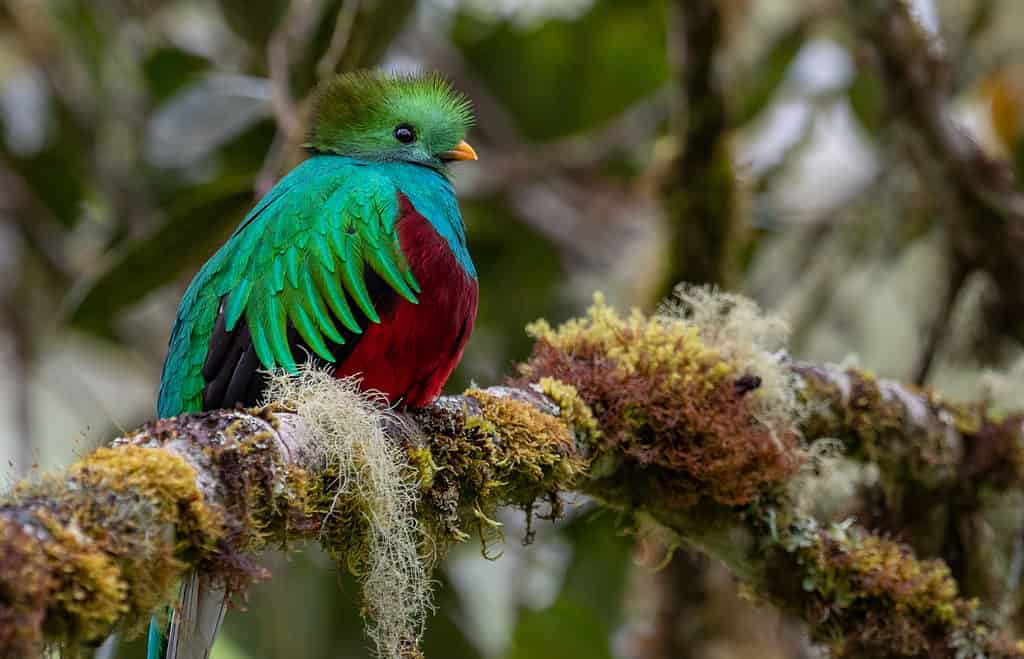
The Resplendent Quetzal is an important symbol in both Aztec and Mayan culture. The quetzal is associated with the snake god Quetzalcoatl and is seen as a symbol of goodness and light.
©iStock.com/Harry Collins
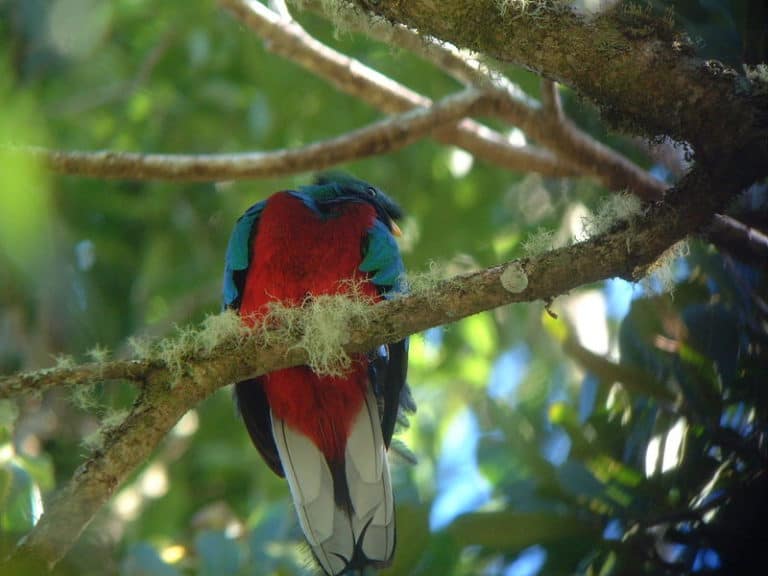
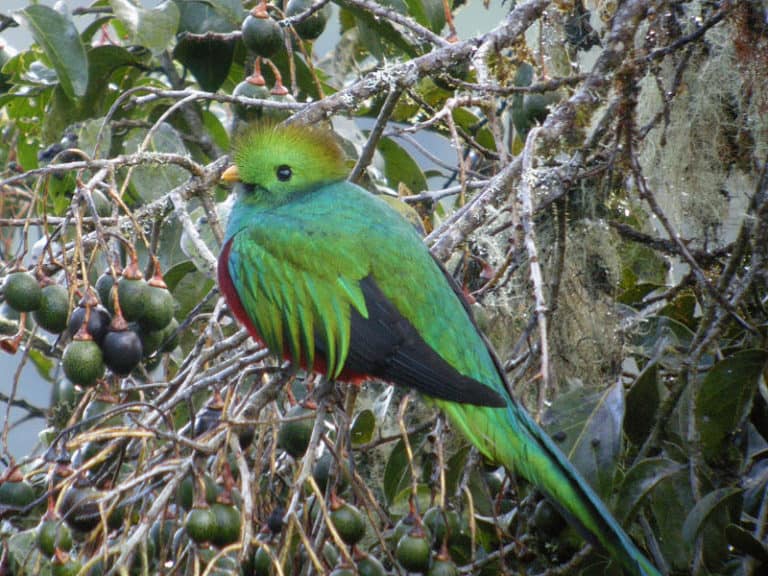
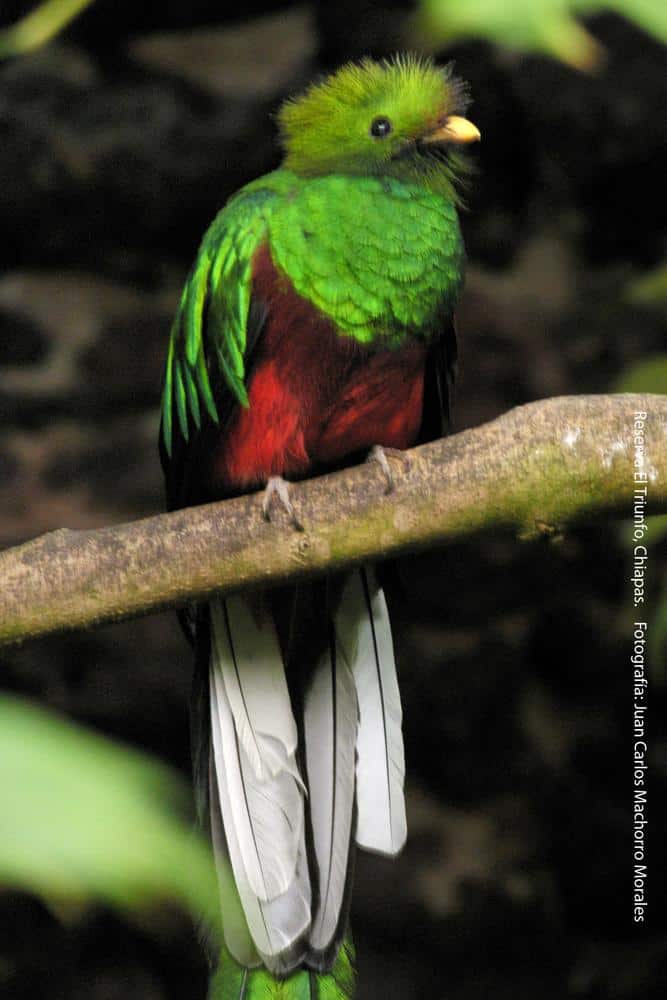
The Quetzal is an incredibly colorful bird with males displaying a bright metallic green or blue on most of their bodies, besides the deep red of the chest and belly. The male Quetzal bird also has a distinctive tuft of golden green feathers that form a crest on top of its head and immensely long twin tail feathers that can grow up to a meter in length.
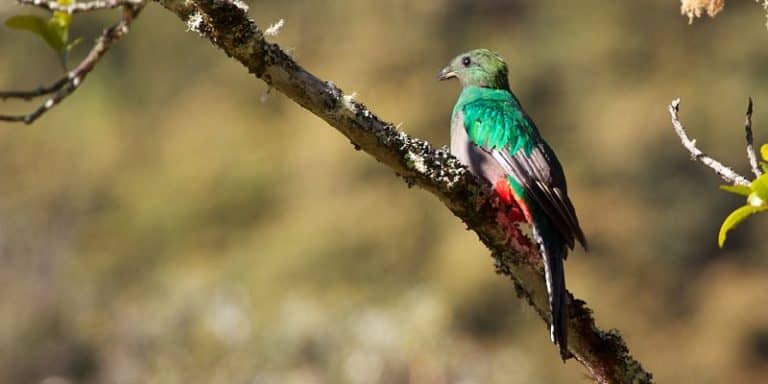
Although females do not grow such an impressively long train, they are of similar coloration to their male counterparts, with their plumage not being quite as bright. The deep red of the chest is often much duller or even gray (as is the metallic green), and they have gray or bronze-colored heads edged with green.
As with other members of the Trogon family, the feet of the Quetzal are unique, with two toes facing forward and two back on each foot that aid the Quetzal when perching high in the trees.
Distribution and Habitat
The Quetzal bird is found throughout the mountainous rainforests of Central America, where they tend to prefer high mountain ranges at altitudes of between 4,000 and 10,000 feet. The Quetzal inhabits moist, tropical forests in cooler areas that contain dense vegetation, and that is incredibly moist.
Cloud forests are one of the most successful habitats for the Quetzal, where the high moisture levels cause there to be a great deal of fog in the forest. Quetzals live in holes in the trees close to the top of the canopy that they have either built themselves using their powerful beaks or ones that have been abandoned by Woodpeckers. The striking plumage of the Quetzal means that these birds are perfectly camouflaged amongst the abundance of vegetation surrounding them.
Behavior and Lifestyle
The Quetzal is thought to be a relatively inactive bird and is rarely seen on the forest floor, as the design of their feet makes them very weak for walking. The Quetzal perches high up in the tree canopy where their calls are nearly as distinctive as their appearance.
They make soft, deep noises that can be very loud, and they are known to use different calls depending on the situation. The Quetzal is most vocal when there is plenty of mist at dawn and dusk, and rarely calls during very sunny or windy days.
Although the calls of the males tend to be louder than those of the females, during the mating season, the sounds made are described as being “whining”. The Quetzal is also known to make whistle-like calls at dawn and dusk to stake its claim on its territory.
Reproduction and Life Cycles
Quetzal birds use their strong beaks to make holes in rotting trees so that they can nest. The female lays one to three eggs in the hole, which are incubated by both the female and the male alternately. However, because the male Quetzal has tail feathers that can grow up to 3ft long, they are often seen sticking out of the nest when he is sitting on the eggs.
Incubation lasts for up to three weeks, and when the chicks hatch, they are born with their eyes closed and are fed by their parents until they are strong enough to begin moving about. Quetzal chicks can usually fly by the time they are three weeks old, and once they are confident enough, they will flee the nest to find a territory of their own (although they are known to remain close to their father for their first few years).
Diet and Prey
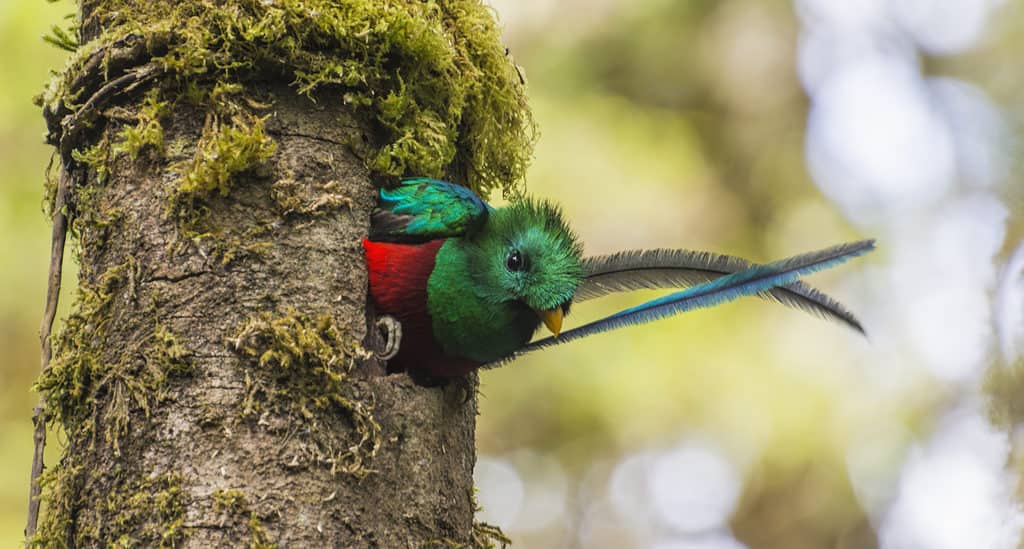
Resplendent quetzal poking out from its nest in a tree.
©iStock.com/Kris Meaney
The Quetzal is an omnivorous animal that is a skilled hunter, swooping down and catching its prey before eating it, whilst still in the air. They have a predominantly fruit-based diet and particularly favor small avocado-like fruits that belong to the laurel family, and are known to gather in vast numbers around fruiting trees.
When fruits are scarce, the Quetzal also eats small animals, including Insects and lizards, along with frogs, snails, and larvae to provide it with the nutrition that its body needs. The Quetzal plays a vital role in maintaining its surrounding environment as the seeds from fruits and berries are spread throughout the forest in their droppings.
Predators and Threats
Even though the beautifully colored feathers of the Quetzal provide this bird with good camouflage in the forest, they are not particularly strong flyers and instead rely more on hopping between the branches.
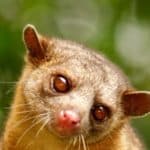
The Quetzal is therefore relatively easy prey for other tree-dwelling animals and is preyed upon by mammals such as the Kinkajou, along with squirrels and birds of prey, including hawks and owls.
The biggest threat, however, to the existing Quetzal population is the loss of habitat as human settlements and agriculture encroach more and more and their native habitats. The Quetzal is also commonly captured to be kept in captivity as a tourist attraction, although few survive in these conditions.
Interesting Facts and Features
Although the male Quetzal is most distinctively known for its incredibly long tail feathers, they do not begin to grow until they are at least three years old, with many Quetzal individuals not reaching sexual maturity until they are nearly six.
The Resplendent Quetzal is also commonly known as the Guatemalan Quetzal and is not only the nation’s national symbol, but the currency used in Guatemala is actually known as the “quetzal”. The Quetzal belongs to the ‘Trogon’ family of birds, which is the Greek word for “gnawing”, which is a distinctive trait of these birds.
Relationship with Humans
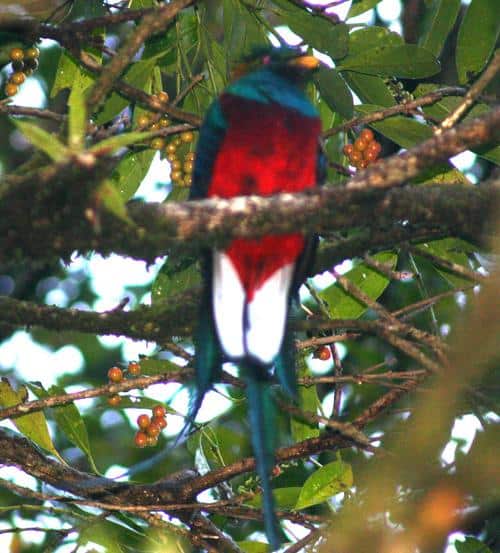
A Quetzal sitting in a tree.
©Oliver Castaneda / Flickr – Original
The Quetzal was seen as a sacred animal to ancient native people, including the Aztecs and the Maya, and was often referred to as The Rare Jewel Bird of the World, along with regularly being depicted in native art.
The long, bright tail feathers of the males were also used in garments worn by royalty, in particular. Today, however, although the Quetzal is still a treasured species in many countries, including both Guatemala and Costa Rica, their numbers are declining due to both human interference in their natural habitats and the capture of them to be displayed in captivity.
Conservation Status and Life Today
The Quetzal is considered to be a species that is threatened in its surrounding environment, as population numbers in their distinctive habitats have been falling.
Although there are protected areas of forest where the Quetzal cannot be disturbed, they are becoming ever-popular tourist attractions both for bird watchers and animal institutions. The Quetzal, however, does not survive very successfully in a captive environment, meaning that they are captured in the wild on a fairly regular basis, leading to declining population numbers in certain parts of their natural range.
Quetzal Pictures
View all of our Quetzal pictures in the gallery.

How to say Quetzal in ...
Sources
- David Burnie, Dorling Kindersley (2011) Animal, The Definitive Visual Guide To The World's Wildlife / Accessed August 4, 2011
- Tom Jackson, Lorenz Books (2007) The World Encyclopedia Of Animals / Accessed August 4, 2011
- David Burnie, Kingfisher (2011) The Kingfisher Animal Encyclopedia / Accessed August 4, 2011
- Richard Mackay, University of California Press (2009) The Atlas Of Endangered Species / Accessed August 4, 2011
- David Burnie, Dorling Kindersley (2008) Illustrated Encyclopedia Of Animals / Accessed August 4, 2011
- Dorling Kindersley (2006) Dorling Kindersley Encyclopedia Of Animals / Accessed August 4, 2011
- Christopher Perrins, Oxford University Press (2009) The Encyclopedia Of Birds / Accessed August 4, 2011
- National Geographic / Accessed August 4, 2011
- Encyclopedia / Accessed August 4, 2011
- Animal Diversity Web / Accessed August 4, 2011
- Rainforest Animals / Accessed August 4, 2011