
Quick Take
- Chameleons don't always change color to hide, so what are they actually doing? See what color change really does →
- One chameleon spends more of its life inside an egg than outside it, and the math behind that fact is stranger than you'd expect. Explore the strange life cycle →
- Chameleon bones do something under UV light that scientists didn't discover until recently, a fact the chameleons themselves already knew. See the glowing bones →
- A chameleon missing for over a century just turned up, and it was not where anyone was looking. Read about the rediscovery →
Chameleons are primarily arboreal lizards that belong to the family Chamaeleonidae. Their astonishing color-changing skin and lightning-fast tongues make them some of the most unusual lizards in the world. Yet, did you know that one type of chameleon lives longer in its egg than outside of it? Or that their bones glow in the dark? Jump into our list of incredible chameleon facts.
The Smallest Chameleon in the World Is Seriously Tiny
Brookesia nana, commonly called the nano chameleon, is the tiniest chameleon species of all. Nano chameleons are so tiny that their entire body can fit on a fingertip. About the size of a sunflower seed, measuring 0.85 inches long, scientists believe their small size is due at least in part to extreme miniaturization, an evolutionary process that some animals go through to adapt to environments with diminished amounts of space or resources.
There have only been two sightings of B. nana to date: one male and one female. Scientists confirmed these animals were adults by observing the female’s ovaries, where eggs were found, and the shape of the male’s genitals, which is used to determine the sex and maturity of chameleons.
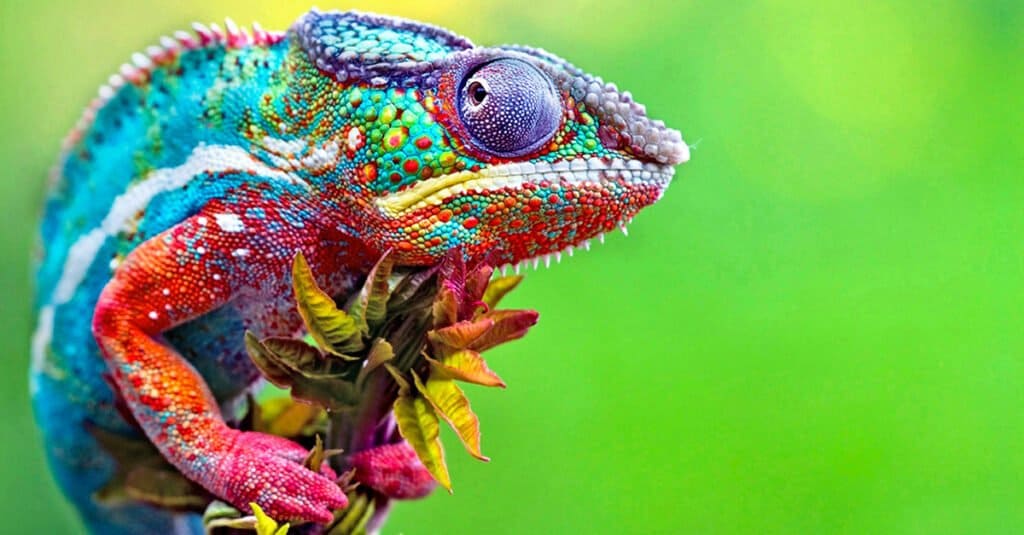
Chromatophores are the color-changing pigments chameleons use to regulate their body temperature.
©Graphics Illuminate/Shutterstock.com
Labord’s Chameleon Spends Most of Its Life as an Egg
Labord’s chameleons (Furcifer labordi) spend more time incubating inside their egg than they spend in the wild. These incredible creatures spend 8-9 months developing before hatching, only to spend a surprisingly short life of outside of their eggs. Their post-hatching lifespan of just four to five months makes them one of the shortest-living animals on the planet.

Labord’s chameleon has the shortest lifespan of any land vertebrate.
©irinaroma/Shutterstock.com
Most Chameleons Don’t Change Colors to Blend In
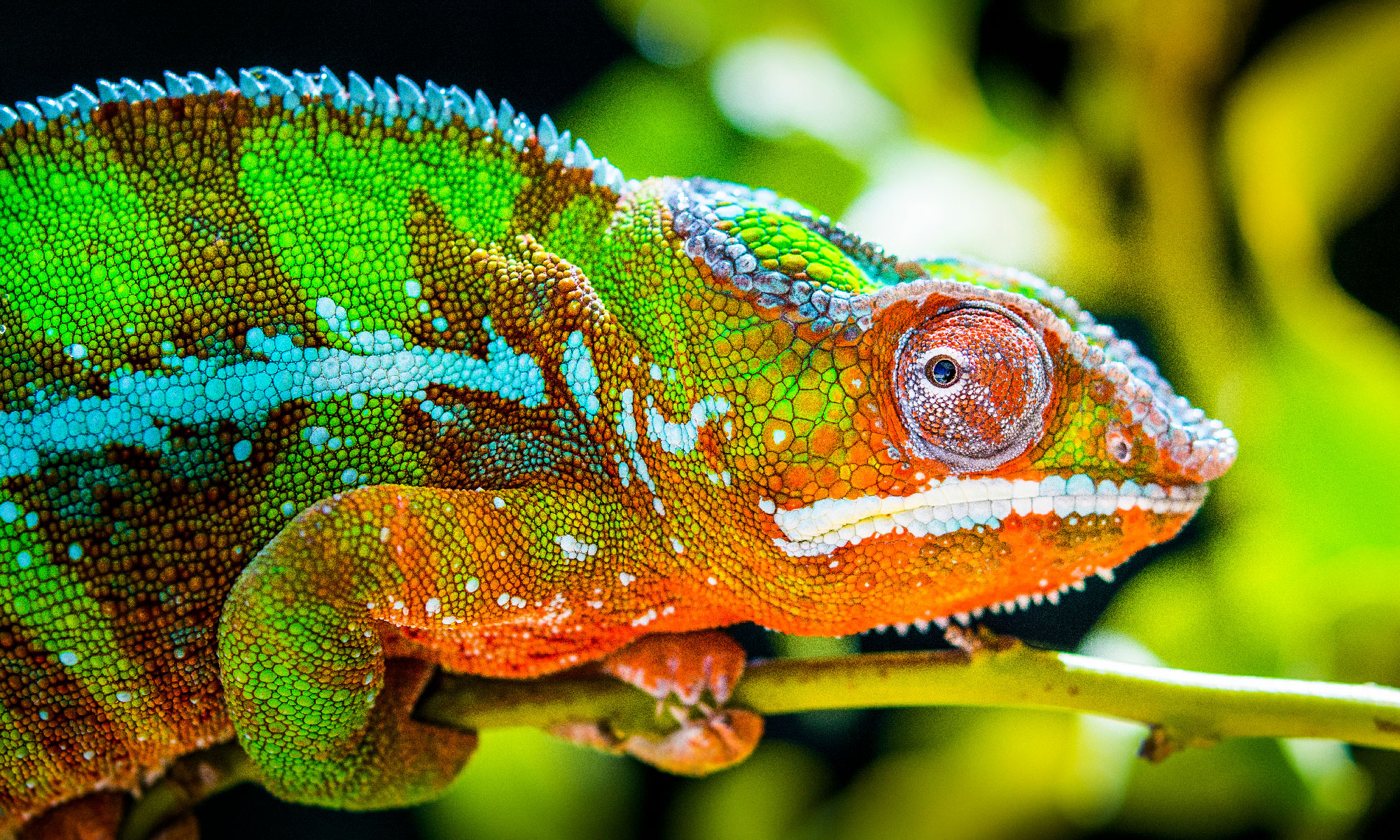
If you’ve ever seen Monsters, Inc., you know Randall, the chameleon-like lizard that changes his color to hide from unsuspecting children. You might be surprised to learn, though, that chameleons don’t just change their color to blend into their surroundings. Many chameleons are limited to just a few colors, which makes blending into unlimited backgrounds a challenge. Chameleons can also use their extraordinary color-changing abilities to communicate with other chameleons, reflect their mood, and even regulate their body temperature.
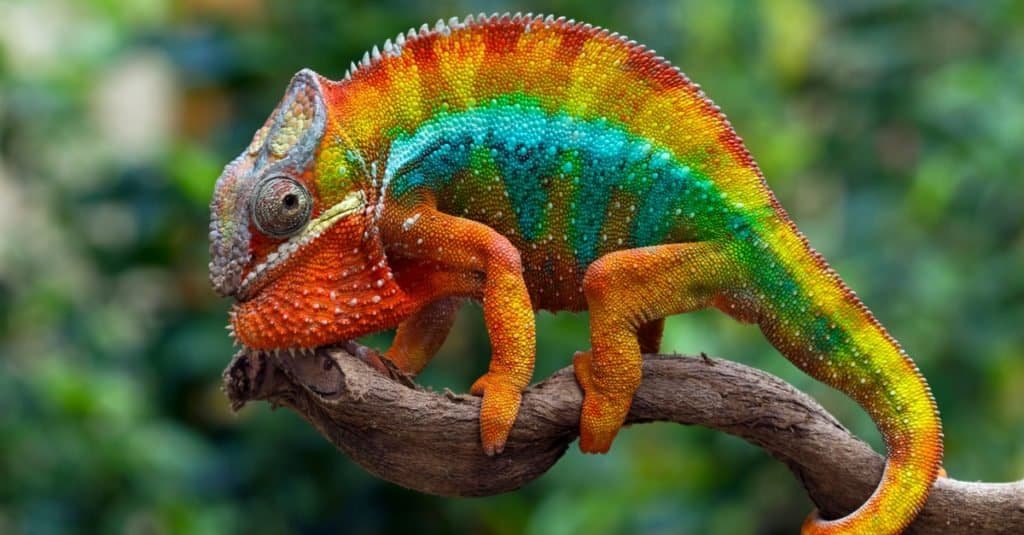
Panther chameleons also change colors for mood, thermoregulation, and communication.
©Kurit afshen/Shutterstock.com
Chameleons Don’t Have Ears
Chameleons have very poor hearing, but like snakes, they possess the incredible ability to feel sounds. Since they lack ears and eardrums, they must instead rely on vibrations to identify threats in the world around them. Chameleons feel sound as low-frequency vibrations through bone conduction. Researchers believe that some chameleons may also produce vibrations to communicate.
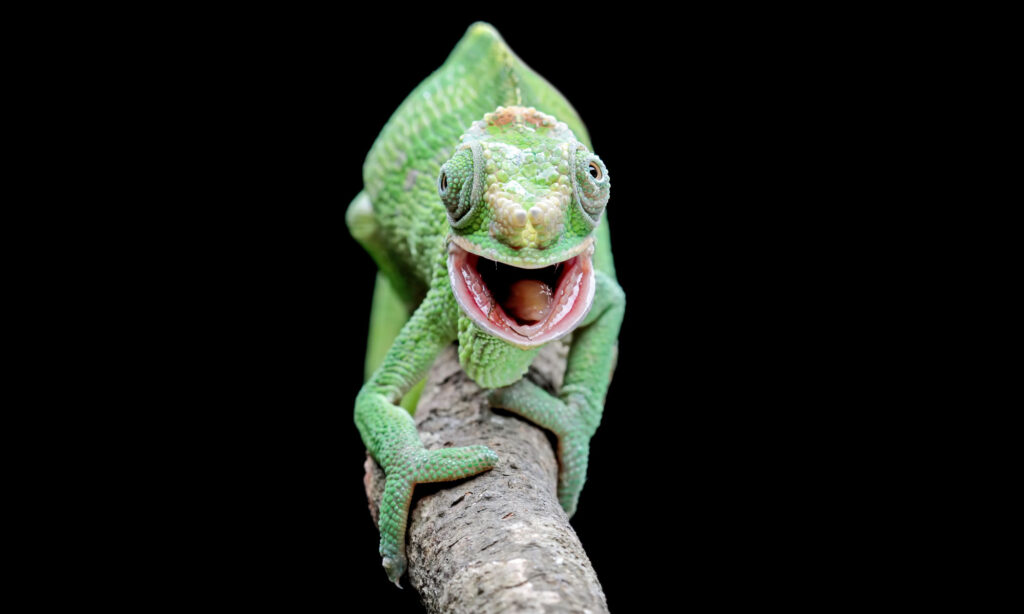
Because chameleons lack ears, they must rely on feeling vibrations to identify threats.
©Agus_Gatam/Shutterstock.com
Chameleons Are at Least 100 Million Years Old
Fossils found by scientists in 2016 suggest that chameleons date back to the time of dinosaurs! One lizard was found trapped in amber that dates back 100 million years at minimum. That’s an astounding 78 million years older than specimens found before. This prehistoric chameleon did not have the fused toes of today’s chameleons, but clues in its jaw indicated that it shared the projectile tongue.
Fossil discoveries show that chameleon-like reptiles date back nearly 100 million years.
©Baishev/Shutterstock.com
These Tiny Chameleons Vibrate to Ward Off Predators
Brookesia and Palleon chameleons are among the tiniest chameleons in the world, measuring 3 inches or smaller. An evolutionary trait allows these miniature chameleons to defend themselves by vibrating their bodies. Scientists believe that these chameleons use vibration to startle enemies into dropping them. It is thought that these vibrations originate in the muscles between a chameleon’s ribs.
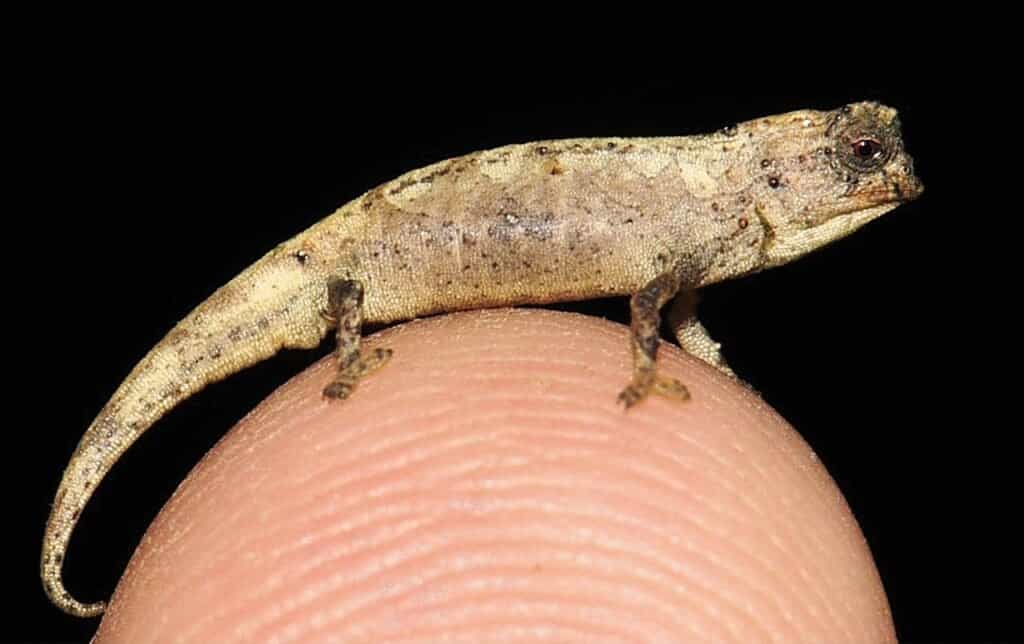
The Brookesia chameleon, one of the tiniest chameleons in the world, vibrates its body to defend itself.
©Frank Glaw, Jörn Köhler, Oliver Hawlitschek, Fanomezana M. Ratsoavina, Andolalao Rakotoarison, Mark D. Scherz & Miguel Vences / Creative Commons – Original / License
The Voeltzkow’s Chameleon Recently Reappeared After Going Missing for More Than 100 Years
If you’ve ever lost something for a long time, you can imagine the excitement scientists felt upon rediscovering a chameleon that hadn’t been spotted in 107 years. An expedition team from the conservation group Re:Wild located Voeltzkow’s chameleon in Madagascar in 2018. Much to their surprise, this chameleon wasn’t found in the forest; instead, they found three males and 15 females in an overgrown hotel garden.
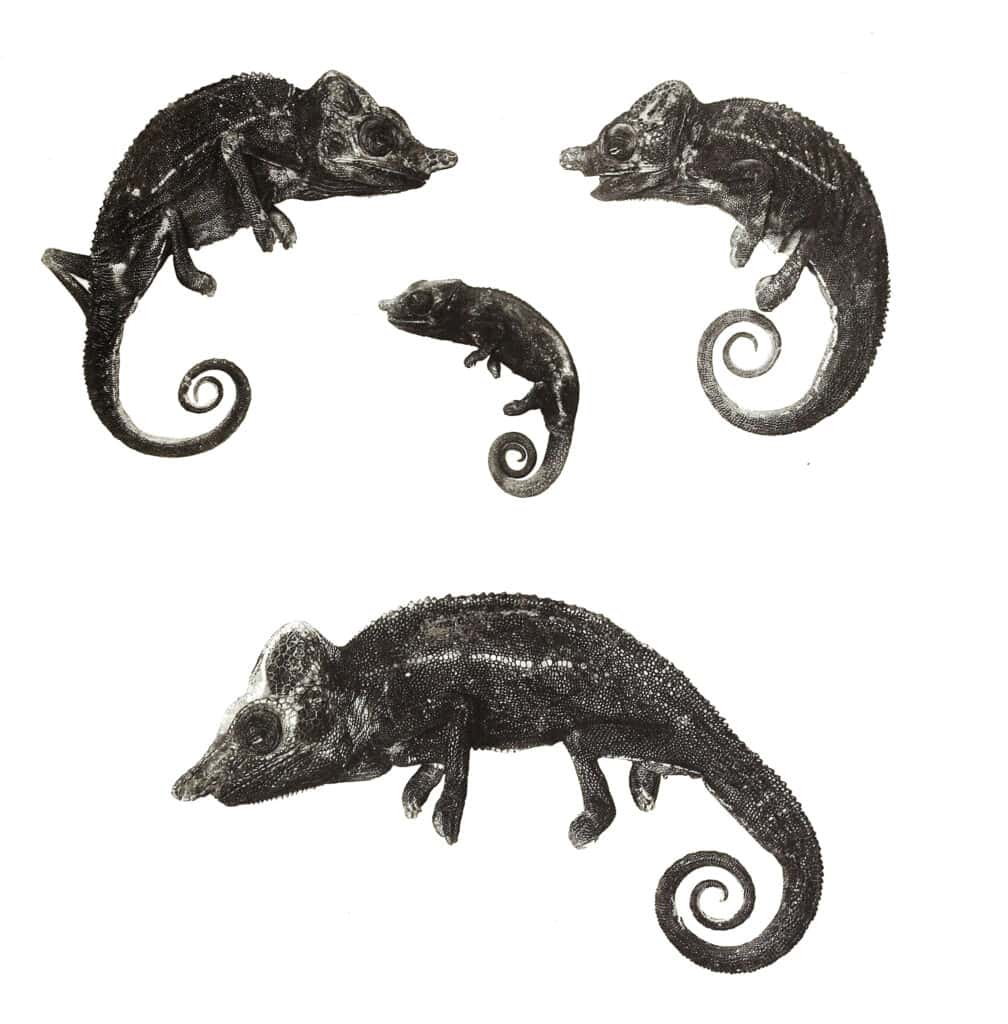
Voeltzkow’s chameleon was rediscovered in 2018 after being thought extinct for 107 years.
Chameleons Are Nearly Blind in the Dark
Have you ever experienced temporary blindness when you walk out of a bright room and into a dark one? This is the chameleon’s experience each night, except their eyes never adjust to the darkness. Since the photoreceptors in their eyes are made up of more cones than rods, they have sharp daylight and color vision, along with the ability to see ultraviolet (UV) light. However, since they have very few rods, they have poor night vision. When it’s dark outside, their eyesight is diminished to near blindness.
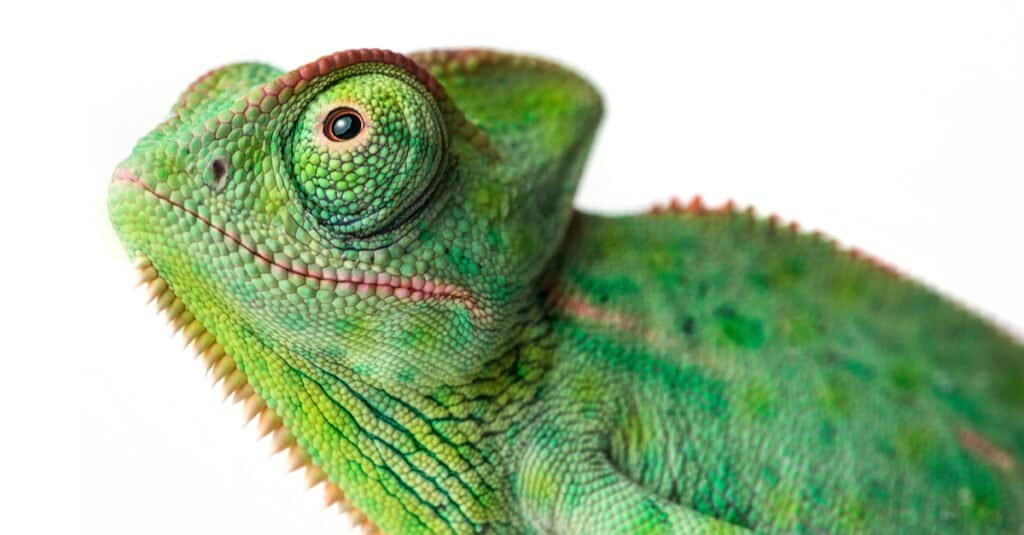
The eyes of a chameleon mostly view the world by color, so their vision is compromised in the dark.
©Kuttelvaserova Stuchelova/Shutterstock.com
Chameleons’ Bones Glow in the Dark
On our list of chameleon facts, the fact that their bones glow is possibly the most surprising. Have you ever seen a velvet poster glow under a blacklight? That’s what scientists realized chameleon bones could do under UV light. During the study, scientists discovered that when exposed to UV light, chameleons’ bones shone different shades of blue, visible through their skin. If that wasn’t exciting enough, they also observed entire patterns across chameleons’ skin that weren’t visible to the naked eye.
This is even more interesting because chameleons can see UV light with the naked eye, an ability that humans lack. This suggests that chameleons see each other in an entirely different light than we do, .

A chameleon’s bones glow in the dark.
©Kurit afshen/Shutterstock.com
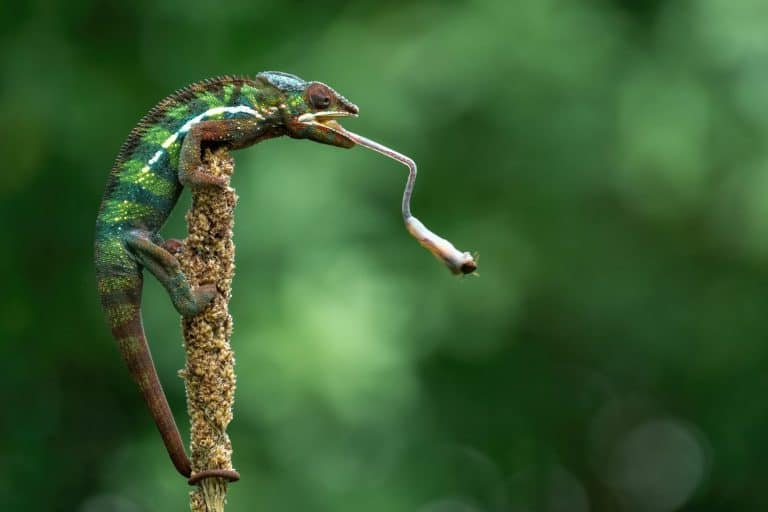
One Chameleon’s Tongue is Faster than the Fastest Sports Car
The rosette-nosed pygmy chameleon (Rhampholeon spinosus) from Tanzania might be tiny, but its tongue packs a powerful punch. Launching at an impressive 8,500 feet second squared (ft/s²), the speed of this chameleon’s tongue is faster than space shuttles and jet fighters. What’s even more interesting is that this chameleon’s tongue gives it one of the fastest accelerations of any animal on the planet.

A rosette-nosed chameleon has a tongue faster than a sports car.
©Ferdy Timmerman/Shutterstock.com
Scientists Found a New Population of Nearly Extinct Chameleons
One of the world’s rarest reptiles, the Belalanda chameleon (Furcifer belalandaensis), is making headlines for what appears to be a magician-level feat: disappearing for months before turning up somewhere else entirely. The critically endangered reptile lives in a very tiny, 1.5-square-mile area of Madagascar. However, within this known habitat, scientists had not seen any individuals since November of 2024. Then, miraculously, three Belalanda chameleons were discovered in the PK32-Ranobe protected area three miles away.
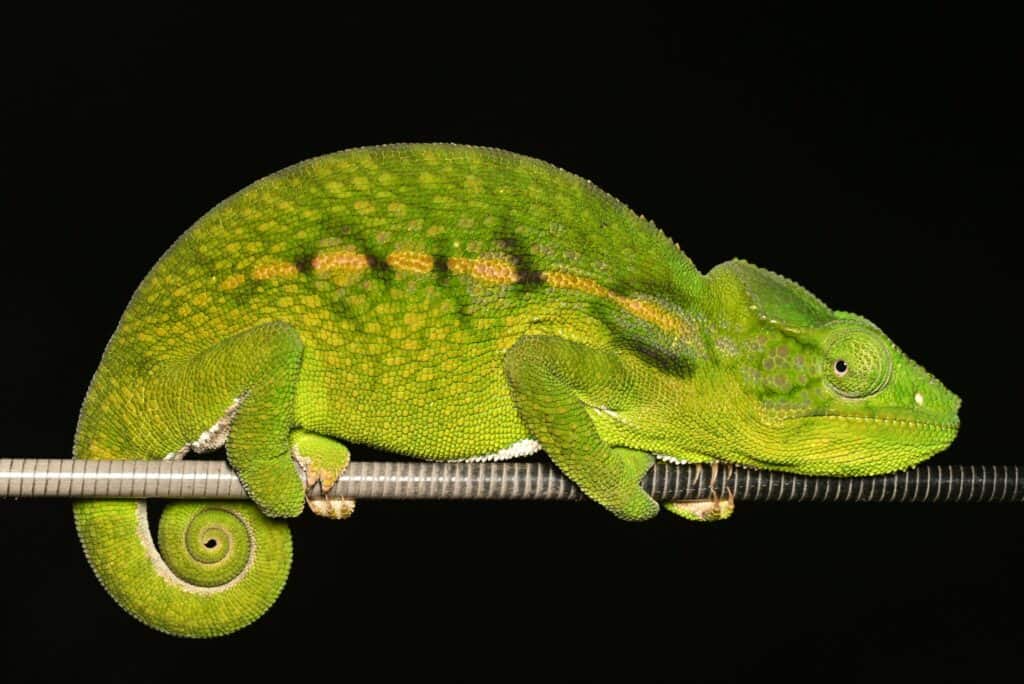
The Belalanda chameleon was historically confined to a tiny area near Belalanda in the Toliara region of Madagascar.