
Quick Take
- Animals have body parts that range from enormous organs to microscopic structures, showing how evolution shapes anatomy for survival.
- Giant structures include blue whale hearts, elephant ears, and giant squid eyes.
- Extremely small parts include hummingbird hearts, gecko foot hairs, and microscopic teeth.
- These extremes reveal how organisms adapt to different environments.
The animal kingdom stretches anatomy far beyond human expectations. Some creatures carry organs that rival furniture in size, while others rely on structures so tiny they can only be seen through a microscope. These extremes are not accidents. Each oversized or microscopic body part evolved to solve a specific survival problem, from pumping blood through a massive body to swallowing prey larger than your head. Looking at these structures side by side reveals just how vast the range of biological size can be.
The Blue Whale Heart: A Pump the Size of a Vehicle
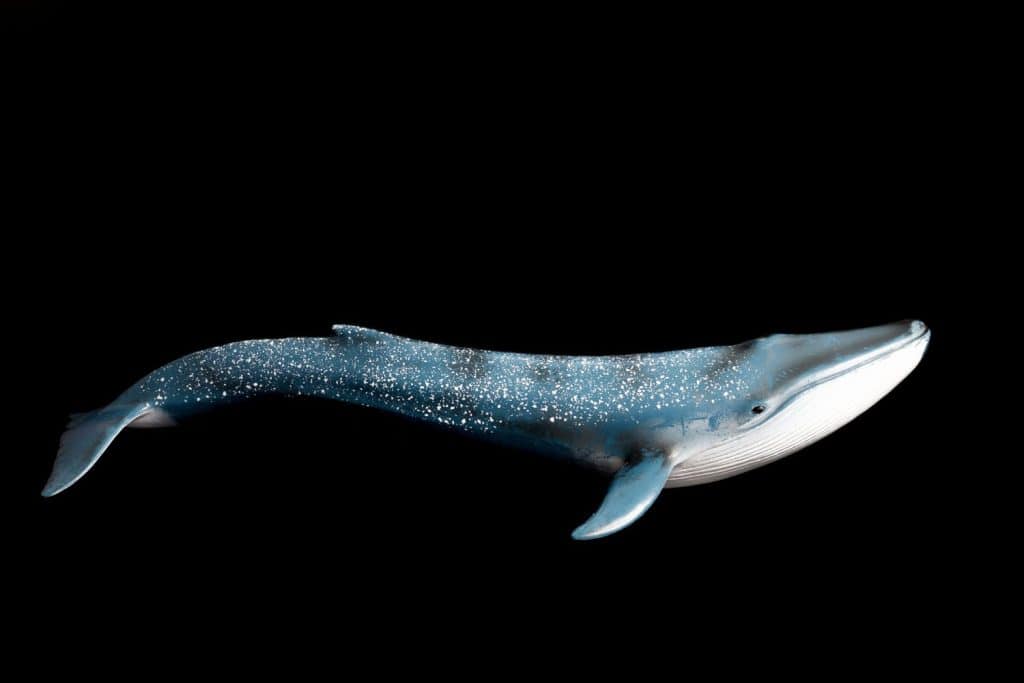
The blue whale’s heart is as large as a car engine.
©ARomadov/Shutterstock.com
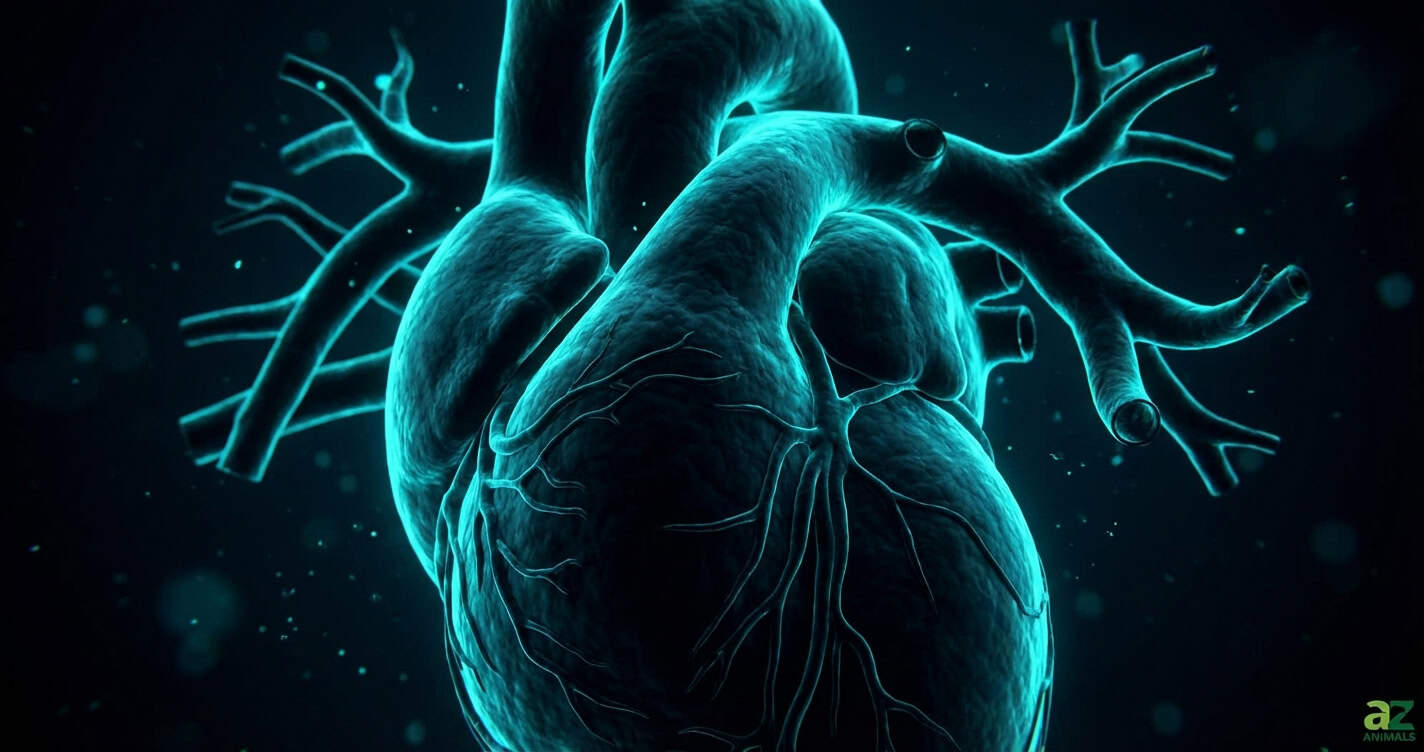
The blue whale possesses the largest heart of any known animal. This enormous organ can weigh about 400 pounds and measure roughly five feet tall. That size places it close to the dimensions of a compact car engine. Inside the whale’s chest, this massive pump drives blood through arteries that can exceed eight inches in diameter.
The heart’s scale reflects the size of the animal itself. Blue whales can grow longer than eighty feet and weigh more than one hundred tons. Moving oxygen through such a body requires tremendous pumping force. During deep dives, the whale slows its heart rate dramatically to conserve oxygen. When it returns to the surface and begins swimming again, the heart speeds up to restore circulation through the muscles.
A Tiny Wasp with a Brain Smaller Than a Dust Speck
The smallest known brains belong to tiny parasitic wasps of the genus Megaphragma. The entire insect is only about 0.2 millimeters long, roughly the size of a single-celled organism visible as a speck of dust. Their brain contains fewer than 10,000 neurons, compared with about 86 billion neurons in a human brain.

Megaphragma is a genus of parasitic wasps with microscopically tiny brains.
©Alexey A. Polilov, CC BY 4.0 , via Wikimedia Commons – Original / License
What makes Megaphragma even stranger is how its brain cells work. During development, many neurons lose their nuclei to save space. That means the adult insect operates with neurons that lack the central control structure most cells rely on. This adaptation allows the brain to fit inside a body barely larger than a grain of pollen.
Despite that tiny brain, these wasps can still fly, locate host eggs, lay their own eggs inside them, and navigate their environment, proving that complex behavior can occur with surprisingly small neural hardware.
Elephant Ears: Giant Cooling Surfaces
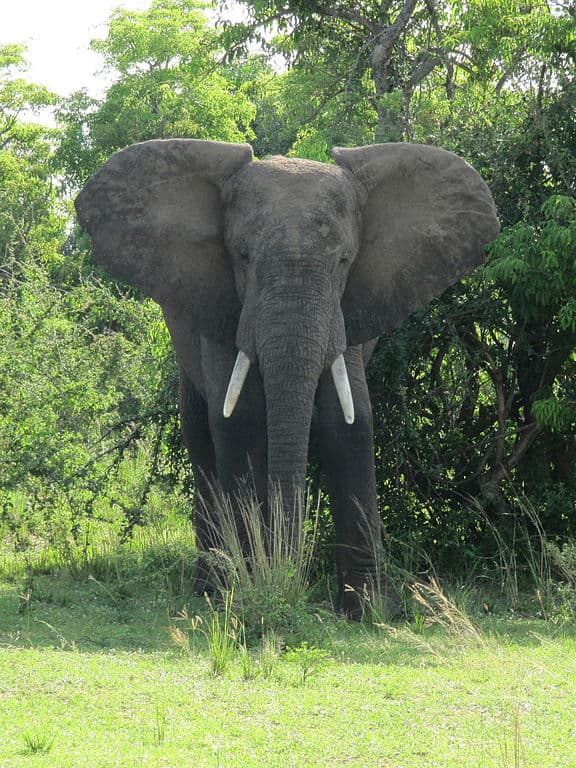
African elephants have ears the size of dining room tables.
©Daryona, CC BY-SA 3.0, via Wikimedia Commons – Original / License
African elephants carry some of the largest ears of any land mammal. A single ear may extend more than six feet long and four feet wide, about the dimensions of a dining room table. Beneath the thin skin lies a dense network of blood vessels that release heat as warm blood passes through them. When elephants flap their ears, airflow increases and cooling becomes more effective. This biological cooling system helps prevent overheating in the African savanna, which hovers around 95°F in the hottest time of year. Because elephants have enormous bodies that generate considerable heat, these large ears play a critical role in temperature control.
The Most Extreme Size Difference Between Males and Females
One of the most dramatic size differences between males and females of the same species occurs in Krøyer’s deep-sea anglerfish (Ceratias holboelli). Mature females can grow to about 4 feet long, making them among the larger predators living in the dark depths of the ocean. Males, however, are tiny by comparison. A male anglerfish measures only about 1 to 2 inches long and looks almost like a completely different species. Seen side by side, their length would be comparable to a paper clip next to a baseball bat.

This Danish stamp features a deep-sea anglerfish.
©Public Domain / Wikimedia Commons. – Original
This extreme difference exists because the male lives as a permanent parasite on the female. After finding a mate in the deep sea, the male attaches to the female’s body and gradually fuses with her tissues. Over time, he loses most of his organs and survives by sharing the female’s bloodstream. In this species, females can be about 60 times longer than males and roughly 500,000 times heavier, making it one of the most extreme examples of sexual size difference known in the animal kingdom.
Giant Squid Eyes: Dinner Plates Looking at You
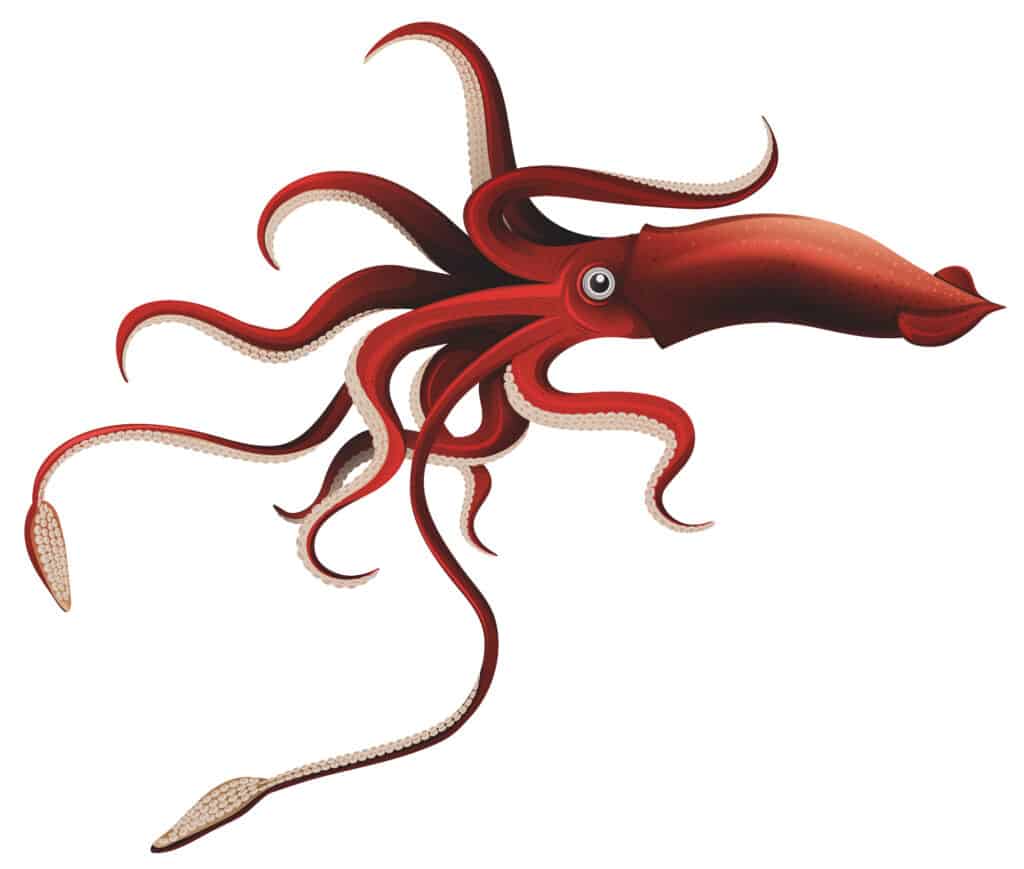
Giant squids are elusive and difficult to photograph. This artistic depiction shows clearly how large the eye is relative to the body.
©iStock.com/blueringmedia
The giant squid lives in deep ocean waters where sunlight rarely reaches. To detect faint movement and distant light, it has evolved some of the largest eyes found in the animal kingdom. Each eye can measure about ten inches across, close to the width of a dinner plate. Large eyes collect more light than smaller ones. In the dim deep sea, this ability helps giant squid detect the faint glow of bioluminescent animals. It also helps them sense approaching predators such as sperm whales. These enormous eyes function like extremely sensitive cameras designed for darkness.
The Giraffe Tongue: Two Feet Long, and Blue
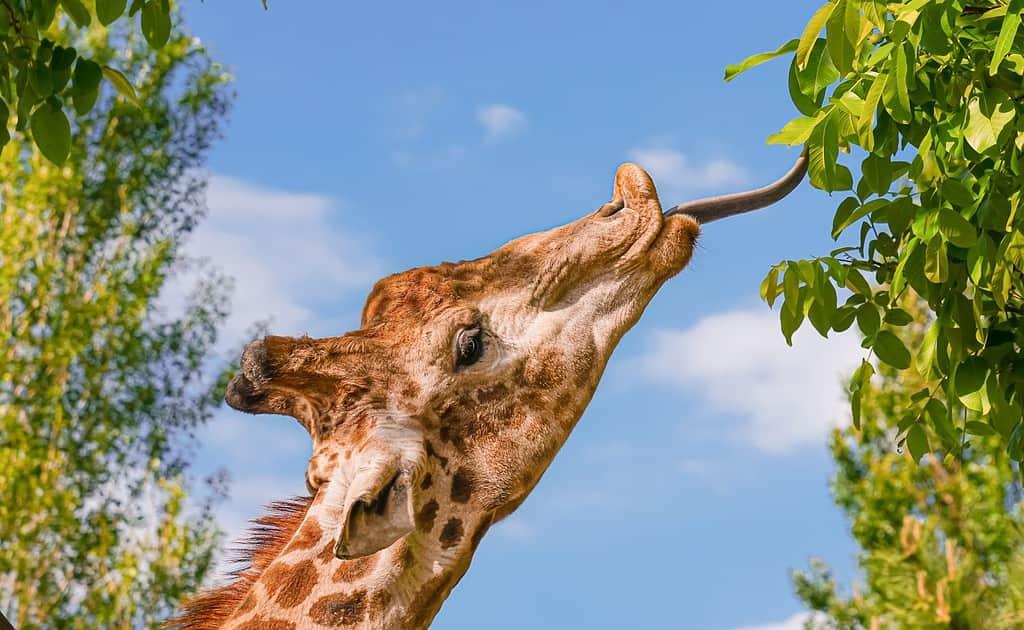
Giraffes use their long tongues to reach high leaves.
©marseus/Shutterstock.com
A giraffe’s tongue ranks among the longest tongues relative to body size in land mammals. It often measures between 18 and 20 inches long. This flexible structure acts almost like an extra hand while feeding. Giraffes browse on acacia trees filled with sharp thorns. The long tongue allows them to reach deep between branches to pull leaves free. Thick skin and sticky saliva protect the surface from injury. Dark blue pigmentation on the tongue may help reduce damage from sun exposure during long hours of feeding.
The Smallest Bird Egg
The smallest egg laid by any bird belongs to the bee hummingbird (Mellisuga helenae), a tiny species found in Cuba. A typical egg measures only about .4 inches long and weighs around a hundredth of an ounce. That is roughly the size of a coffee bean. Two of these eggs usually sit in a delicate cup-shaped nest built from plant fibers and spider silk.
Despite their tiny size, these eggs contain everything needed to produce a fully formed hummingbird chick. After about two to three weeks of incubation, the chicks hatch and begin growing rapidly. The eggs reflect the miniature scale of the bee hummingbird itself, which weighs less than a penny and measures only about two inches long from beak to tail.

A bee hummingbird sips nectar. It lays the smallest bird eggs.
©Wang LiQiang/Shutterstock.com
The Longest Bird Feather
Peacocks are famous for their enormous display feathers, which form the colorful fan seen during courtship. These feathers belong to the male Indian peafowl (Pavo cristatus). The longest feathers in the display, known as the train, can reach about 4 to 5 feet in length. A male may have more than 150 of these feathers, each ending in the familiar eye-shaped pattern. When the bird raises and spreads its train, the display can stretch several feet across, creating one of the largest feather displays among birds
While peacock feathers are among the longest found in wild birds, the record for extreme feather length belongs to a rare domestic breed from Japan called the Onagadori chicken. Males of this breed have a genetic mutation that causes their tail feathers to continue growing for many years, as the birds molt very slowly. With careful breeding and special care, these feathers have reached documented lengths of up to 20 feet, and there are unconfirmed reports of feathers reaching 27 feet. These unusual birds demonstrate how selective breeding can push feather growth far beyond what occurs naturally.

The Onagadori chicken has a genetic mutation that causes its tail feathers to grow up to 20 feet long.
©SARAWUT DEEPALA/Shutterstock.com
Python Jaws: A Mouth That Expands Far Beyond the Head
Large pythons possess jaws that stretch far wider than their heads. The lower jaw consists of two halves joined by flexible ligaments rather than a rigid bone. Additional joints in the skull allow the mouth to expand during feeding. This structure lets the snake swallow prey much wider than its own body. Large individuals have been documented consuming animals as large as deer. The equivalent for a human would be swallowing an entire Thanksgiving turkey and perhaps a whole watermelon for dessert.
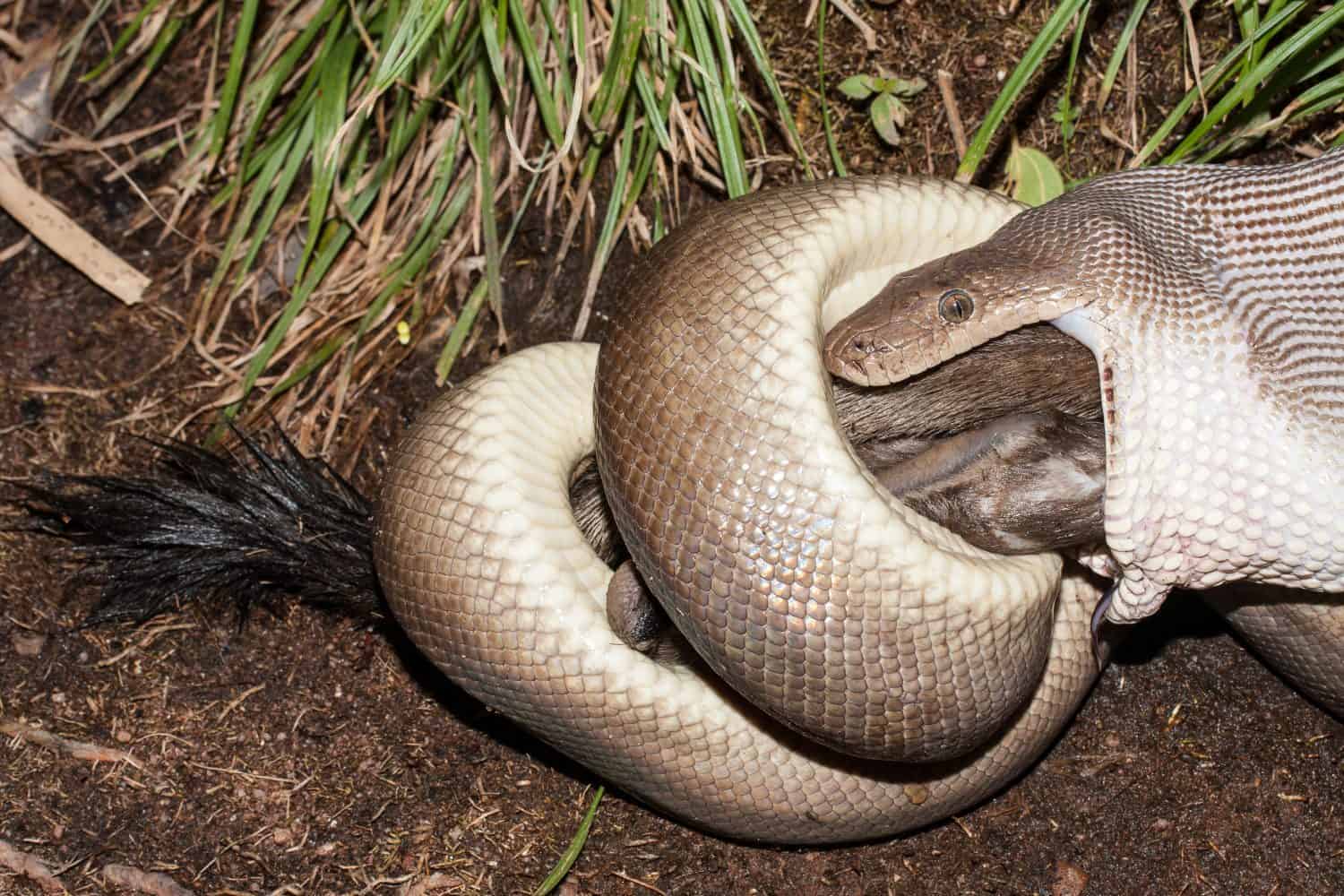
An olive python feeds on a rock wallaby with its massive jaws.
©Ken Griffiths/Shutterstock.com
The Narwhal: The Longest Tooth
The narwhal, a medium-sized Arctic whale, possesses one of the most unusual body parts in the ocean. The long spiral tusk seen in photographs is not a horn, but an enlarged canine tooth that grows straight through the upper lip. In most males, the left canine tooth continues to grow throughout life and can reach 8 to 10 feet in length. The tooth twists into a gentle spiral as it extends forward from the animal’s head.
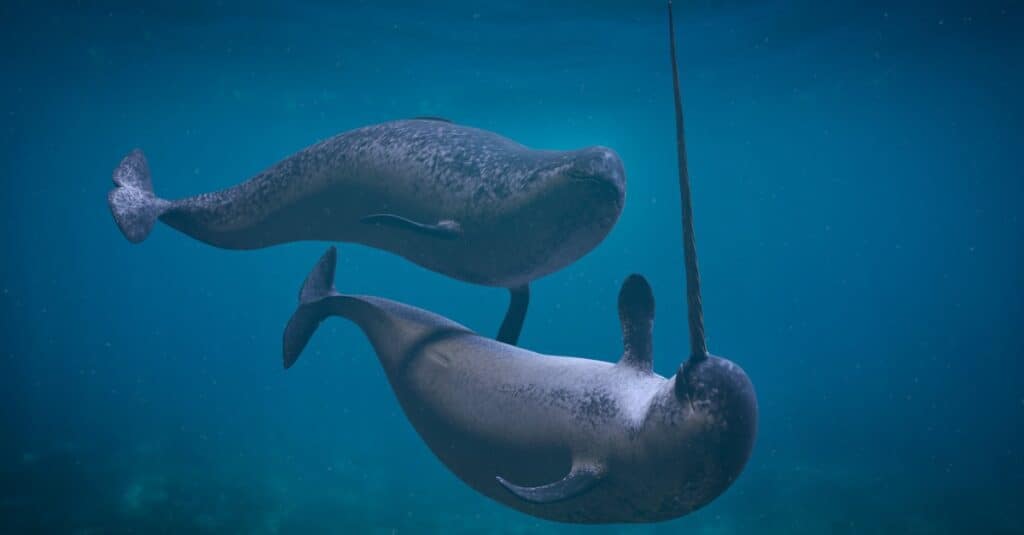
A narwhal’s horn is actually an overgrown tooth.
©iStock.com/dottedhippo
This tusk is hollow inside and filled with nerve endings that connect directly to the narwhal’s nervous system. Because of this, scientists believe the tusk works as a sensory organ rather than a weapon. The nerve network may help the whale detect subtle changes in the surrounding water, including temperature, pressure, and chemical signals. Although males sometimes rub tusks together in behavior called “tusking,” research suggests the tusk is used for a variety of purposes, including sensing the environment, social interactions, and manipulating prey.
The Microscopic Teeth of Limpets and Snails
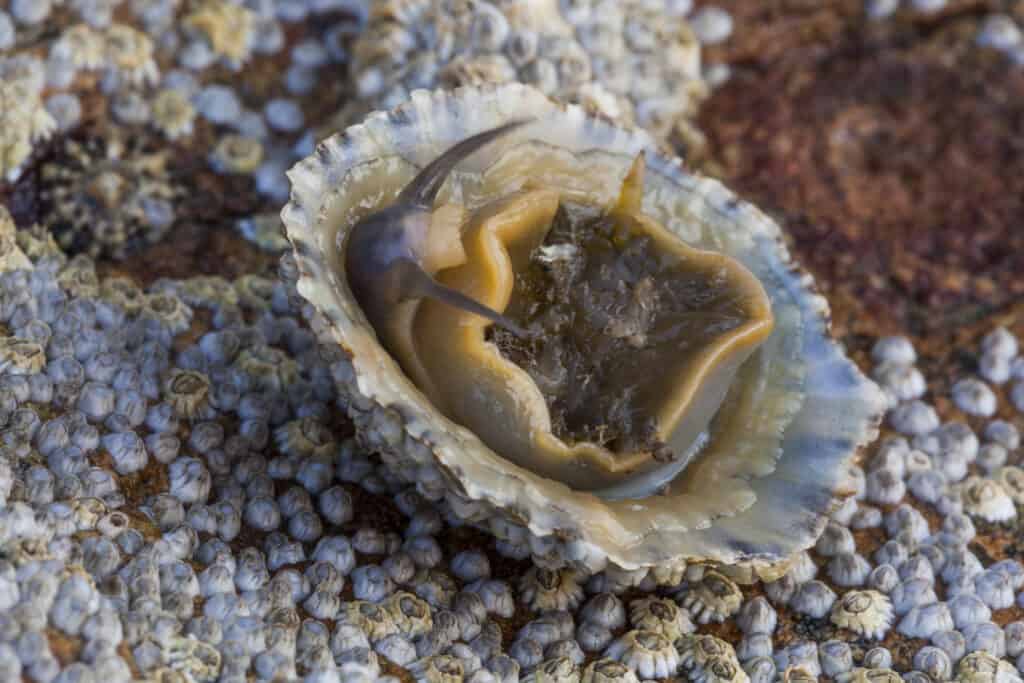
Limpets are found all over the world in intertidal zones and along rocky shores.
©Coxy58/Shutterstock.com
Some of the smallest true teeth in the animal kingdom belong to snails and limpets. These teeth do not sit in jaws like those of mammals. Instead, they grow on a flexible ribbon of tissue called a radula that functions like a scraping tongue. As the animal feeds, the radula moves back and forth across surfaces, allowing the tiny teeth to shave off algae and other food from rocks.
Each limpet tooth forms a curved, hardened point only a few micrometers long. That size makes them far thinner than a human hair and invisible without a microscope. The teeth are arranged in dense rows across the radula, creating a surface covered with hundreds or thousands of microscopic scraping points. Despite their small size, these teeth are extremely strong and help limpets grind away tough algae growing on rock surfaces.
The Widest Wings in the Animal World
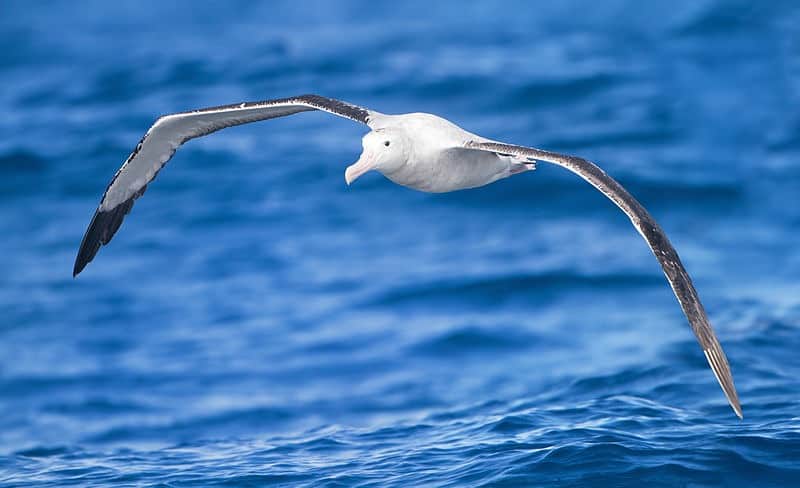
A wandering albatross in flight off Tasmania, Australia.
©JJ Harrison (https://tiny.jjharrison.com.au/t/fCEqOJC1cJUcoIOa), CC BY-SA 3.0, via Wikimedia Commons – Original / License
Among living birds, the wandering albatross holds the record for the largest wingspan. Adult birds can stretch their wings to 12 feet or more. That distance is wider than many small cars are long. These long, narrow wings allow the bird to glide across open ocean for hours with very little effort, riding air currents above the waves while searching for food.
If extinct animals are included, the title likely belongs to the giant flying reptile Quetzalcoatlus. Fossil evidence suggests its wingspan reached roughly 33 to 36 feet. That span is comparable to the width of a small airplane’s wings. Unlike modern birds, Quetzalcoatlus belonged to a group of reptiles called pterosaurs that dominated the skies during the age of dinosaurs.
The Extreme Range of Animal Anatomy
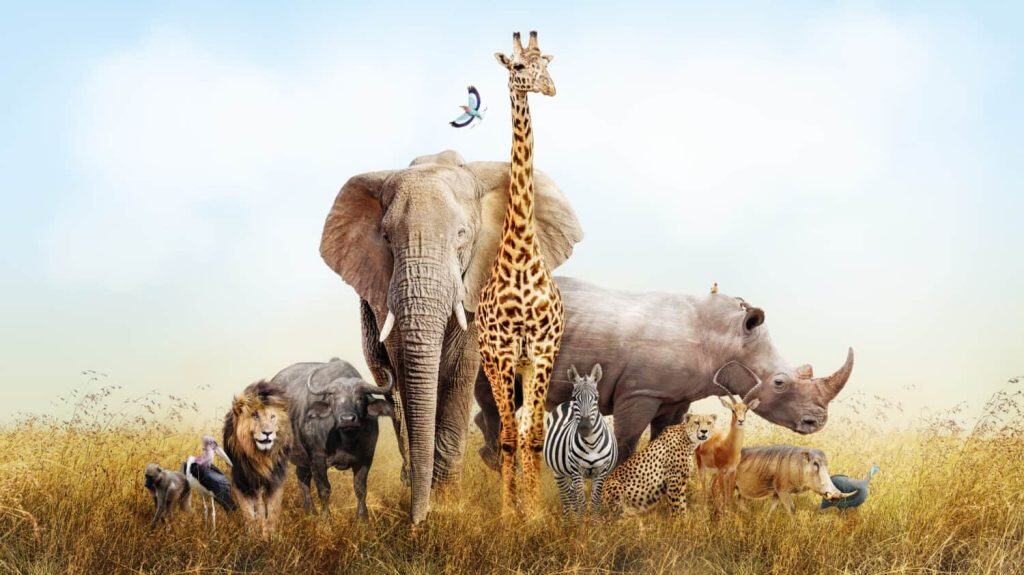
Animal anatomy is as diverse inside as it is outside.
©GoodFocused/Shutterstock.com
The animal kingdom spans an enormous range of anatomical sizes. Each structure reflects evolutionary pressures that shape bodies for survival in particular environments. Large organs often support animals with massive bodies or intense physical demands. Tiny structures allow small creatures to interact with surfaces and materials at scales humans cannot perceive. Studying these extremes reveals how life adapts across every level of size, from the giant to the microscopic.