
Quick Take
- New York lacks abundant dinosaur bones due to Mesozoic erosion and bedrock of metamorphic/igneous rocks that do not preserve fossils well.
- Rockland County footprints trace Atreipus and Coelophysis from about 200 to 215 million years ago, preserved on rock slabs at the New York State Museum.
- Eurypterus is the state fossil of New York, a Silurian sea scorpion whose fossils are abundant near Buffalo and in Herkimer and Oneida counties.
Fossils are more than just the fascinating bones of ancient animals. They’re important markers that tell the story of life in the distant past. Although Wyoming, Montana, Utah, Florida, and Colorado are known for their diverse dinosaur, marine, and ancient mammalian fossils, New York also has a relatively rich fossil record, primarily of marine life from the Paleozoic Era. New York lacks the abundant dinosaur bones found in other states because geological erosion and glaciation have worn away the ancient rock layers from the Mesozoic Era. Additionally, New York’s bedrock is dominated by older, non-sedimentary metamorphic and igneous rocks, which do not preserve fossils well. However, the state does contain some fossil evidence, particularly dinosaur footprints found in Rockland County, which are among the few remaining records of dinosaurs that lived in the area. Continue reading to learn what these footprints can tell us about the dinosaurs that once roamed New York.
Rockland County, New York Footprint Fossils

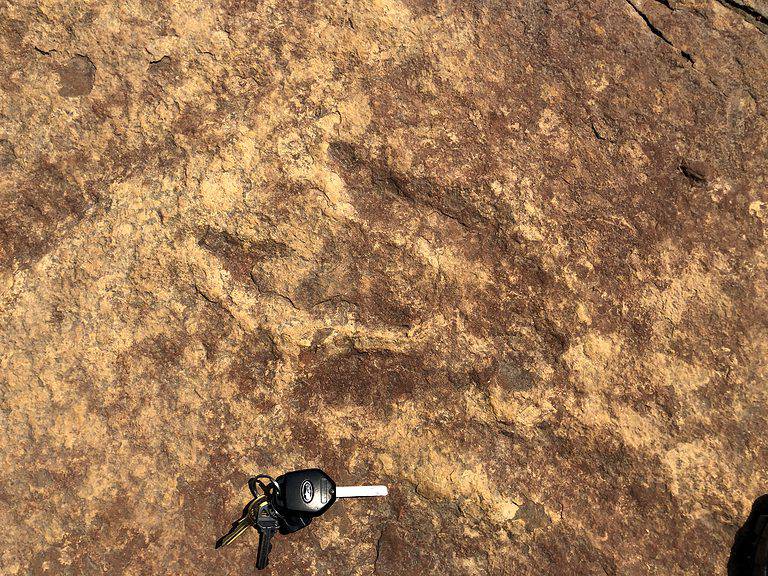
The Rockland County, New York, tracks may have looked similar to these Atreipus tracks discovered in Newark, New Jersey.
Dinosaur footprints were discovered in Rockland County, New York, in the early 1970s, specifically in the Blauvelt area around 1972. These tracks were made by small, bipedal dinosaurs that are thought to have been either plant-eaters or small meat-eaters.
Paleontologists have identified tracks from Atreipus, a plant-eating, dinosaur-like creature, possibly a silesaur, that was about the size of a large dog. These three-toed tracks, known as Grallator tracks, are believed to have been made by early ornithischian dinosaurs or similar dinosaur-like animals. These creatures were plant-eaters that sometimes walked on four legs. Evidence of Atreipus has been found in various locations across North America, Europe, and Africa.
The tracks are small, measuring between 4 and 5 inches. The footprints are from the Late Triassic or Early Jurassic periods, approximately 210 to 215 million years ago.
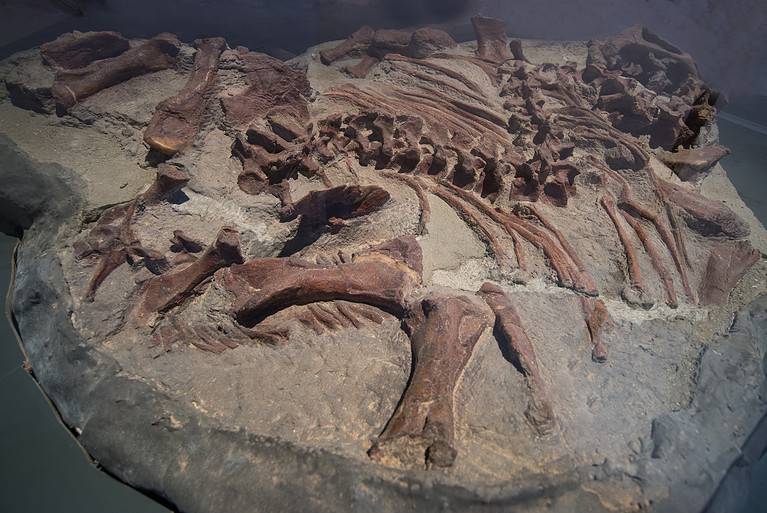
They were preserved in slabs of rock that have been moved to the New York State Museum in Albany.
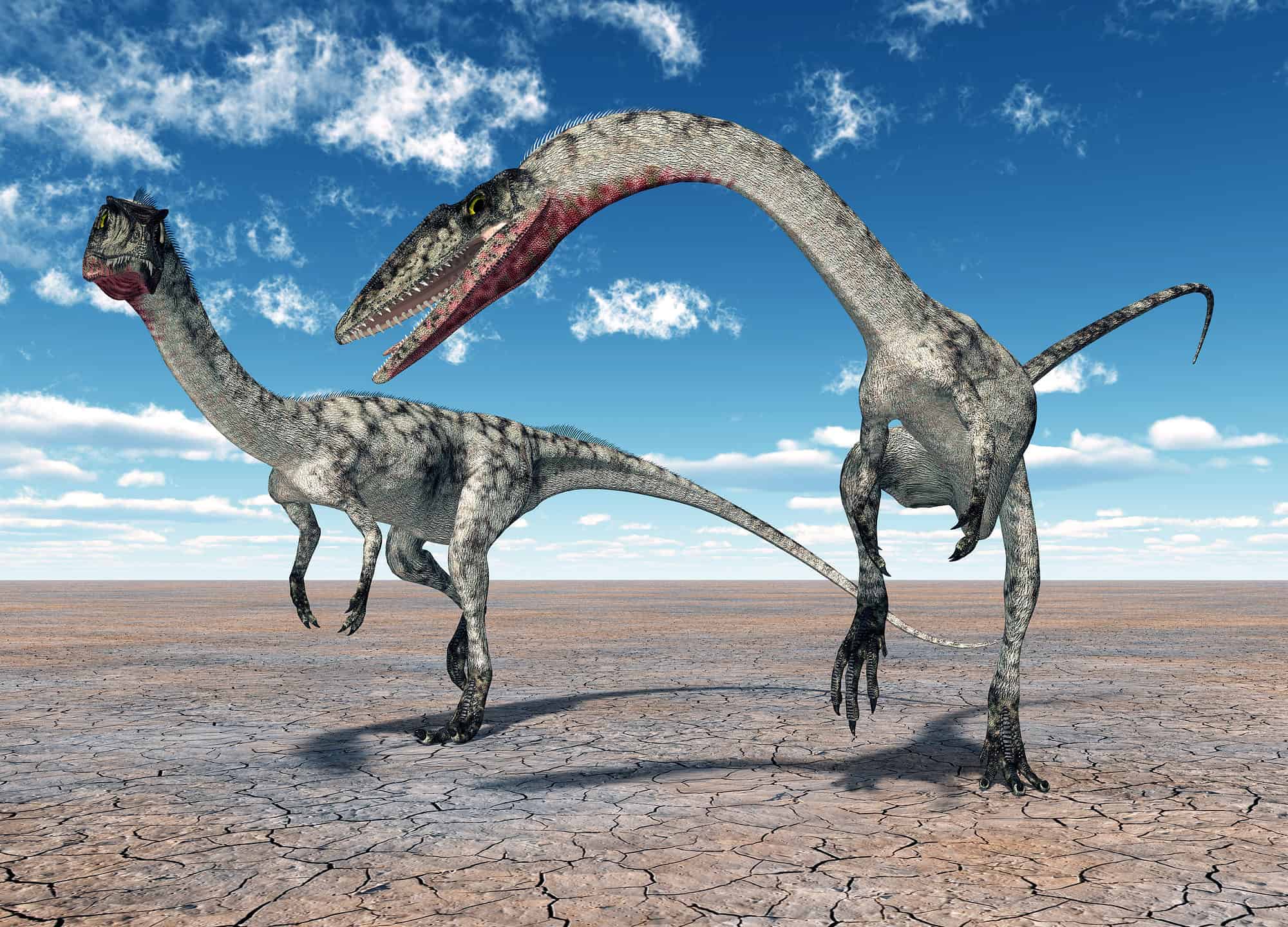
Coelophysis
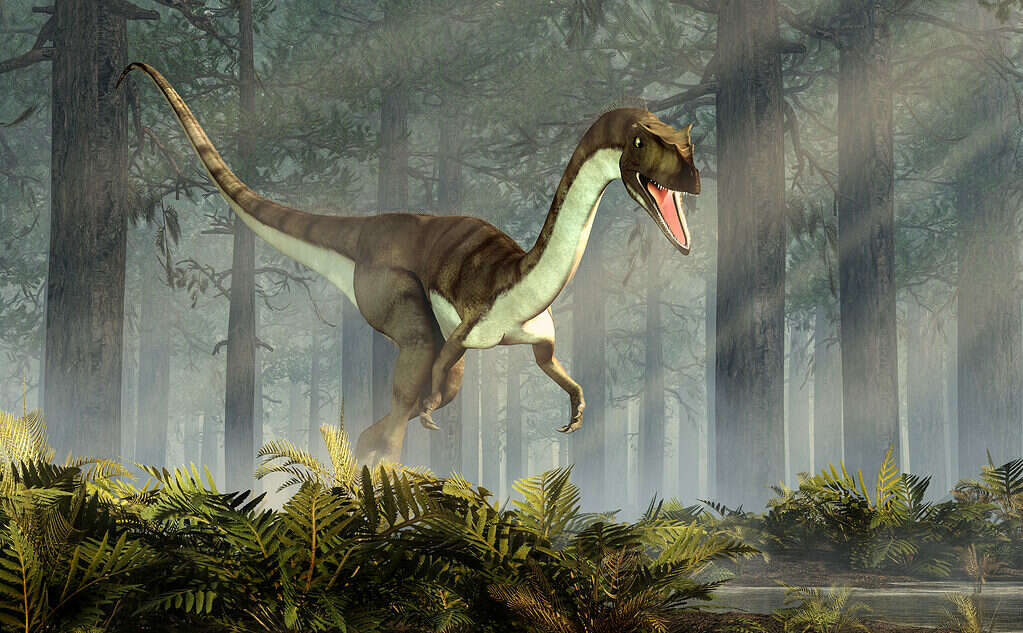
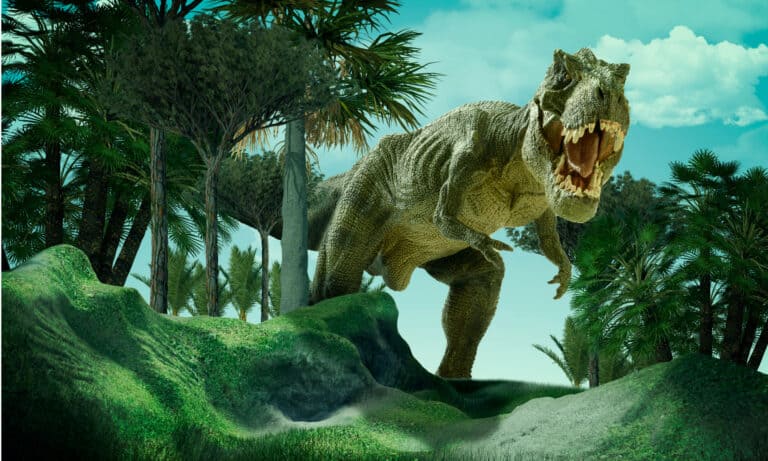
Dinosaur foot imprints have been recovered from rocks in New York, which may have been made by Coelophysis.
©Daniel Eskridge/Shutterstock.com
Paleontologists sometimes use evidence of the creature’s activity, such as footprints, to prove its existence. These are known as trace fossils, and they’re important markers. Numerous dinosaur footprints have been recovered from rocks in New York. A set of prints was discovered in 1972 on rock slabs in Albany, although it is uncertain to which species of dinosaur the footprints belong. However, there are speculations that the footprints were left behind by a Grallator, a type of carnivorous theropod, which includes the genus Coelophysis. Coelophysis was a carnivorous dinosaur that lived 200 million years ago. This falls within the Late Triassic and Early Jurassic periods. This relatively small dinosaur weighed between 40 and 50 pounds and was roughly 9.8 feet long. Coelophysis had a slender body and was probably one of the earliest terrestrial dinosaurs. It also had a long snout, neck, and tail. The predatory animal primarily fed on early mammals and smaller reptiles.
Fossils of this creature can be found in many parts of the world, including present-day North America. At the time, however, the continents were joined together as a single landmass known as Pangea.
The slab containing the dinosaur footprints is presently at the New York State Museum. You can visit to catch a glimpse of the Coelophysis footprint there. The Nyack Beach State Park also contains similar fossilized dinosaur footprints that date back to the Mesozoic Era.
Anchisaurus
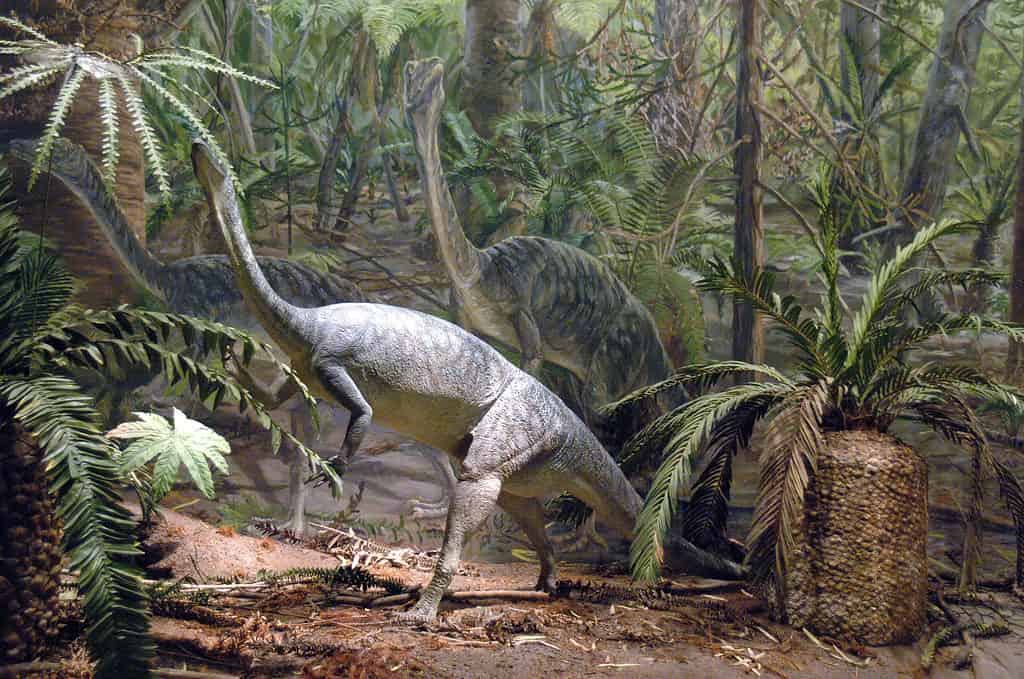
Anchisaurus was a relatively small dinosaur that lived in present-day New England.
©JERRYE AND ROY KLOTZ MD, CC BY-SA 3.0 <https://creativecommons.org/licenses/by-sa/3.0>, via Wikimedia Commons – Original / License
Anchisaurus was a small, herbivorous basal sauropodomorph dinosaur that lived during the early Jurassic period, between 200 to 195 million years ago. It was roughly 6.5 feet long, walked on four legs, but was capable of bipedal movement. Anchisaurus had blunt, square-shaped teeth for a plant-based diet. Though it was likely social and could stand on its hind legs to reach high vegetation, it was a relatively small and vulnerable dinosaur.
Although fossils of Anchisaurus have not been discovered in present-day New York, many have been found in neighboring Connecticut and Massachusetts. The first Anchisaurus fossil was found in a quarry in Connecticut in 1818. The remains were initially thought to be those of a human until the workers noticed the peculiar jaw and tail. The quarry workers, not knowing how important the discovery was, had already destroyed most of the bony remains. Fortunately, another fossil of the Anchisaurus was discovered in another part of Connecticut, which was more intact.
Anchisaurus fossils are on display at the Beneski Museum of Natural History at Amherst College in Massachusetts and the Peabody Museum of Natural History at Yale University in Connecticut.
Eurypterus
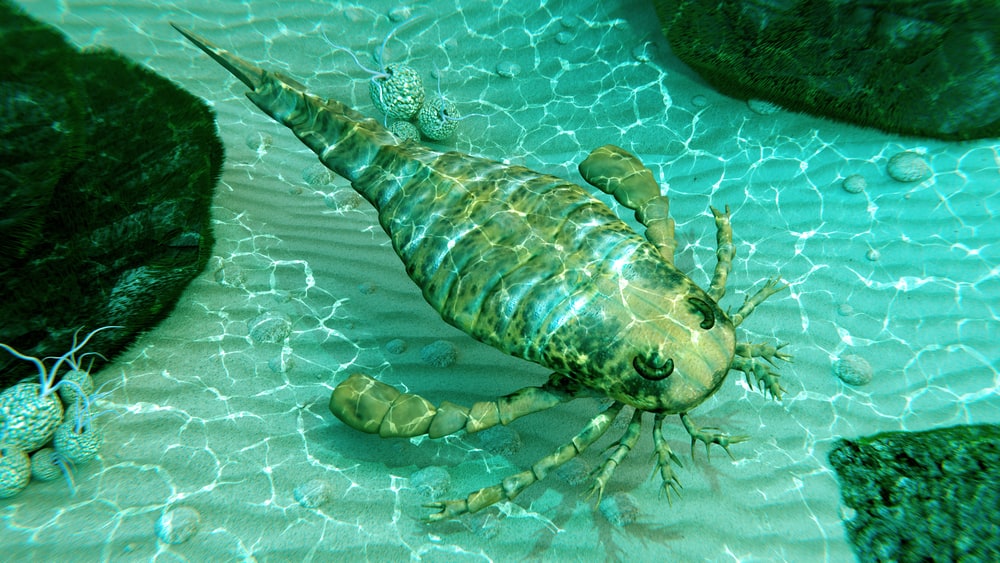
Eurypterus was one of the most fearsome underwater creatures to have lived in its time, referred to as the sea scorpion.
©Aunt Spray/Shutterstock.com
Eurypterus is the official state fossil of New York. It was designated the state fossil in 1984 because numerous fossils of this ancient marine creature have been found in the state, particularly near Buffalo and in Herkimer and Oneida counties. Although it’s not a dinosaur, this ancient creature deserves a spot on this list of ancient animals that lived in New York. Eurypterus was one of the most fearsome underwater creatures to have lived in its time. It is referred to as the sea scorpion but is only distantly related to modern-day scorpions.
Eurypterids lived during the Silurian Period, between 444 to 419 million years ago. The genus went extinct about 250 million years ago.
This fearsome predator is an arthropod related to modern-day horseshoe crabs, spiders, mites, ticks, and scorpions. Eurypterids have an uncanny resemblance to land scorpions thanks to their long tail (which had no stingers). The animal lived at a time when most of North America, including New York, was underwater. Their existence also predates that of many ancient sharks and reptiles. The diet of the Eurypterus would have included primitive invertebrates and fish that existed in the sea at the time.
The largest collection of the Eurypterus fossils is at the Yale Pebody Museum. The museum contains the most diverse collection of the Eurypterus species in large slabs collected from New York. Eurypterid fossils from other locations, like Ohio and Indiana, are present in this museum as well.