
Quick Take
- The aquarium's most notorious fighter has a version that can actually live peacefully with guppies, though one wrong move is enough to tank the whole setup. Female betta compatibility →
- One popular tank mate looks harmless but could end up on your guppies' menu, or your guppies could end up on its menu instead. Shrimp as tank mates →
- The best guppy companions might be fish that never even interact with them, and that is exactly the point. Bottom dwellers that coexist →
- Your guppy's tail shape could determine which tank mates are safe, something most owners never consider. Tail shape and fin nipping →
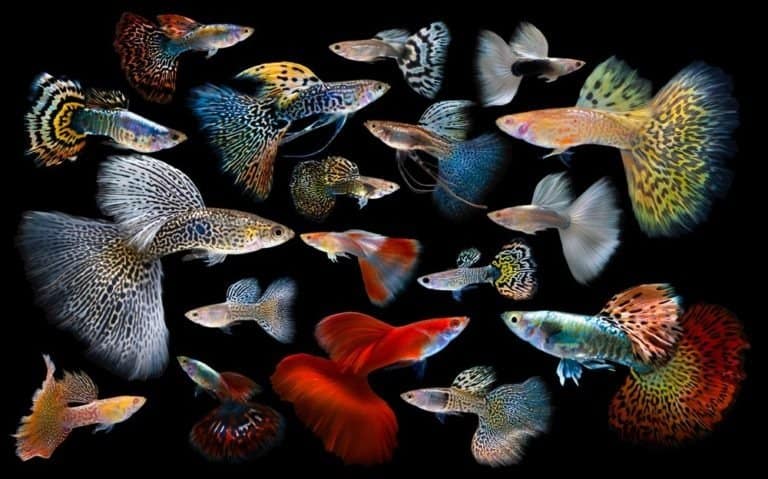
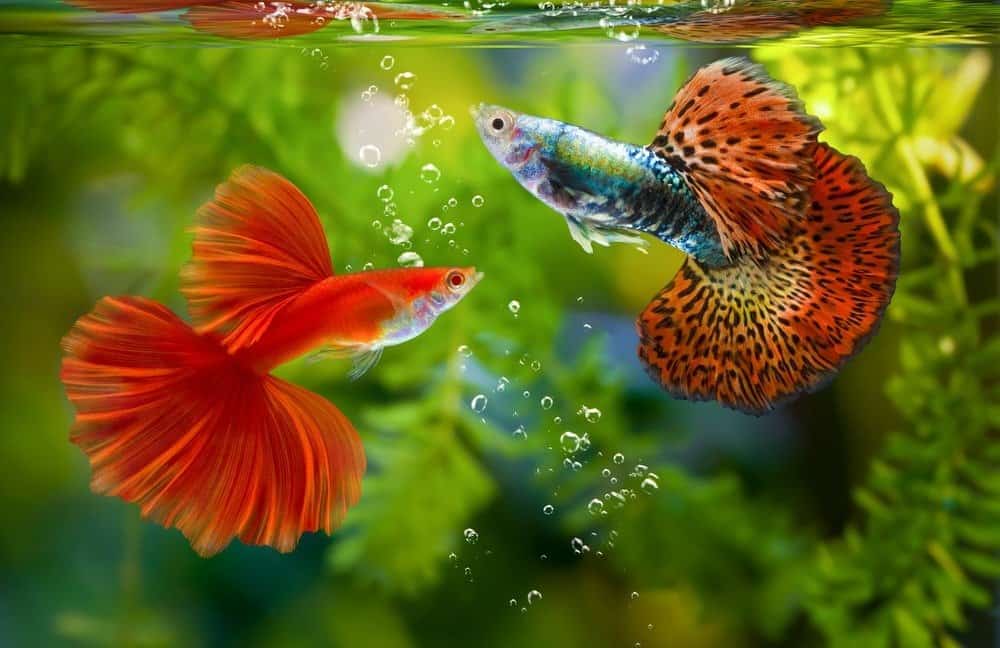
Almost all classic fancy aquarium guppies were originally derived from just one main wild species: Poecilia reticulata, which is found in freshwater environments in Northeastern South America and the Southern Caribbean. However, through selective breeding, there are now countless varieties of guppies, categorized by specific tail shapes and color patterns. Guppies are adaptable livebearers that are easy to care for. They are generally peaceful community fish that co-exist well with a variety of other popular freshwater aquarium fish. Continue reading to discover some of the best tank mates for guppies.
Mollies
Mollies (Poecilia sphenops) are a type of live-bearing fish in the same family as guppies. They grow to between 2 and 4 inches long and can be found in various colors, patterns, and fin shapes. Some of the most popular species of mollies are the balloon, sailfin, Yucatan lyretail, and shortfin, or common molly fish.
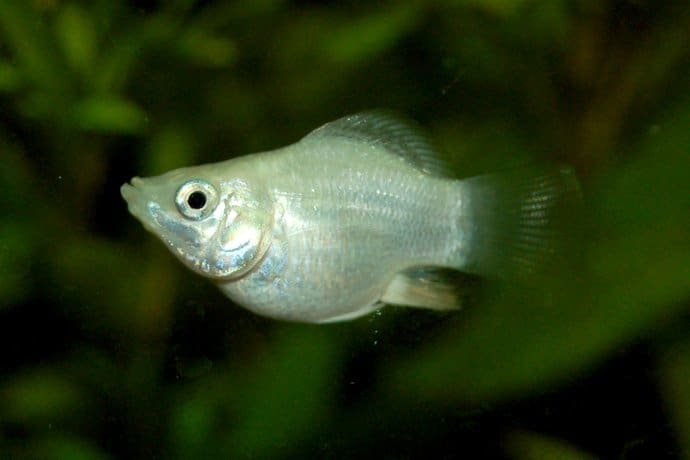
You can find molly fish in an assortment of fascinating colors.
©Marrabbio2 / Creative Commons – Original
Like guppies, mollies are tropical, freshwater fish. Guppies and mollies share highly compatible water needs, both thriving in hard, alkaline environments with a stable pH between 7.5 and 8.0, and temperatures between 76°F and 78°F. Mollies are endemic to slow-moving rivers and streams in the Southeastern United States through Central America and parts of Northern South America.
Platies
Platies (Xiphophorus) are live-bearing fish often confused with mollies. However, platies are slightly smaller, at only 3 inches long. There are different varieties of platies, although the Southern platy (Xiphophorus maculatus) is the most common and can be distinguished by three dark circles at the base of its tail.
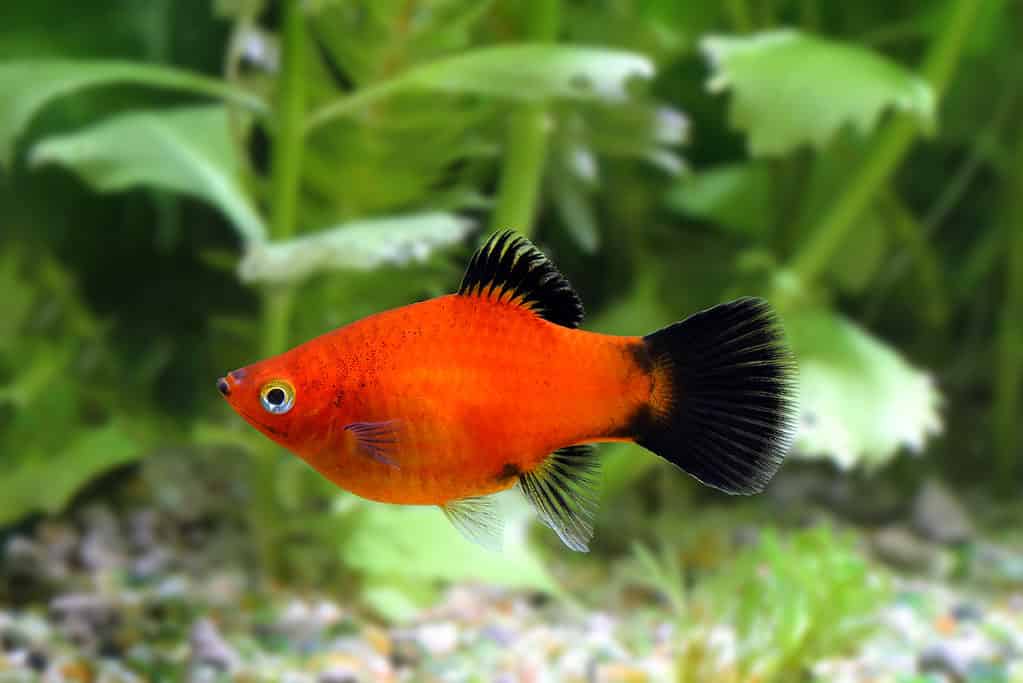
The Southern platyfish has three dark circles at the base of their tail fin.
©topimages/Shutterstock.com
All varieties of platies can be housed with guppies, such as the wagtail, dalmatian, and calico platies. Both guppies and platies thrive at similar water conditions, including a heater to replicate the tropical conditions they experience in the wild.
Corydoras
Cory catfish (Corydoras) or corydoras, are small bottom-dwelling fish. Some of the most popular species include the albino, panda, peppered, pygmy, bronze, and green cory catfish. They reach an adult length of 1.5 to 4 inches, with the pygmy cory being the smallest out of all 200 recognized species.
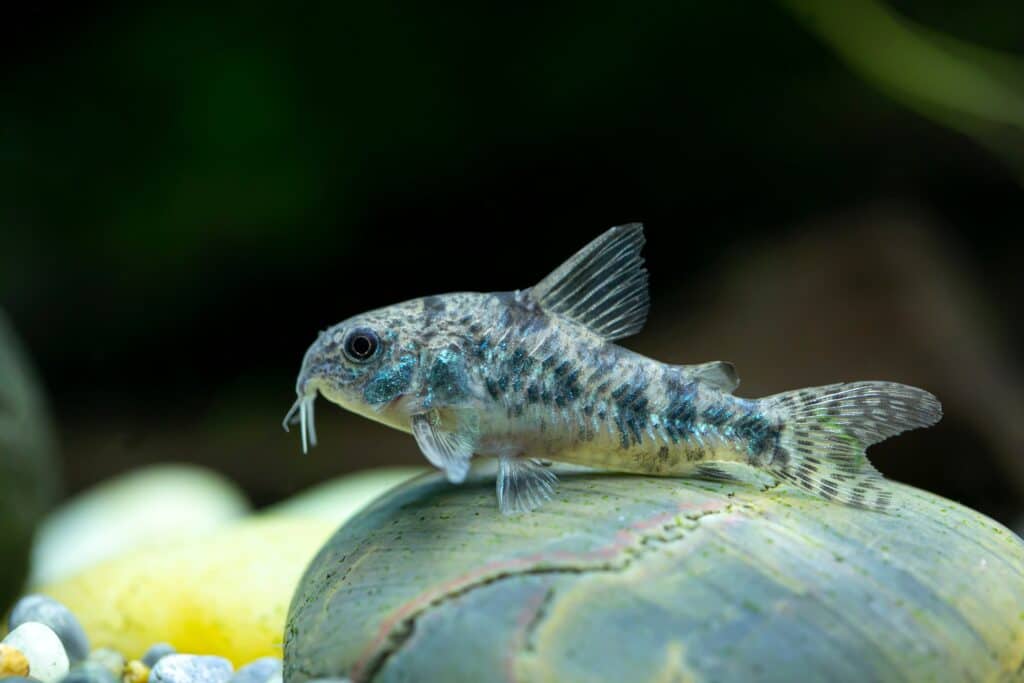
Corydoras catfish are native to South America and the Caribbean island of Trinidad.
©boban_nz/Shutterstock.com
Cory catfish spend most of their time at the bottom of the tank along the substrate, so they rarely interact with guppies. They forage for food and socialize with their own species, since they need to be kept in large groups. Cory catfish thrive in shallow tanks with more horizontal swimming space.
Female Betta Fish
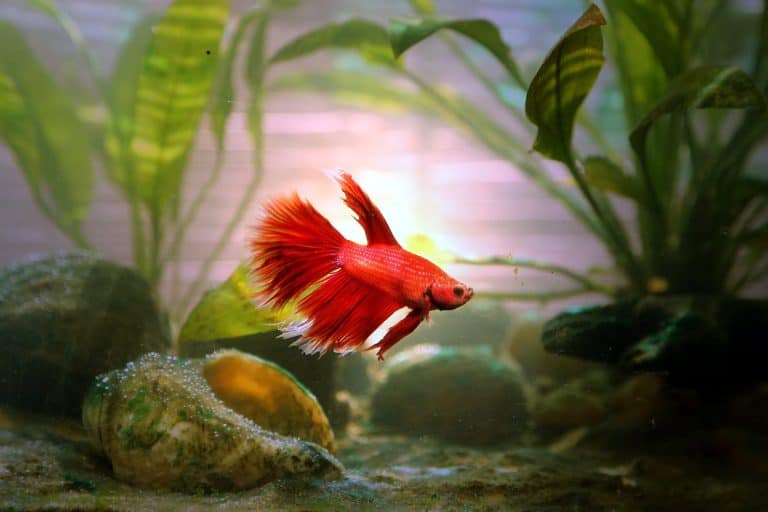
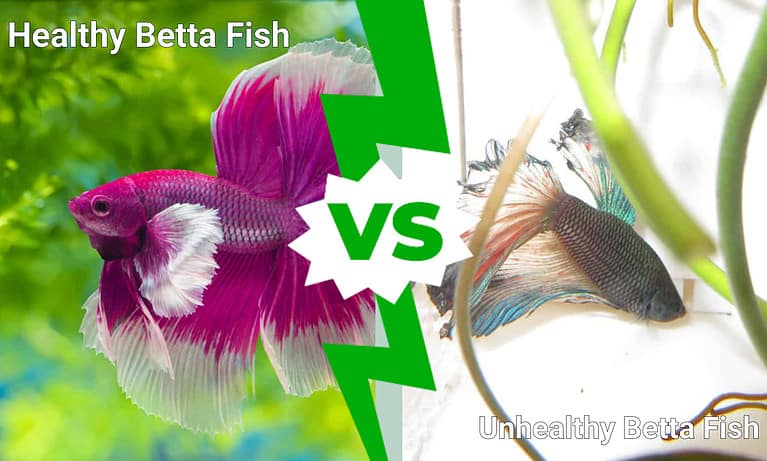
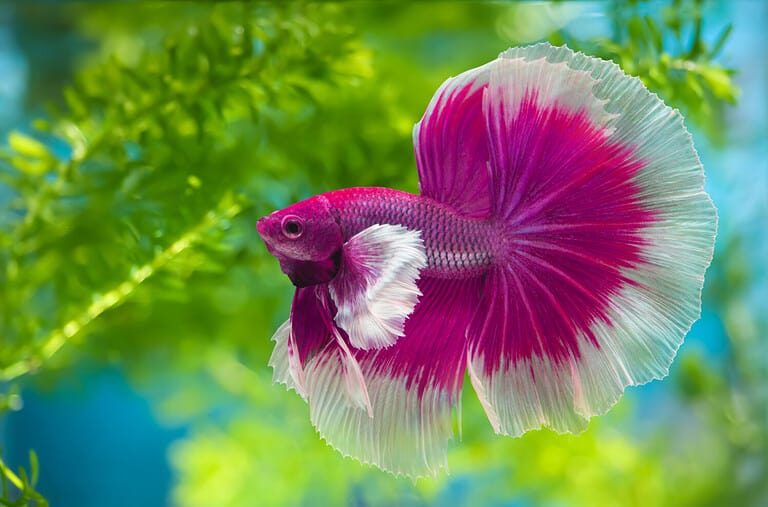
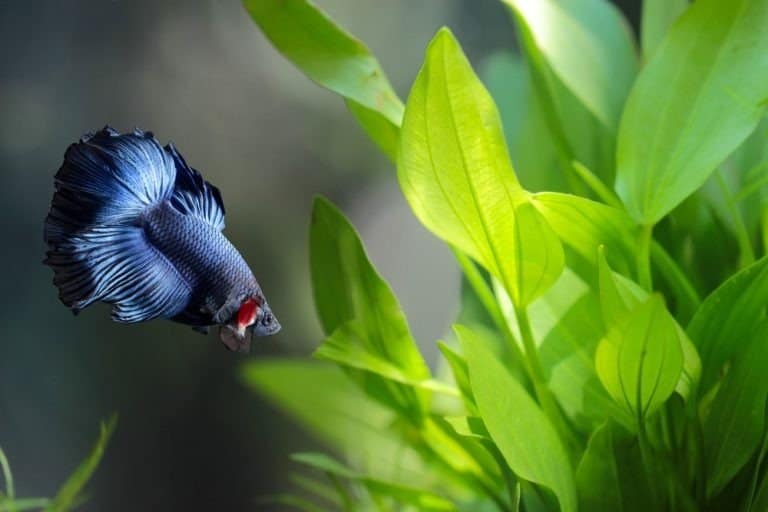
Bettas, or Siamese fighting fish (Betta splendens) are very popular and colorful aquarium fish. They make excellent additions to tropical and freshwater aquariums over 5 gallons in size. Although male bettas are highly territorial and aggressive fish that are compatible with few tank mates, females are an exception.
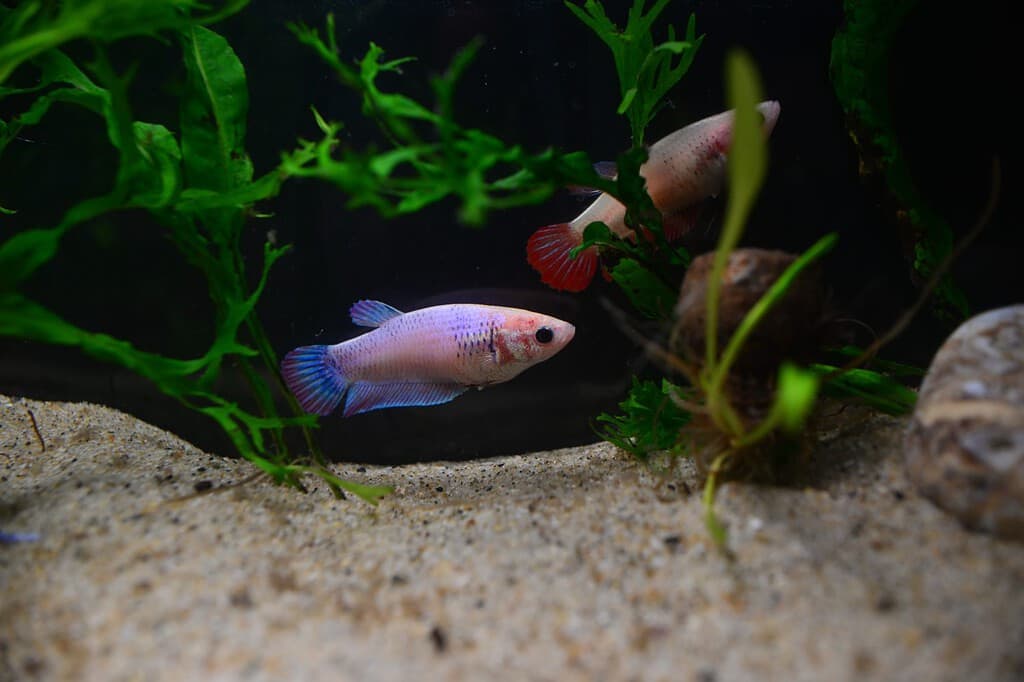
Betta fish are endemic to Southeast Asia, with their core ancestral range centered in the Mekong and Chao Phraya river basins.
©ItsAngela/Shutterstock.com
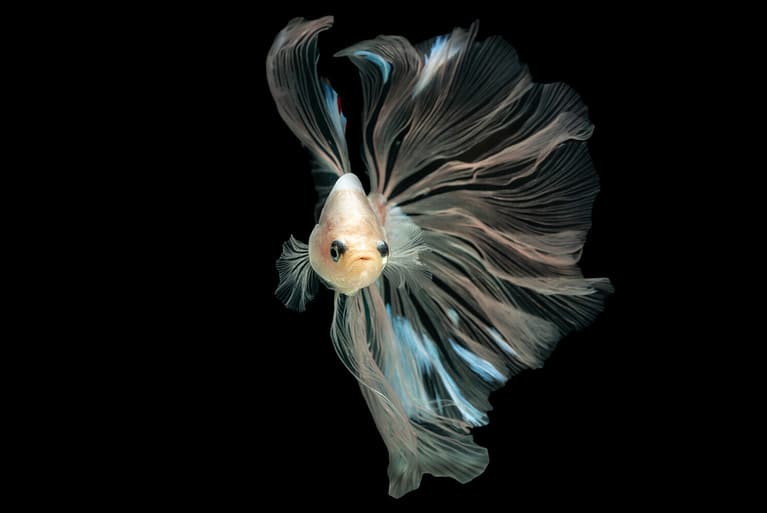
Provided that the tank is spacious enough, female bettas can be placed with a small group of guppies, ideally short-tailed varieties, since long and flowing tails might be tempting for bettas to nip.
If you decide to keep a female betta with a group of guppies, be sure to keep the tank heavily planted. Guppies need a space to hide away if the female betta fish starts to show territorial behavior.
Bristlenose Plecostomus
The bristlenose plecostomus (Ancistrus cirrhosus), also known as the bushynose pleco, is a small species of plecostomus that reaches 5 inches in length. They naturally inhabit the tropical streams and tributaries in the Amazon River Basin, where they experience similar conditions to guppies.
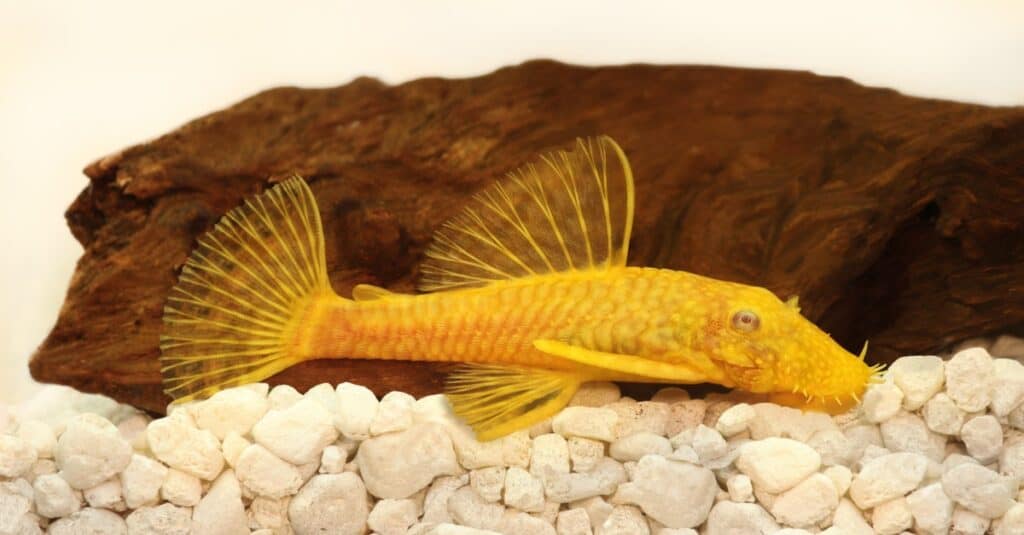
The bristlenose pleco is popular among the smallest pleco fish.
©iStock.com/Mirko_Rosenau
Bristlenose plecos can be distinguished by the thick tentacles (or barbels) that frame their heads.
They are bottom dwellers that will attach themselves to the décor and sides of the tank with their suckermouths. Bristlenose plecos can be great additions to large guppy tanks at least 25 gallons.
Siamese Algae Eater
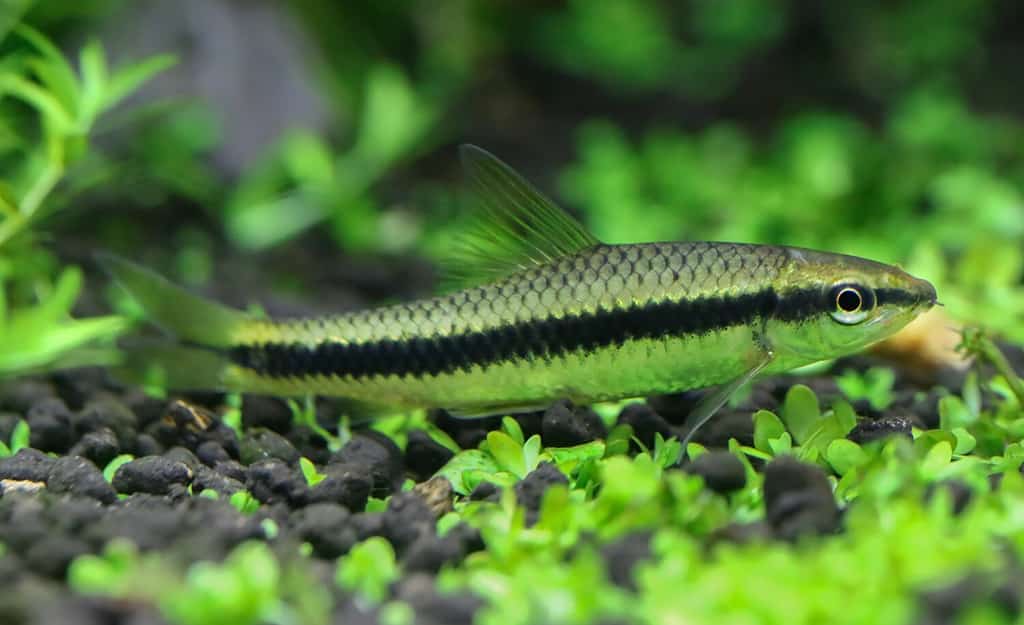
The Siamese algae eater thrives in heavily planted tanks.
©Swapan Photography/Shutterstock.com
Siamese algae eaters (Crossocheilus oblongus) are a freshwater fish that is native to Southeast Asia. They grow between 5 and 6 inches in length. They aren’t very colorful fish, with adults displaying drab brown and yellow colors. Their bodies are pencil-thin, and they have small downturned mouths that they use to suck up food. They are ideal for aquariums with frequent algae growth since algae is a major source of nutrients for them.
Both guppies and Siamese algae eaters are peaceful and social fish that thrive in similar environments. The Siamese algae eater is also a tropical fish and can be kept within the same temperature range as guppies.
As social fish, Siamese algae eaters should be kept in groups of at least six, with 8–12 being ideal
Neon Tetras
The popular neon tetra (Paracheirodon innesi) is another compatible tank mate for guppies and is often considered a first choice for beginners. Neon tetras are tiny schooling fish that are between 1 and 2 inches long. They have a distinctive neon red and white coloration and are known for being highly active and peaceful fish.
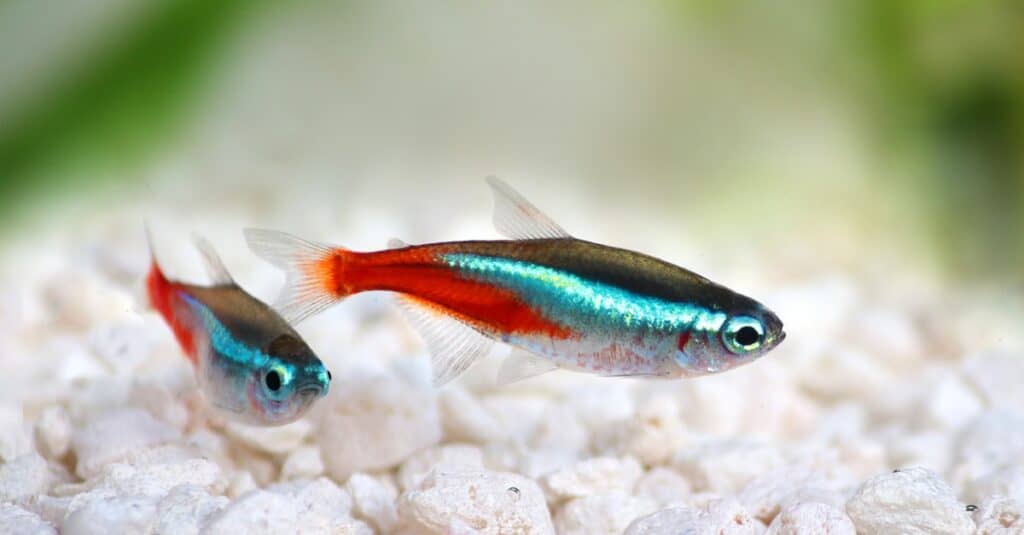
Neon tetras are one of the most vibrant tetra species.
©iStock.com/Mirko_Rosenau
Neon tetras and guppies get along quite well, as both fish are social and rarely show signs of aggression. In fact, several tetra varieties, including cardinal and ember tetras, make good tank mates for guppies.
You can comfortably house a group of 6 to 8 neon tetras in a 10-gallon tank, but if you plan to add guppies, increase the tank size to at least 15 gallons. Neon tetras benefit from plenty of dense vegetation in an aquarium since it offers them a place to hide.
Neocaridina Shrimp
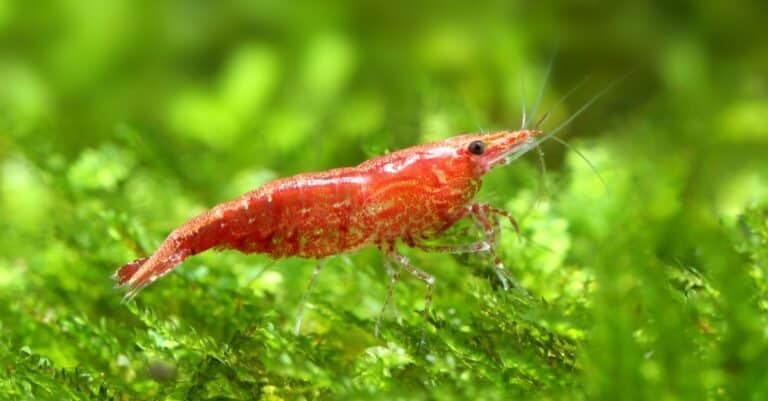
Neocaridina shrimp (Neocaridina davidi) make good tank mates for guppies. The cherry, red rili, blue dream, yellow, and jade green colors varieties are all compatible with guppies. Most Neocaridina shrimp reach a size of 1 to 1.5 inches long and have a relatively short lifespan of about two years.
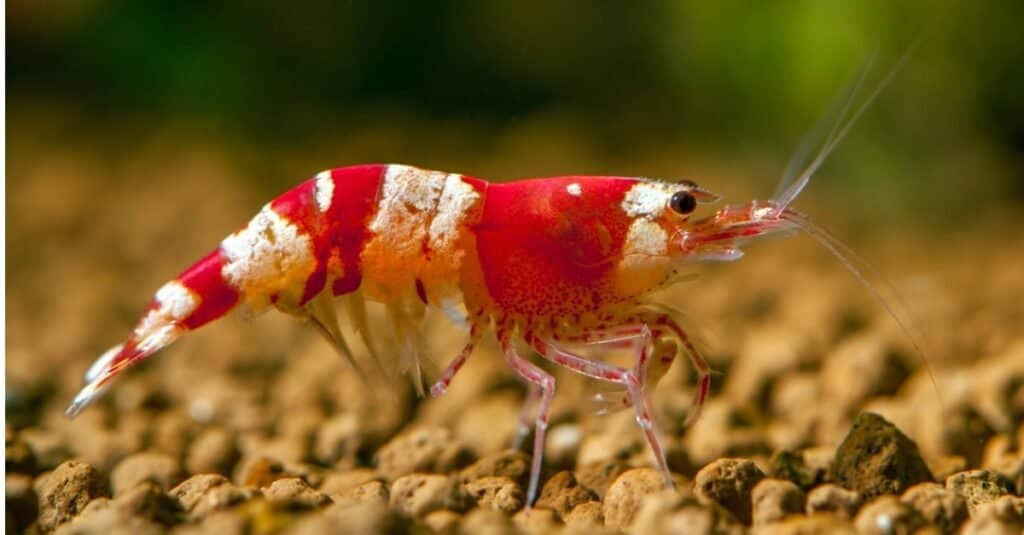
Neocaridina shrimp can tolerate cold water temperatures down to around 59 degrees Fahrenheit.
©iStock.com/Mariusz-W
When keeping Neocaridina shrimp with guppies, it is crucial to have a well-planted tank. Guppies may try to eat young Neocaridina shrimp, so providing plenty of hiding places is important. A heavily planted tank with dense vegetation, driftwood, and lava rock provides ideal hiding spots for the shrimp.
In general, Neocaridina shrimp are peaceful creatures and do not pose a risk to guppies. Neocaridina shrimp thrive in large groups, which makes them feel safer and encourages breeding.
Harlequin Rasboras
Harlequin or red rasboras (Trigonostigma heteromorpha) and guppies are both highly social fish with peaceful temperaments that require similar water conditions. The harlequin rasbora originates from the tropical rivers and streams of Southeast Asia.
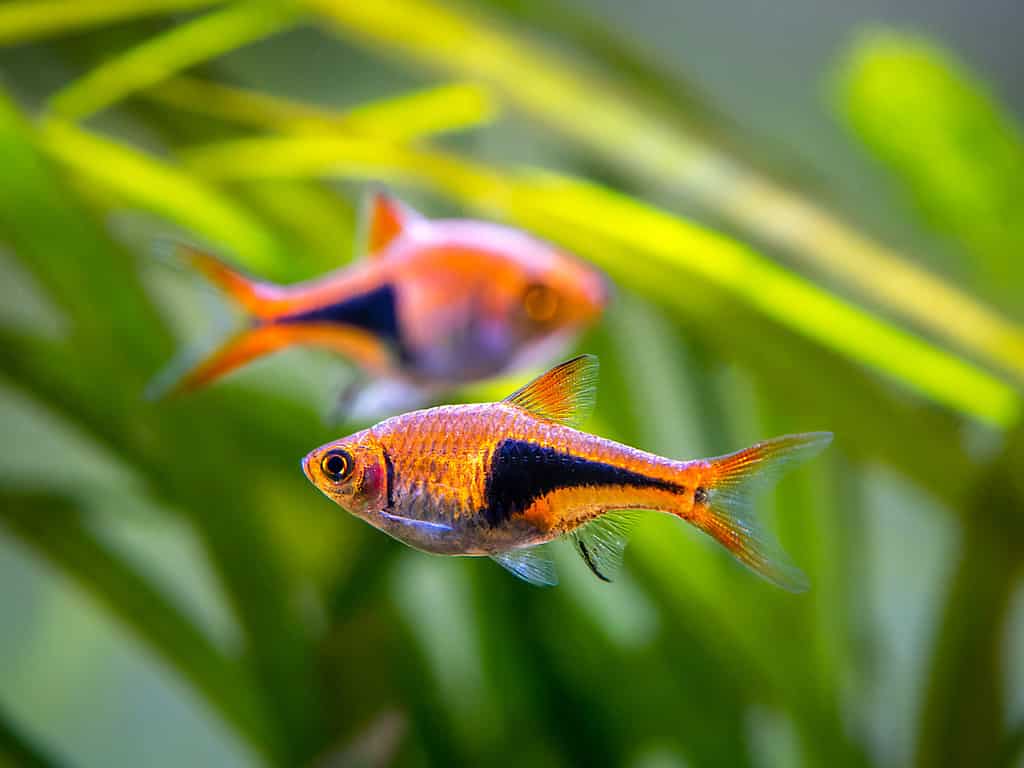
Rasboras are vibrantly colored fish with striking orange bodies.
©Joan Carles Juarez/Shutterstock.com
Harlequin rasboras only grow to around 1.5 to 2 inches, a similar size to many guppies. Harlequin rasboras have a distinctive red or copper-colored body with a dark black wedge starting at the middle of their body to the end of their caudal (tail) fin.
Zebra Danios
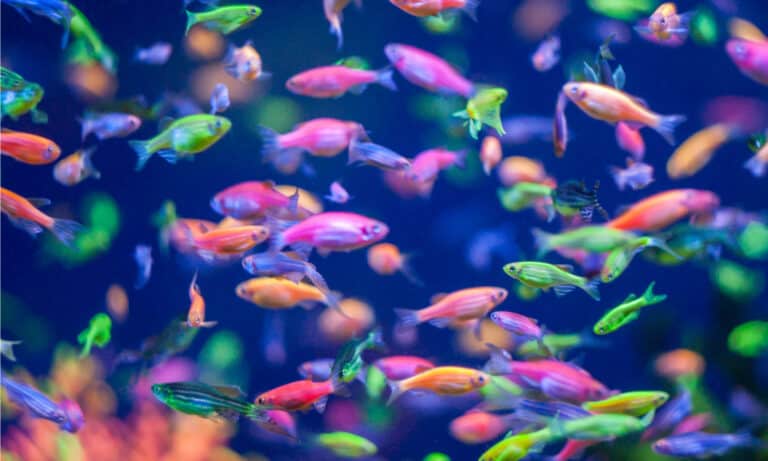
The zebra danio (Danio rerio) is slightly smaller than a guppy, but they make good tank mates. Zebra danios are tiny, peaceful fish that form large schools in the wild and in aquariums. hey reach a length of 1 to 2 inches as adults and can live 3 to 5 years with proper care, with some individuals living even longer
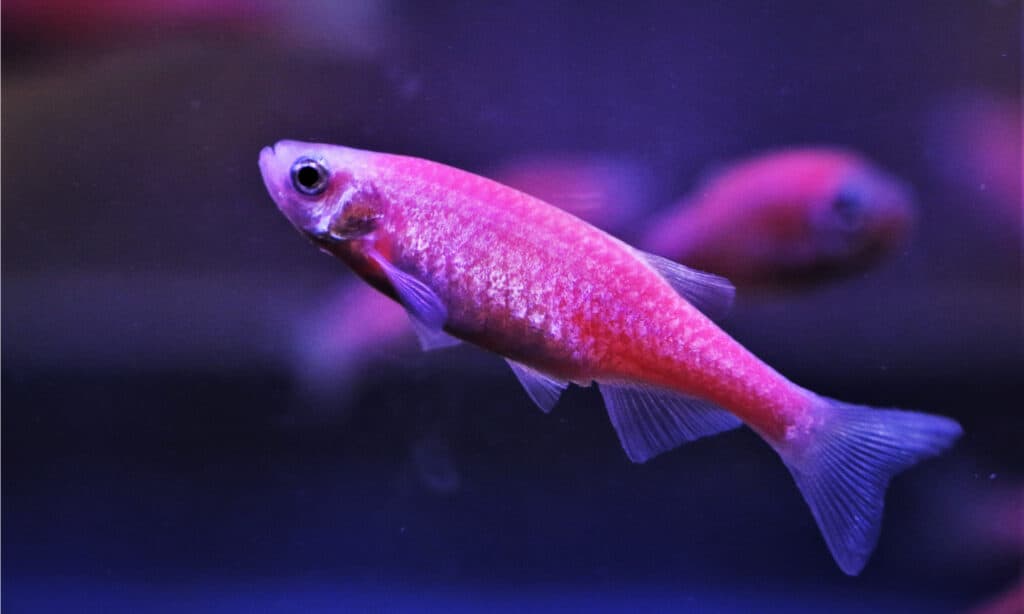
The pink zebra danio is a genetically modified zebrafish.
©Arunee Rodloy/Shutterstock.com
Zebra danios typically have a blue and yellow striped body, but some have been genetically modified to display neon colors such as purple, blue, green, yellow, pink, and red.
All varieties of zebra danio are social schooling fish, so they need to be kept in groups of six or more. They get along quite well in the same tank as guppies and share many things in common, such as their diet, water temperature, and peaceful temperament.
Since zebra danios are small fish, they do not require very big tank setups. You can keep a handful of guppies and zebra danios in a 15-gallon or larger tank. Live plants like Amazon sword, floating hornwort, and water sprite are preferred over artificial plants.