Quick Take
- Your betta looked vivid at the pet store, dull at home, or the other way around. What that color shift is really telling you may surprise you.
- One odd behavior looks like playful darting, but it can signal something invisible in the water.
- A betta that gets sick again and again may be fighting a hidden enemy, and it isn't a germ.
- Your betta's home setup could be quietly sabotaging its health. Find out which common choice vets warn against.
Betta fish (Betta splendens), also called Siamese fighting fish, are small, tropical fish that are native to the Mekong River basin in Southeast Asia and are often kept as pets. They are a popular choice for those who want a small and colorful fish that can be housed in a small aquarium. Being a responsible betta fish owner means ensuring your fish is happy and healthy through its three to five years of life. Although bettas are relatively hardy and adaptable fish, they can become ill. Fortunately, unwell bettas will have visible symptoms. Familiarizing yourself with signs of illness in your betta fish can help you provide treatment in a timely fashion. Continue reading to learn how to determine if your betta fish is ill.
Discoloration
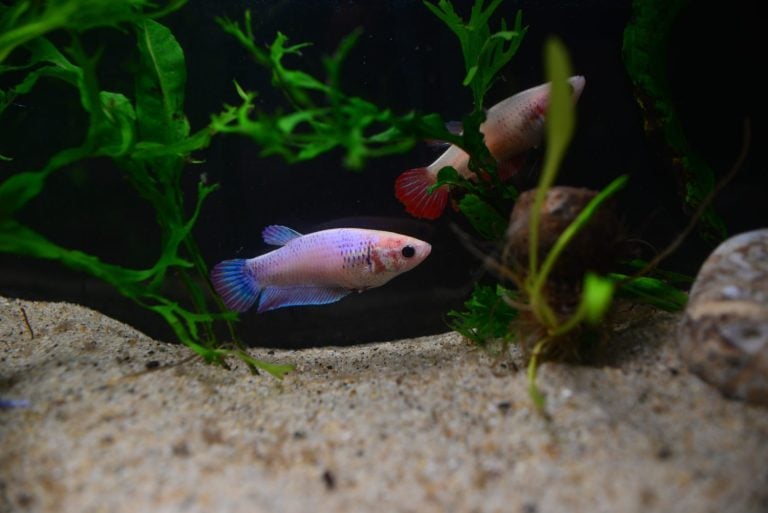
Bettas are usually vibrantly colored fish, but if you notice that your once colorful betta looks washed out or faded, it may be a sign of illness. Bettas lose their vivid coloration in stressful situations and from disease. This is why your pet store betta may look dull in color and then seem to become more vivid in your home. A healthy betta fish should not have faded colors unless it is naturally so.

A sick or stressed betta fish will lose its vivid colors and appear dull.
©elisabet nugraheni/Shutterstock.com
Damaged Fins
Tail fin varieties are endless, but no healthy betta should have torn, ragged, or damaged fins. This damage can be from chewing or sharp aquarium decorations. Damaged fins can also indicate certain fungal or bacterial infections that eat away at the betta’s fins. When the fins develop a translucent appearance at the tips, it can indicate that they are healing.

Damaged betta fish fins will appear torn and ragged. These fins will soon heal as the fish is recovering.
©SoReaux/Shutterstock.com
Lethargy
A healthy betta fish should be active and swimming around regardless of how heavy or long its fins are. If you notice that your betta is spending most of the time at the bottom of the tank without moving, this is a sign of lethargy.

An unhealthy betta fish will appear lethargic and won’t spend much time swimming around the tank.
©Wirestock Creators/Shutterstock.com
Also, a healthy betta will not spend most of its time hiding or lying on aquarium decorations or leaves. While it can be normal for some heavy-finned bettas to take a quick rest on a leaf or smooth surface, they should still be able to swim normally, with no abnormal swimming patterns or buoyancy issues.
Poor Appetite
A healthy betta fish will have a hearty appetite and will rarely refuse a meal. If your betta stops eating, it may indicate that it is feeling unwell or stressed. There are several reasons your betta fish may refuse food: poor water quality, disease, or stress from incompatible tank mates.

Betta fish love foods like baby brine shrimp, and healthy bettas rarely refuse foods.
©Pantherius/Shutterstock.com
It is also important to ensure that your betta is fed an appropriate number of healthy foods. You should avoid overfeeding, as this can cause uncomfortable abdominal swelling and potential water quality issues.
Getting Sick Easily
A healthy betta fish typically has a highly functional immune system, which lowers the risk of certain diseases. However, a stressed betta lacks a strong immune system and may become ill regularly. Such a fish might recover from one infection right before developing another.

An overly stressed betta fish may have trouble fighting off diseases that can make it feel very ill.
©Lienda Yunita Apponno/Shutterstock.com
If this is the case, it is important to determine what stressors are at play. Poor water quality, confined space, and aggressive tank mates can make your betta fish feel stressed, making disease more likely.
Abnormal Swimming Patterns
Bettas should be able to swim up and down without struggling. They should also be able to move their bodies and fins comfortably in the water. While it can be common for heavy-finned bettas to be slower swimmers than short-finned varieties, a healthy betta shouldn’t have great difficulty swimming.
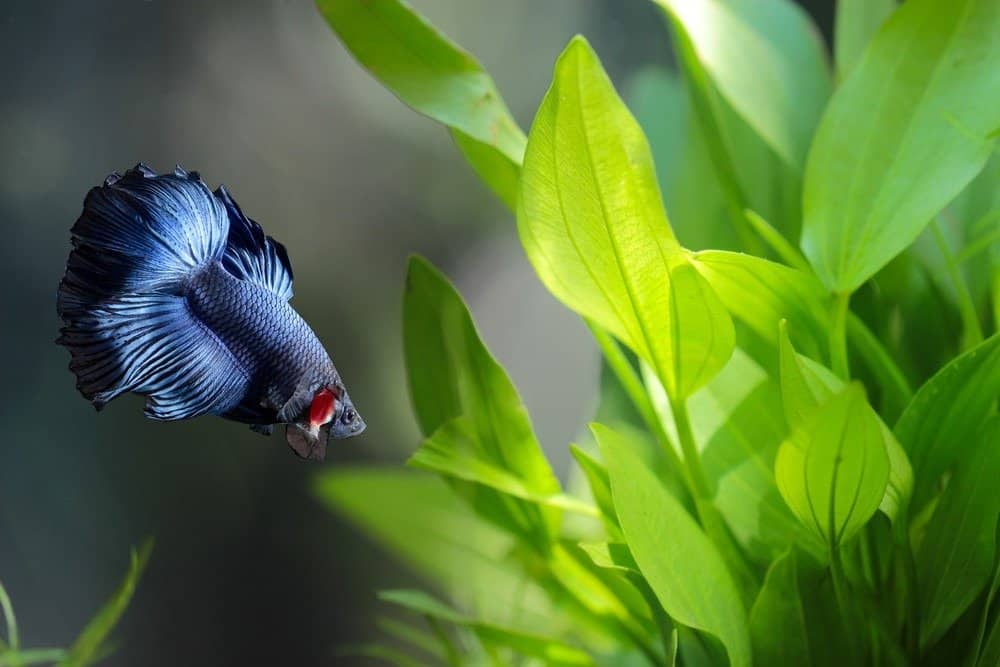
Betta fish should swim with vigor, only resting now and again.
©Napat/Shutterstock.com
If you notice that your betta is swimming with clamped fins, sideways movements, or listlessness, it may be dealing with disease, poor water quality, or damaged fins.
Flashing Behavior
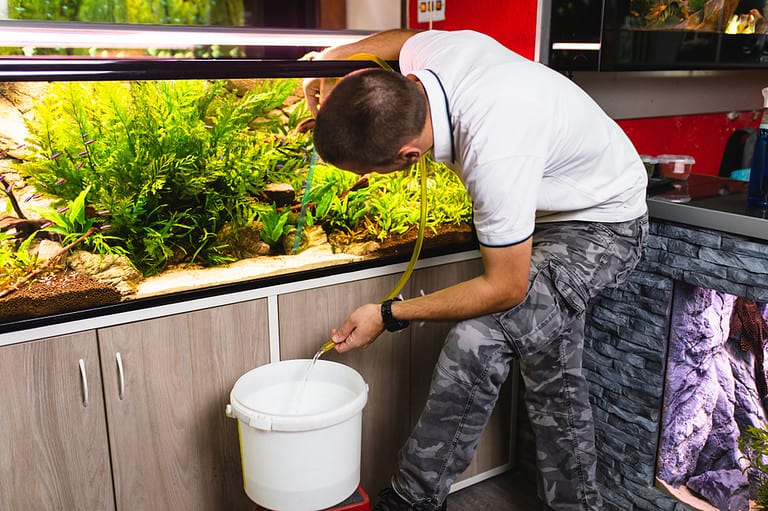
Maintaining good water quality in the aquarium is essential for betta fish. When ammonia levels in the tank are too high, your betta fish may become stressed. This can lead to a behavior referred to as flashing, during which a fish will dart around the tank and rub against the substrate, glass, or aquarium decorations.

Water quality issues like high ammonia are harmful to betta fish. Test the water with a liquid testing kit.
©Ladanifer/Shutterstock.com
Bettas do this to try to alleviate the discomfort they are feeling from the poor water quality. Other pollutants, like chlorine, and certain external parasites such as Ichthyophthirius (white spot disease), Trichodina, Costia, and Chilodonella can cause flashing behavior in fish.
Rapid Breathing
Although betta fish are adapted to living in environments with low oxygen levels for short periods, they require sufficient oxygen to breathe normally. In tanks with low oxygen levels and overly warm water, your betta may struggle to breathe.
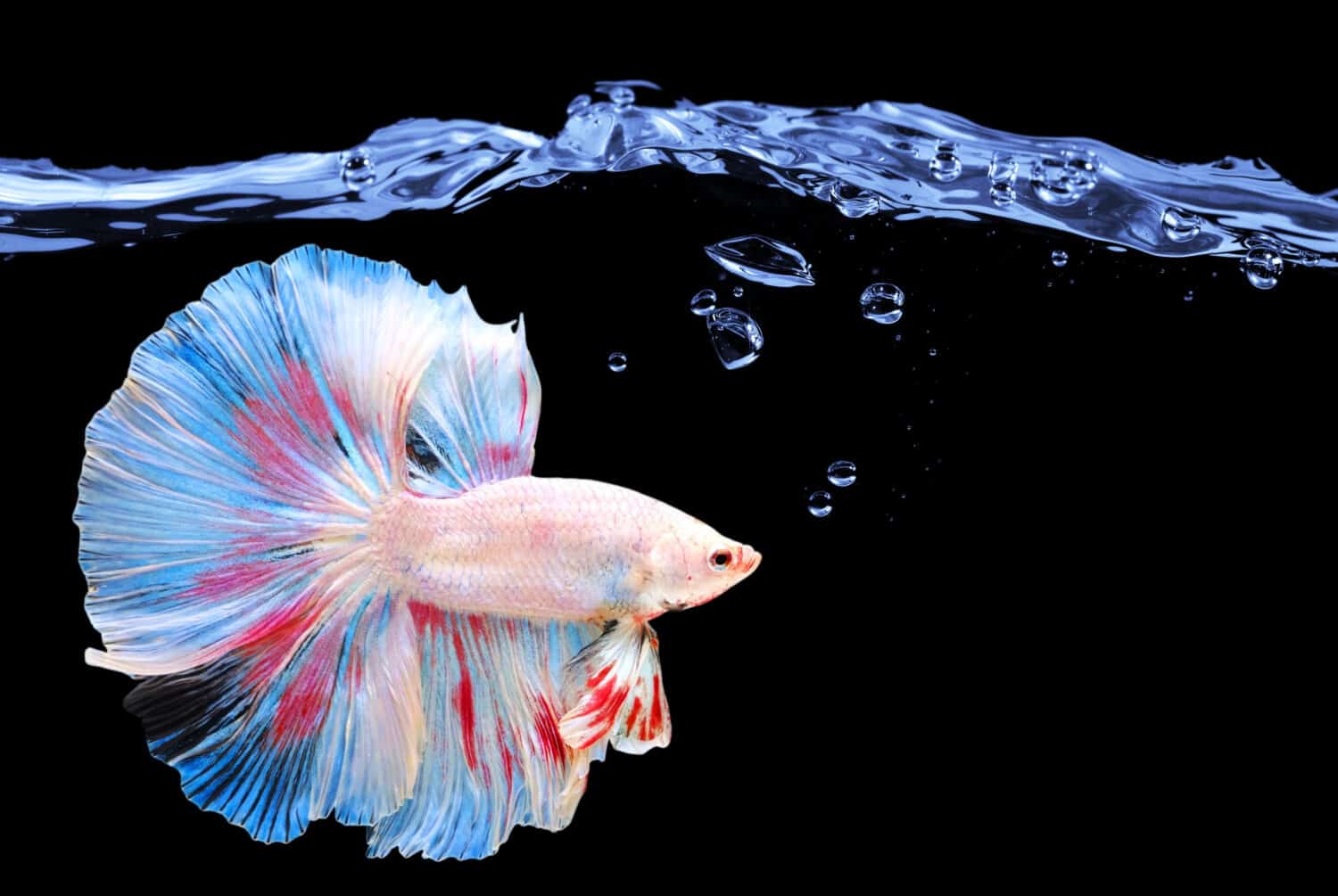
Betta fish have a labyrinth organ that lets them breathe air in environments with low oxygen levels.
©Shutterman70/Shutterstock.com
A betta fish that is struggling to breathe will rapidly open and close its mouth to pass water over its gills. Most bettas will become lethargic when they are breathing rapidly and may hide or bottom-sit.
Another cause of rapid breathing in bettas is gill irritation. This can happen due to pollutants in the water, high ammonia, and parasitic infestations that affect the gills. Ideally, the ammonia and nitrite levels in your betta’s tank should be 0 ppm (parts per million). The nitrates can be slightly higher, at around 15 ppm.
Clamped Fins
Bettas should have relaxed fins when they are resting, and upright fins when they are swimming, but never clamped fins. Clamped fins are held tight against the body when the fish is resting and swimming. Clamped fins aren’t a disease, but rather a symptom of disease or water quality issues. High levels of ammonia and parasites are some of the leading causes of clamped fins in betta fish.

Sick or stressed betta fish will swim with tightly clamped fins.
©Rumaisha Project/Shutterstock.com
Tips for Keeping Your Betta Fish Healthy
If you are new to keeping betta fish or simply want to know how to care for your betta properly, these tips will ensure you keep your betta healthy and happy.
Tank Size
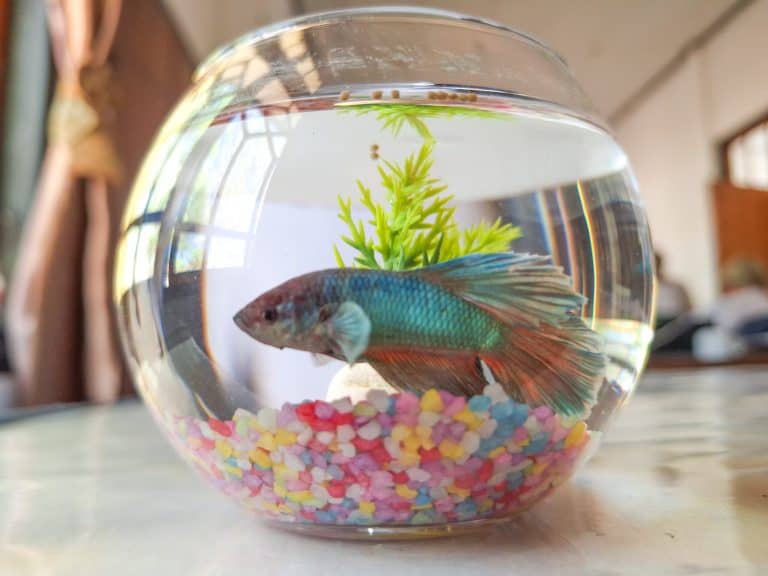
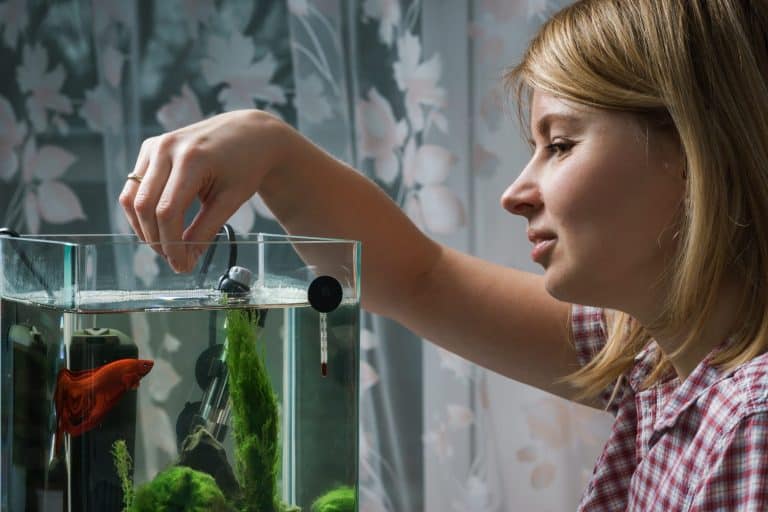
Instead of placing your betta fish in a bowl or vase, opt for a suitably sized tank. Bettas do not belong in small bowls or vases, according to veterinarians Dr. Krista Keller and Dr. Jessie Sanders. Most betta fish require a minimum tank size of five gallons, and it should contain more horizontal space than vertical space.

The ideal aquarium for your betta fish should be spacious and equipped with a filter and heater.
©Sandra Burm/Shutterstock.com
Fishbowls are usually too small for bettas and do not offer them enough space to thrive. Furthermore, bowls and vases make it difficult to add a proper filter, heater, and plants inside without affecting the amount of swimming space.
Heater and Filtration System
A filtration system and heater are essential for these fish. Bettas need a filter in their tank to prevent the water from becoming stagnant, as well as to process waste and create beneficial bacteria. Since bettas are tropical fish that need a temperature range of 76 to 81 degrees Fahrenheit, a heater is necessary.
Oxygenation System
Bettas are anabantoids, meaning they have a labyrinth organ that lets them breathe atmospheric air in otherwise uninhabitable conditions. However, they still need sufficient oxygen in their tank. If the filtration system isn’t providing the tank with enough surface agitation, you might need to look into using a bubbler system.
Compatible Tank Mates
Betta fish are considered solitary fish, with rare instances of some female bettas getting along in sororities. However, all males are solitary and will fight till severe injury or even death. Housing two betta fish together can cause both fish to become very stressed, which is not good for them. Furthermore, males and females should not be housed together, and may only be introduced in appropriate conditions for a short time during breeding.
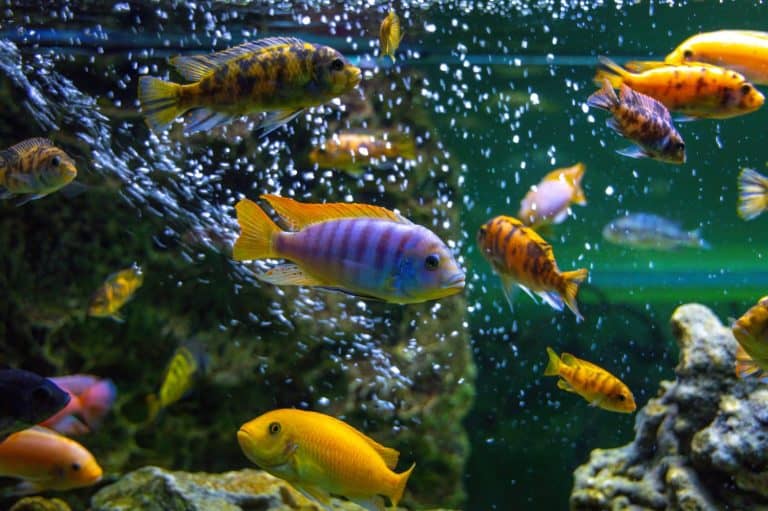
It is best to house your betta alone, possibly with snails or shrimp, and not with incompatible tank mates like goldfish, koi, or cichlids.
Healthy Diet
Betta fish are natural carnivores in the wild, so they benefit from a similar diet in captivity. A quality betta fish pellet formulated with animal protein as a main ingredient is recommended. You can also supplement their diets with live or freeze-dried foods like bloodworms and baby brine shrimp.