
Quick Take
- The bear most people consider the largest is not actually #1, and the real record-holder can hit a weight that seems physically impossible. See the true largest bear →
- One "black" bear species can actually be blond, and it is not the smallest one on this list. Explore its color variations →
- Several bears on this list are one habitat loss away from extinction, and the most endangered ones may not be the ones you'd expect. See habitat loss threats →
- The last surviving species of an ancient bear lineage is still alive today, and it is hiding in plain sight on this list. Meet the last short-faced bear →
Although movies and television often portray them as cute and cuddly, few animals can be more intimidating or deadly than bears. Their jaws can bite down with enough force to crush a bowling ball, and they will eat almost anything that they can get their claws into, including other bears. Many bears have incredible strength and size, but what is the biggest bear species of them all? By comparing them from head to toe, it’s easy to see which bear stands above the rest. Continue reading to learn about the ten largest bears in the world.
10. Sloth Bear
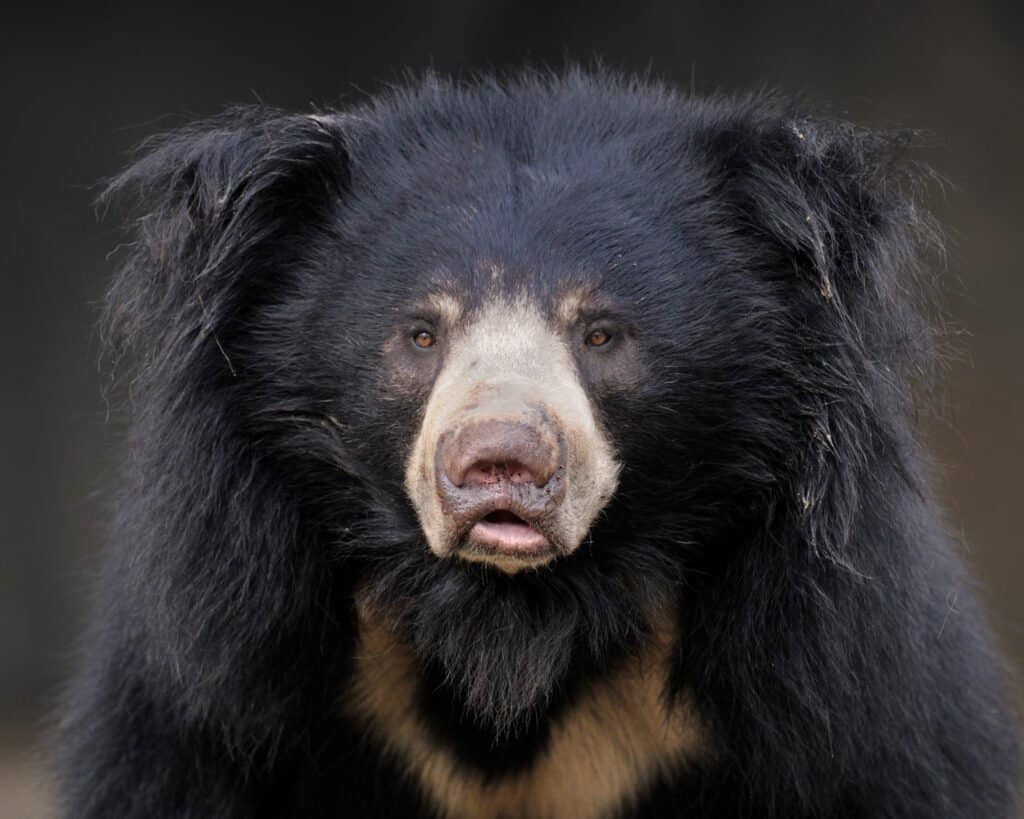
Sloth bears live across the Indian subcontinent
©Nagel Photography/Shutterstock.com
Leaner than brown and black bears, the Sloth bear (Melursus ursinus) distinguishes itself with its shaggy mane and sickle-shaped claws. The average female can range from 121-231 pounds while the average male weighs between 176-320 pounds. However, unusually sized Sloth bears can reach weights of 423 pounds. They stand between 4 feet, 7 inches and 6 feet, 3 inches tall.
Sloth bears are native to the Indian subcontinent and distributed across India, Sri Lanka, and Nepal. These classic omnivores subsist primarily on fruit, termites, and ants.. Also known as a lip-bearing bear, sloth bears use their long lower lip to suck up insects. Meanwhile, their curved claws are perfect for digging up tasty treats. Due to habitat loss and environmental degradation, the IUCN lists the Sloth Bear as a Vulnerable species.
9. Asiatic Black Bear
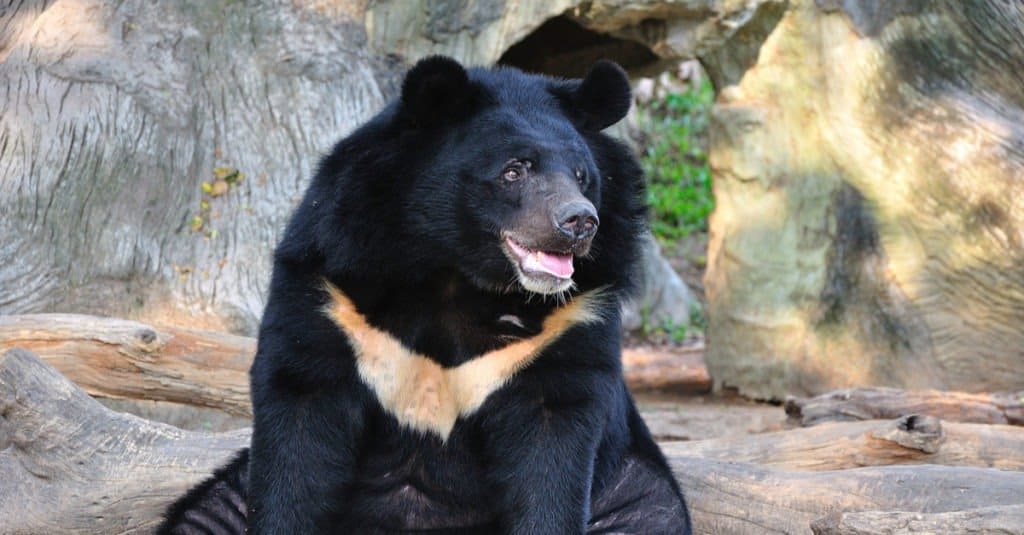
The Asiatic black bear can reach more than 400 pounds!
©Tigger11th/Shutterstock.com
Next on our list of the biggest bear species is the Asiatic black bear (Ursus thibetanus). Also known as the moon bear or white-chested bear, it is most recognizable due to the v-shaped white mark on its chest. More slender and lightly built than brown bears, male Asiatic black bears weigh around 130-440 pounds. Females of the species weigh between 88-276 pounds. They measure from 3 feet, 11 inches to 6 feet, 4 inches in length.
Native to the Himalayas, Asiatic black bears can also be found throughout other parts of Asia. Additional habitats include the Indian subcontinent, southern Iran, the Korean Peninsula, eastern Russia, northern Japan, and Taiwan. They like to spend their waking hours in trees but prefer to hibernate in caves or hollowed-out tree trunks. Their diet consists of insects, fruits, nuts, mushrooms, honey, and grains. Currently, the IUCN lists the Asiatic black bear as a Vulnerable species. Its chief threats include habitat loss and poaching.
8. Spectacled Bear
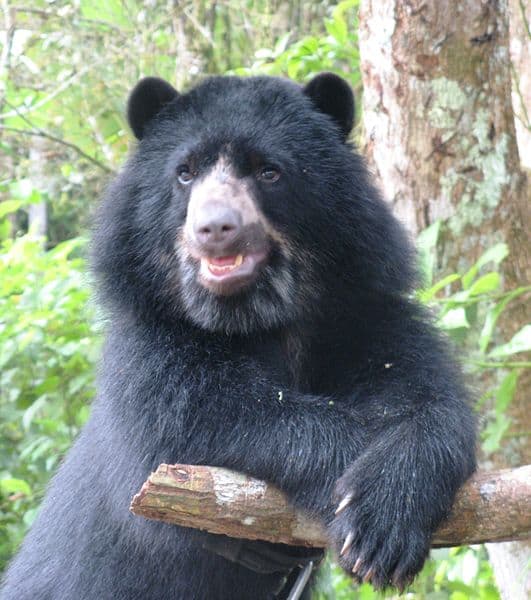
The spectacled bear lives across South America
©Gelber21, CC BY 3.0, via Wikimedia Commons – Original / License
The spectacled bear (Tremarctos ornatus) is the last remaining species of short-faced bear in the world. Also known as the Andean bear or mountain bear, spectacled bears get their name from the splash of pale markings across their face and chest. Male spectacled bears typically weigh between 220-440 pounds, and females weigh from 77-181 pounds. The most massive spectacled bears can weigh approximately 491 pounds. They measure between 3 feet, 11 inches and 6 feet, 5 inches in length from head to toe.
Spectacled bears remain the only surviving bear species native to South America. They range from Venezuela to Colombia, Ecuador, Peru, Bolivia, and Argentina. However, they can be found almost exclusively in the Andes Mountains. Like black and sun bears, spectacled bears spend most of their time in trees. Their diet includes cactus, nuts, bamboo hearts, fruit, and palm leaves, but they will also prey on deer, llamas, cattle, and small rodents. The IUCN lists the spectacled bear as a Vulnerable species, primarily because of habitat loss.
7. American Black Bear
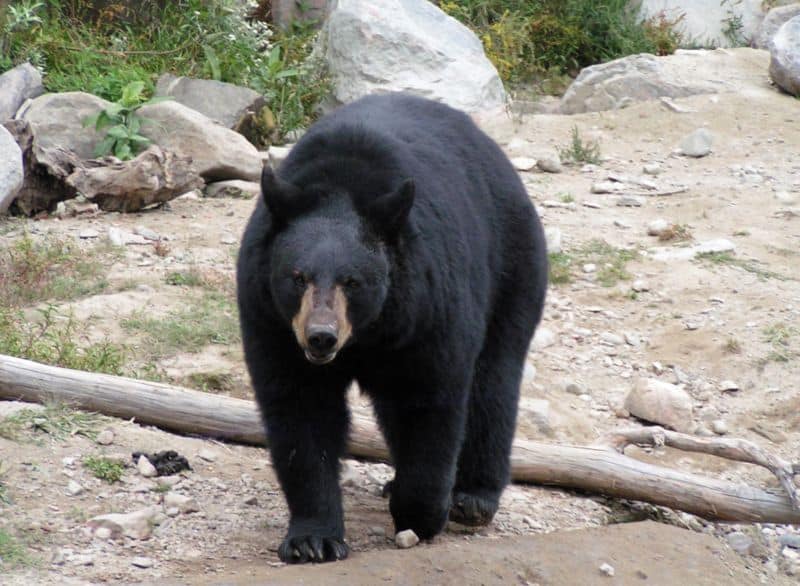
The black bear is found throughout North America
©Diane Krauss (DianeAnna), CC BY-SA 3.0, via Wikimedia Commons – Original / License
The American black bear (Ursus americanus) is the tiniest and most common bear in North America. Typically, they stand between 3 feet, 11 inches, and 6 feet, 7 inches tall, but can grow to be much larger. Male American black bears typically weigh between 126-551 pounds, while females usually weigh between 90-375 pounds. However, one enormous American black bear measured 1,000 pounds and was almost 8 feet in length!
Although their name implies a dark coloration, American black bears can also be brown or even blond. They range throughout the northwestern and northeastern United States, around the Great Lakes region, throughout Canada, and into Alaska. American black bears subsist mainly on vegetation, including fruits, nuts, and the shoots of young grasses. Their diet also includes insects, white-tailed deer, young elk and moose, and fish. Thanks to its widespread distribution and stable population, the American black bear is listed as a species of Least Concern by the IUCN.
6. Eurasian Brown Bear
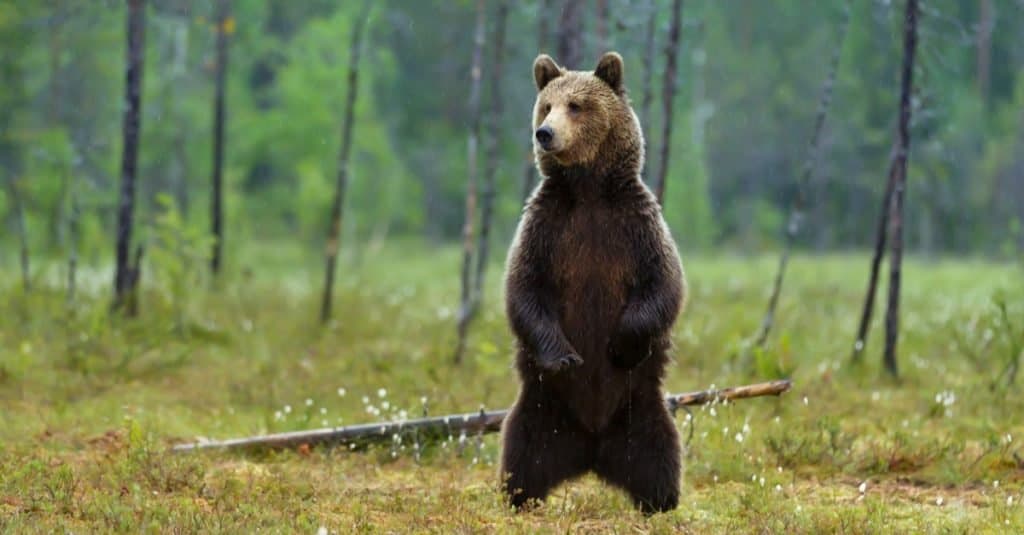
Alerted Eurasian brown bear standing on hind legs on a rainy day in a Finnish forest. The brown bear is the largest predator still living on the continent of Europe.
©Giedriius/Shutterstock.com
Also known as the European brown bear or common bear, the Eurasian brown bear (Ursus arctos arctos) is one of the most common subspecies of brown bears. Adult males usually weigh between 550 and 660 pounds, while full-grown females range from 330 to 550 pounds. Some Eurasian brown bears can grow up to 1,058 pounds and stand nearly 8 feet 3 inches tall.
Eurasian brown bears used to exist throughout Eurasia. Today, their range is limited chiefly to northern and eastern Europe, Russia, the Baltic states, and the Balkans. However, isolated populations still exist in Spain, Italy, France, southwest Asia, China, and Japan. The diet of Eurasian brown bears consists of roots, berries, nuts, insects, and fish. They are also known to attack livestock and hunt small and large mammals. The IUCN currently lists them as a species of Least Concern, although some question their status due to decreasing populations in several regions.
5. Grizzly Bear
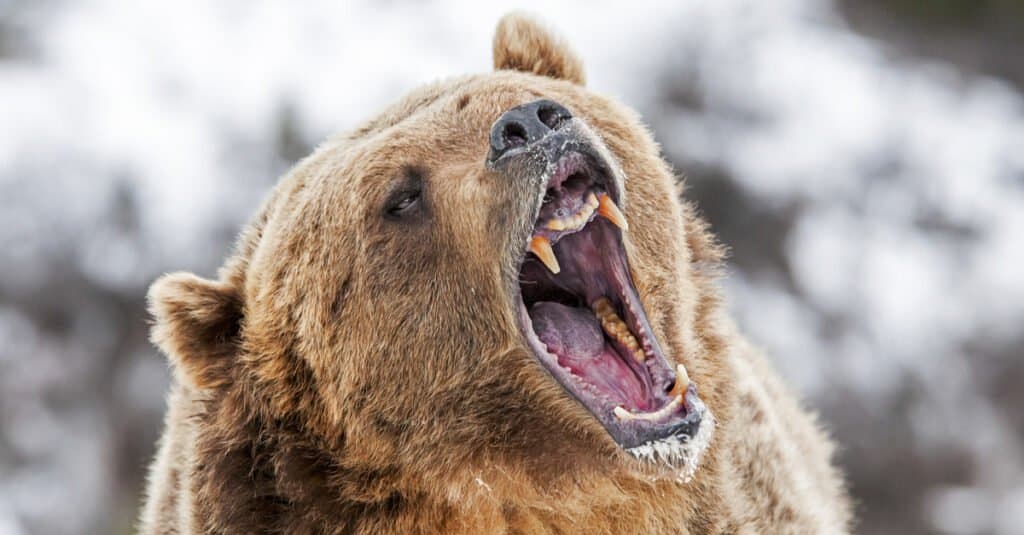
Grizzly bears feast on everything from salmon and trout to large animals such as moose and elk.
©Scott E Read/Shutterstock.com
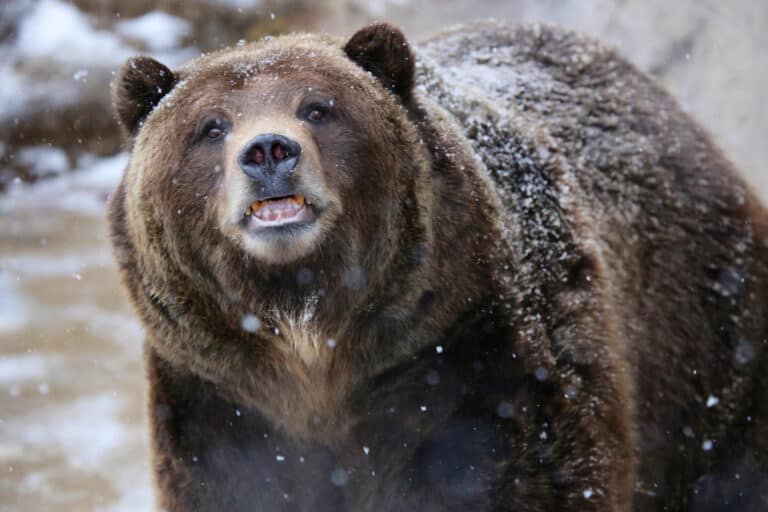
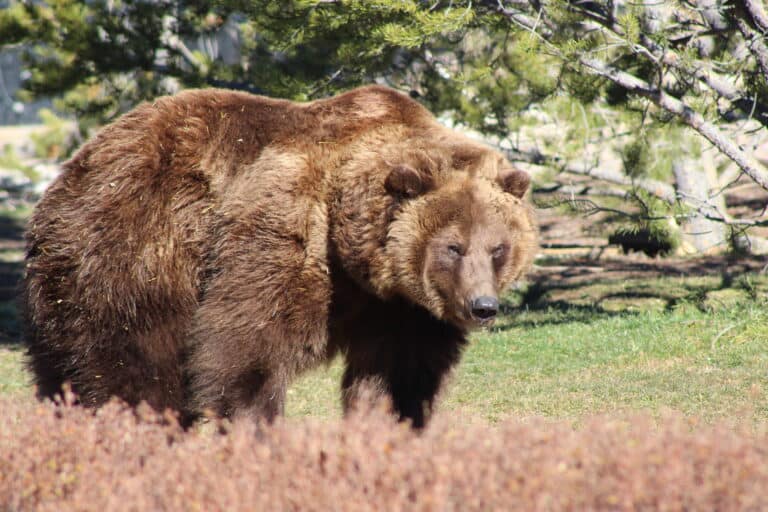
One of the most famous subspecies of brown bears, the grizzly bear (Ursus arctos horribilis) gets its name from its fearsome appearance. The average grizzly measures about 6 feet, 5 inches in length but can range between 3 feet, 6 inches and 9 feet long. Adult male grizzlies often weigh between 400-790 pounds, while females weigh between 290-400 pounds. However, coastal grizzlies average around 899 pounds and can exceed 1,000 pounds at their heaviest.
Historically, grizzlies’ territories stretched throughout most of North America. Today, their range is limited to the northwestern United States, Alaska, and western and northern Canada. Grizzlies will frequently prey on large animals, including elk, deer, bison, moose, and caribou. Populations with access to salmon, trout, and bass can grow especially large, such as the grizzlies of Alaska and British Columbia. The grizzly bear is listed as Threatened in the contiguous United States under the Endangered Species Act, but globally, the IUCN lists the brown bear species (which includes grizzlies) as Least Concern.
4. Ussuri Brown Bear
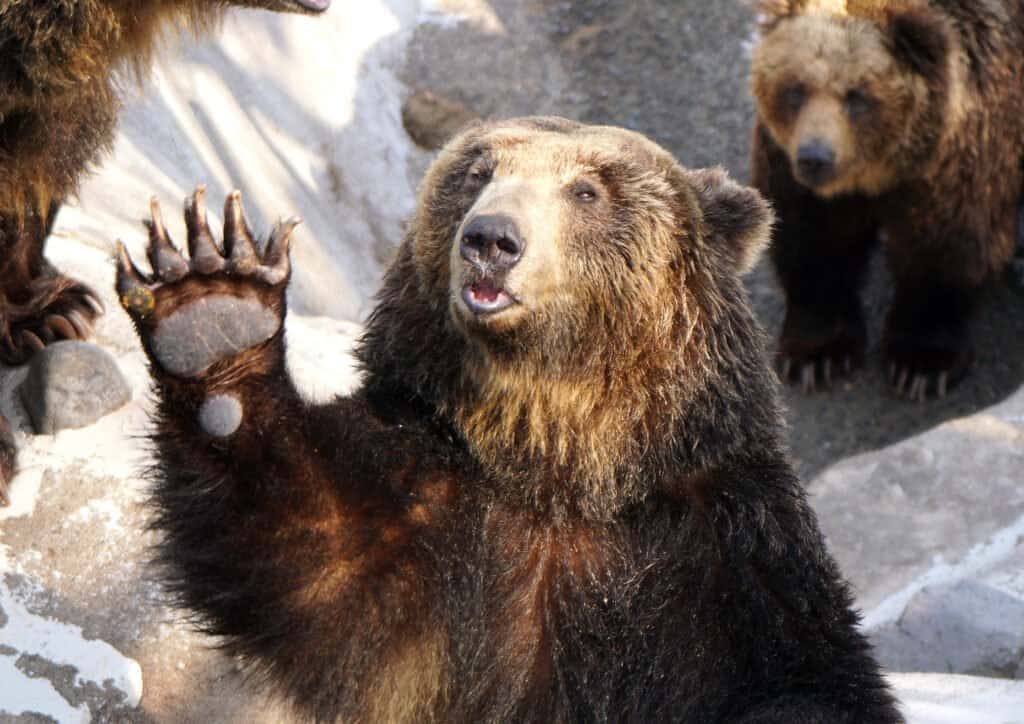
Ussuri brown bears can reach more than 1,000 pounds
©VANESSAL/Shutterstock.com
A close relative of the Eurasian brown bear, the Ussuri brown bear (Ursus arctos lasiotus) is also known as the black grizzly bear or Ezo brown bear. Its appearance is similar to the Kamchatka brown bear, although it possesses a narrower skull and shorter forehead. Male Ussuri brown bears average 880 pounds and can grow up to 1,210 pounds. They typically range from 6-9 feet in length.
Ussuri brown bears primarily live in eastern Russia and its surrounding islands, the Korean Peninsula, northeast China, and northern Japan. Their diet consists mainly of vegetation, including grass shoots, sap, seeds, nuts, and berries. However, they will also hunt and consume small and large mammals, birds, fish, and insects. Depending on the region, populations of Ussuri brown bears can be listed as either stable or threatened. Overall, the IUCN lists them as a species of Least Concern.
3. Kamchatka Brown Bear
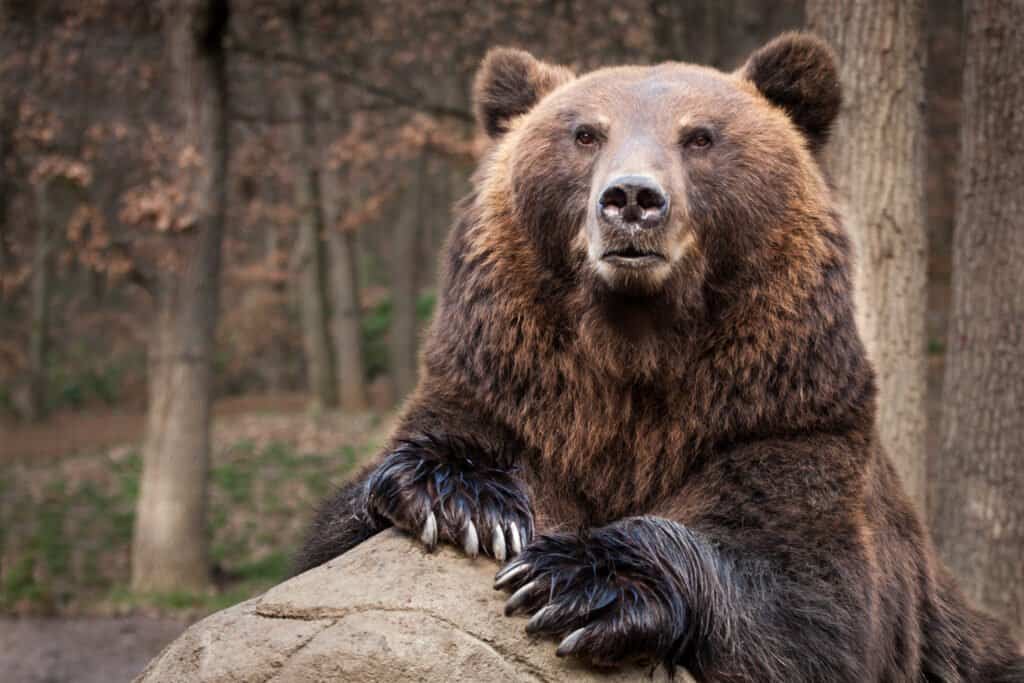
Kamchatka brown bears are the largest bears found in Eurasia.
©Marie Dirgova/Shutterstock.com
The Kamchatka brown bear (Ursus arctos beringianus) is the largest subspecies of brown bear in Eurasia. The heaviest Kamchatka brown bears can weigh up to 1,430 pounds, although average weights vary throughout the seasons. When standing on their hind legs, they measure from 7 feet, 11 inches to 9 feet, 9 inches tall. While typically dark brown in appearance, lighter colorations do exist in the wild.
Kamchatka brown bears get their name from the Kamchatka Peninsula, which is home to most of its population. However, sightings frequently occur on Karaginsky Island, the Kuril Islands, the Shantar Islands, and Saint Lawrence Island. Their diet primarily consists of berries, nuts, fish such as salmon and trout, and marine mammals. Around 10,000-15,000 Kamchatka brown bears exist in the wild, which prompted the IUCN to list them as a species of Least Concern.
2. Kodiak Bear
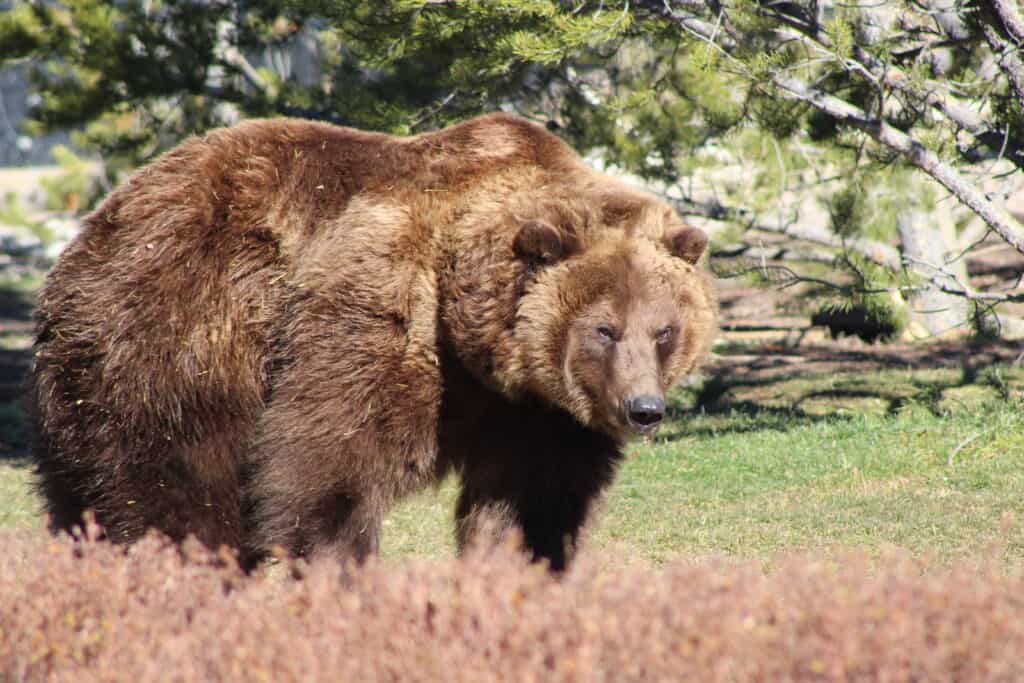
Kodiak bears are the largest subspecies of brown bears. They are also known as the Alaskan brown bear.
©Lisa Stoorza/Shutterstock.com
In our list of the biggest bear species, this ursine is a true heavyweight. The largest subspecies of brown bears, the Kodiak bear (Ursus arctos middendorffi) is second only in size to the polar bear. Also known as the Alaskan brown bear, it is similar in appearance to other brown bears, with its distinguishing feature being its size and location. Adult Kodiak bears often weigh between 660-1320 pounds, while the most massive wild bear on record weighed 1,656 pounds. Standing upright, they can measure anywhere from 8 feet to 9 feet 10 inches tall. However, captive Kodiak bears can weigh up to 2,130 pounds and stand almost 11 feet tall.
Kodiak bears are native to the Kodiak Archipelago. The archipelago is the only place in the world where Kodiak bears live, and it is also the source of their name. Their diet contains various local foods, including berries, seaweed, beach-dwelling invertebrates, and salmon. The population of Kodiak bears is estimated to be above 3,000, and the number of bears is slowly increasing. The IUCN currently lists Kodiak bears as a species of Least Concern.
1. Polar Bear
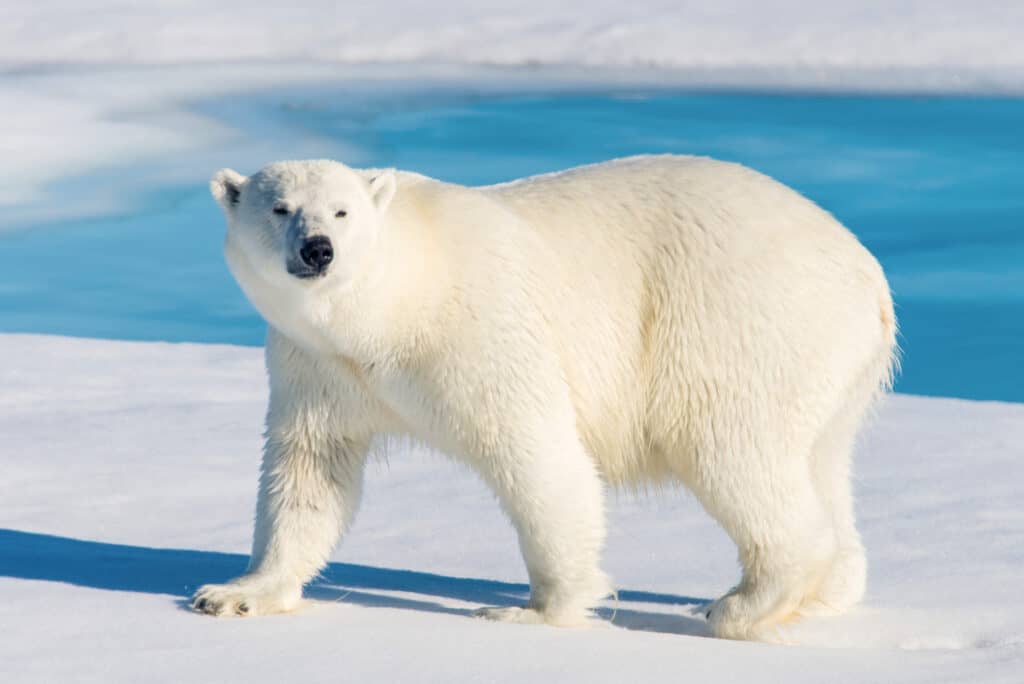
Polar bears are the world’s largest extant bears on Earth.
©iStock.com/Alexey_Seafarer
The polar bear (Ursus maritimus) is the largest bear species in the world and is also the largest living land carnivore. Male polar bears weigh between 770 and 1,500 pounds, while females typically weigh 330-550 pounds, although they can easily hit 1,100 pounds when pregnant. The typical height for males is between 7 feet, 10 inches and 9 feet, 10 inches, with females measuring between 5 feet, 11 inches and 7 feet, 10 inches. However, the largest polar bear on record weighed 2,209 pounds and stood 11 feet, 1 inch tall.
Polar bears range within the Arctic Circle but also roam throughout the northern stretches of Greenland, Canada, Russia, Alaska, and Norway. Their scientific name translates to maritime bear, which alludes to their ability to swim for long distances in freezing water. Members of the biggest bear species rely on meat more than any other of their relatives, as their diet primarily consists of seals, but they will also prey on walruses, small whales, and fish. The global polar bear population is estimated to be between 20,000 and 30,000. Due to climate change, pollution, and other human influences, the IUCN lists polar bears as a Vulnerable species.
It’s probably easy to guess the location of this subspecies of brown bear from its name: they inhabit the Himalayas in parts of Pakistan, India, Nepal, and China. These bears have fur that is more sandy or reddish in color, and their exact bite force is not well-documented. Males are slightly larger than females, averaging from 4 feet, 11 inches to 7 feet, 3 inches, while females range from 4 feet, 6 inches to 6 feet. Males can weigh up to a staggering 880 pounds.