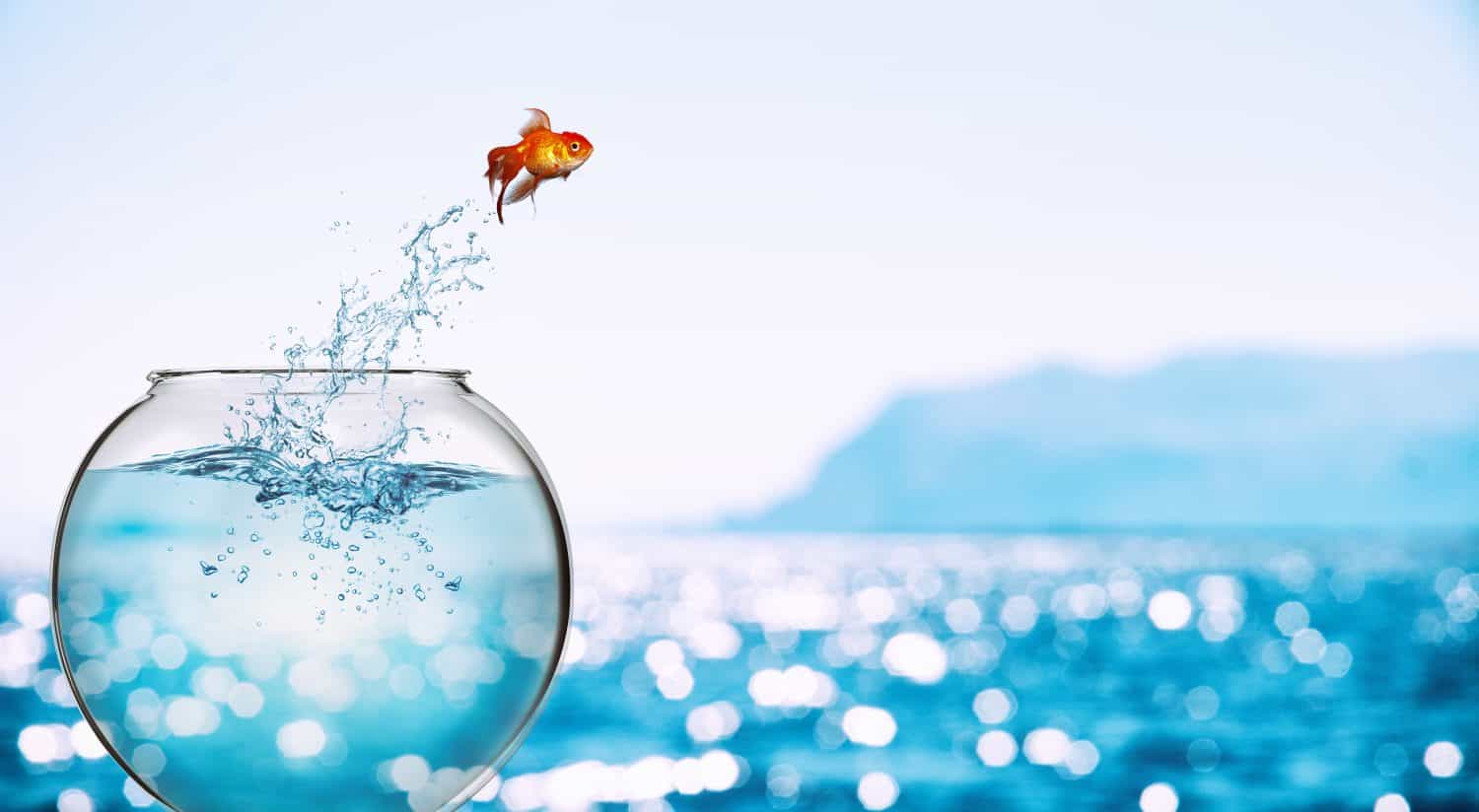

Many things can stress out your pet goldfish to a life-threatening degree. From overfeeding them to adding unwanted companions to their tank, there’s a lot to consider if you want to have a happy aquarium in your home. If you’re thinking of adding some aquatic friends to your family, then consider the seven no-nos on this list.
The Science Behind Goldfish Stress
Similar to humans, when goldfish are stressed, they experience a variety of negative physiological and behavioral changes. One of them is the fight-or-flight response that people also experience due to the release of the hormone cortisol in our system. That flight response is important because it keeps humans and animals out of danger. However, if cortisol is released into our system too often, it can cause anxiety or worse.
Constant stress may mean a shorter lifespan for fish as their immune systems are compromised because when they’re constantly in fright-mode, the necessary energy is diverted away from other necessary functions in their bodies. Other side effects of stress include elevated blood glucose levels, dehydration, and an increased heart rate.
Signs of stressed-out goldfish include a loss of appetite, erratic swimming, color changes like becoming paler or darker, and spending an unusual amount of time hiding. Basically, if they’re not acting like themselves, then you may need to consider if you’re doing one of the following things that stress out goldfish.
Poor Water Quality
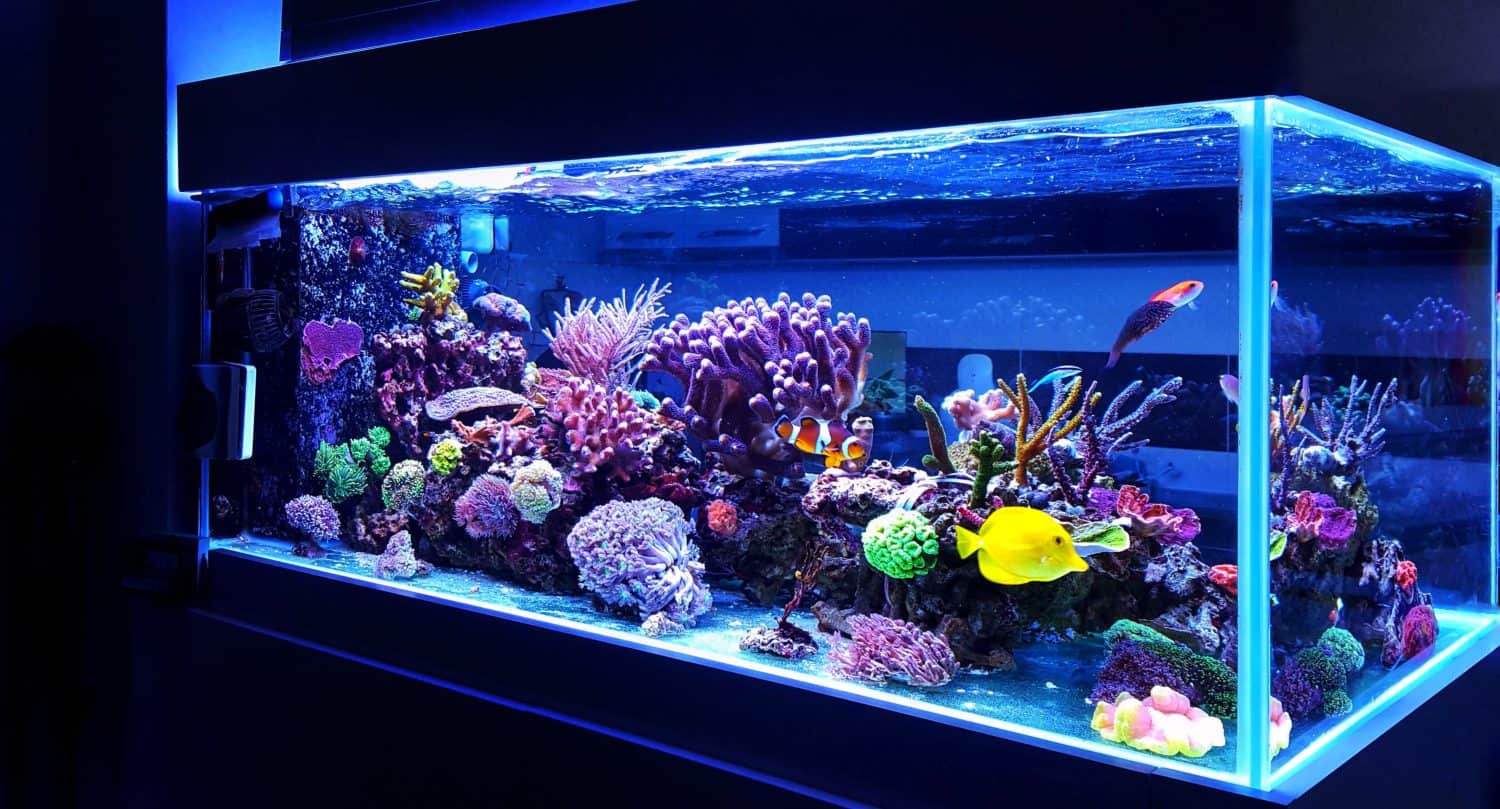
Ensuring good water quality is the most significant way to avoid goldfish stress.
©Vojce/Shutterstock.com
One thing that will almost always stress out goldfish is poor water quality in their tank. The number one priority when taking care of fish of any kind is installing a filter. Without proper filtration, your tank may see an increase in toxic material. Two of the biggest culprits are nitrate and ammonia. Both are produced when fish waste and uneaten food are left in the tank. Invest in a nitrate reader and check the levels regularly. Nitrate levels should ideally be kept below 20-40 ppm for goldfish, as higher levels can cause stress and health issues.
There are other preparations you can make to provide good water quality and a suitable home for your goldfish. Keep the aquarium out of direct sunlight and away from heating and cooling vents so they don’t negatively influence the water temperatures. Add a thermometer so you can ensure a water temperature between 65-72 degrees Fahrenheit. Also, add water conditioner regularly per the directions on the bottle. Finally, ensure a proper pH balance at all times.
Not Providing Enough Space to Swim
While many goldfish on TV spend their time in a small bowl, the only way to have a truly happy, stress-free goldfish is to give them plenty of space to swim. Like many animals, fish like to have a purpose, which they fulfil by swimming around the tank and exploring the habitat. When goldfish don’t have enough to do, they can become irritated. Aim for a wider tank so your fish has a chance to move about.
There’s also the issue of overcrowding the tank with other fish. If you have too many fish of any kind in the tank, it’s likely that they’ll become agitated, and they may quarrel with each other. As a general rule of thumb, find a tank that will allow 20 gallons of water volume per goldfish. You will likely need to adjust this formula as your fish grows or you add more fish.
It’s wise to add different plants and decorations, like caves, driftwood, and rocks, to the aquarium. They give the fish something to explore and help them to define their territory when living with other fish. With that in mind, understand that sudden changes in the tank environment can also stress out goldfish. Don’t suddenly add several new decorations or plants at a time. Add them gradually. Give them time to adjust to new surroundings, and they’ll be happy fish.
Incorrect Temperature
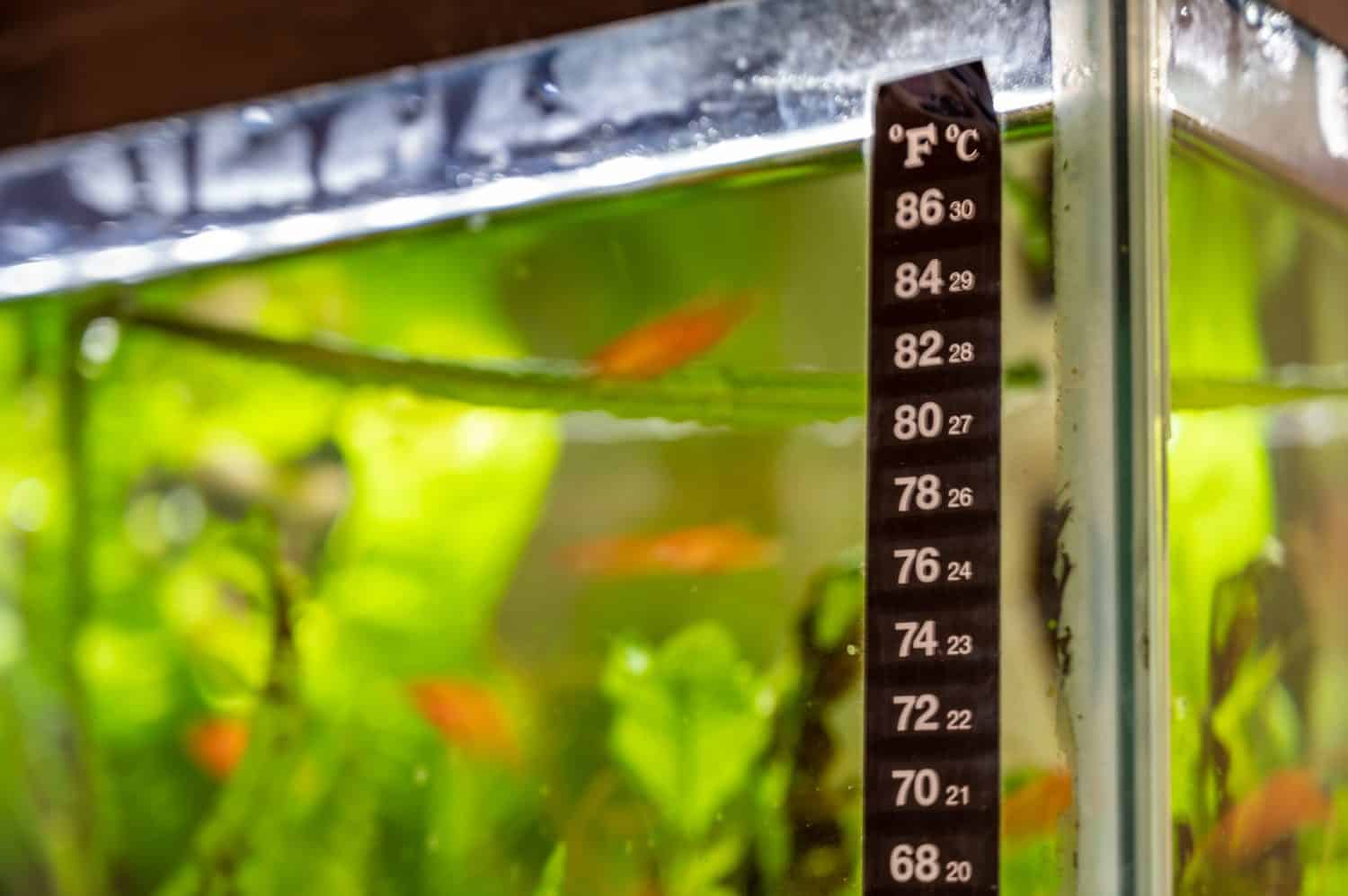
Keep a thermometer near the aquarium at all times to ensure proper water temperature.
©Lost_in_the_Midwest/Shutterstock.com
The ideal water temperature for a tank of goldfish is between 65 and 72 degrees F. Going much lower or higher than that range is likely to result in anxiety.
Dangers of Warm Water
Water that is warmer than the recommended range can cause health issues by lowering dissolved oxygen levels, increasing harmful bacteria, algae, and toxin buildup. Warm water can also increase metabolism, which can cause an imbalance and outweigh the available oxygen, which can limit the energy necessary for growth and survival. Signs of overheating can include lethargy, rapid gill movement, and loss of appetite.
Keeping the water temperature from rising can be particularly difficult in the summer, especially if you live in a warmer climate. However, there are proven methods to prevent overheating, such as attaching a clip-on fan over the surface of the water. If you have lights in the aquarium, use them sparingly as they can heat up the water. You can even add frozen bottles or ice packets into the tank to bring down the temperature. Just be sure to monitor the conditions regularly to ensure that the water doesn’t get too cold.
Issues With Cold Water
If the water is too cold, it can cause other issues. Fish are cold-blooded creatures, so they cannot control their own body temperature. They rely on the temperature of the environment around them to keep their activity levels and metabolism in check. Fish in the wild can typically move to a warmer spot when they’re cold. However, the water temperature in your aquarium is usually uniform throughout the tank. Fish who are experiencing discomfort due to colder water will often show it by being less active and less hungry. As a result, their immune system may be compromised.
Check the temperature periodically to verify that the water isn’t too cold. If you have a naturally colder home, then you may need to intervene by adding a heater that is designed for the size of your tank. Ensure that there is good circulation around the heater to allow even heat distribution. Check the temperature regularly so it doesn’t get too warm. In the case where you need to exchange the water in the tank, try to add water that is already within the desired temperature range immediately, so it isn’t a shock to the fish.
Aggressive Tank Mates
One of the more obvious things that is likely to stress out goldfish is having aggressive tank mates. Just like with humans, having too many fish nearby all the time can often be a cause for anxiety. In addition to being more crowded, many aggressive tank mates may even try to chase goldfish around or nip at their fins, causing physical harm.
If you decide to add more fish to the tank, select the other species carefully. Look for those that have similar environmental needs. Also, just like with the decorations, add new fish slowly so it’s less jarring for your goldfish. Finally, don’t do too much at once. For example, you wouldn’t want to add new fish, new plants, and new decorations at the same time, or it could cause sensory overload.
It’s essential that you don’t find tank companions that naturally don’t mix well with goldfish. Some tankmates to avoid include:
- Tropical fish (guppies, bettas, plecos)
- Cichlids
- Red-Tailed sharks
- Bucktooth tetra
On the other hand, fish that are often compatible with goldfish include:
- Zebrafish
- Ornamental minnows
- Decorative snails
- Hillstream loach
- Ricefish
- Hoplo catfish
- Longfin rosy barbs
Do a bit of research before filling your tank with fish, or talk to an expert or a vet before your purchase, so you can keep your fish stress-free.
Improper Feeding
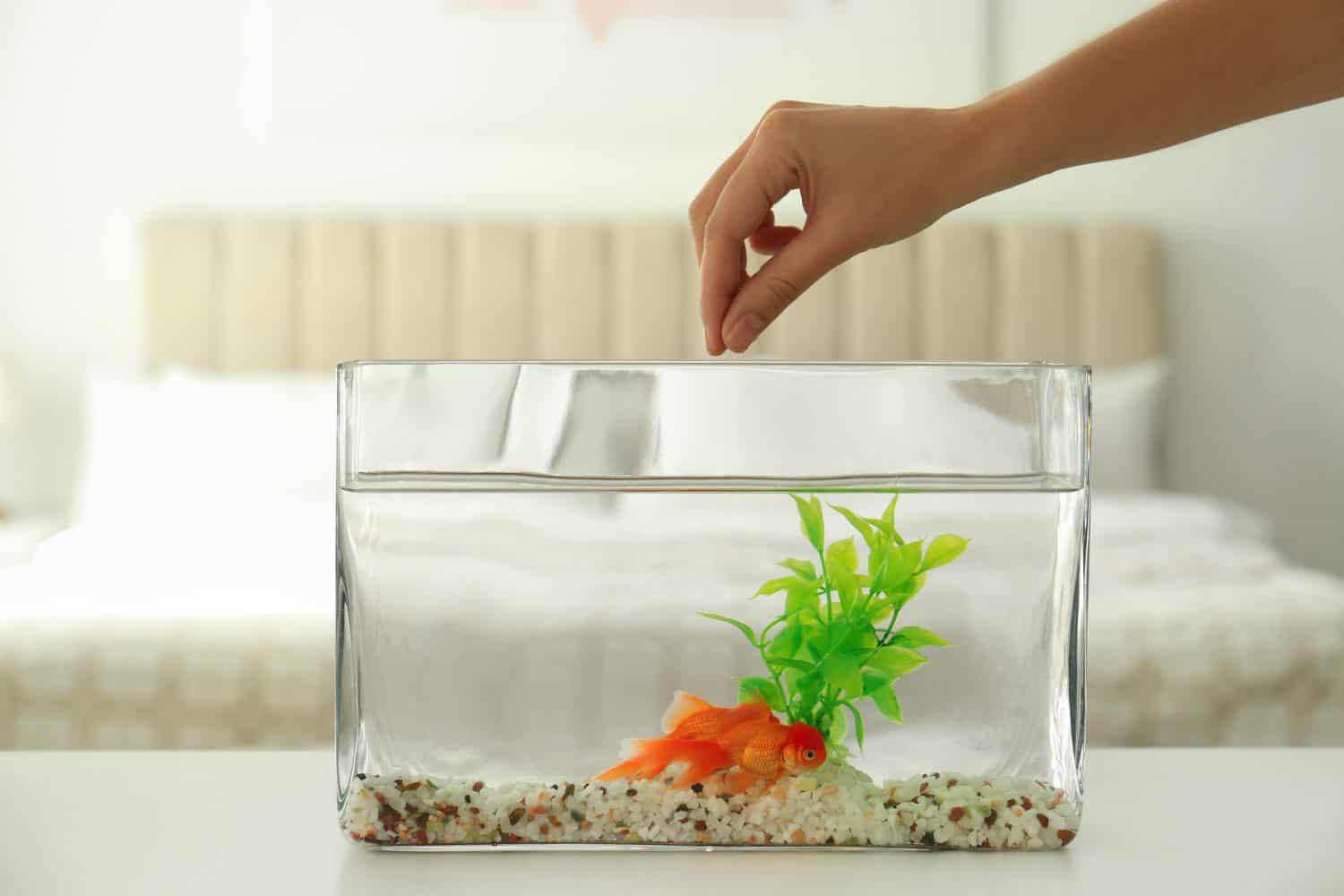
Over or underfeeding your fish can cause stress and various health concerns.
©New Africa/Shutterstock.com
An improper diet and poor feeding habits can easily stress out goldfish. It can go either way. Both overfeeding and underfeeding your goldfish can cause weakness and disease that will put your pet in distress. Signs of underfeeding include weight loss, faded coloration, lethargy, and fin erosion. The fish may also be more competitive when it comes to gathering the meager food that they’re provided, and they may attack each other. Overfed fish may develop a distended belly and appear bloated. Naturally, they’ll likely also become less active and display fin rot or cloudy water. If you see uneaten food sinking to the bottom of the tank, it may be a sign that you’re providing too much food.
To avoid both scenarios, you must ensure that you feed your fish the proper amount of food on a regular basis. Most adult goldfish do well with one or two small feedings per day. Create a routine and set reminders on your phone so you don’t forget a feeding. Since not all fish are the same, you may have to do a bit of investigation to learn how much food they need. Watch when they feed. If all the food is eaten in minutes, you may have to feed them more. If you walk by five minutes after feeding and some food is still floating in the tank, you may want to feed it a bit less. Finally, be sure to feed your fish the proper type of food, be it with flakes or pellets. Ask the vet what your particular type of fish typically requires.
Excessive Noise
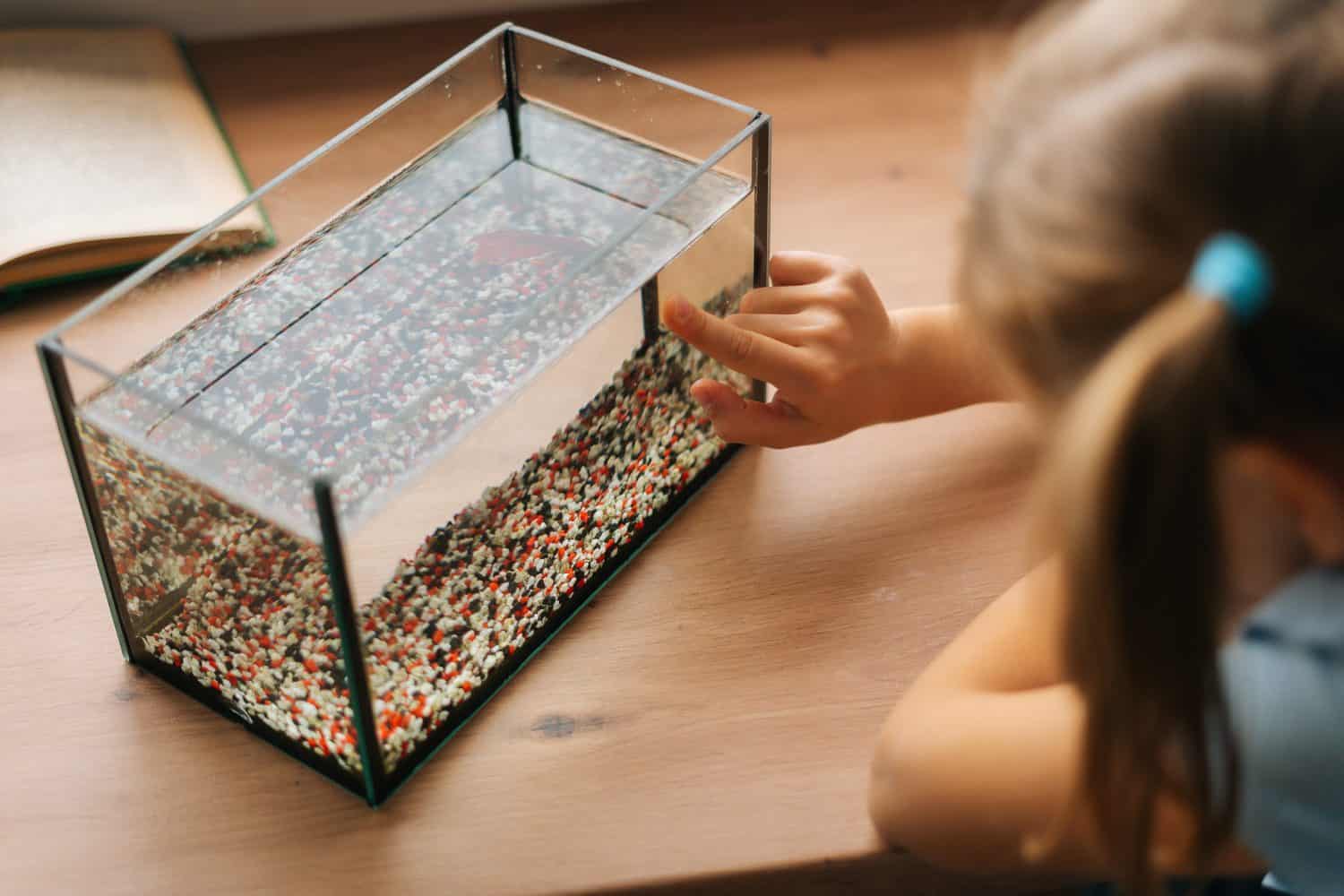
Loud noises, including tapping on the glass, can cause stress and anxiety in fish.
©Dikushin Dmitry/Shutterstock.com
As a rule of thumb, try to keep your fish tank in a quieter part of your house or apartment, as excessive noise can be very stressful for fish. Light doesn’t travel very far in water, so fish depend on sound to learn about their environment, communicate, and detect prey and predators. So, naturally, they will be a bit more stressed when they essentially can’t hear themselves think. As it can do with humans, excessive loud noise can also cause health issues in fish, including tissue damage, bleeding, and hearing loss. Studies also show that fish that are subjected to constant sounds may also die earlier than other fish
Fish can also feel vibrations when there is a loud noise near their bowls or tanks. That’s why tapping on the glass is frowned upon. Tapping startles the fish and can cause stress and fear. So, ensure that guests in your home are respectful of your fish and keep the aquarium out of the busy footpaths of your house.
Too Much Light
Another living condition that will stress out goldfish is too much light. One reason is that different fish require different levels of light. Some are better at seeing and moving in low light, so too much light could be sensory overload. You also don’t want to put your tank right next to a window, because in addition to being in blinding light, the heat from the sun could raise the water temperature to an unwanted level. Constant light can also cause excessive algae growth. Finally, fish sleep like all other creatures, and like most, too much light can interfere with their circadian rhythm and disrupt their rest. When fish don’t get enough sleep, they may lose their appetite or become lethargic, which can increase the risk of stress.
The best way to provide the proper light level for your fish is to purchase an LED fixture that allows you to change the brightness and color temperature. Modify the lighting until your fish appear to be comfortable. A tank with too much light and open water is also likely to have a lack of places to hide. Fish like to have little caves and plants in the tank to hide behind so they can feel secure and less stressed. A cave may also be where they hide when they’re feeling stressed about the other items on this list, like aggressive tank mates and sudden water changes. Provide at least a few different hiding spots, and your goldfish are likely to be much happier.