
Quick Take
- The cloaca is the orifice through which geckos excrete their feces.
- Most gecko feces are considered odorless.
- During brumation, geckos may not poop for months.
There are over 1,850 known species of geckos (Gekkota) worldwide. They are found on every continent except Antarctica, primarily inhabiting warm, tropical, and subtropical regions. Geckos rely on warm climates because they are ectothermic, meaning they cannot generate their own body heat and must absorb warmth from their environment to maintain a suitable body temperature. Divided among seven different reptile families, geckos exhibit one of the most extreme size differences, ranging from tiny creatures that are less than one inch long to strikingly large lizards that can reach over a foot in length. While most geckos are insectivores, many are omnivores that also consume fruit, nectar, and pollen. Given their extreme size differences, it follows that gecko poop varies significantly in size, but otherwise, their solid waste is remarkably similar. Continue reading to discover everything you ever wanted to know about gecko poop.
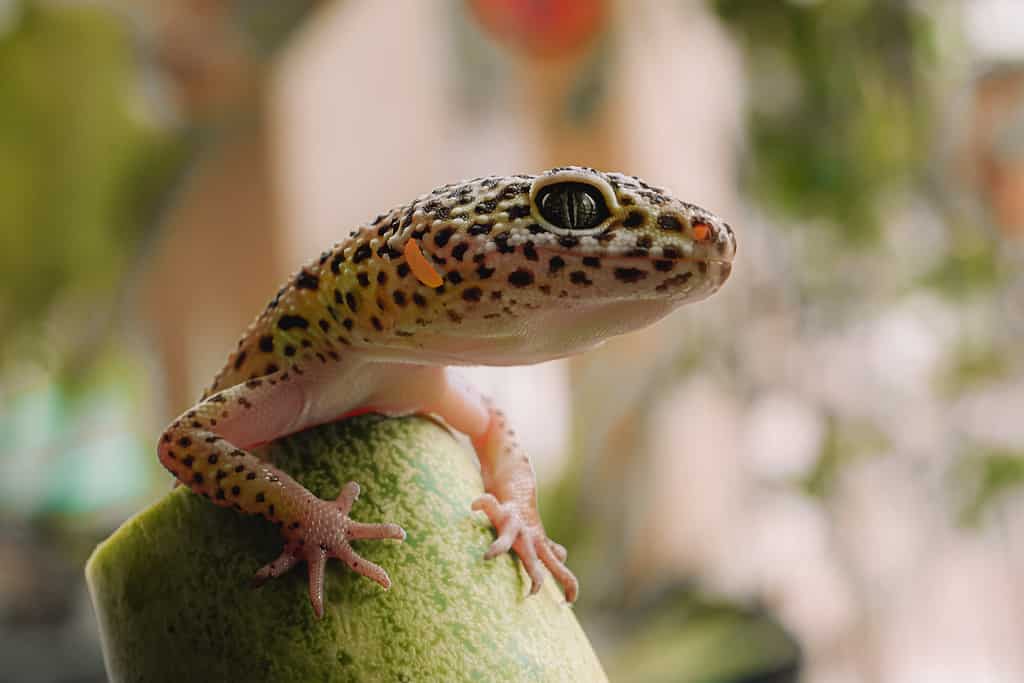
Geckos make good pets, as long as you give them plenty of attention.
©feri ferdinan/iStock / Getty Images Plus via Getty Images
What Does The Gecko Poop Look Like?
Gecko poop is characterized by a distinctive, two-part structure: a dark, solid fecal component and a white, chalky tip, which is excreted from a single opening called the cloaca. Because geckos are reptiles, their waste combines digestive excrement with crystallized uric acid (urine).
The fecal part is usually dark brown to black, while the uric acid portion is white.
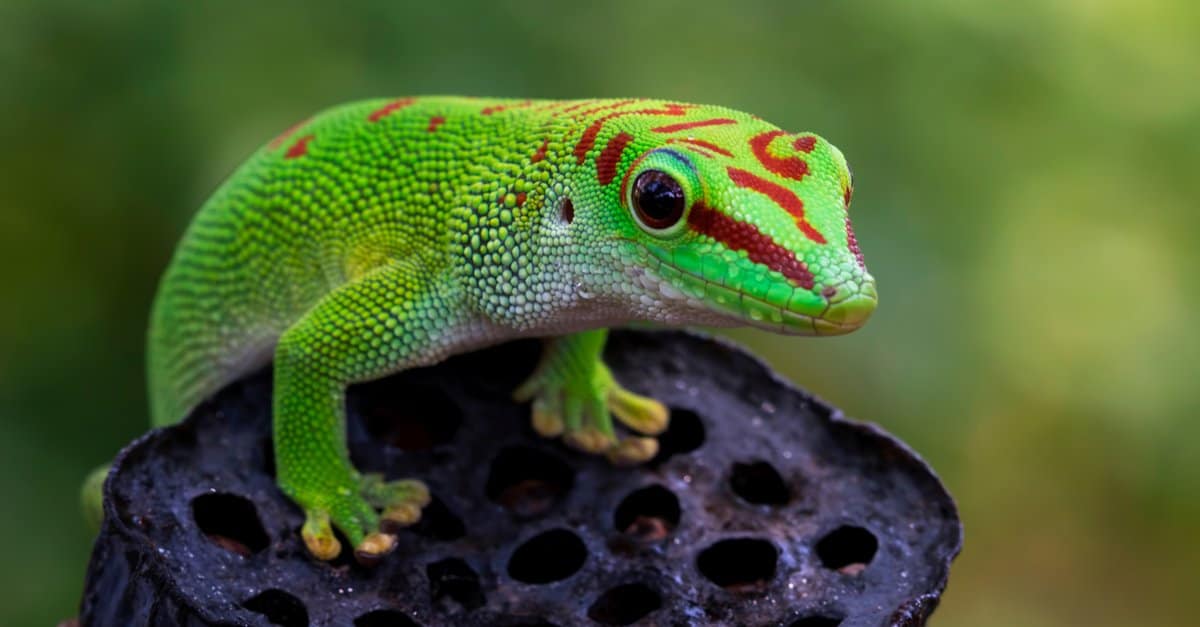
The New Caledonian giant gecko (Rhacodactylus leachianus) is the world’s largest extant gecko. This lizard is between 12 and 17 inches long, including its tail, and weighs 0.5 to 1 pound. Due to their large size, their feces are notably larger than those of most other gecko species, though specific measurements are not well documented.
The Jaragua dwarf gecko (Sphaerodactylus ariasae) is one of the smallest extant gecko species. Jaragua dwarf geckos measure less than one inch from snout to vent, and only 1.4 inches when including their tail. This tiny lizard’s scat is 0.07 to 0.19 inches long, or about the size of a grain of sand.
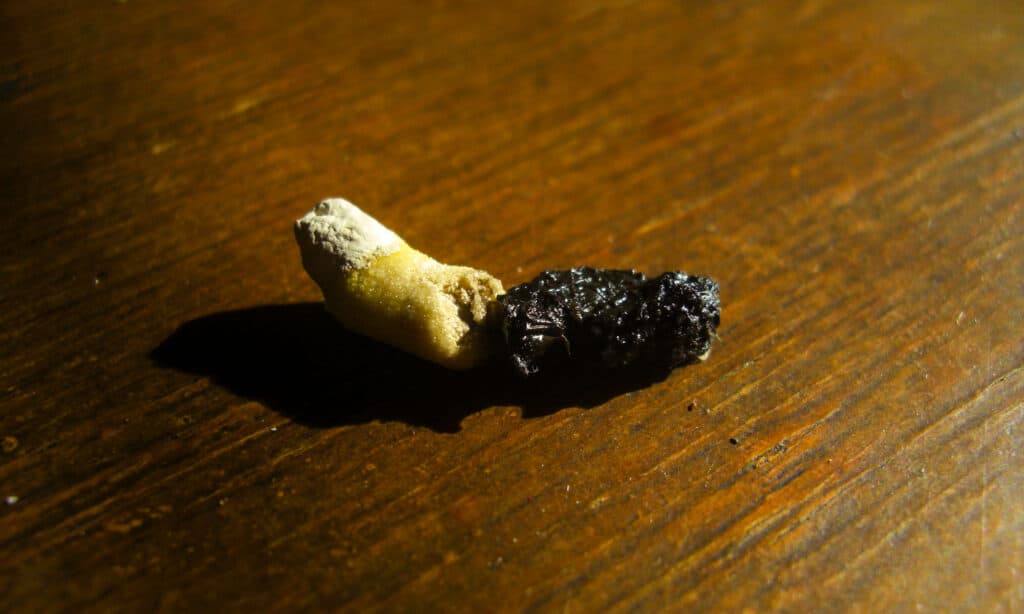
Gecko droppings are composed of feces and uric acid (urine).
©Muhammad Akmal Juarsa/Shutterstock.com
Two of the most common pet geckos are the leopard gecko (Eublepharis macularius) and the crested gecko (Correlophus ciliatus). These two species are of a very similar size, but have different dietary requirements. Even so, their feces are similar in appearance and size.
Their droppings are approximately 0.05 inches long and between 0.25 and 0.375 inches in diameter. They reportedly resemble Tic Tac breath mints in size.
Although leopard geckos are insectivores and crested geckos are omnivores, their scat looks surprisingly similar, with a cylindrical fecal part and a smaller, white or off-white urate cap.
Does Gecko Poop Smell Bad?
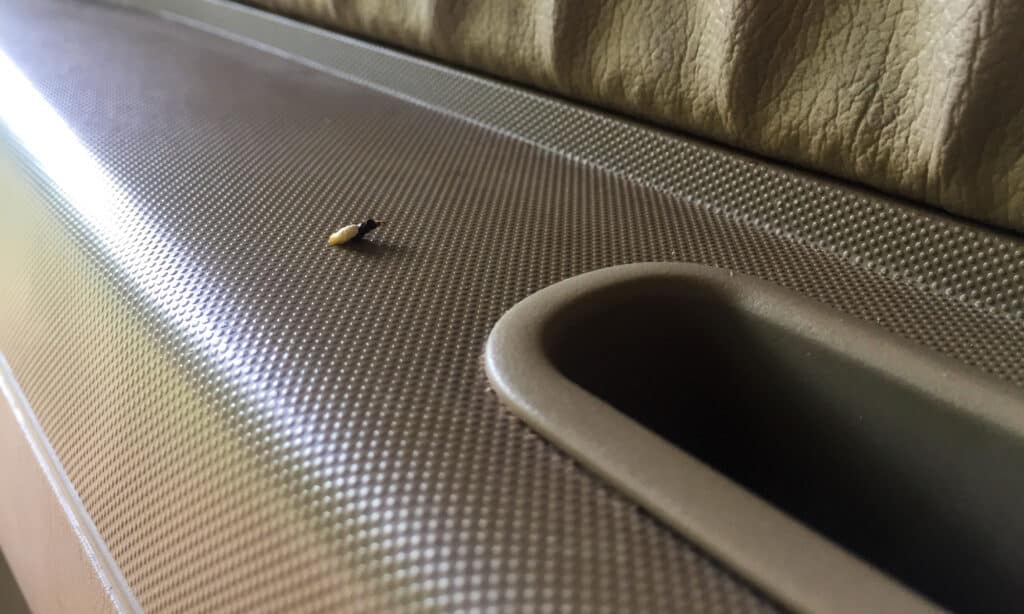
Healthy gecko feces do not have a strong odor.
©Artikom jumpamoon/Shutterstock.com
Gecko feces generally do not smell bad or create a noticeable odor, as most geckos produce small, dry droppings. While gecko feces, particularly in a clean environment, rarely produce strong-smelling waste, a sudden change to foul-smelling feces could be indicative of potential health issues. However, the aforementioned New Caledonian giant gecko is renowned for its exceptionally odoriferous droppings, which are described as foul-smelling.
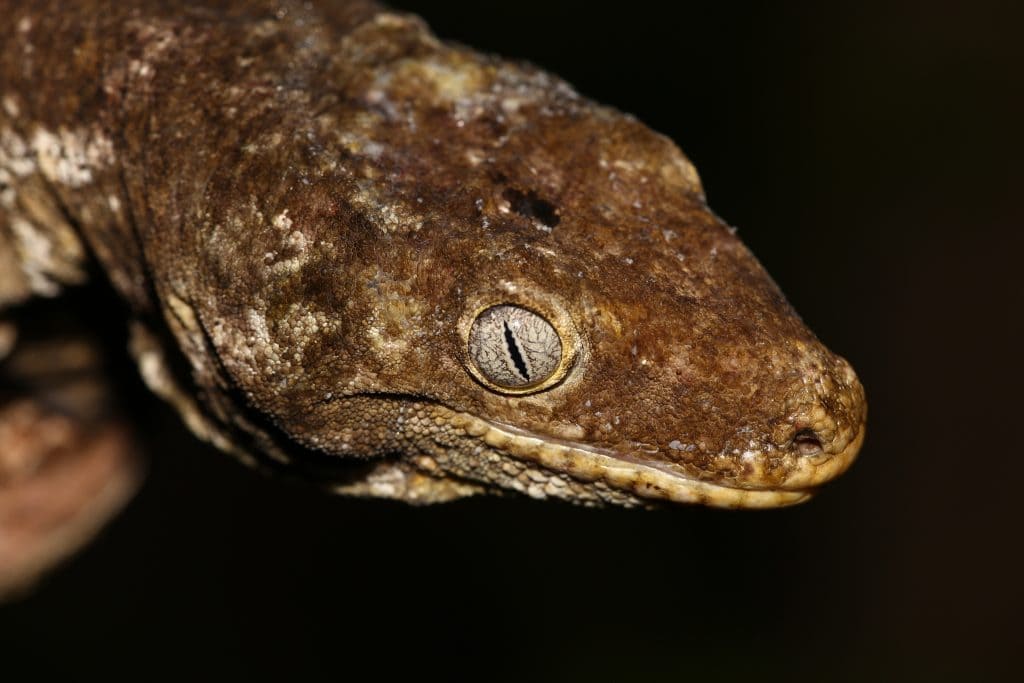
New Caledonian giant geckos produce foul-smelling feces.
Do Geckos Poop A Lot?
How often a gecko defecates is affected by its age and the amount of food it consumes. Young geckos may poop several times a day. However, mature geckos generally defecate approximately two times per week.
During proper brumation, a gecko will rarely, if ever, poop. Because their metabolism slows down significantly and they usually stop eating entirely, there is little to no waste to expel. In preparation for brumation, a gecko has a period of fasting to empty its digestive tract.
Is Gecko Poop Harmful?
Geckos, like other reptiles, can carry Salmonella and other bacteria in their droppings, even if they appear healthy. These germs can spread to people through contact with the gecko or its environment, potentially causing severe gastrointestinal illness. Because these bacteria can be present in the cage, its contents, and on the gecko’s skin, it is imperative to wash your hands thoroughly after cleaning an enclosure or handling a gecko.
Is Gecko Poop Useful?
Geckos use their feces as scent-based markers to define their territory. Gecko droppings are primarily useful to owners as a key indicator of their pet’s health, diet, and hydration, with normal, well-formed, dark brown droppings signifying a healthy pet.
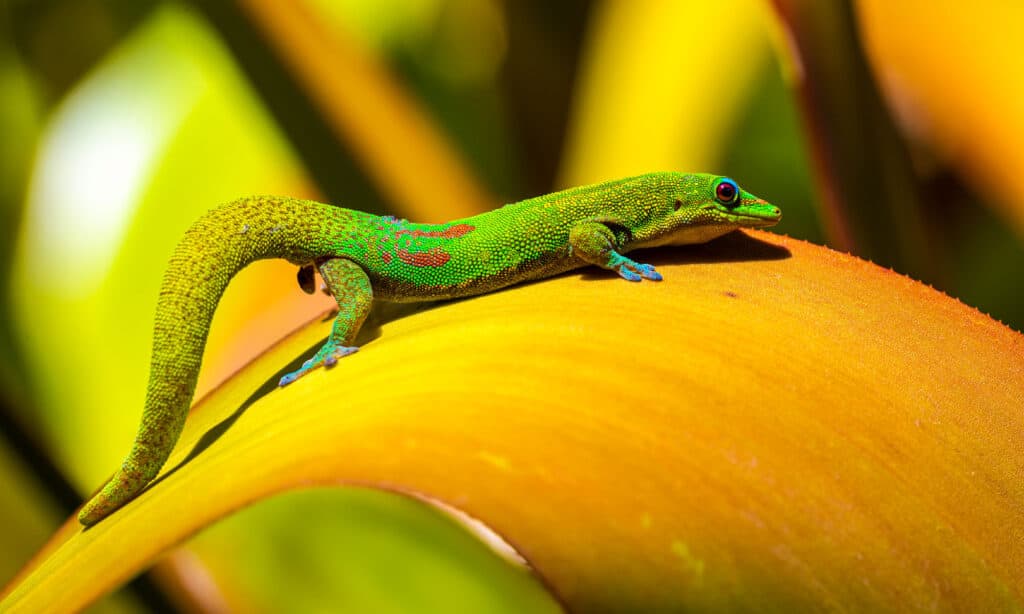
The poop of a gecko is passed through their cloaca.
©Phillip B. Espinasse/Shutterstock.com