
The two new spider species scientists recently discovered in Southeast Asia have taken their camouflage to a truly bizarre and impressive level. These unusual crab spiders, members of the genus Phrynarachne, not only look like bird droppings — they smell like them too! This impressive (and gross) disguise helps the spiders both avoid predators and ambush prey. A recent study published in ZooKeys details these new species and shares surprising insights into the behavior of other spiders in this creatively disguised genus.
Two New Spiders from the Philippines and Borneo
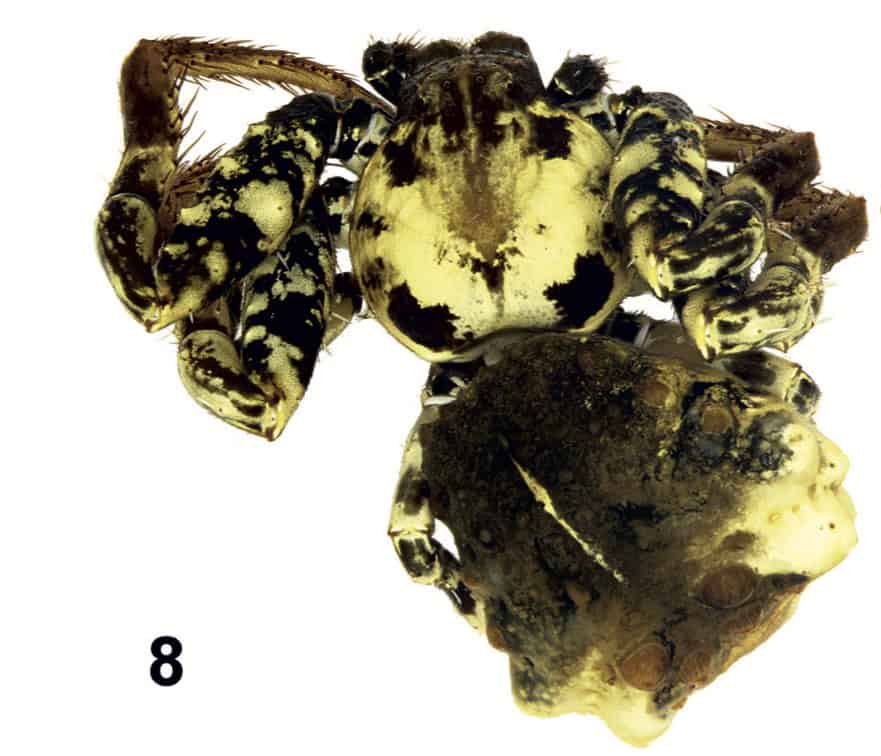
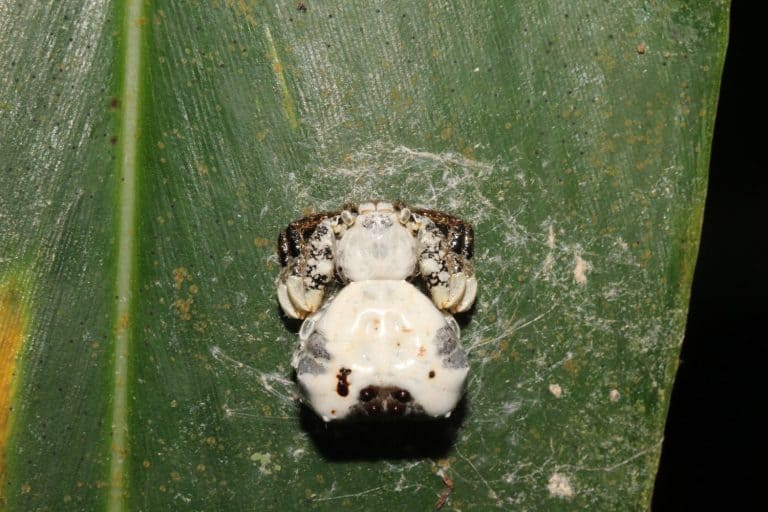
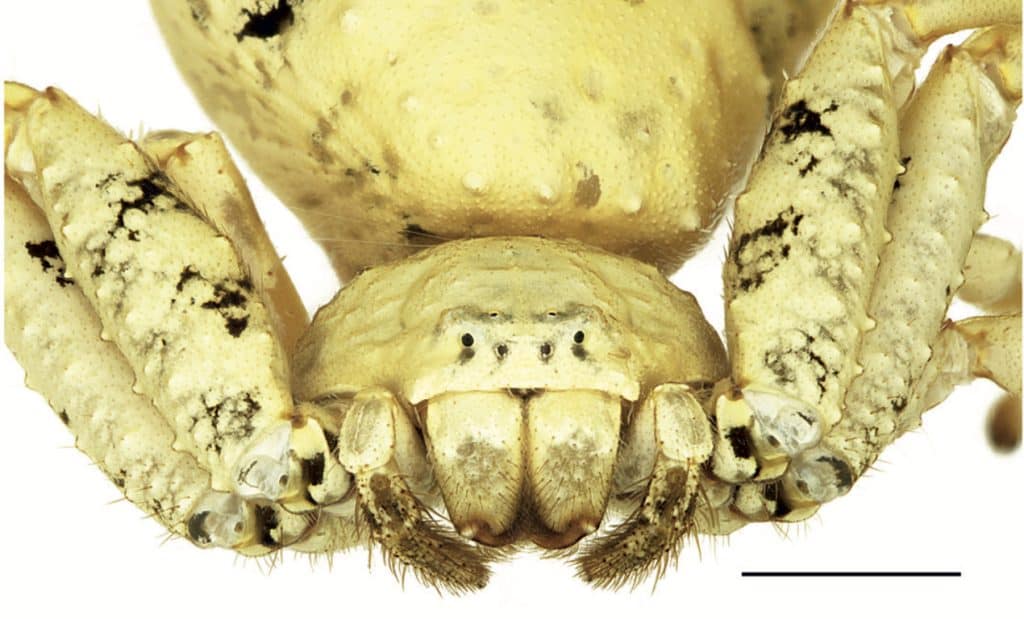
Phrynarachne storozhenkoi was named in honor of the Russian entomologist Sergei Storozhenko.
©Mikhail M. Omelko / CC BY 4.0 / ZooKeys 2025 – Original / License
Researchers discovered female specimens of the two new crab spider species, Phrynarachne gorochovi and Phrynarachne storozhenkoi, in the rainforests of Southeast Asia.
Phrynarachne gorochovi, found on the island of Luzon, is the first of its genus to be documented in the Philippines. The spider has a blotchy appearance, featuring irregular dark brown spots and bumps scattered across its yellow body.
Phrynarachne storozhenkoi was discovered on the island of Borneo in Malaysia. Its pale, yellowish-white body has four irregular black spots and light legs covered in dark streaks. While no Phrynarachne species had been formally documented on Borneo before, this finding confirms more than 80 reported sightings by citizen scientists on iNaturalist.
Expanding the Spider’s Range and Diversity
Crab spiders walk sideways like a crab.
©Mikhail M. Omelko / CC BY 4.0 / ZooKeys 2025 – Original / License
In addition to the two new spider species, the study formally documented two known Phrynarachne species. The two spiders, Phrynarachne ceylonica and Phrynarachne decipiens, were found in Laos for the first time. This discovery significantly expands the known range of these spiders across Southeast Asia. The observation of all four species highlights how widespread and diverse these “bird-dropping crab spiders” really are.
This broader distribution also suggests that the region’s tropical rainforests may hold more undescribed species. Because these spiders are small, secretive, and skilled at hiding, the species discovered so far may represent just a fraction of the genus’s true diversity.
The Bizarre Art of Looking and Smelling Like Poop
Spiders in the Phrynarachne genus are often called bird-dung or bird-dropping spiders.
©Mikhail M. Omelko / CC BY 4.0 / ZooKeys 2025 – Original / License
Spiders in the Phrynarachne genus have one of the most unusual camouflage strategies in the animal kingdom. These unique spiders are almost indistinguishable from bird droppings — and that is the exact purpose of their strange appearance.
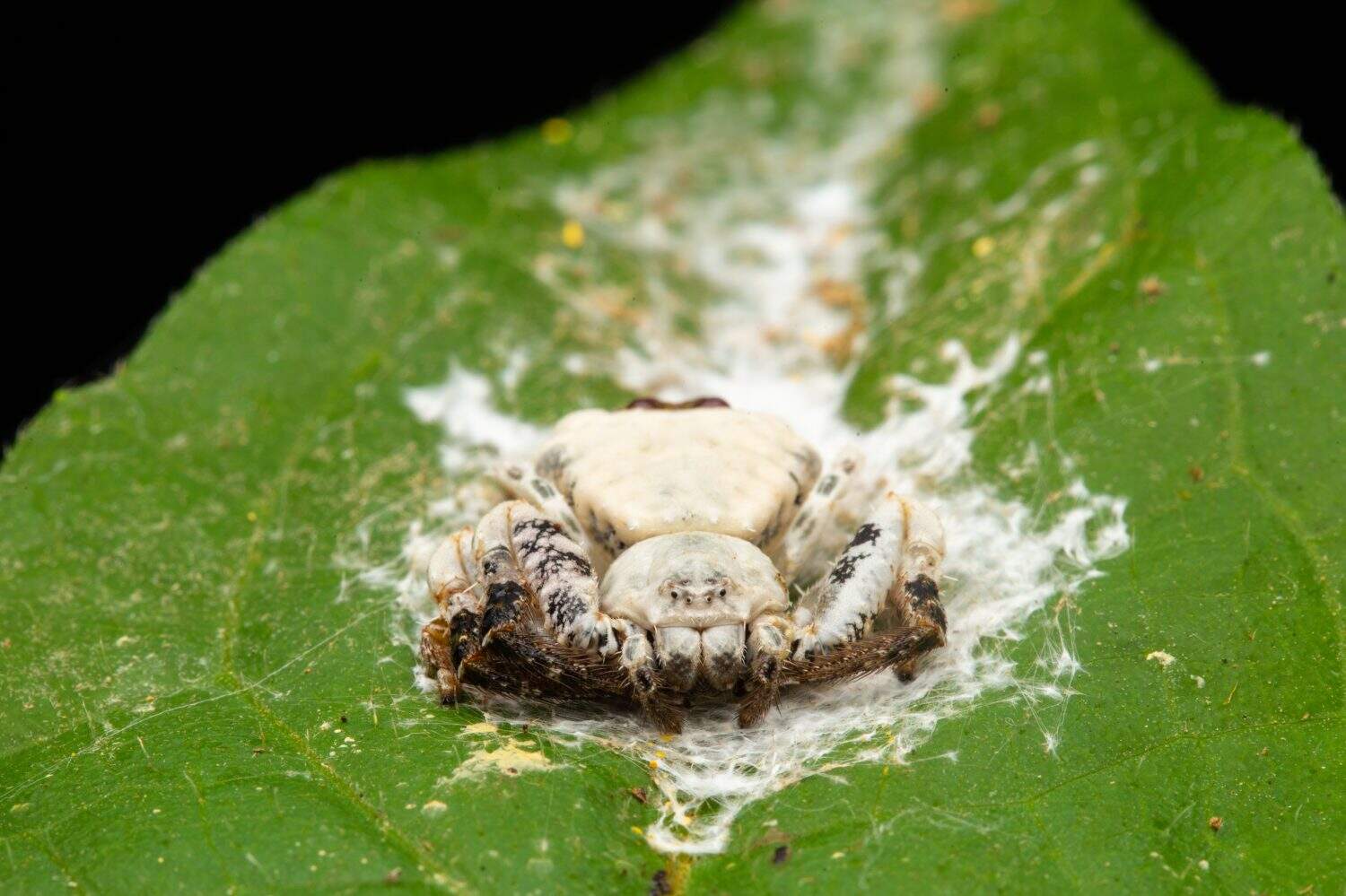
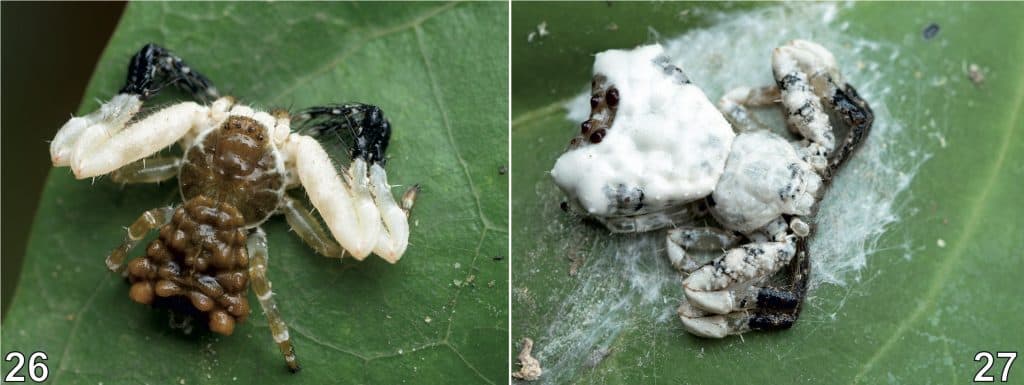
The spiders’ bodies have mottled patterns, colors, and bumps that closely resemble bird droppings. To enhance the illusion, they often sit motionless on leaves. Sometimes they position themselves on a small white silk patch that mimics a splash of fresh poop. Some species even add debris or insect remains to their silk mat to create a more convincing bird-dropping appearance.
The spiders’ mimicry goes beyond appearance and behavior—they also emit a foul odor that makes them smell like bird droppings. This scent likely helps deter predators while simultaneously attracting flies and other insect prey.
As ambush hunters, bird-dropping crab spiders do not build webs. Instead, they rely entirely on their camouflage and deception, waiting patiently on a leaf until an unsuspecting insect lands nearby, then striking it with lightning speed.
Phrynarachne females are much larger than males, typically measuring 0.44 to 0.55 inches long. Males, on the other hand, are rarely seen and only measure 0.12 to 0.2 inches long. Females use their silk to bend and seal the edges of leaves, creating a safe, hidden chamber to protect their egg sacs.
Evolution’s Gross Yet Genius Design
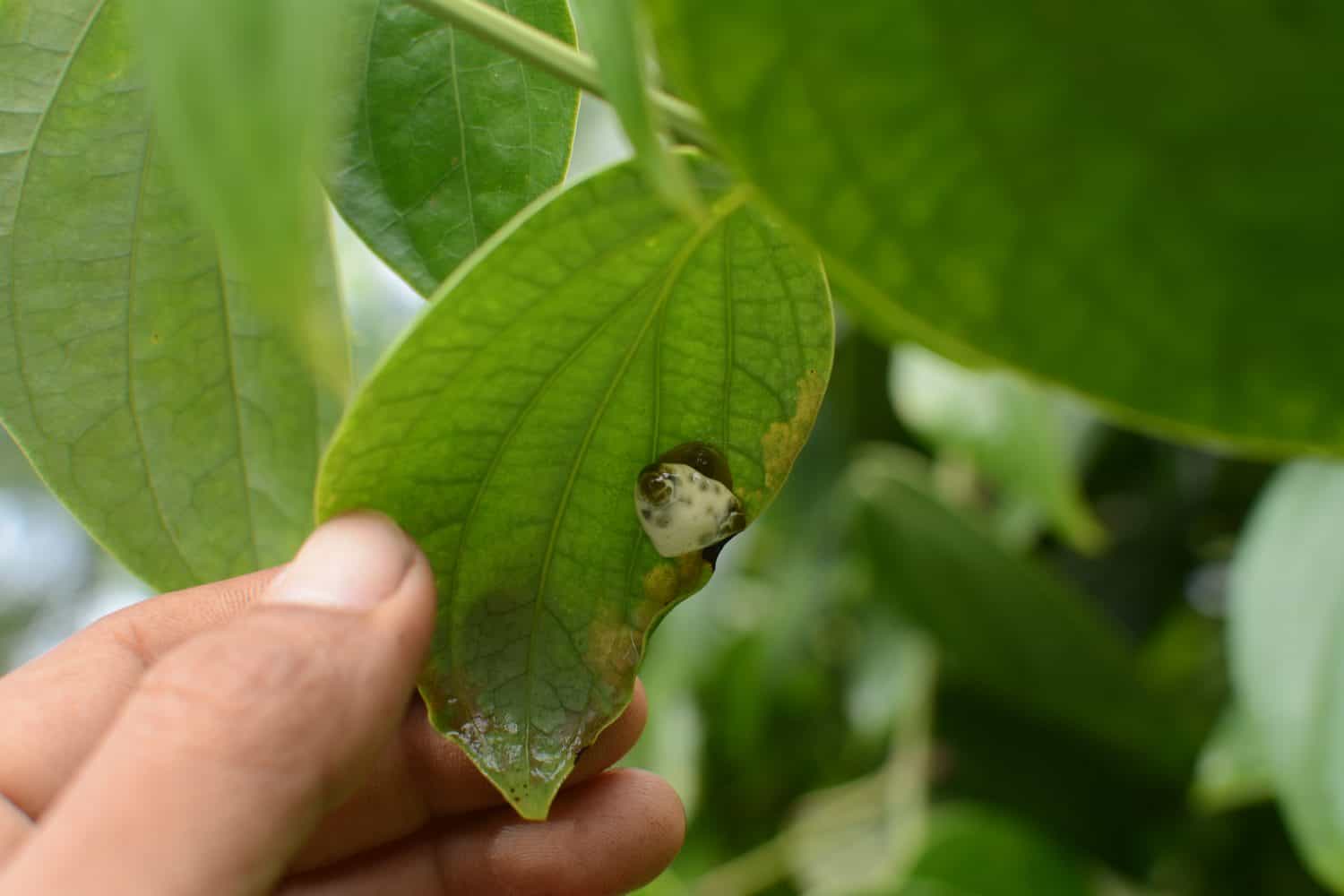
Phrynarachne spiders often adopt an unusual position to appear more like bird droppings.
©Marut Khrueahong/Shutterstock.com
Mimicking bird droppings provides two major advantages to these small arachnids: it repels predators such as birds and lizards, and it also lures prey like flies for the spiders to eat. This cleverly combined strategy is known as protective and aggressive mimicry — protective because it hides the spider from predators, and aggressive because it helps the spider hunt its food.
The extraordinary appearance of Phrynarachne spiders is the result of natural selection over millions of years. Evolution consistently favored any genetic mutation that enhanced the spider’s resemblance to a bird dropping. Consequently, the spiders we see today often have bulbous, lumpy bodies with chalky white and dark areas. These colors and textures imitate a fresh bird dropping, which consists of white uric acid crystals and darker fecal matter.
The spiders’ disguise may seem strange and unappealing to us, but it is an excellent reminder that natural selection and evolution do not always favor beauty; sometimes, survival depends on being just gross enough to go unnoticed.