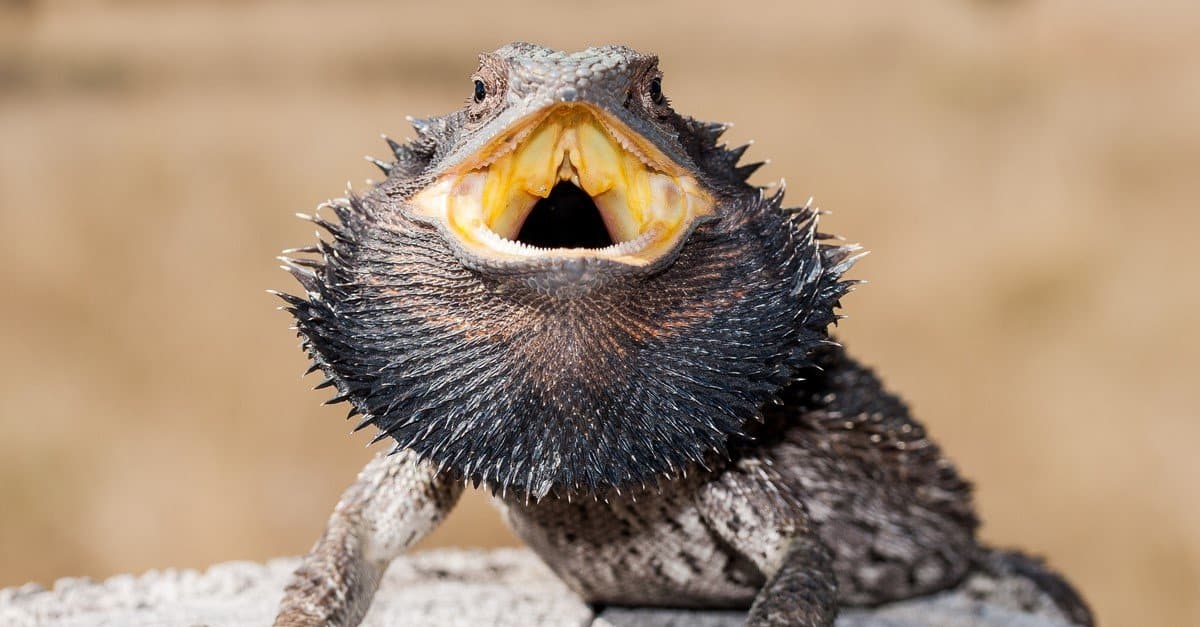

The bearded dragon, a reptile native to Australia, is known for its calm temperament and has become a popular pet around the world. While its distinctive “beard” can reveal changes in mood, another important indicator of its health is its poop. By paying attention to color, texture, and frequency, owners can gain valuable insight into their bearded dragon’s overall well-being. This guide covers everything you need to know about bearded dragon poop.
This post was updated on September 9, 2025 to clarify bearded dragon diet, indications of bowel obstruction and dehydration, as well as the normalcy of white coloration within reptile feces.
What Does Bearded Dragon Poop Look Like?
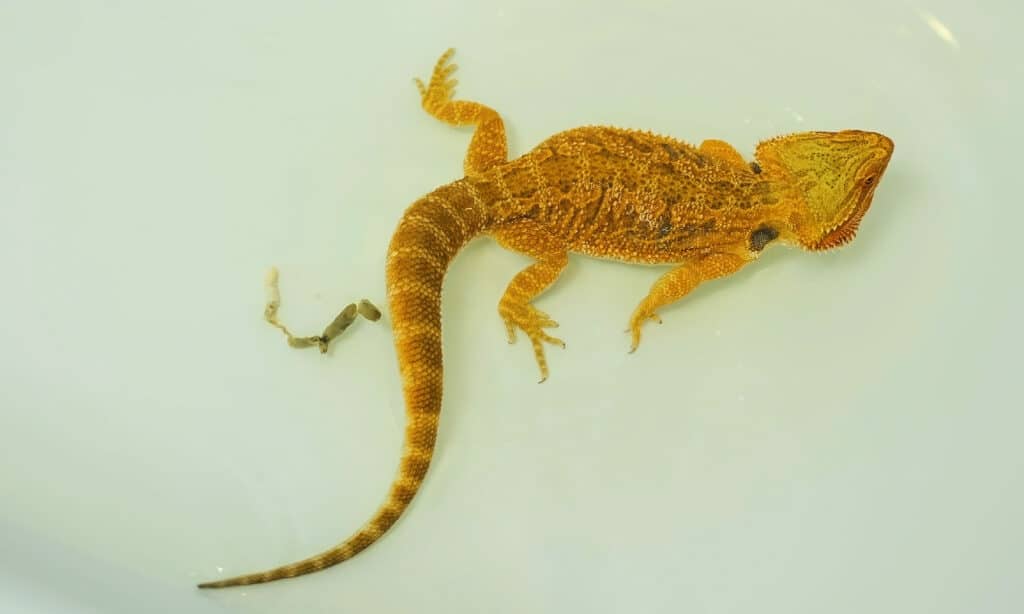
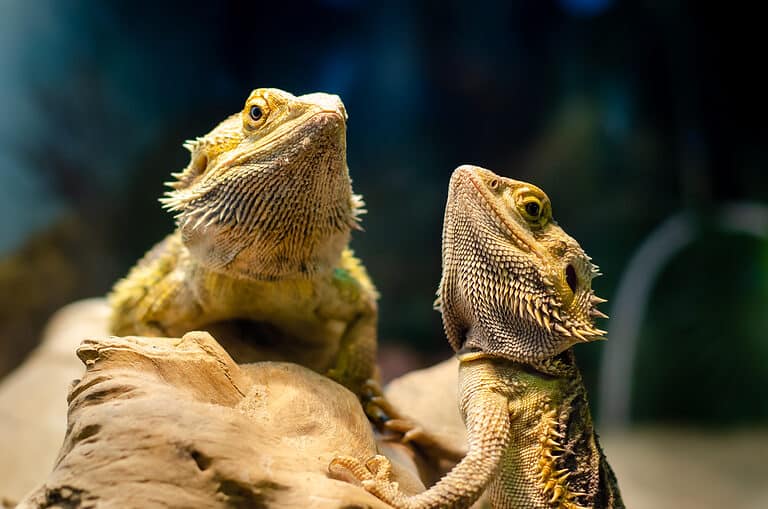
Bearded dragon poop is usually brown with white or yellow urates.
©Evgeniia Zakharishcheva/Shutterstock.com
Healthy bearded dragon poop would be brown and firm with white or yellow urates. The poop will also have a strong consistency and a log-like shape. The white part is the urate which is usually soft and has only a slight odor. However, if a bearded dragon has parasites or kidney issues, urates can be very foul-smelling.
What Do Different Kinds of Bearded Dragon Poop Mean?
*It should be noted: poop appearance varies widely based on hydration, diet, and health. Many of the supposed “diagnoses” are too definitive and should be framed as possibilities requiring vet confirmation.
Brown Poop
The brown poop is the regular bearded dragon poop, indicating a healthy bearded dragon. When you see this kind of poop, you have no cause for alarm.
Runny Poop
Runny poop is usually a sign that your bearded dragon is suffering from diarrhea. The most likely reasons for this could be diet changes, parasites, or a bad diet. If you recently changed your bearded dragon’s diet, the runny poop may continue temporarily. If, however, the loose stool is a result of foods that are high in water content, you might need to make some adjustments to reduce the amount of water. Also, it could be that parasites have infected your beardie. The primary way this can happen is through the insects that they consume. Signs of a parasitic infection include mucus in stool, weight loss, lethargy, loss of appetite, anorexia, or foul-smelling poop.
White Poop
The white portion is urate, which is the solid form of uric acid (normal reptile waste). Chalky or hard urates can indicate dehydration, but white urates are normal. In the case of dehydration, your beardie needs short fifteen-minute baths, which can help rehydrate its skin. A repetition of this hard, white poop even after care is a sign to visit the vet.
Bloody Poop
There are times when your beardie may be suffering from internal bleeding. Some sharp part of something it has eaten could have pierced its intestine and resulted in internal bleeding. If you discover a blood-like substance in your beardie’s poop, it’s something to be concerned about. If it becomes repetitive, then you sure need to see a vet.
Yellow Poop
If your beloved reptile is excreting yellow poop, it’s a sign they have excess calcium in their system. It’s advisable to regulate the amount of calcium your bearded dragon is ingesting. Try limiting the amount of Vitamin D from UVB lighting.
It’s noteworthy that there are yellow substances that aren’t poop but are excreted by male and female bearded dragons. In the female, it would be a case of excreted infertile eggs. For the male, it would be a seminal plug that is often tinted yellow and string-like. A gentle bath and a massage can handle the issue for both sexes.
Black Poop
Black poop might indicate that your bearded dragon is consuming a lot of insects and little or no plant. This should be balanced by providing the necessary plant for the beardie’s diet. If, after doing this, you still see black poop, then you need to take the poop for examination. It could be possible that your beardie is suffering from a blocked bowel (Though true bowel impaction usually results in no feces at all, or very small/dry droppings). This can lead to severe constipation, tears, and internal bleeding. If the poop is smelly, it might signify a parasitic infection. It’s also worth mentioning that bearded dragon poop will darken as it dries up.
Green Poop
The bearded dragon consumes a lot of vegetables, which could sometimes leave a green-ish pigment in its poop. If paired with lethargy and runniness, it can indicate illness; however, it is not in itself a red flag. If the poop is green, runny, and smelly, it could point to severe conditions like liver disease, anorexia, and hemolytic anemia. If you suspect this is the case, then contact a vet.
What Do Bearded Dragons Eat?
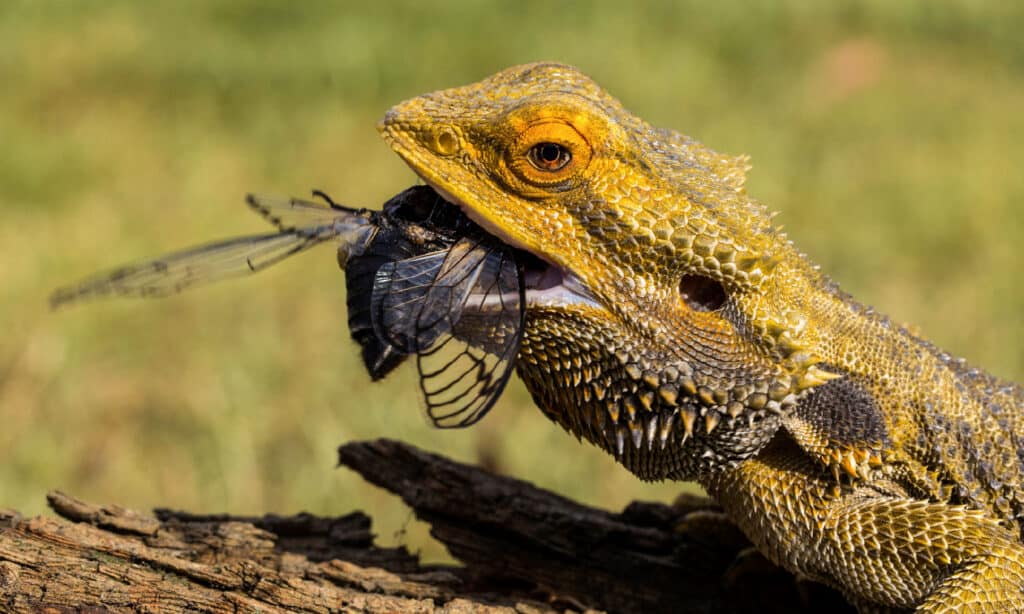
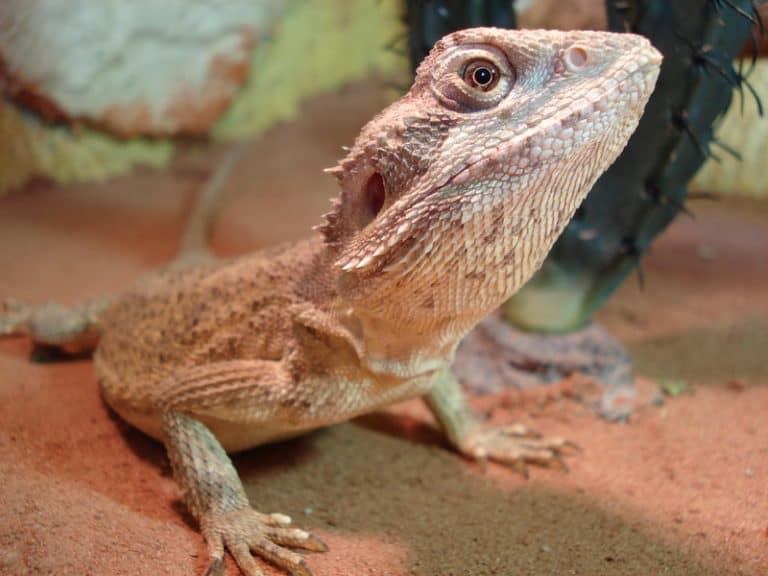
As omnivores, bearded dragons depend on plants and animals for survival.
©iStock.com/Ken Griffiths
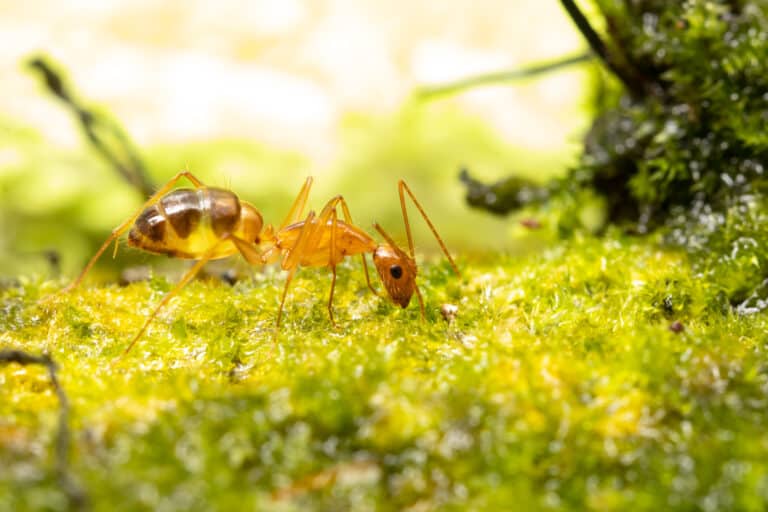
Bearded dragons are omnivores who depend on plants and insects for survival. Juveniles are primarily insectivores (around 70–80% insects, 20–30% plants), while adults switch to a more herbivorous diet (70–80% plants, 20–30% insects). You can find a beardie eating vegetables and fruits like pepper, banana, sweet potato, and kale. In terms of insects, they consume crickets, cockroaches, locusts, mealworms, and kingworms.
Is Bearded Dragon Poop Dangerous?
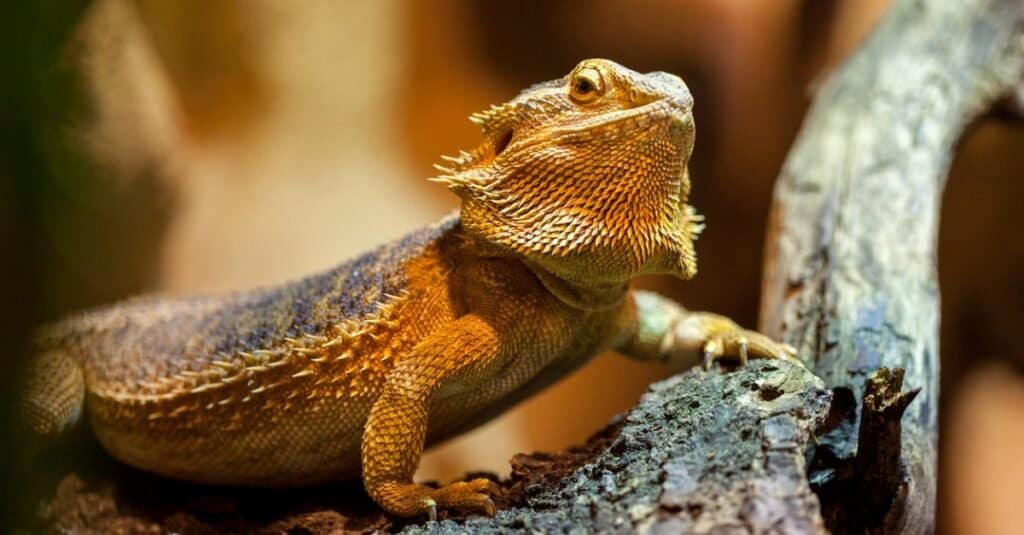
The poop of a bearded dragon contains Salmonella, which can be very harmful to humans.
©iStock.com/huettenhoelscher
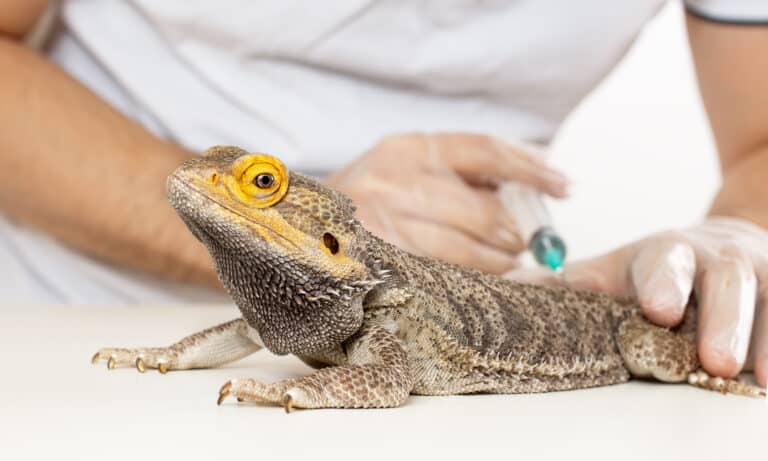
Bearded dragon feces may contain Salmonella, which might not prove deadly to the reptile but can be very harmful to humans. This means a very healthy bearded dragon can pass diseases to humans. It’s essential to be careful when handling the reptile or cleaning its poop. Contact with an infected reptile may not lead to an infection, but having it too close to sensitive parts of the body, like the mouth, can lead to an infection. It’s advisable to clean soiled surfaces with hot water and soap and to thoroughly wash your hands after cleaning.
What Are the Signs My Lizard May Have Parasites?
As was mentioned earlier, one factor that can affect a bearded dragon’s poop is being infected with parasites. Bearded dragons can contract intestinal parasites through having contact with other infected reptiles, contact with contaminated surfaces or objects, or by consuming infected food. Also, a bearded dragon captured in the wild can already carry an infection.
Different types of parasites a reptile can become infected with include roundworms, hookworms, or pinworms. Of the three, roundworms are the most common. The worms could show up in the feces or even vomit, but even if they are not apparent, your lizard could still have them. Signs your bearded dragon may be infected include appetite loss, weight loss, abnormal stools, diarrhea, or vomiting.
If your bearded dragon is displaying one or more of these symptoms, it’s important to see a veterinarian who treats exotic animals. If parasites are left unchecked, they can lead to severe illness or even death.