
Quick Take
- A researcher has discovered two new species of spider in the Phrynarachne genus.
- Like other bird-dropping crab spiders, they hide from predators by pretending to be bird poop.
- Not only do they hide in silk, but they also emit foul-smelling odors to make their disguise more believable.
- Bird dropping crab spiders illustrate the effectiveness of masquerade evolution.
Sometimes, the best survival strategy is disguising yourself like something no one wants to eat, much less mess with and dig around in: bird poop. That is the approach taken by newly discovered spider species to ensure that predators don’t swoop in and eat them. A scientific article published in late 2025 introduces two new spider species from Southeast Asia—Phrynarachne gorochovi and Phrynarachne storozhenkoi—and details their unique camouflage strategies
While there are many unconventional hide-and-seek strategies in nature, few are as gag-inducing as those employed by the two recently discovered spider species. As explained by researcher Mikhail M. Omelko, these spiders use a type of “poop-mimicry” to transform from tasty treats for predators into smelly, waste-looking objects of avoidance. Let’s learn more about these spiders and how they put on stinky costumes to evade spider hunters.
New Species of Crab Spiders
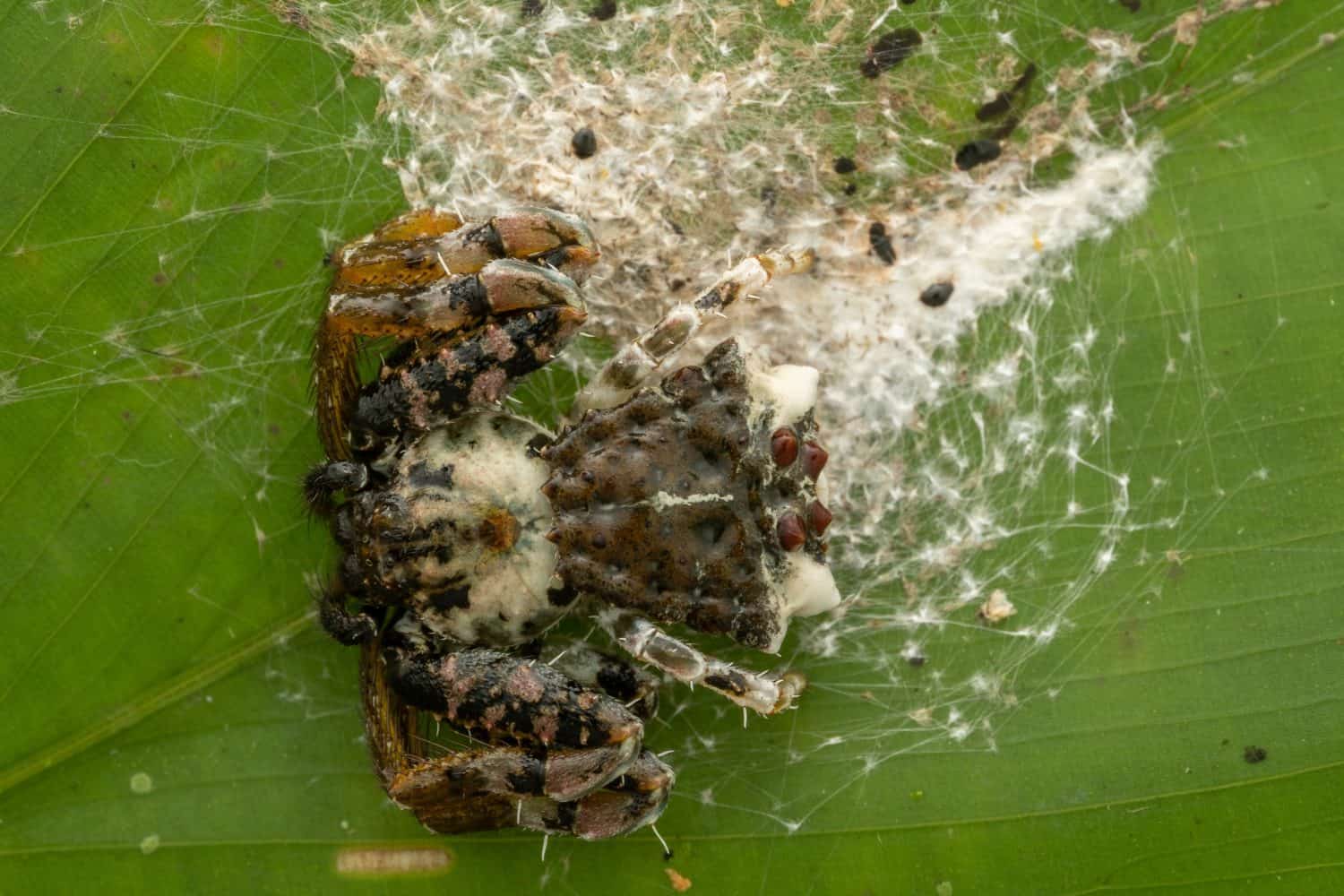
A genus of spider found in Southeast Asia camouflages itself like bird droppings to hide from predators.
©Alen thien/Shutterstock.com
The Indomalayan region of Southeast Asia is a veritable hotspot for a genus of crab spiders called Phrynarachne. These spiders have been known since the mid-19th century, but many were ghost species, with the only evidence of their existence confined to old books. However, new research from Omelko has described and named two new species of these crab spiders.
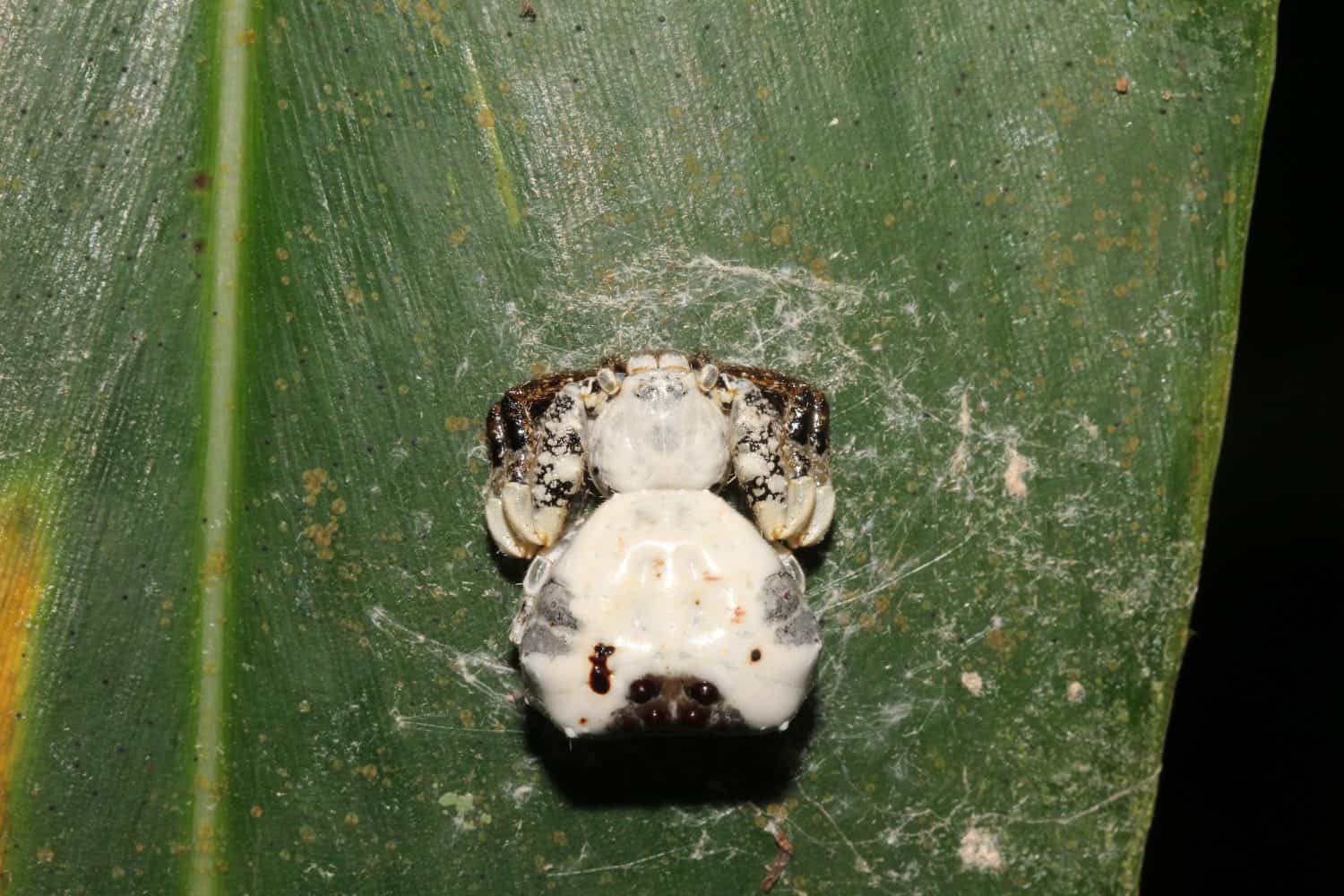
Phrynarachne gorochovi was discovered on Luzon Island in the Philippines. It features a mottled, yellow-brown body with 19 triangular tubercles along its sides. Phrynarachne storozhenkoi is found in Borneo. This species is pale, yellowish-white, featuring four irregular black spots and dark-brown markings. It was named in honor of entomologist Sergei Storozhenko.
Both of these newly discovered species belong to the hallowed ranks of bird-dropping crab spiders. These spiders employ a variety of strategies to camouflage themselves as bird poo so predators ignore them or avoid them completely.
The Stagecraft of Poo Camouflage
Like other spiders in the Phrynarachne genus, Phrynarachne gorochovi and Phrynarachne storozhenkoi employ a calculated series of strategies to not only look like bird poop, but smell like it too. First and foremost, any predator looking for spiders will look for symmetrical legs and a smooth body. Bird dropping crab spiders, however, are covered in weird humps and bumps. P. gorochovi, in particular, features two large humps on its carapace. These humps look like the uric acid crystals and undigested material often found in real bird poop.
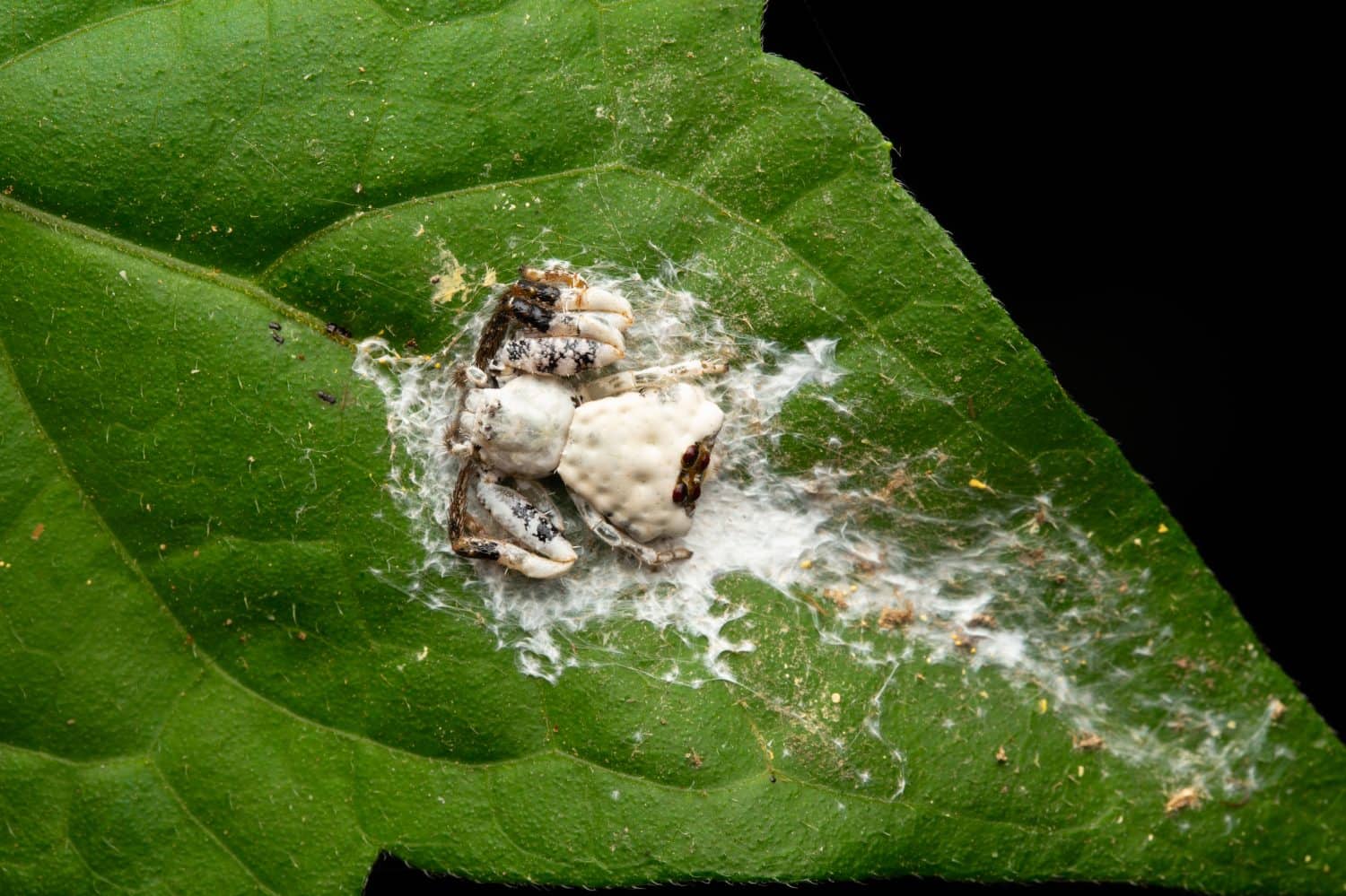
To a passing predator, a bird dropping crab spider looks like nothing more than a randomly dropped piece of bird poop.
©Alen thien/Shutterstock.com
Once disguised, the spiders create a stage by spinning a thin, white, circular patch of silk on a leaf and sitting in its center. From a distance, the silk patch resembles a chalky smear of bird urine, while the spider in the center looks like solid waste. To ensure a predator doesn’t make out any shapes that trigger its hunting instinct, some species of crab spider will even add insect remains to the silk. This reinforces the illusion of innocuous, if unpleasant, bird poop.
Such manipulations can work at a distance, but if a predator is too close, they might realize the ruse. As such, some of these spiders take their camouflage to the next level by incorporating organic smell-o-vision. Phrynarachne spiders emit a rotten odor that smells like decaying organic matter. The smell is repulsive enough that most predators like birds and lizards won’t even bother to investigate it further. It also has the added benefit of attracting flies and other scavengers. This allows spiders in the Phrynarachne genus to wait for prey to land directly on them.
Crappy Conclusions
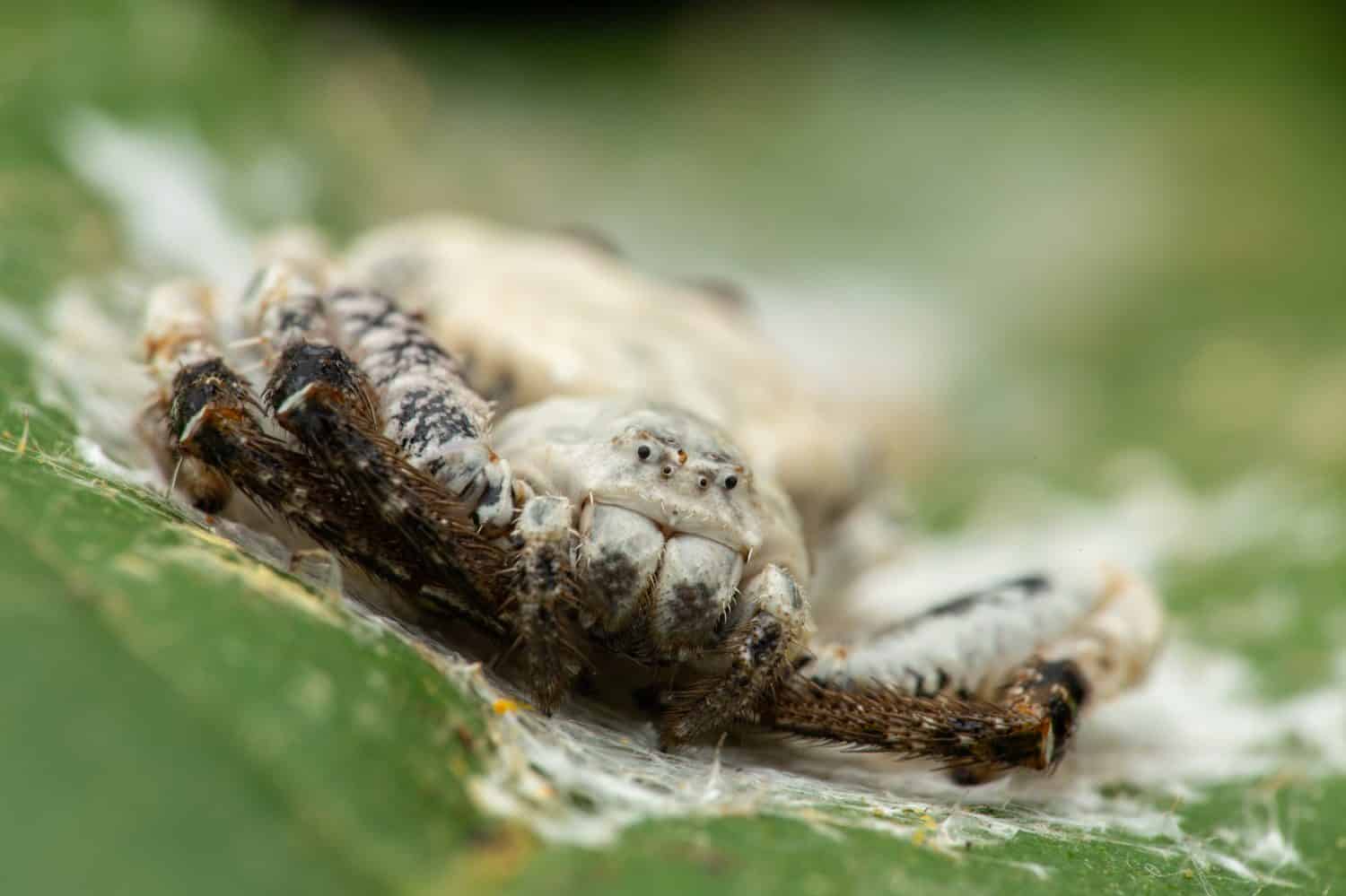
The way these spiders transform themselves into disgusting illusions of waste is an example of masquerade evolution.
©Alen thien/Shutterstock.com
It may not be glamorous, but the camouflages of P. gorochovi and P. storozhenkoi are some of the most effective survival strategies on earth. Most animals that hide just do that. These bird-dropping crab spiders, however, can hide from predators while simultaneously luring food sources directly to them. Other spiders spend all their energy building webs or chasing prey, but those in the Phrynarachne genus have found a way to both attract food and remain hidden from predators. It’s a perfect example of masquerade evolution.
The Indomalayan wilderness is likely full of undiscovered creatures. There is even a chance that the genus Phrynarachne contains even more species still unknown to science. Omelko’s study describes two new species of bird-dropping crab spiders and details their mimicry strategies. It shows that sometimes, being disgusting is the best way to stay safe.