
Quick Take
- The kayaker's first instinct about where to drop off the raccoon turned out to be completely wrong, and the reason why changes everything.
- Sharks were in the water the whole time, a detail that reframes the entire rescue in a chilling way. Sharks lurking nearby →
- Raccoons can swim, but there's a specific reason this one was running out of time fast. Why the raccoon was struggling →
- The fisherman caught something he planned to offer his unexpected passenger, though his plan never quite worked out the way he hoped. The mullet that went uneaten →
Quick Take
- A kayaker noticed a small animal swimming through open water and initially could not tell what he was looking at. The striped tail finally gave it away. See what he found →
- The exhausted young raccoon did not simply accept a lift toward shore. It climbed aboard and turned the man’s tackle box into a bed. Watch the rescue unfold →
- When the kayaker noticed what he identified as sharks nearby, the raccoon’s long swim suddenly looked even more precarious. Explore the danger in the water →
- Rather than start his motor and disturb the sleeping passenger, the kayaker paddled back and delivered it safely to Big Pine Key. See how the trip ended →
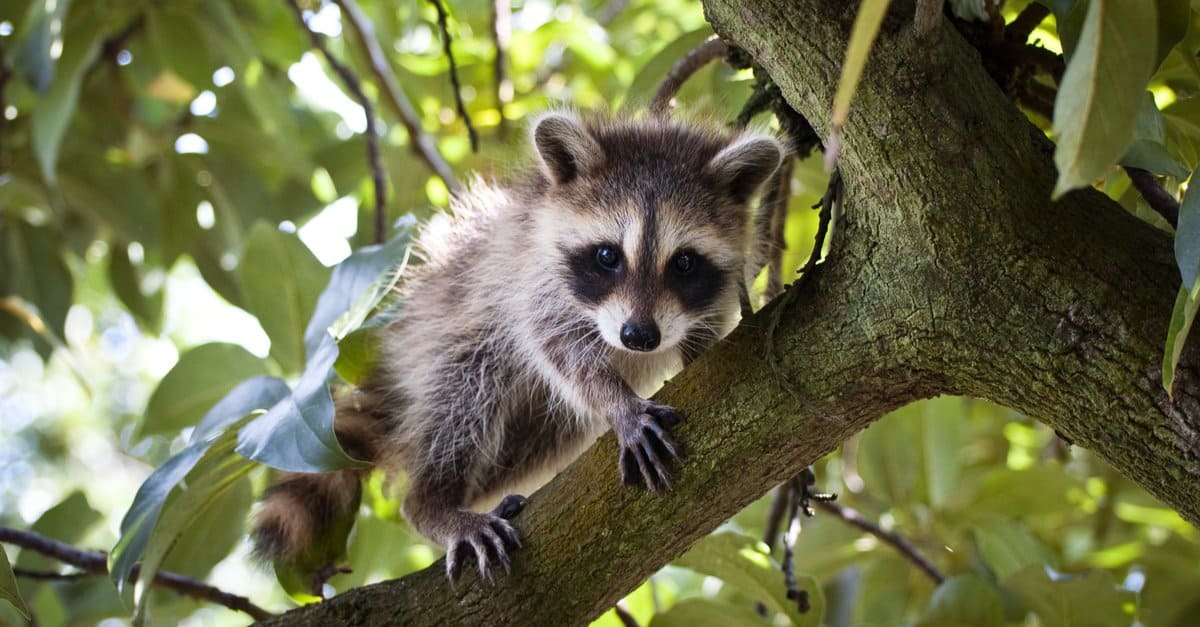
The kayaker initially thought the dark shape moving through the open water might be debris. Then he saw fur, a striped tail, and one very tired raccoon swimming far from shore.
He moved closer to help guide the young animal toward land. The raccoon chose a more direct solution: climb aboard, curl up in the tackle box, and let the human handle the rest of the commute.
Watch the Raccoon Rescue From Start to Finish
What Is Swimming Toward the Kayak?
The video begins with the kayaker trying to identify something moving across the water. It is too far away to make out at first. Once he draws closer, the fur and tail reveal a young raccoon working hard to stay afloat.
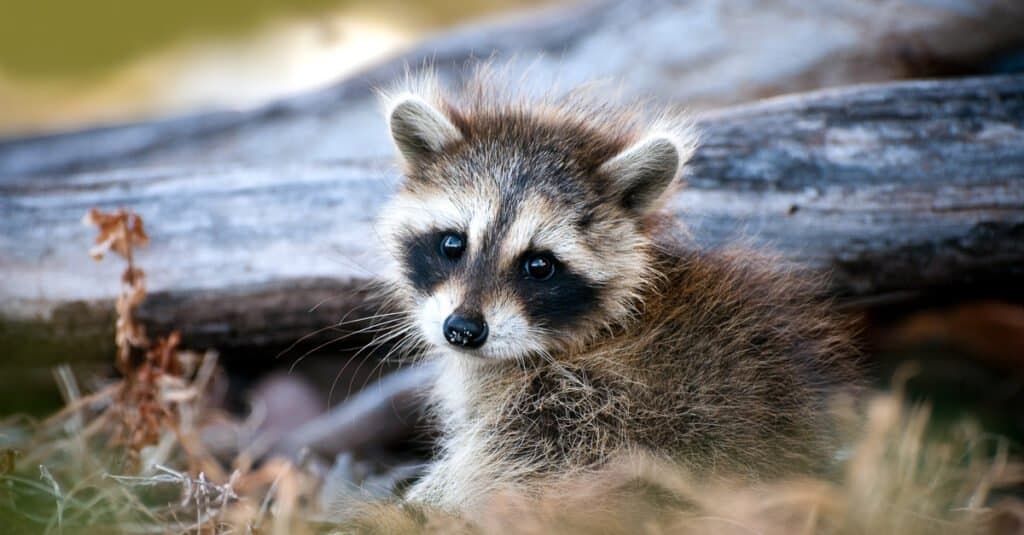
Raccoons can swim, but a long trip through open water can exhaust a young animal.
©Heiko Kiera/Shutterstock.com
The raccoon appears exhausted, so the kayaker approaches with the apparent goal of helping it reach land. That is when the rescue changes. Rather than continue swimming beside the boat, the animal pulls itself onto the kayak.
The Raccoon Climbs Aboard—and Falls Asleep
Once aboard, the raccoon wastes very little time finding the most comfortable spot available. It crawls into the tackle box, curls up, and falls asleep as if this had been the plan all along.
The kayaker first heads toward a nearby island, apparently hoping to return his passenger to land. By the time he arrives, however, the raccoon is sound asleep. He decides the small island is not a suitable place to leave it and continues toward a larger one.
How Dangerous Was the Raccoon’s Swim?
Raccoons are capable swimmers and may cross ponds, creeks, and rivers while searching for food or new territory. Open water is a different challenge, especially for a small animal that has already burned through much of its energy.
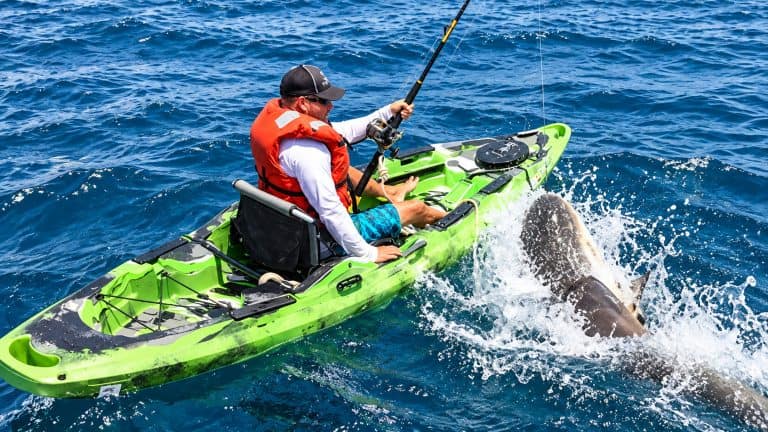
At one point, the kayaker points to dark shapes in the water that he identifies as sharks. The video does not provide a close enough look to independently confirm what they are, but the possibility adds another layer of risk to an already difficult swim. Exhaustion alone would have been enough to put the raccoon in trouble.
The Rescue Turns Into a Fishing Trip
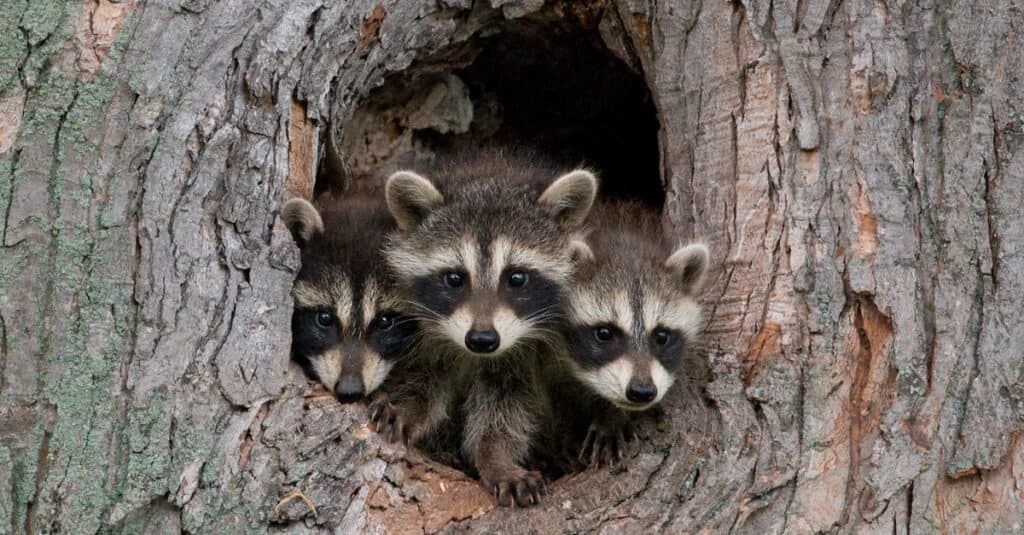
Young raccoons can swim, but they have less stamina than healthy adults.
©Gerald A. DeBoer/Shutterstock.com
With his passenger still sleeping, the kayaker continues fishing. He eventually catches a mullet that he plans to offer the raccoon after it wakes. Fish can be part of a raccoon’s diet, although these opportunistic omnivores eat almost anything available, including crayfish, insects, frogs, eggs, fruits, berries, nuts, and corn.
A couple of hours pass, and the raccoon remains asleep—occasionally snoring and effectively blocking access to some of the fishing gear. It had apparently decided that a tackle box was close enough to first class.
One Very Sleepy Passenger Reaches Land
As sunset approaches, the kayaker begins the trip back. Instead of starting the motor and frightening the sleeping animal, he paddles toward Big Pine Key in the Florida Keys.
The raccoon finally begins to stir near shore, although it seems reluctant to surrender its new bed. The kayaker lifts it onto dry land, where it takes a moment to get its bearings before walking into the vegetation.
It is impossible to know how the raccoon ended up so far out or where it originally intended to go. What the video does show is an exhausted animal finding help at exactly the right moment—and one fisherman accepting that his tackle box belonged to somebody else for the afternoon.