
Quick Take
- A goliath grouper started the chaos, and what happened next was what turned a routine fishing trip into a survival situation. Learn about goliath groupers →
- Most people would have called it a day after getting flipped into shark-infested water. Chancey did something else entirely. See Chancey's full recovery →
- Bull sharks have a reputation as one of the ocean's most dangerous species, though the real reason this one attacked might not be what you think. Understand bull shark behavior →
- There's a specific detail about how Chancey's gear was rigged that made escaping the shark's pull nearly impossible. See how the kayak was rigged →
Fishing is usually one of the more relaxing ways to spend a day on the water. Grab a rod, find a good spot and hope something interesting takes the bait.
Of course, things get considerably less relaxing when the fish on the other end of the line happens to be an enormous bull shark.
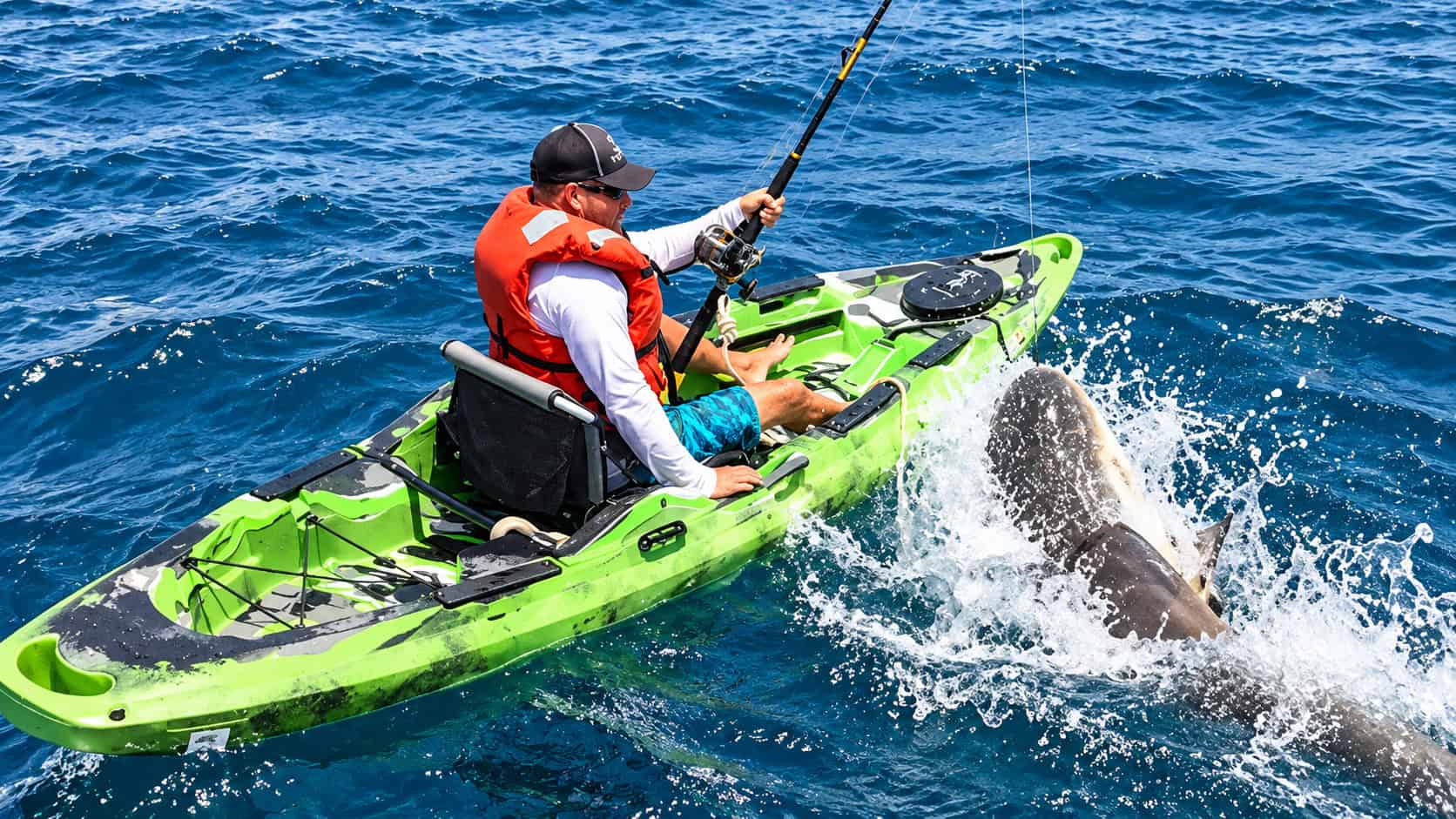
That’s exactly what happened to Capt. Ben Chancey during a 2015 fishing trip off Stuart, Florida. Chancey was fishing from a kayak while a support boat and other anglers stayed nearby. He was targeting goliath grouper when the trip took a very unexpected turn.
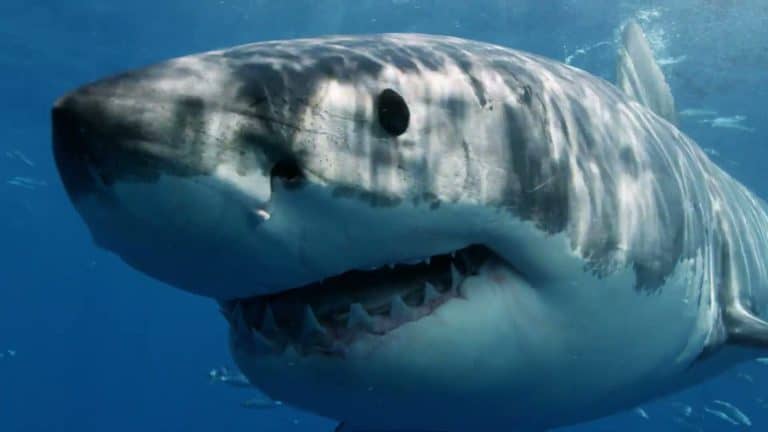
Watch This Bull Shark Flip a Kayaker
A fishing trip from a kayak became a lot more interesting when a bull shark grabbed the bait.
©Robalito/Shutterstock.com
Chancey initially hooked a goliath grouper, but the huge fish pulled the rod from his hand before spitting out the bait. That turned out to be only the beginning.
A bull shark swimming nearby grabbed the bait instead. Because Chancey’s fishing rod was tethered to the kayak, he suddenly found himself connected to a powerful shark that began pulling him around the water.
Eventually, the bull shark flipped the kayak and sent Chancey into the water. He quickly swam to the nearby support boat and climbed aboard without being bitten.
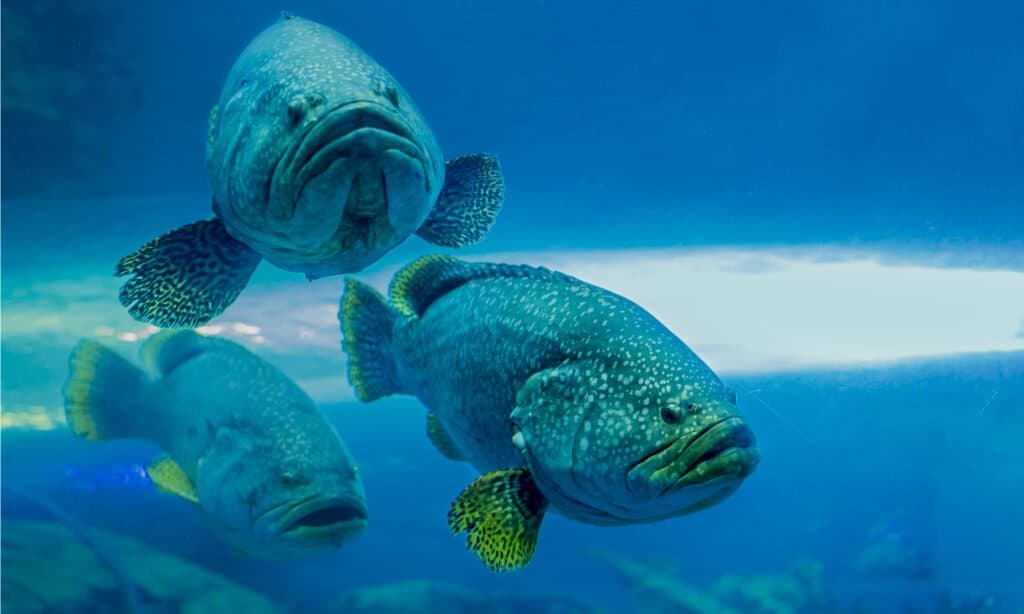
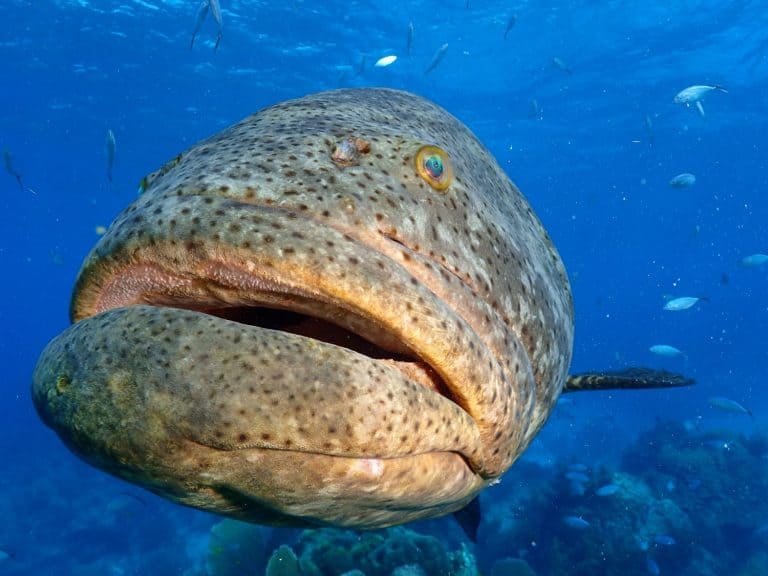
Some grouper species grow to enormous sizes. Atlantic goliath grouper can reach about eight feet long and weigh as much as 800 pounds.
©Supermop/Shutterstock.com
Most people would probably consider that a perfectly reasonable place to end the fishing trip. Chancey had other ideas.
After the kayak was flipped upright, he climbed back aboard to finish the fight. Chancey eventually landed the bull shark, which he estimated was more than eight feet long, before releasing it. He later told CNN that getting back into the kayak felt a little like getting back on a horse after being thrown off.
Grouper (Epinephelinae) Facts
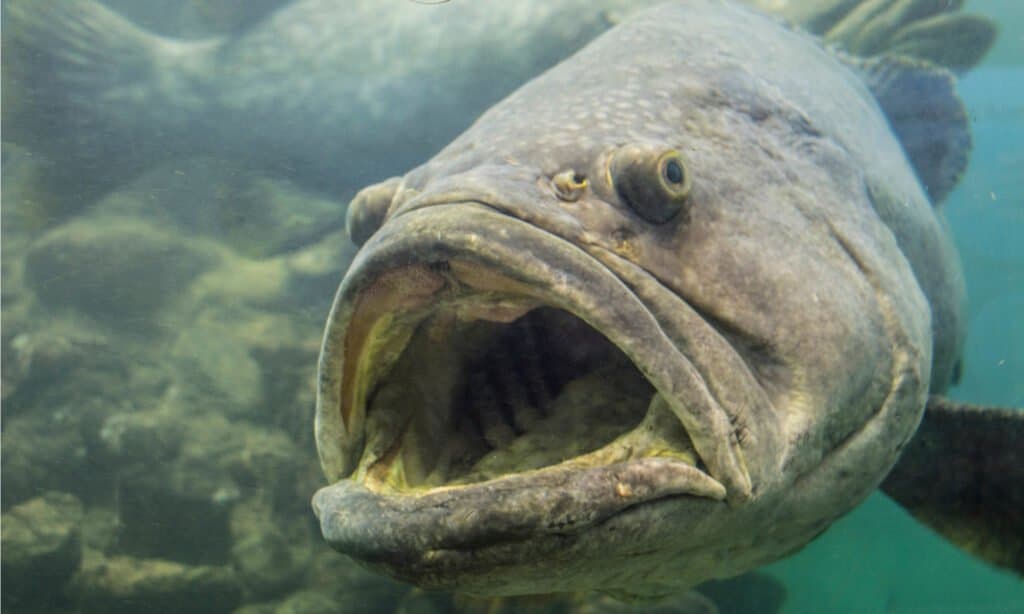
Groupers have stout bodies and large mouths that allow many species to suck prey in and swallow it whole.
©Samakai/Shutterstock.com
Groupers are members of the family Serranidae and are found primarily in warm tropical and subtropical waters around the world. They include dozens of species that vary dramatically in size.
The Atlantic goliath grouper that Chancey was targeting sits at the extreme end of that range. According to NOAA Fisheries, the species can reach about eight feet long and weigh as much as 800 pounds. It can also live for more than 30 years.
Most groupers are predators, using their large mouths to engulf prey. Depending on the species, their diet can include fish, crustaceans and cephalopods such as octopuses. Rather than chasing prey over long distances, many groupers rely on ambush and a powerful suction created when they rapidly open their mouths.
Groupers can also become prey themselves. Smaller individuals may be eaten by sharks, barracudas, moray eels and even larger groupers, while large sharks are among the predators capable of taking adult groupers.
Is It Normal for Bull Sharks to Behave This Way?
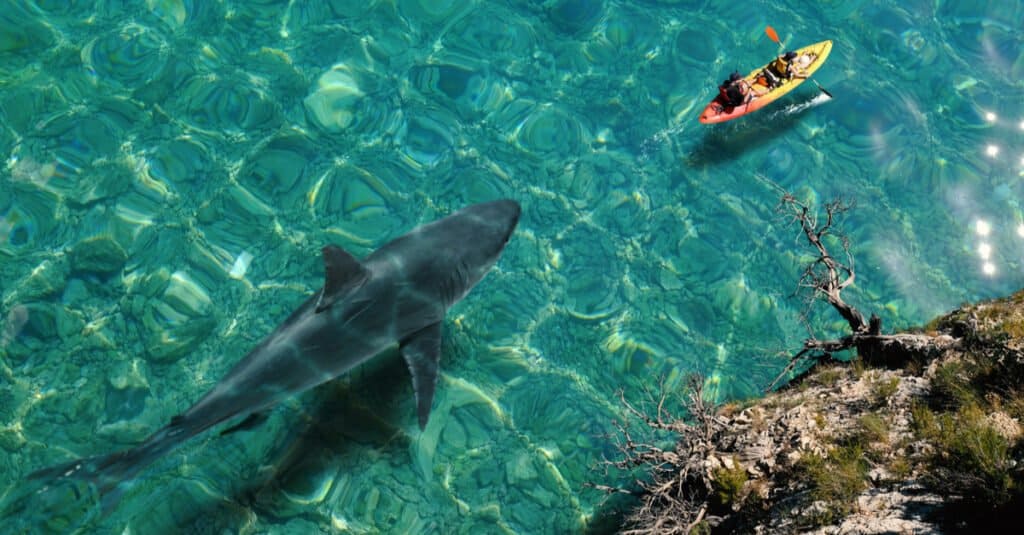
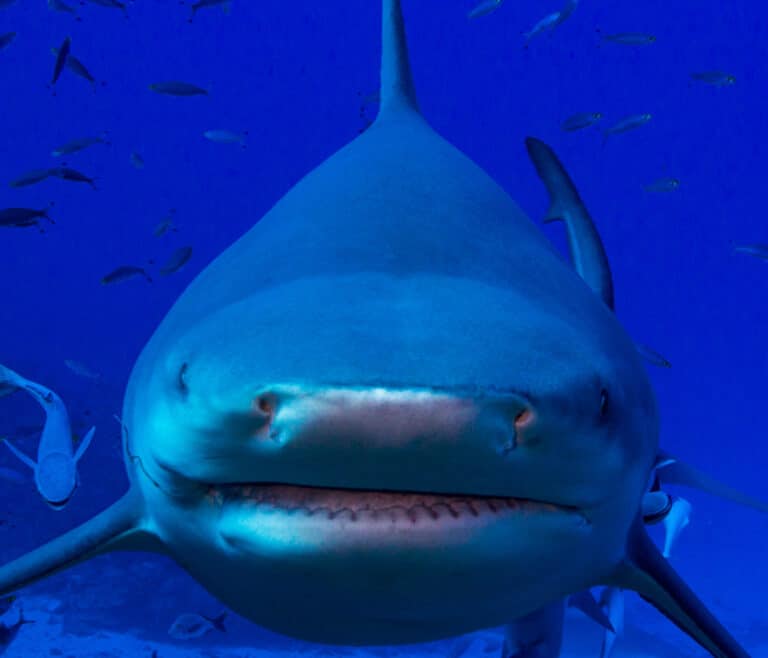
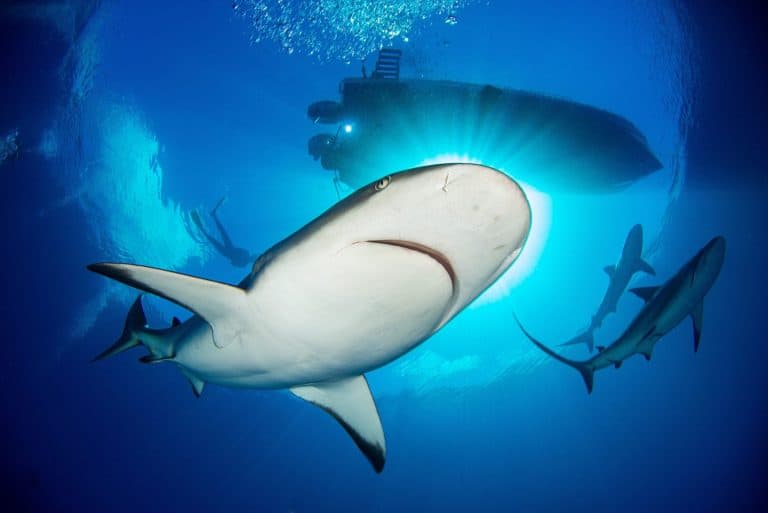
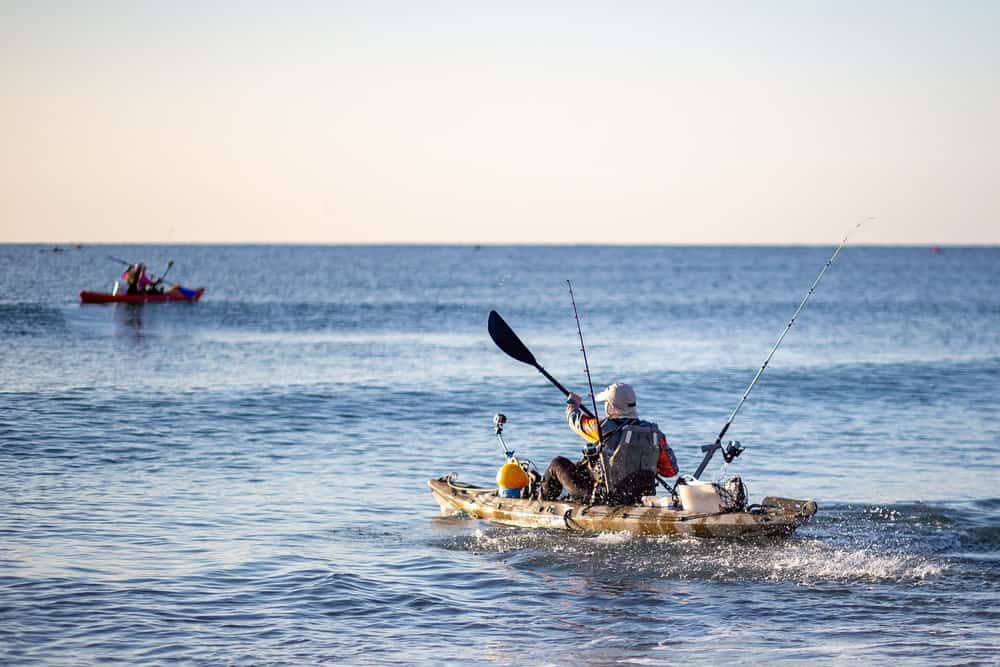
Large sharks are perfectly capable of investigating kayaks and other small vessels, but serious encounters remain uncommon.
©karelnoppe/Shutterstock.com
A bull shark taking advantage of bait or a struggling fish around anglers isn’t particularly surprising. The International Shark Attack File specifically warns people to use extra caution around areas where recreational or commercial fishing is taking place because bait, hooked fish and splashing can attract sharks.
That doesn’t mean bull sharks routinely go around flipping kayaks. Encounters this dramatic are unusual, and this wasn’t a shark simply deciding that a kayaker looked like lunch. Chancey was actively fishing, the shark grabbed the bait and became connected to the kayak through the tethered fishing rod.
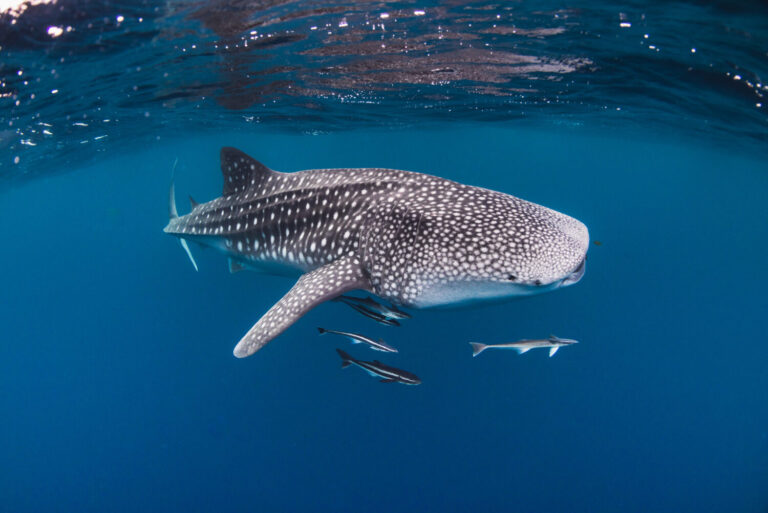
Bull sharks, tiger sharks and white sharks are sometimes called the “Big Three” because they are the large species most often implicated in serious unprovoked bites on people. Even so, shark bites remain rare. The Florida Museum’s International Shark Attack File says there are roughly 70 unprovoked bites worldwide in an average year.
Some shark bites may involve mistaken identity, while others appear to involve investigation, feeding behavior or defensive reactions. In this case, there wasn’t much mystery about what caught the shark’s attention: there was bait in the water, a fishing line attached to it and one very determined fisherman hanging on at the other end.