
Quick Take
- Blue whale calves are huge at birth but still vulnerable, and orca attacks on them are rare, high-risk events that require coordinated pod hunting.
- Mothers defend calves by positioning their massive bodies as shields, using powerful tail strikes, turbulence, and short bursts of speed to disrupt orca attacks.
- Calves benefit from hydrodynamic drafting by swimming close to their mothers, conserving energy during escape attempts.
- Raising a calf demands enormous energy, so successful defense during the first year is critical to survival and long-term population stability.
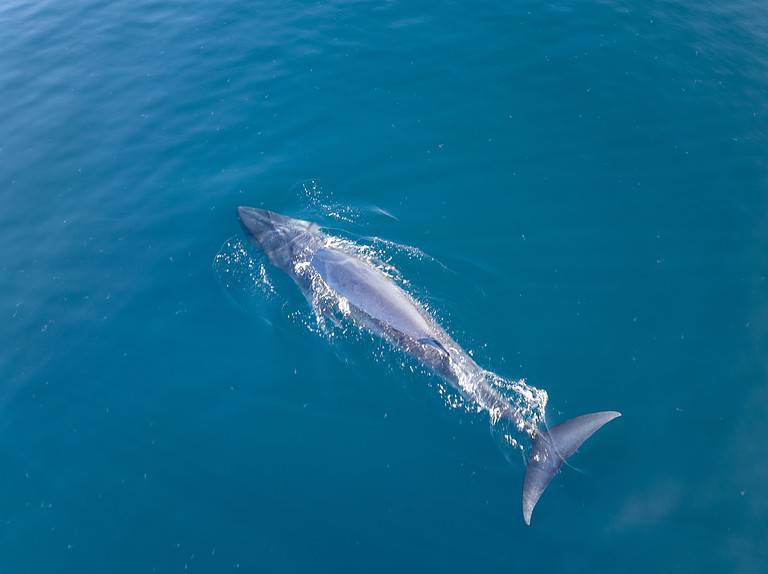
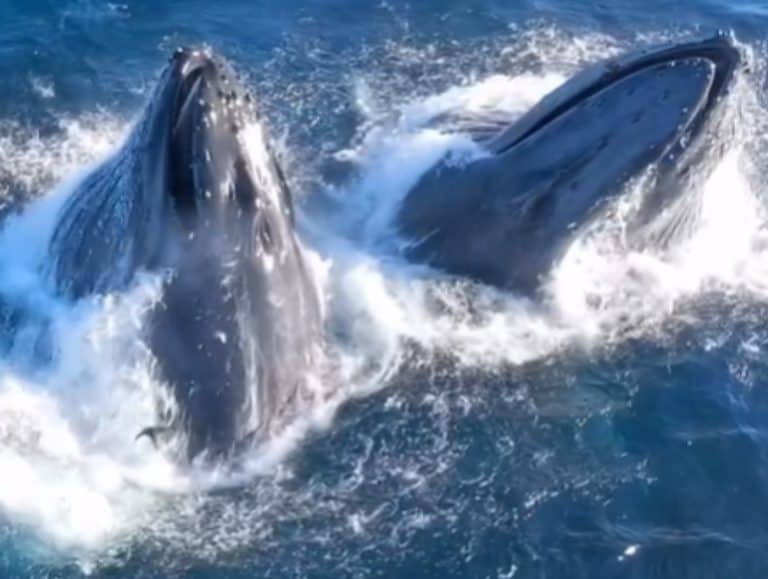
Blue whale calves enter the world already the size of a bus, yet they still face danger. A hungry killer whale sees a slow, inexperienced target guarded by a single adult. However, orcas cannot reach such a large meal without first confronting the calf’s mother. The largest animals ever known to live, adult blue whales can shift from calm krill feeders to forceful defenders within seconds. They use body positioning, speed, and powerful tail strikes to protect their young. In rare cases, other whales may even assist.
These confrontations reveal how strength, teamwork, and ocean physics combine in the open sea. While attacks are uncommon, the risk is real during migration seasons. Survival during the first year often depends on a mother’s quick judgment and stamina. Anyone foolish enough to challenge her might just find they’ve ticked off a battleship with attitude.
Big Mommas
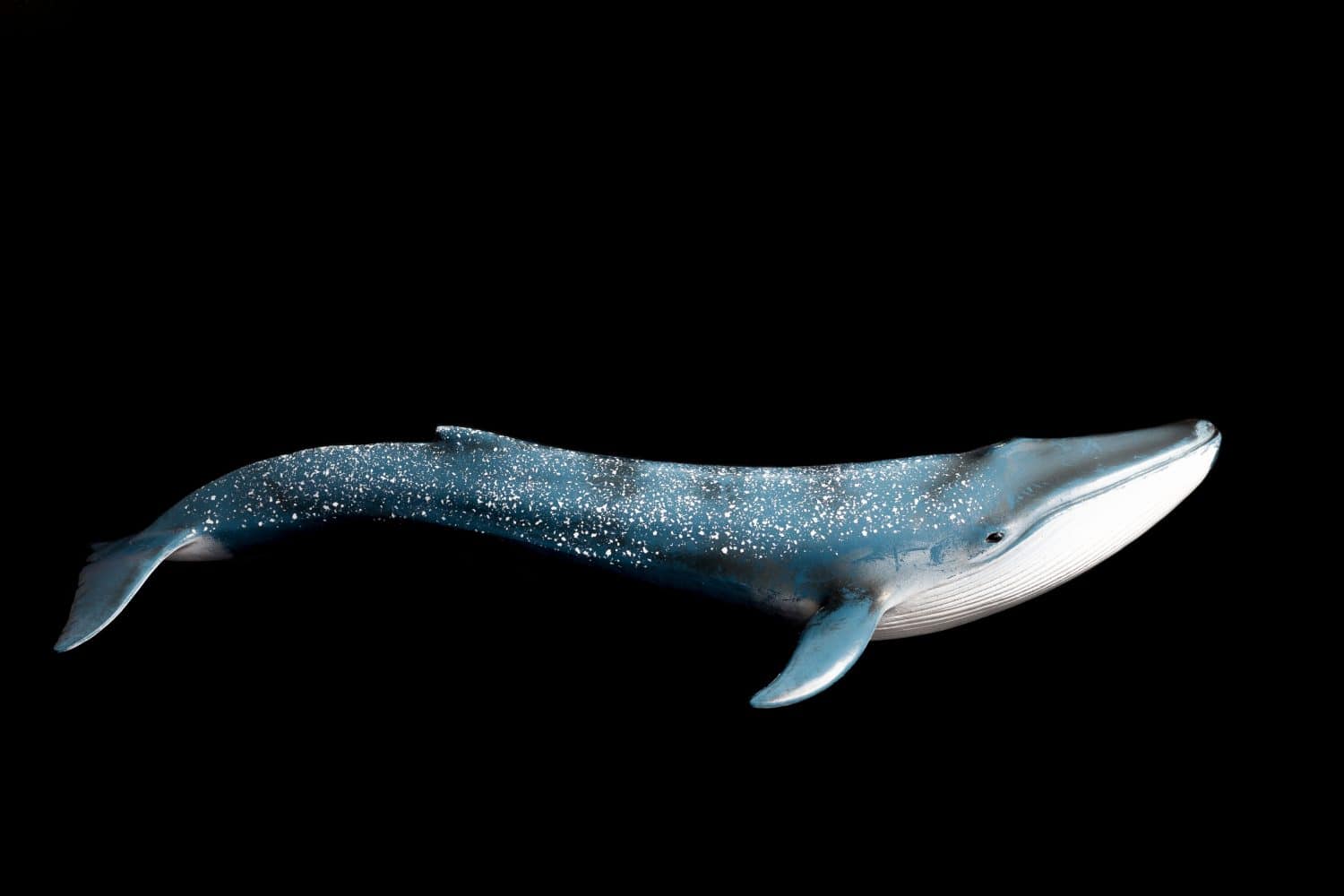
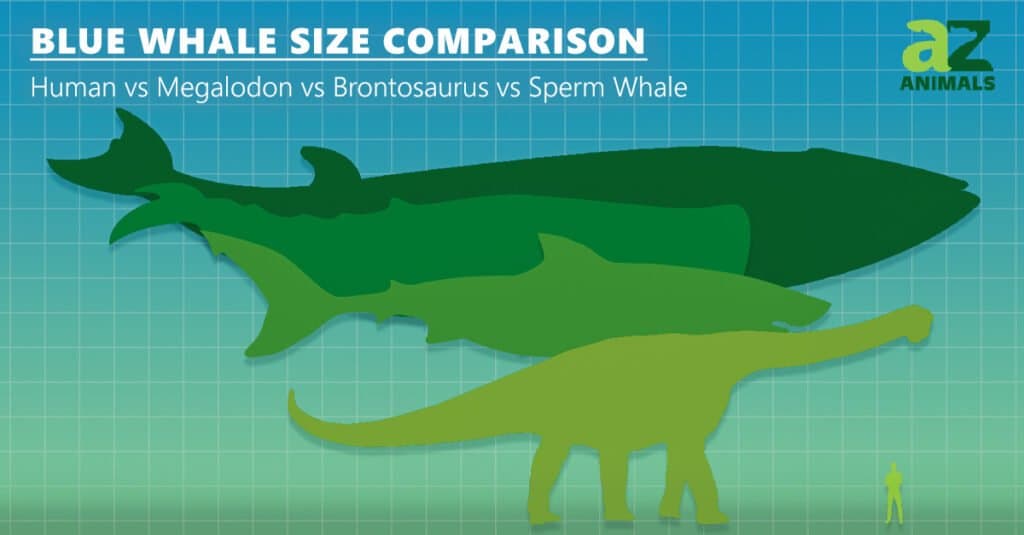
Blue whales are the largest animals ever known to live, reaching lengths of 80 to 100 feet and weights of up to 200 tons. Blue whales are a type of baleen whale, meaning they filter krill through baleen plates instead of using teeth to eat larger prey. They inhabit every major ocean except the Arctic, migrating seasonally between cold, food-rich feeding grounds and warmer breeding areas. In summer, they concentrate in regions such as the North Atlantic, North Pacific, Southern Ocean, and parts of the Indian Ocean, where dense swarms of krill provide enough energy to sustain their massive bodies. In winter, many populations travel thousands of miles to lower-latitude waters to mate and give birth.
Commercial whaling in the 20th century reduced global numbers by an estimated 80 to 90 percent. Current scientific estimates suggest that there are roughly 10,000 to 25,000 blue whales left in the world today. About 5,000 to 15,000 of those are considered mature adults capable of breeding. These numbers are far below pre-whaling levels, when global populations may have exceeded hundreds of thousands before commercial whaling severely reduced them. Although international protections have allowed partial recovery, blue whales remain listed as Endangered under the IUCN Red List. Current threats include ship strikes, fishing gear entanglement, ocean noise, and climate-driven shifts in krill availability.
Baby Blues
Newborn blue whale calves measure about 23 to 26 feet long and weigh roughly 2.5 to 4 tons. To put this in perspective, imagine a large U-Haul box truck. Despite their massive size, “little” blue whales are vulnerable, inexperienced swimmers. Calves must surface often to breathe and stay close to mom to nurse. They consume around 100 gallons of milk daily, packing on nearly 200 pounds per day. Such rapid growth demands energy and constant care.
Killer Whales as Coordinated Hunters
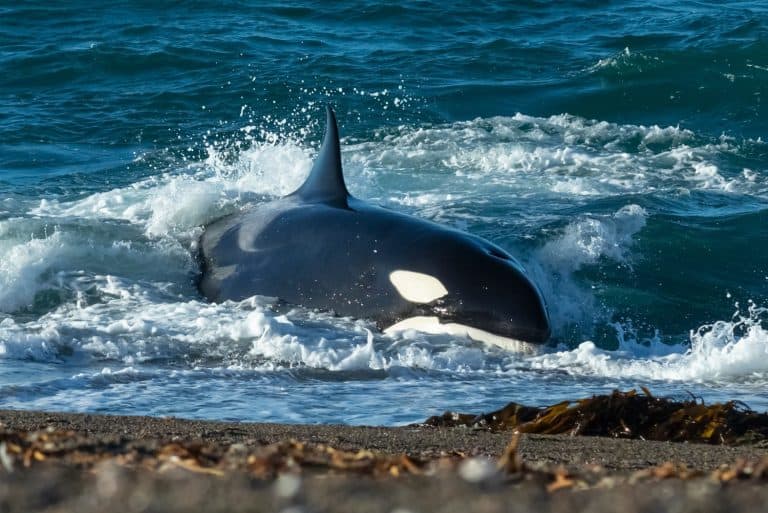
Orcas, also known as “killer whales,” are the only known predators bold enough to take on baby blue whales. Adult killer whales are similar in size to baby blues, reaching 20 to 26 feet and weighing up to 6 tons. They are known to target baleen whale calves because they contain dense fat stores. Confirmed attacks on blue whale calves remain rare compared to smaller species. The calf’s large size and the vigilance of its parent do not eliminate risk, but they do make hunting more difficult for orcas. This means orcas that take on the task need coordination and patience.
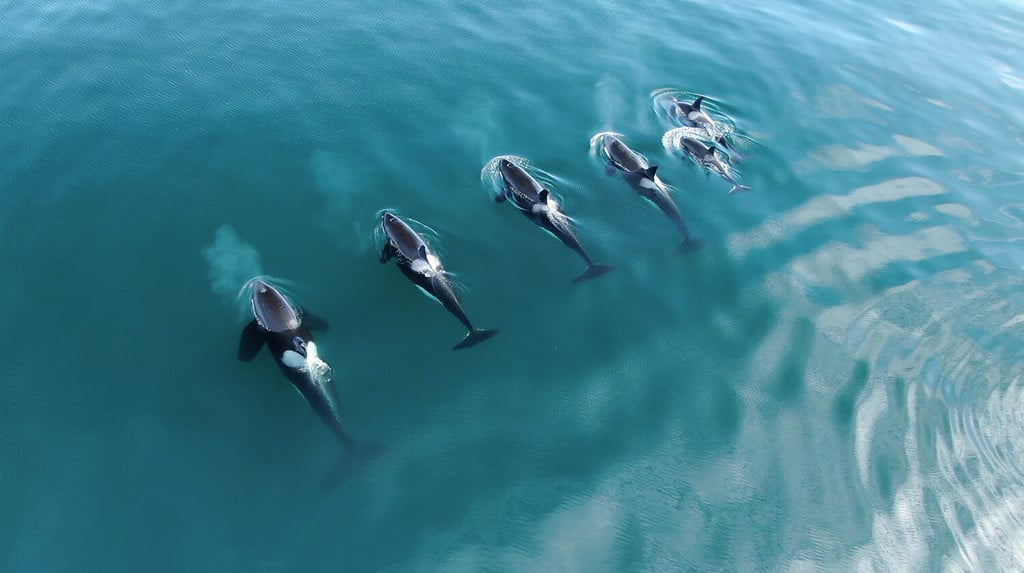
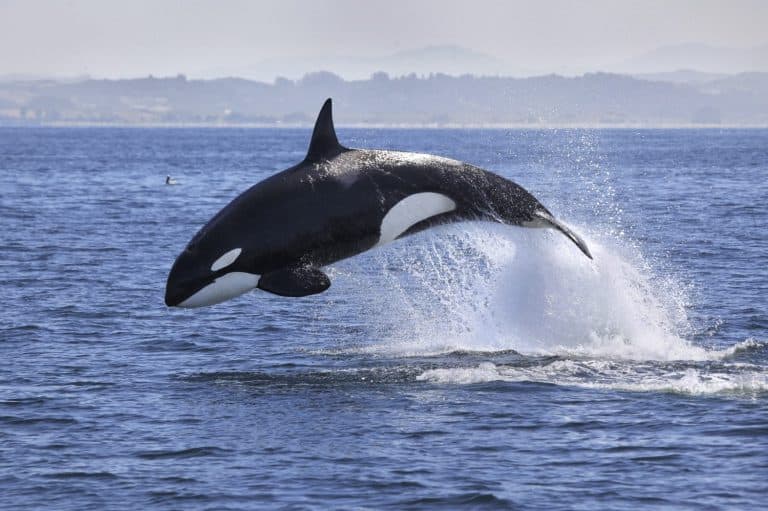
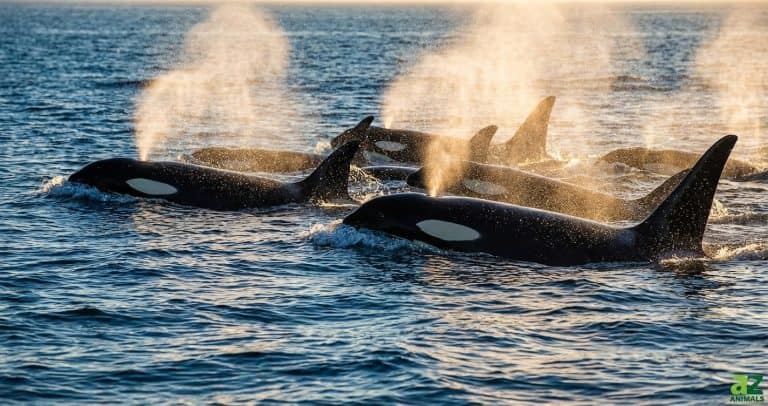
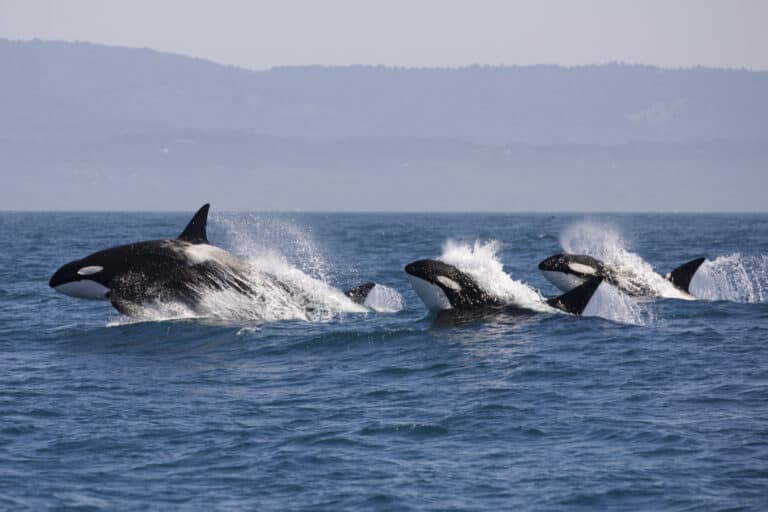
Orcas swim in pods and coordinate their hunting strategies.
©Willyam Bradberry/Shutterstock.com
Killer whales hunt in organized family groups known as pods. Some populations focus mainly on fish, such as herring. Others specialize in marine mammals. These dietary differences depend on region and learned behavior. When targeting whale calves, pods surround the pair and attempt to separate the mother from the young. They may bite flukes or pectoral fins to slow movement. At times, they try to prevent the calf from surfacing to breathe and induce exhaustion. Such hunts demand cooperation and significant energy expenditure. Because the risk of injury is high, pods do not attack large whales casually. Most orca groups feed primarily on fish or smaller marine mammals. Calf hunts appear seasonal and localized rather than routine.
Why Blue Whale Calves Are Not Routine Prey
Scientists have documented relatively few confirmed attacks on blue whale calves worldwide. In contrast, humpback and gray whale calves experience more frequent predation attempts. Regional diet studies show that many orca populations prefer fish or pinnipeds. Off Iceland, some pods specialize almost entirely on herring. In Western Australia, humpback calves become seasonal prey. Still, blue whale attacks remain sporadic. Large size, defensive mothers, and high injury risk likely deter many attempts.
Holding The Line: Mothers As Shields
The mother’s defense begins with positioning. A mother often places her body between attackers and her calf. This creates a living barrier of muscle and bone. The calf presses close to her flank or swims slightly behind her shoulder. That position reduces exposure to bites. Other baleen whales display similar strategies. Sperm whales, for example, form tight circles with tails outward during threats. By forcing predators to circle her, the mother increases her calf’s chances of survival. Every extra second gives the calf more time to grow and gain strength. Size becomes an advantage only when paired with strategy. Protection depends on constant awareness and quick turns.
Tail Power and Shock Waves
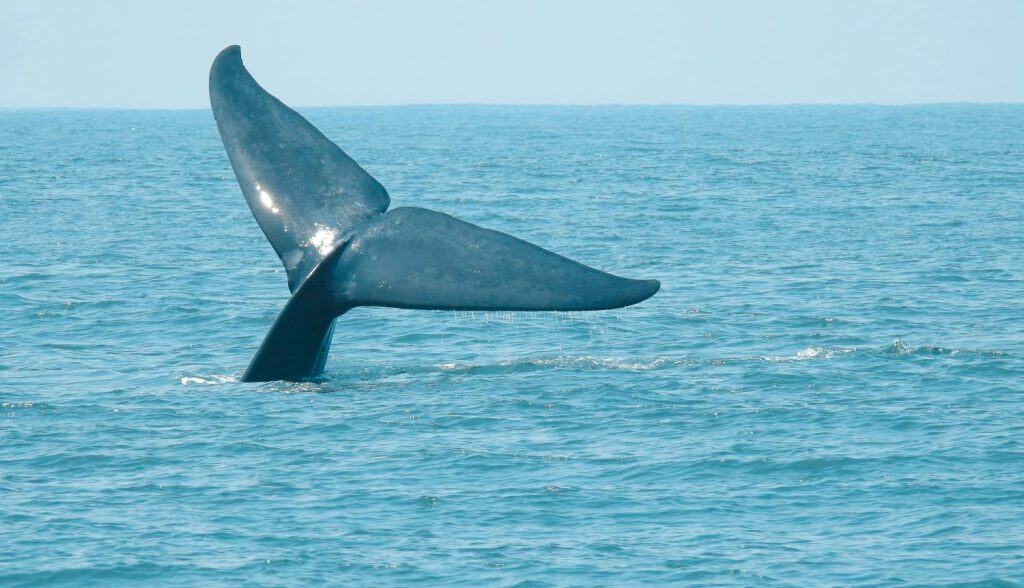
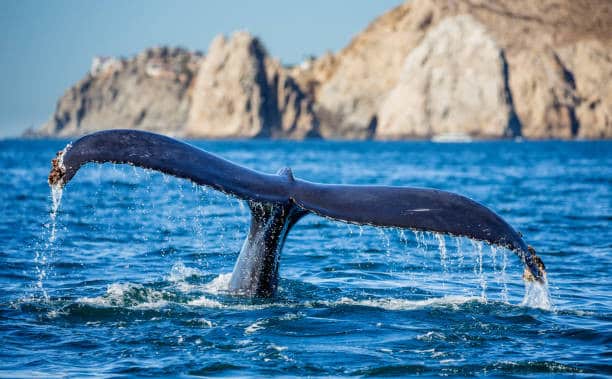
A blue whale’s tail can be 20-25 feet wide from tip to tip: wider than a 2-car garage and roughly equivalent to the wingspan of a small airplane.
©max-Photography/Shutterstock.com
The fluke of a blue whale acts as a broad, muscular propeller built to move hundreds of tons through dense water. That same structure becomes a defensive weapon when needed. A strong downward or sideways strike does more than push water aside. It accelerates a huge volume of water in an instant, creating intense turbulence and sharp pressure changes. Orcas themselves use tail slaps to stun or toss prey, which shows how much force a large cetacean can generate.
In close range, a mother’s swing can send destabilizing currents and pressure pulses toward attackers. Direct contact is not always necessary to interfere with coordination. An orca positioned only a few feet away could be knocked off balance or disoriented by the sudden surge. At closer range, a solid hit could cause serious injury. Faced with that risk, pods must weigh the danger carefully. Sustained resistance often makes the effort too costly to continue.
Speed And the Slipstream Advantage
Despite their immense size, blue whales can accelerate quickly to between 20 and 30 mph. A calf cannot sustain that speed alone. However, hydrodynamic drafting helps. Studies on dolphins show calves gain significant thrust by swimming beside or slightly behind their mothers. The water moving off the adult’s body reduces drag for the youngster. Researchers believe similar effects occur in larger whales. By maintaining tight proximity, the calf conserves energy. That conservation allows longer escape runs. Drafting does not eliminate danger, but it increases the calf’s chances of escaping.
Do Blue Whales Call for Help?
Sound travels efficiently underwater, so any struggle between a mother blue whale and hunting orcas can be heard over long distances. However, there is no clear evidence that blue whales deliberately send distress signals to summon other species for rescue. What researchers do know is that other whales sometimes approach areas where orcas are hunting. The noise and agitation may draw attention, or nearby whales may respond instinctively to predator activity rather than to a specific call for help.
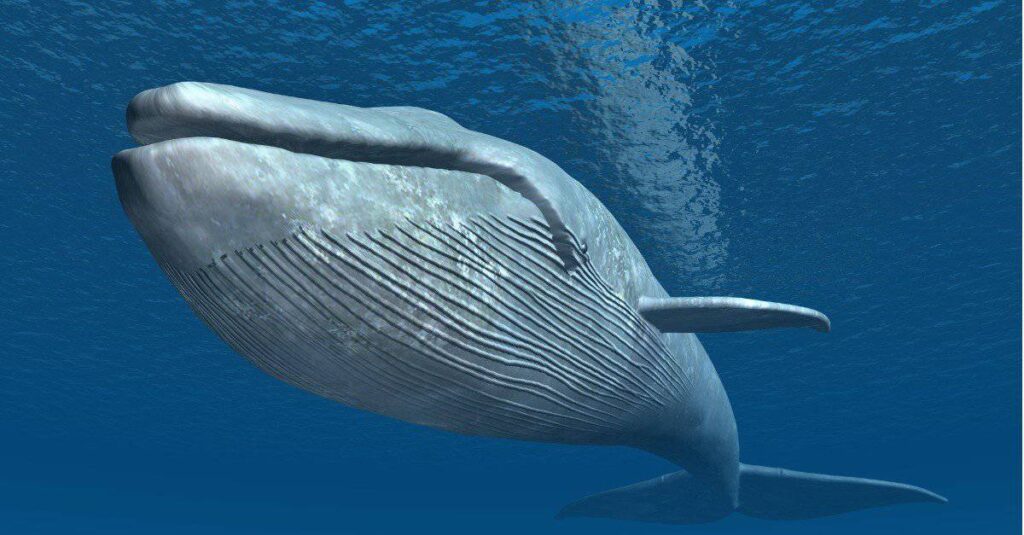
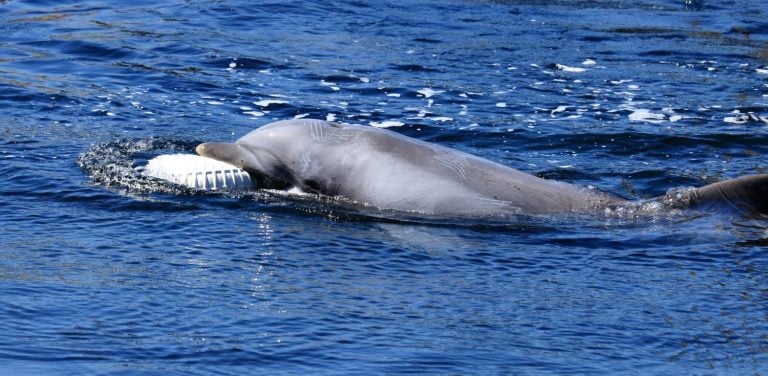
Blue whales tend to be solitary creatures.
©iStock.com/MR1805
Blue whales are generally considered solitary animals, especially during migration, and do not travel in tight pods like orcas. However, ‘solitary’ does not mean they are always separated by great distances. During feeding seasons and along migration routes, multiple blue whales may occupy the same broad region. They often remain spaced far enough apart to forage independently, yet still within acoustic range of one another. Low-frequency blue whale calls can travel many miles underwater, allowing individuals to remain loosely connected without forming close physical groups.
“Not On Our Watch!”: Unexpected Defenders
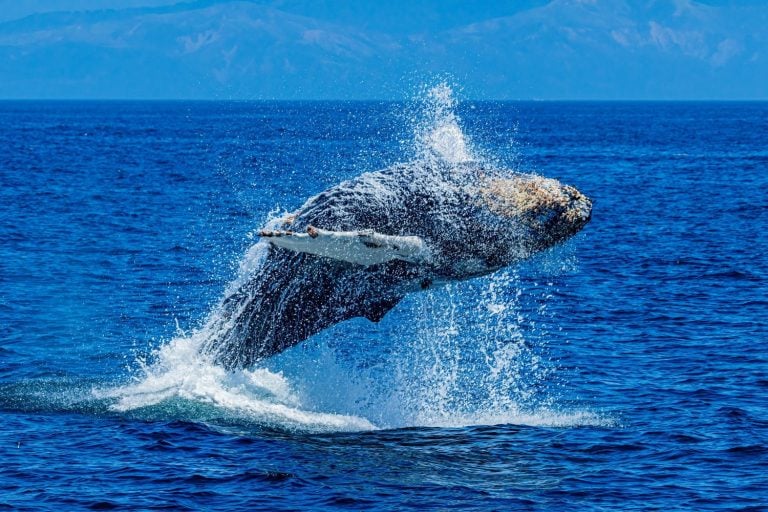
Humpback whales have been documented interfering with orca hunts, defending not only their own calves, but those of other species. This behavior is often described as mobbing or anti-predator interference. Direct evidence of humpbacks specifically assisting blue whale calves has not been documented. However, since the species overlap during migration, and humpbacks have consistently responded to orca activity involving other species, such assistance is possible. Researchers suggest that such responses are likely driven by anti-predator instincts rather than coordinated cross-species rescue. What we do know is that certain whales react strongly to orca presence and sometimes intervene, which can shift the balance of risk for the predators.
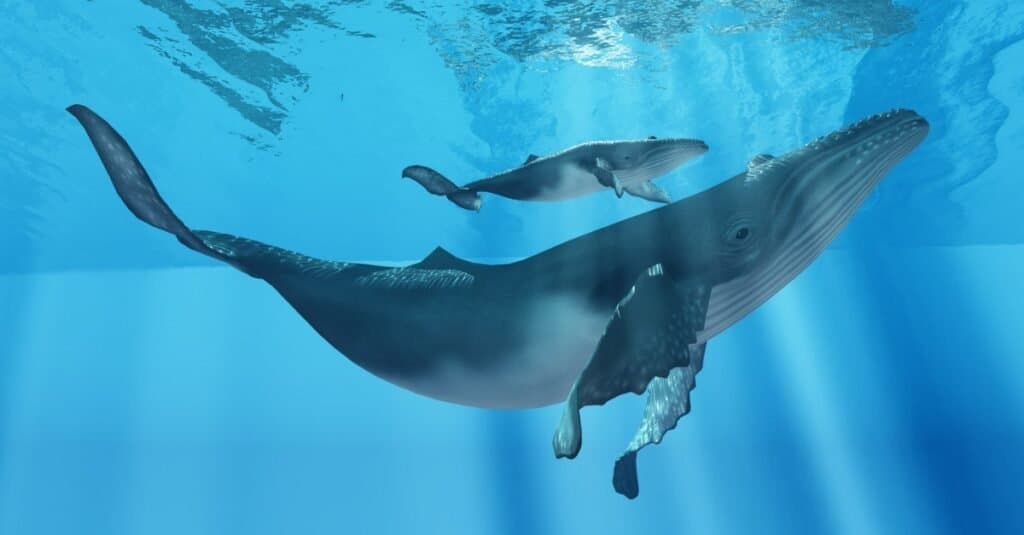
Humpback whales have been documented disrupting orca hunts of calves of other whale species.
©iStock.com/CoreyFord
Early Survival And Long-Term Success
If a calf survives its first year, risk declines sharply. Growth reduces vulnerability to most predators. Strength and swimming ability improve steadily. Mothers gradually reduce direct shielding behavior as calves mature. Predation attempts become less practical. By that stage, the young whale approaches subadult size and becomes far more difficult to target.
Natural mortality still exists, yet predator threat decreases significantly after infancy. Blue whales can live 70 to 90 years in the wild, and some may reach 100 years or more. That means a calf that survives its earliest months may have decades of ocean life ahead. Each successful defense protects not only that year’s calf, but also the potential for a lifetime of migrations, feeding cycles, and future generations. The long lifespan of the species makes early survival especially important because one saved calf can shape the population for generations.