
Quick Take
- A shrimp smaller than your finger can generate temperatures that nearly rival the surface of the sun, and remarkably its weapon is not even a chemical reaction. See how cavitation works →
- One of these shrimp has the most complex vision of any known animal, yet its rival evolved a completely different sensory trick to compensate. Compare their sensory features →
- Aquarists have a nickname for one of these species that doubles as a warning, and the name is well earned. See the dangerous reputation →
- Despite the pistol shrimp's explosive long-range weapon, a head-to-head fight between these two has a pretty clear winner, and the reason goes beyond just size. Find out who wins →
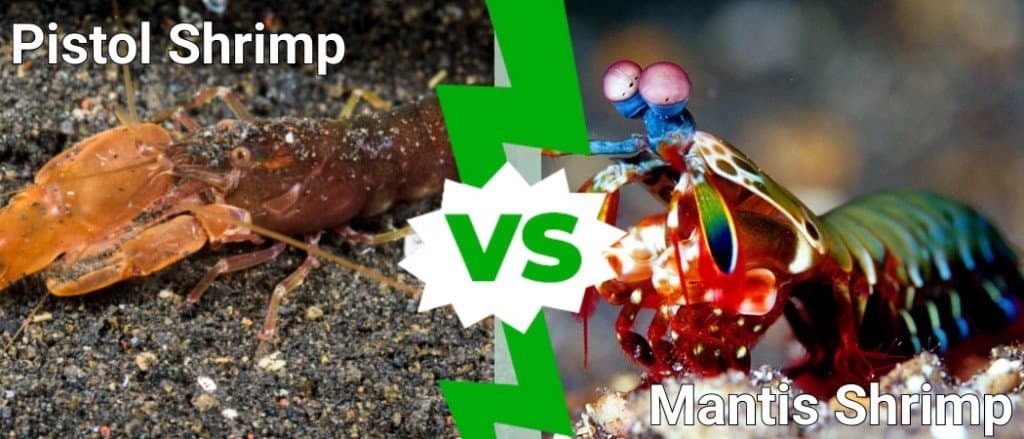
Pistol shrimp (Alpheidae) are a group of many species of true shrimp belonging to the Caridea infraorder. Mantis shrimp are not true shrimp, and this group of species belongs to a separate crustacean order called Stomatopoda. The term “shrimp” is a common name for many different crustaceans, not a strict scientific classification. Both pistol shrimp and mantis shrimp are arthropods, belonging to the phylum Arthropoda like insects and arachnids. Continue reading to discover key differences between these two crustaceans.
The Key Differences Between Pistol Shrimp and Mantis Shrimp
There are four primary differences between pistol shrimp and mantis shrimp, including size, morphology, predation strategies, and behavior. Take an in-depth look at each of these differences in the following sections.
Size
On average, pistol shrimp are much smaller than mantis shrimp, but there is some overlap among large pistol shrimp and small mantis shrimp. Pistol shrimp typically measure between 1.57 and 3 inches in length and weigh 0.88 ounces. Most mantis shrimp measure less than 5.9 inches, but some can reach over 12 inches long and weigh up to 1.5 pounds.
Morphology
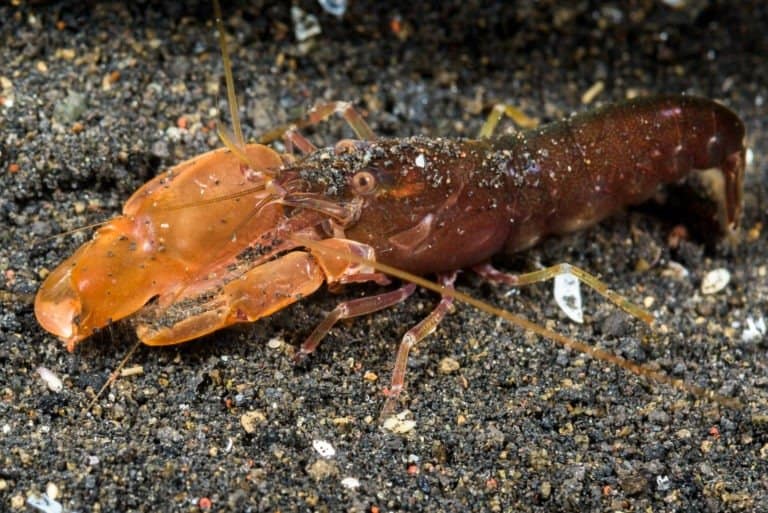
The colors of pistol shrimp vary, including shades of blue, green, yellow, reddish-brown, and translucent. Many species have mottled color patterns for camouflage. Pistol shrimp have a hard exoskeleton, 10 legs like other decapods, and asymmetrical bodies with one large claw that can measure up to half of their total length. The smaller pincer appendage is similar to the pincers of other shrimp species. Although their carapace partially extends over their eyes, researchers have found their vision is not as impaired as previously believed. They have two types of photoreceptors and may be able to communicate visually with other pistol shrimp, as well as partner species such as goby fish, which help them avoid predators.
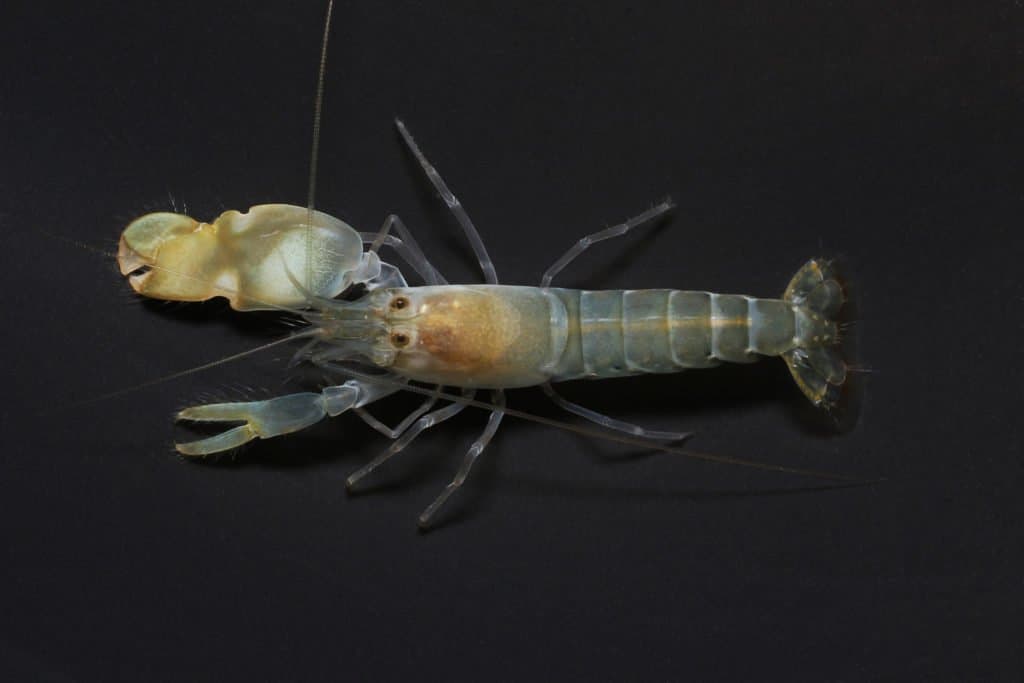
Pistol shrimp are generally less than 3 inches long, but they have one oversized claw that they use to devastating effect.
©Matthew R McClure/Shutterstock.com
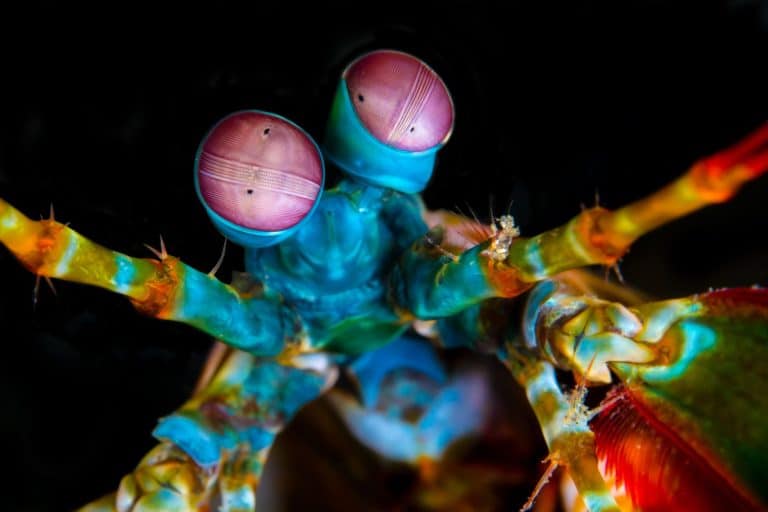
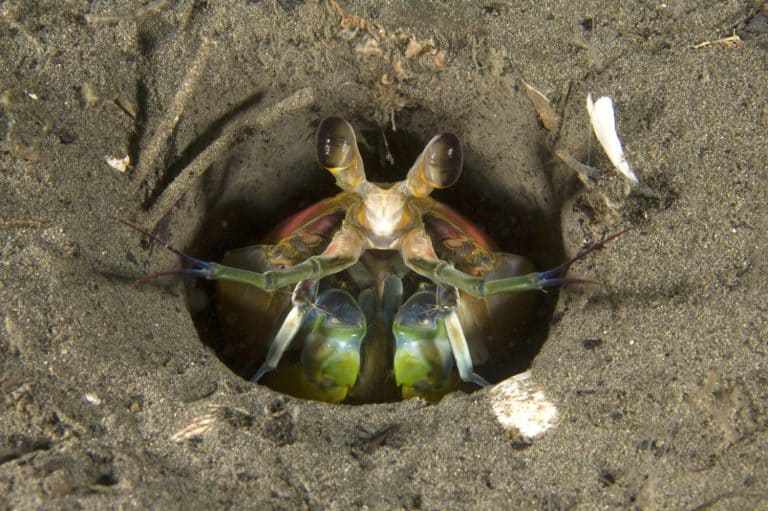
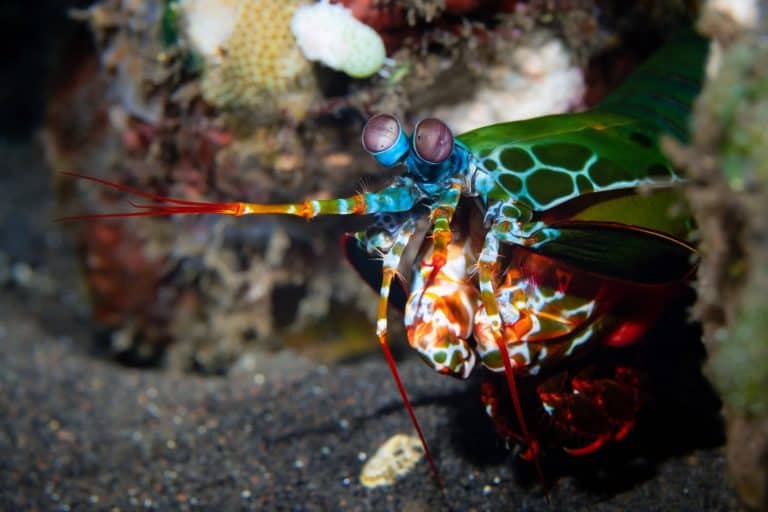
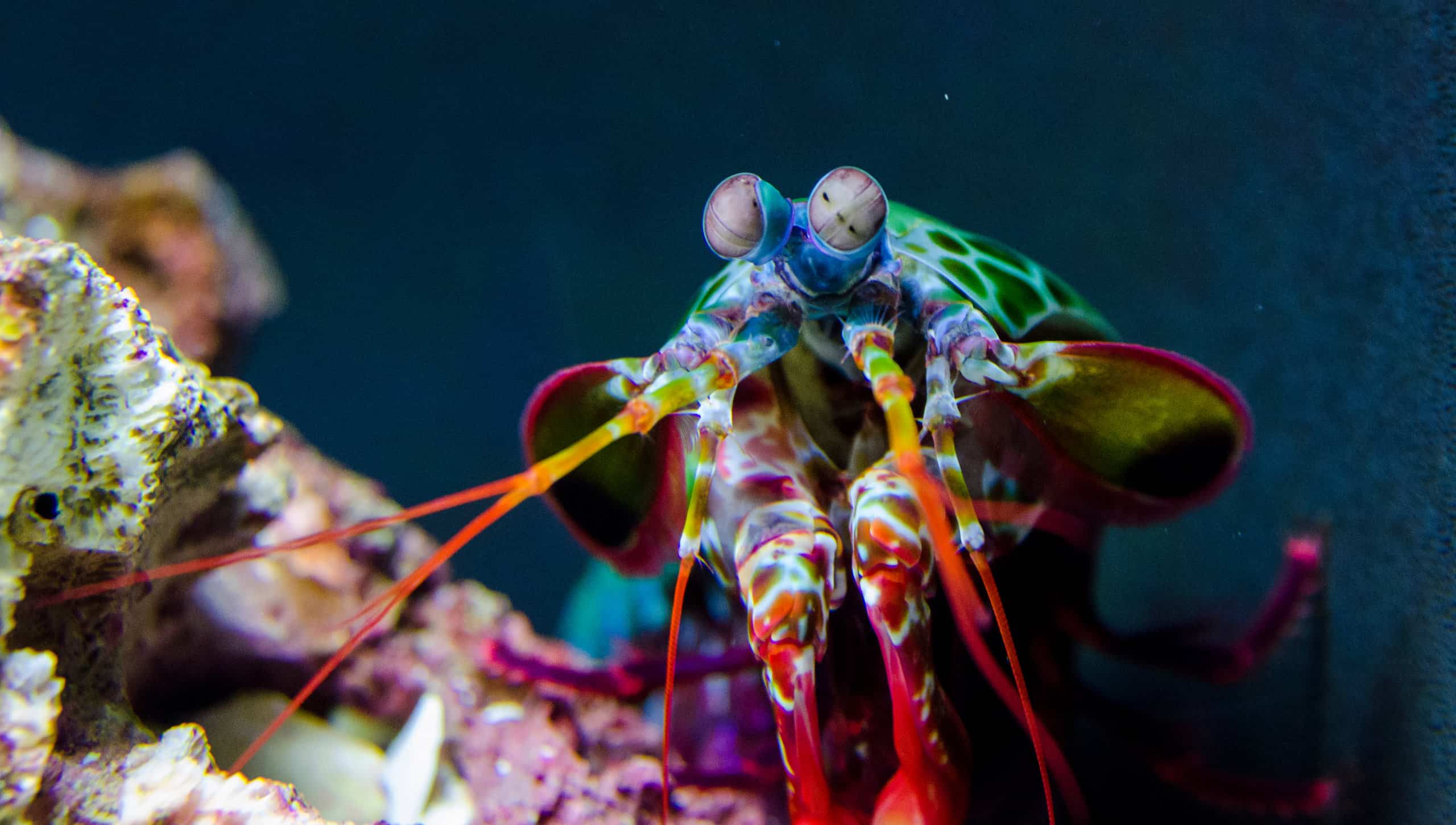
Mantis shrimp are also a variety of colors, including bright red, blue, yellow, and green. They have stronger, more specialized exoskeletons. These shrimp have eight pairs of legs, along with pleopods attached to the abdomen that they use to swim and scurry along the ocean floor. They have raptorial forelegs that they keep folded like praying mantises. Their eyes are raised off their heads by stalks. As in snails, the stalks allow for an extraordinary range of independent movement to enhance their vision, which is the most complex in the world. Mantis shrimp have up to 16 photoreceptors (humans have three) and can see both visible and polarized UV light.
Predation Strategies
Pistol shrimp are primarily opportunistic, nocturnal hunters. They encounter prey while moving throughout their territory. Pistol shrimp snap their claws to generate high-speed jets of water traveling at up to 60 mph. Rapid closure creates a low-pressure vortex called a cavitation bubble. When the bubble quickly implodes, it produces light and heat, with temperatures reaching up to 4,800°C, or 8,672°F. For comparison, the surface of the sun is approximately 10,000°F. The collapse also produces a shock wave as loud as 210 decibels that stuns or kills their prey. The sound is as loud as a gunshot, making the pistol shrimp one of the loudest animals on the planet.
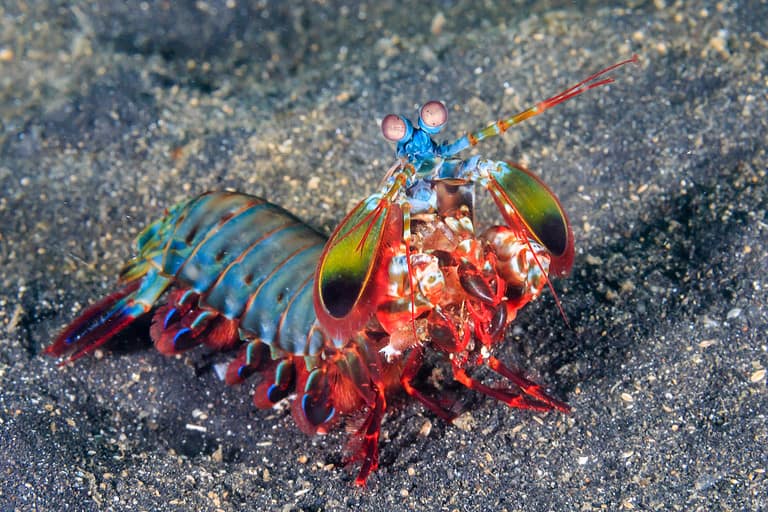
Mantis shrimp actively hunt for food from their burrows or while searching for a new place to hide. Mantis shrimp come in two varieties: smashing or spearing, depending on the species and the shape of the forelimbs. Smashing mantis shrimp have calcified, elbow-like clubs on their appendages. They use these bones to stun and break apart hard shells of crabs, snails, and clams to access the soft tissue. At over 50 mph, these shrimp are said to have one of the fastest and most powerful strikes among all animals.
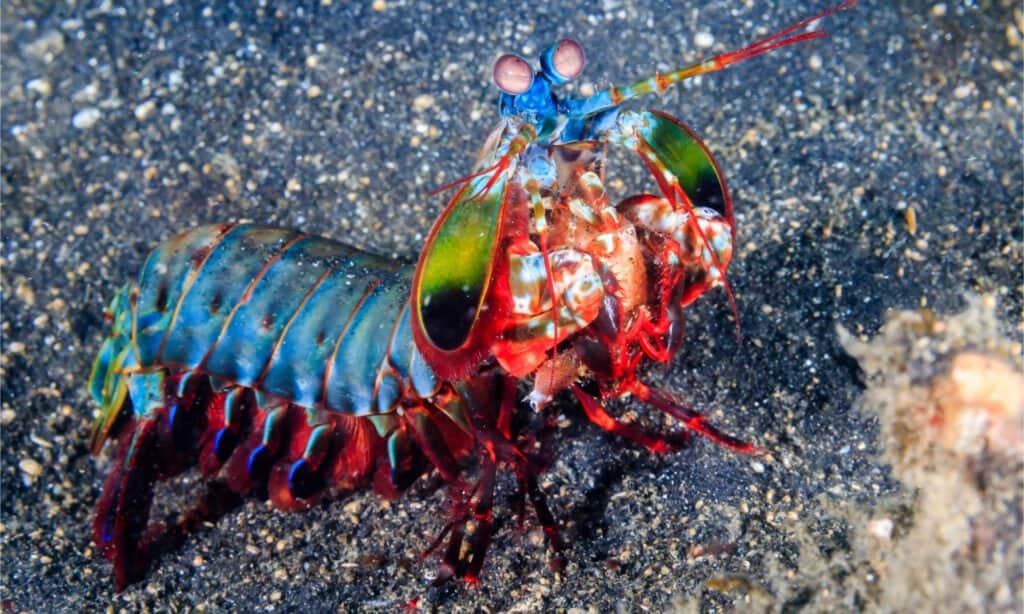
Mantis shrimp are active predators.
©Richard Whitcombe/Shutterstock.com
A spearing mantis shrimp hunts and impales its prey using sharp, barbed appendages. It launches an attack, stabbing its prey and generating a cavitation bubble. Even if it misses with its claw, its cavitation shockwave can stun or kill its prey. Spearing mantis shrimp hide in burrows and wait for animals like fish, crustaceans, and mollusks to swim by before striking.
Other Behavior
Pistol shrimp favor warm, shallow, tropical and subtropical waters along coasts worldwide. They are commonly found in coral reefs, seabeds, rocky crevices, and kelp forests. These shrimp often live in pairs or in symbiotic relationships with goby fish, as mentioned above. Some species also live in colonies. Pistol shrimp dig burrows in mud or sand, or live inside sponges. They can be territorial but are not typically aggressive toward humans. These shrimp are not dangerous to humans.
Mantis shrimp also favor warm, shallow coastal areas worldwide. They often burrow into sand, hide in rock crevices, or camouflage among the coral. They are generally solitary, aggressive, and highly territorial, actively attacking intruders. These shrimp are known as “thumb-splitter shrimp” because they can and will attack humans when handled. They can puncture the skin and tear flesh with ease.
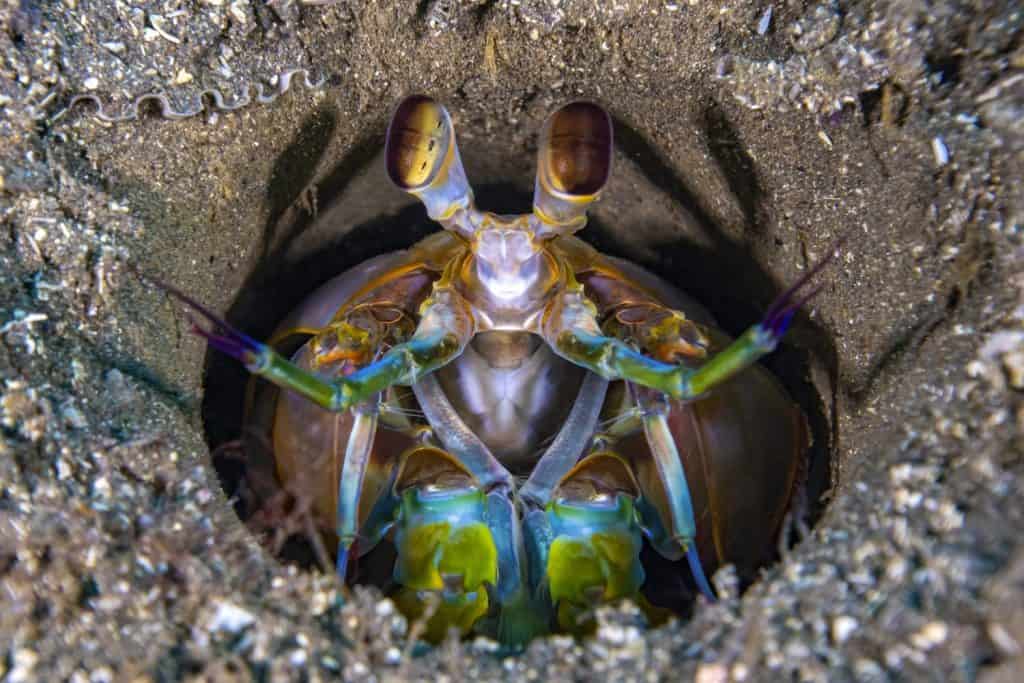
Mantis shrimp are highly territorial, actively attacking intruders.
©Dmitry Demkin/Shutterstock.com
Which Shrimp Would Win a Fight?
Although pistol shrimp and mantis shrimp favor similar habitats and are both protective of their territory, they generally have different ecological niches. However, a mantis shrimp would most likely win a fight due to its much larger size, aggressive tendencies, strong offensive abilities, and stronger exoskeleton.
A pistol shrimp has strong defensive abilities, as it can quickly attack from a distance. However, a large mantis shrimp can repel attacks from a pistol shrimp, and it also relies on speed. A mantis shrimp’s offensive abilities, whether it uses barbed appendages or club-like elbows, would be too challenging for even a large pistol shrimp to overcome.