
Quick Take
- Mantis shrimp deliver one of the fastest and most powerful strikes in the animal kingdom.
- Their unique double-impact mechanism combines physical force with cavitation bubbles to break hard shells.
- Scientists are studying their biomechanics to inspire advances in robotics and energy systems.
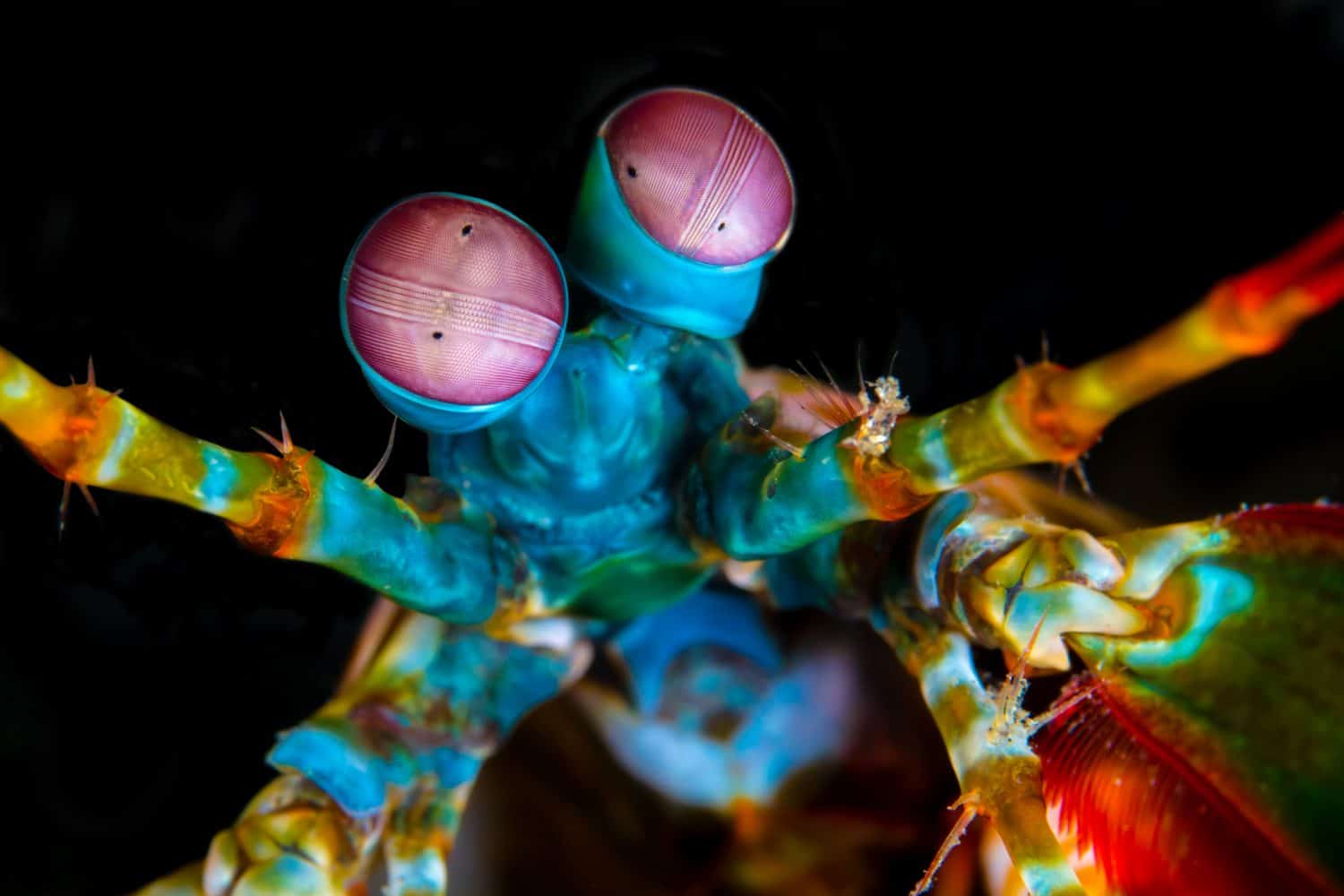
The mantis shrimp was named after its resemblance to both a praying mantis and a shrimp. But instead of being a poor imitation of these creatures, it surpasses them both when it comes to hunting techniques. Mantis shrimps pack the mightiest punch in the marine world. So, how can such a small animal generate such huge forces, and what can they teach modern biomechanical research?
The Phenomenal Mantis Shrimp Punch
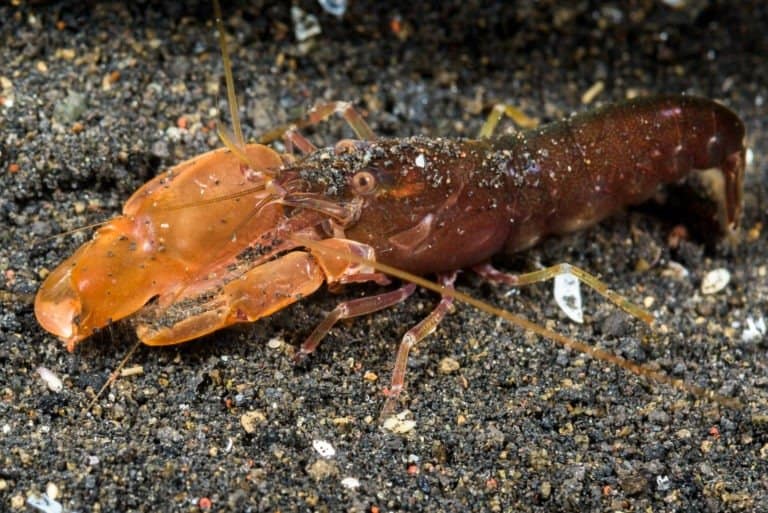
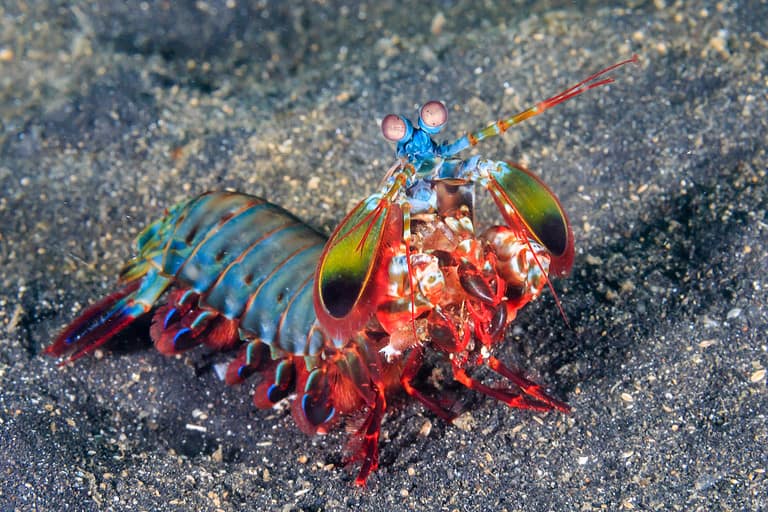
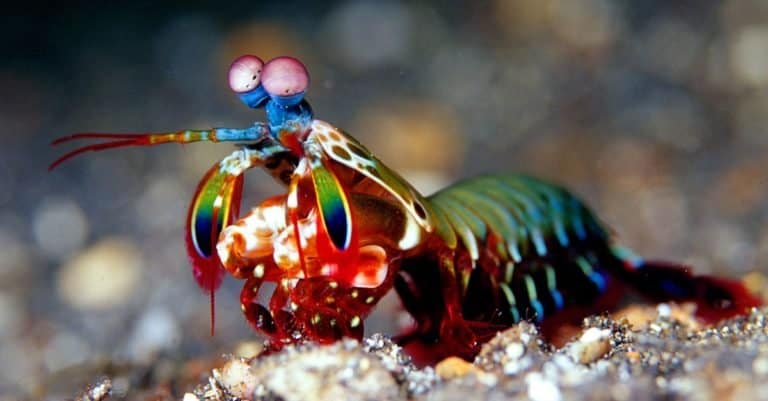
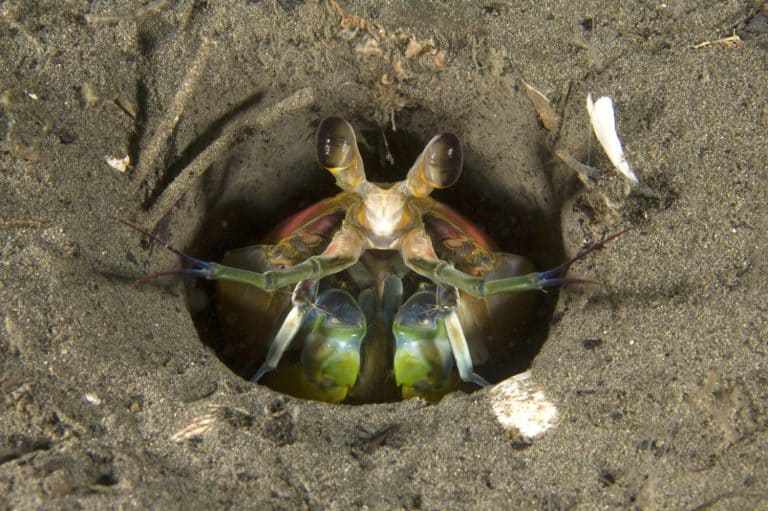
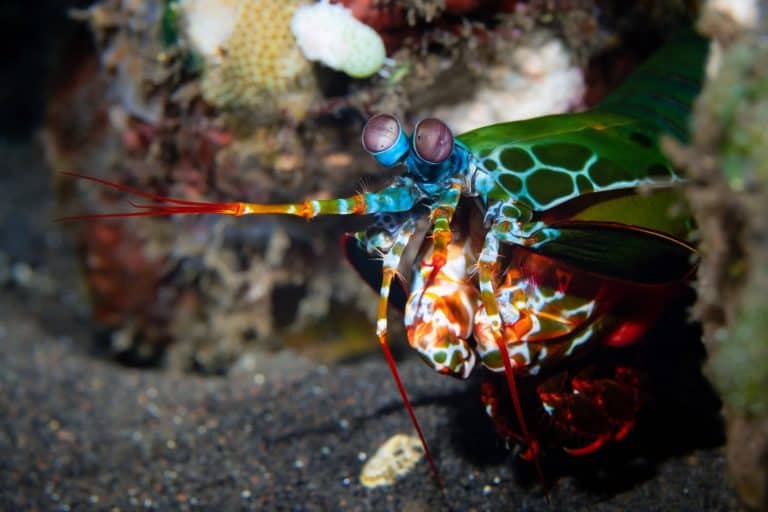
Mantis shrimps belong to an ancient order of crustaceans called Stomatopoda and predate the dinosaurs! They reside in the warm, shallow waters of the Pacific and Indian Oceans. There are over 400 different mantis shrimp species, which vary in size and appearance. One of the most well-known is the peacock mantis shrimp (Odontodactylus scyllarus), which feeds on crabs and mollusks. First, however, it has to break through their strong shells, which is where its powerful punch comes into play. It’s not just used for hunting; a mantis shrimp will also use it to keep enemies away from its burrow.
How Powerful Is the Mantis Shrimp Punch?
All mantis shrimps have two forelimbs called raptorial appendages, plus extra parts attached to them called dactyl clubs. Recent studies using imaging technologies have shown how they use their clubs to deadly effect. The key to their power lies in not one but two deadly strike forces.
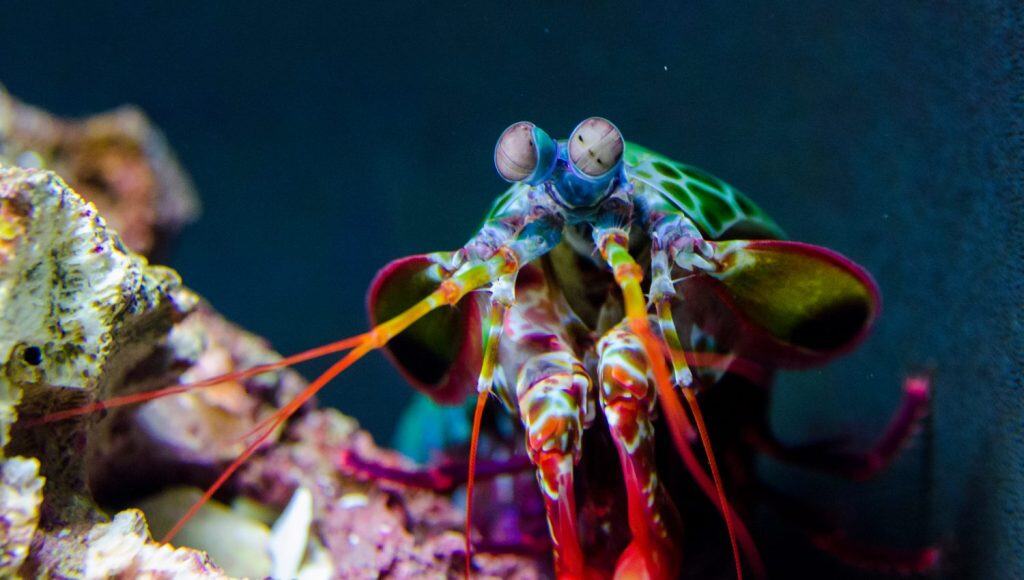
Mantis shrimps use a double strike force to smash the shells of prey.
©Maxfield Weakley/Shutterstock.com
The club is usually tucked away, but when the mantis spots prey, it is released from its spring and latch mechanism at great speed. This means that the appendage is held in place by a latch and is pulled against an exoskeletal spring. They have a 4-bar linkage mechanism that amplifies the force created when the latch is released and the spring recoils. It strikes the prey at up to 23 meters per second.
A second strike force comes from cavitation bubbles that form between the club and the prey’s shell. Cavitation bubbles are pockets of vaporized water. They form when an object moves so fast through water that it heats up enough to turn into a gas. As the cavitation bubble collapses, it releases energy, which exerts even more force to smash the shell.
Jackhammers and Biomechanics
Remember, the mantis shrimp has two front limbs and therefore two dactyl clubs. Each limb delivers an initial impact, followed by the collapse of a cavitation bubble that adds a second forceful blow. The unfortunate prey experiences four force peaks in rapid succession, making it similar to being hit by a jackhammer! Yet all of this happens in just 800 µs, with peak forces of 1500 N. That equates to over 1,000 times the mantis shrimp’s body weight.
Scientists have discovered just how much we can learn from these incredible creatures. Studies on power amplification, muscle mechanics, elastic energy storage, linkage mechanisms, and latch-mediated spring actuation have been inspired by the mantis shrimp as well as numerous robotic applications. Work is even underway to develop a bio-inspired energy harvester that mimics the mantis shrimp’s strike mechanism.