
Quick Take
- Saltwater crocodiles are notoriously poor swimmers, yet somehow they managed to colonize islands separated by hundreds of miles of open ocean. See how they crossed →
- One tracked crocodile made a multi-day open-sea crossing without ever fighting the current, and its strategy was deliberate. Track the ocean journey →
- The reason saltwater crocodiles haven't split into separate species across the Pacific and Indian Oceans puzzled scientists for years, a mystery that one study eventually changed the explanation for entirely. Explore the species mystery →
- There's a precise moment when crocodiles choose to begin an ocean journey, and the timing turns out to be anything but instinct. See when they depart →
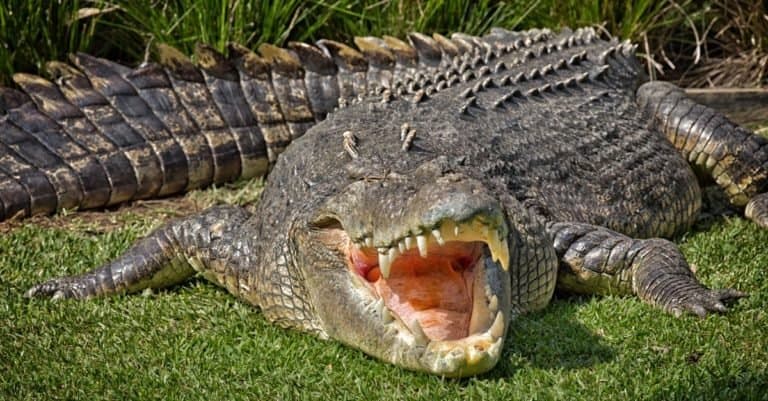
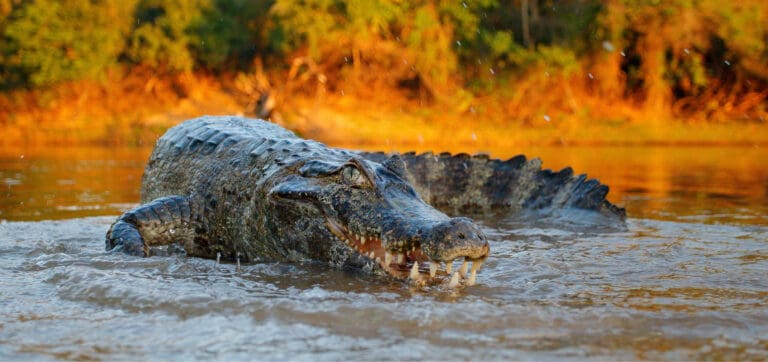
Saltwater crocodiles are poor swimmers. Yet somehow the world’s largest living reptile has spread across island chains scattered throughout the Indian and Pacific Oceans, separated by hundreds of miles of open water. A 2010 study solved the puzzle, and the answer has become one of those classic findings that still holds up.
The trick, researchers found, is that crocodiles don’t swim across oceans. They surf them, waiting for a current to do the work and hitching a ride at exactly the right moment.
How the Study Tracked Crocodile Surfers
A team led by Hamish Campbell at the University of Queensland tagged 27 adult estuarine crocodiles in the remote Kennedy River in North Queensland with sonar transmitters, then tracked their movements for 12 months using underwater receivers. The data showed something unexpected: both male and female crocodiles regularly traveled far beyond their home rivers, out past the river mouth and into open sea.
To see how far that behavior could carry them, the team layered the movement data over estimates of surface ocean currents, and also pulled archival satellite records from a handful of crocodiles that had been tracked during ocean journeys in the past.
Timing the Tide
One satellite-tagged male, 3.84 meters (12.6 feet) long, left the Kennedy River and traveled 590 kilometers (367 miles) down the west coast of Cape York Peninsula in just 25 days. His timing wasn’t random: he launched his trip right as a seasonal current system formed in the Gulf of Carpentaria, and rode it the whole way.
A second crocodile, 4.84 meters long, covered more than 411 kilometers in 20 days, crossing from the east coast of Cape York through the notoriously turbulent Torres Strait to the Wenlock River on the west coast. When he reached the strait, the current was running against him. Rather than fight it, he pulled into a sheltered bay and waited four days until the current switched direction in his favor, then crossed, according to the study.
Why It Matters: Explaining Island Colonization
Across the Kennedy River data as a whole, the pattern was consistent: crocodiles began long journeys within an hour of the tide turning in their favor, and hauled out onto a riverbank or shoreline the moment it turned against them. Because the animals can go long stretches without eating or drinking in saltwater, waiting out an unfavorable current costs them little. A crocodile with nowhere urgent to be can simply haul out, rest, and let the ocean reset in its favor.
That solved a real mystery. The saltwater crocodile exists as island population after island population across the Indian and Pacific, yet it has never split into separate species the way isolated populations so often do, Mongabay reported at the time. Campbell’s explanation was that it probably isn’t isolated at all. By catching favorable currents, crocodiles can cross the same marine barriers that would otherwise cut off one island’s population from the next, keeping the species mixing across a vast range instead of drifting apart, researchers explained.