
The current average life expectancy in the United States is 78.4 years, but we all know people who have lived for a lot longer than that. It was once assumed that the lifespan of an animal was roughly proportional to their size; the larger the animal, the longer it would be expected to live. For example, an elephant has a longer life expectancy than a mouse! However, we now know that the true situation is a lot more complex than that. Bats and mice are around the same size, yet a bat lives for 24 years while a mouse only lives for four years!
An animal’s lifespan is probably determined by a combination of factors, including metabolic rate, the ability to keep cells functioning for longer, rejuvenation, and factors that we don’t yet understand. On our planet, there are several superagers- animals that can live for more than 100 years. Let’s meet some of them.
Humans (122 years)

The oldest recorded human was 122 years of age.
©oneinchpunch/Shutterstock.com
Humans who have lived for over 100 years are called centenarians. In 2021, the population of the USA was roughly 331 million. Of these, 89,739 were centenarians, and the number of people aged over 100 in the population has nearly doubled in the last 20 years.
The longest verified human lifespan is 122 years, 5 months, and 14 days. This was a French woman called Jeanne Calment. However, it is Japan that has the highest prevalence of centenarians in the world; there are over 94,000 centenarians in a population of around 124 million. Interestingly, 85 percent of centenarians are women. This may be because women’s bodies handle age-related disease better, as they have a different hormone profile.
Saltwater Crocodiles (110+ Years)
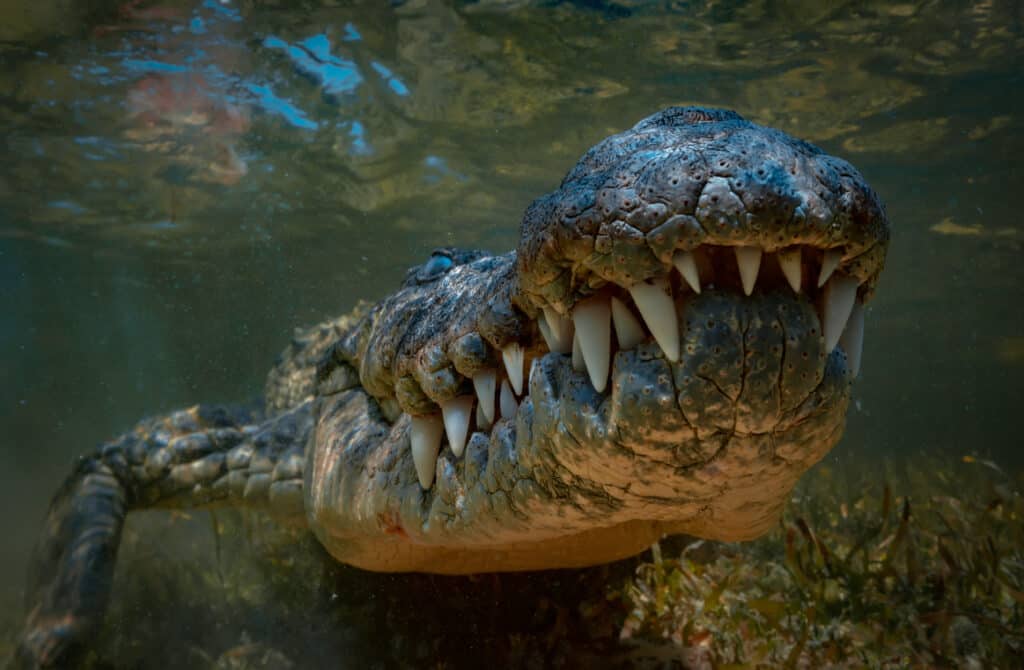
Saltwater crocs can reach 22 feet.
©Willyam Bradberry/Shutterstock.com
Saltwater crocodiles (Crocodylus porosus) have an average lifespan of around 40 to 45years, but some can live a lot longer. A male called Casius resided at a wildlife sanctuary in Australia and lived to be at least 110 years old, although no one was sure of his exact age.
In the wild, saltwater crocs are most commonly found on the coasts of northern Australia and the islands of New Guinea and Indonesia. Their habitats are mostly coastal waters or around rivers. These are the largest reptile species alive, with adults reaching 22 feet in length. They have a large head and a heavy-set jaw. Adults are dark green/grey, with lighter tan or gray areas. Contrary to popular belief, crocodiles do have a finite lifespan and cannot live indefinitely. In the wild, they are unlikely to live past 60, but in captivity, they probably have a maximum age of around 120 years.
Red Sea Urchin (100 -200 Years)
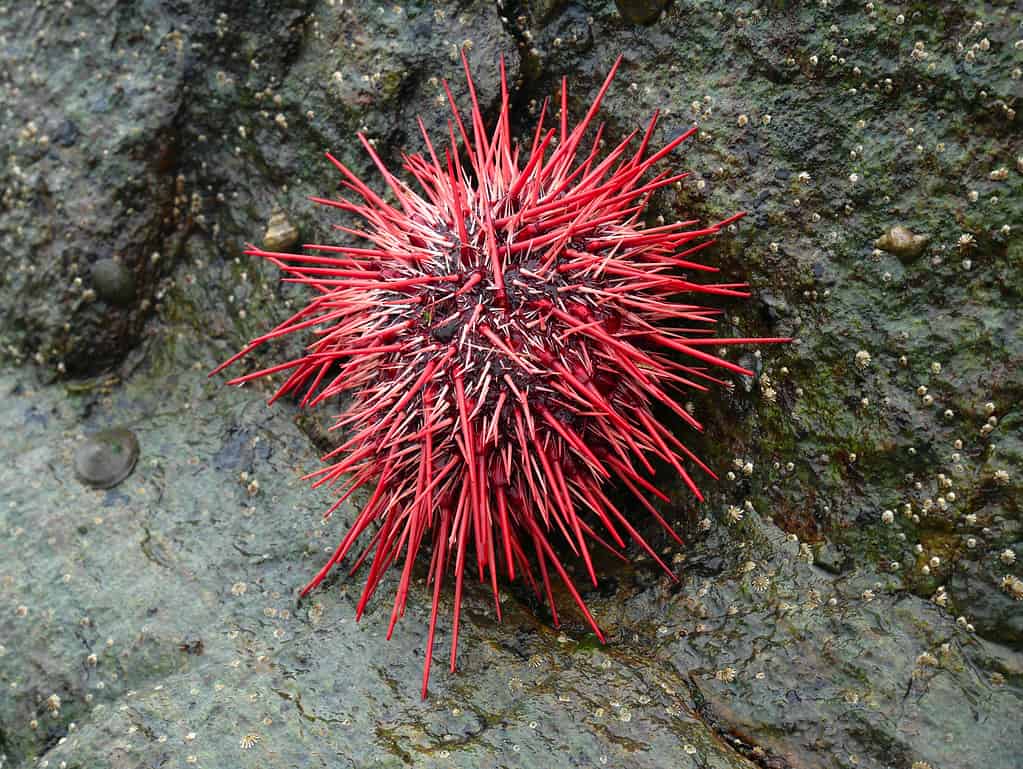
Red sea urchins live in aggregations.
©Extemporalist, CC0, via Wikimedia Commons – Original / License
Red sea urchins (Strongylocentrotus franciscanus)live for at least 100 years, and some may live for 200 years! They are predominantly found along the Pacific coast of North America, from Isla Cedros, Baja California, to the Gulf of Alaska. They are also found along the northern coast of Japan. The urchins have spherically-shaped, calcareous shells which can be light to dark purple with red, pink, light purple, dark purple, maroon, or brown spines. Typically, red sea urchins live in aggregations and tend to stay in one place when food is plentiful. Incredibly, these creatures show no noticeable signs of aging. They have negligible deterioration in their bodies as time passes. Also, they have thicker shells and spines and have more genes associated with immunity, as well as a lower metabolic rate, which can all contribute to longevity.
Bowhead Whale (100 – 200 Years)
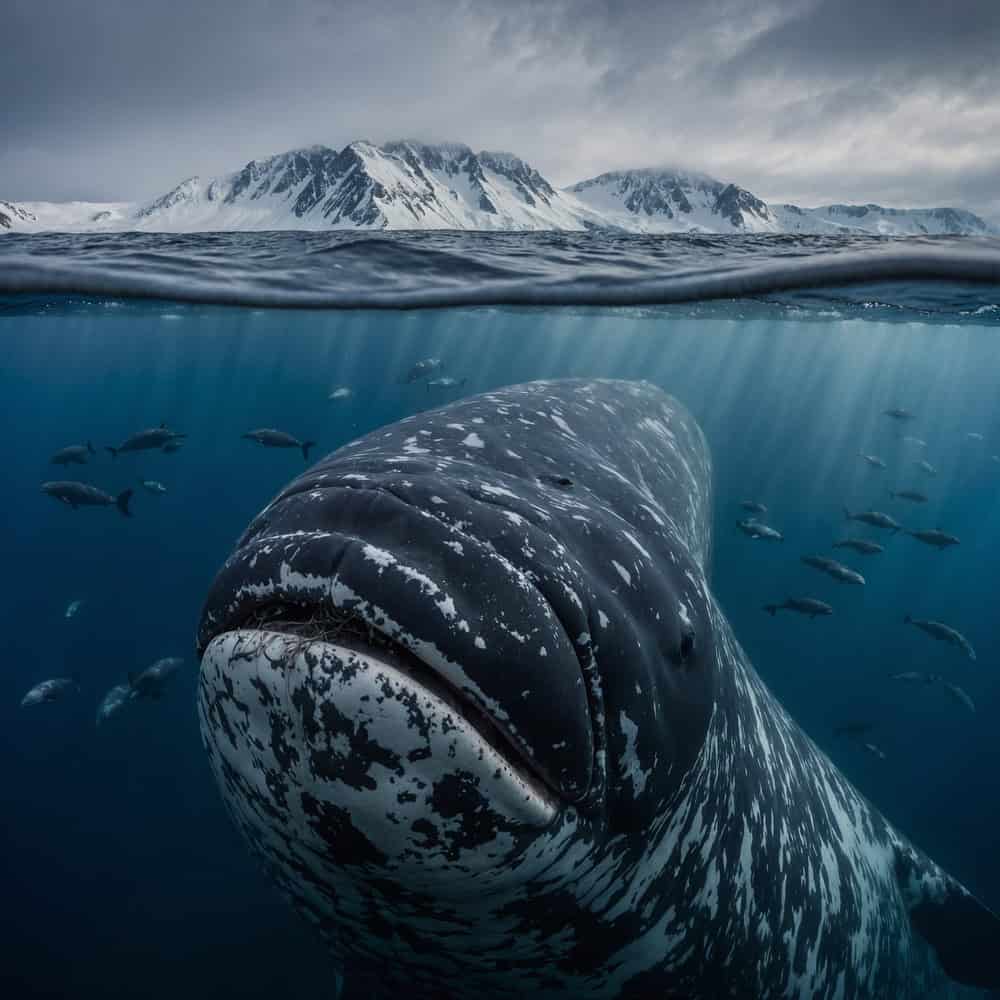
Bowhead whales have special genetic mutations.
©Ansarphotographer/Shutterstock.com
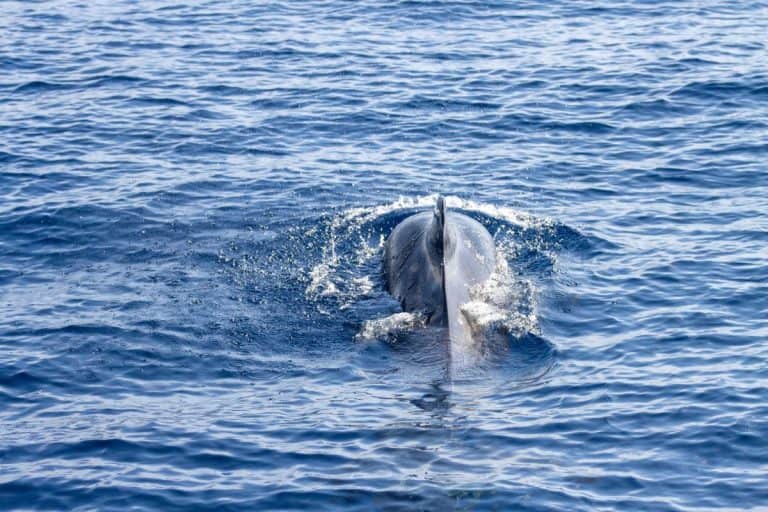
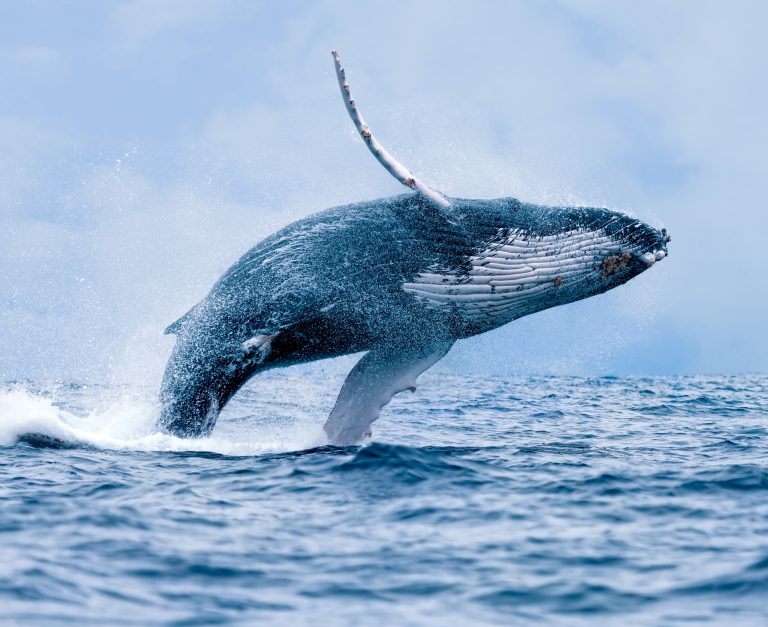
The award for the longest living mammal goes to the bowhead whale. This extraordinary creature can comfortably live over 100 years and may even reach 200 years of age. Sadly, there are now only four or five geographically secluded stocks, including one in the north Atlantic and the Bering Sea. They have a preference for colder waters, and during the summer, they may be seen in bays, straits, and estuaries. These giants are also the second-largest whales in the world, and only the blue whales are larger. Many bowheads are over 60 feet in length! Scientists have found that these whales have a genetic mutation that protects them from cancer, and it is suspected that this may help them live so long. They also have duplication in other genes connected with cell growth and repair, which may also slow aging.
Freshwater Pearl Mussel (250+ Years)
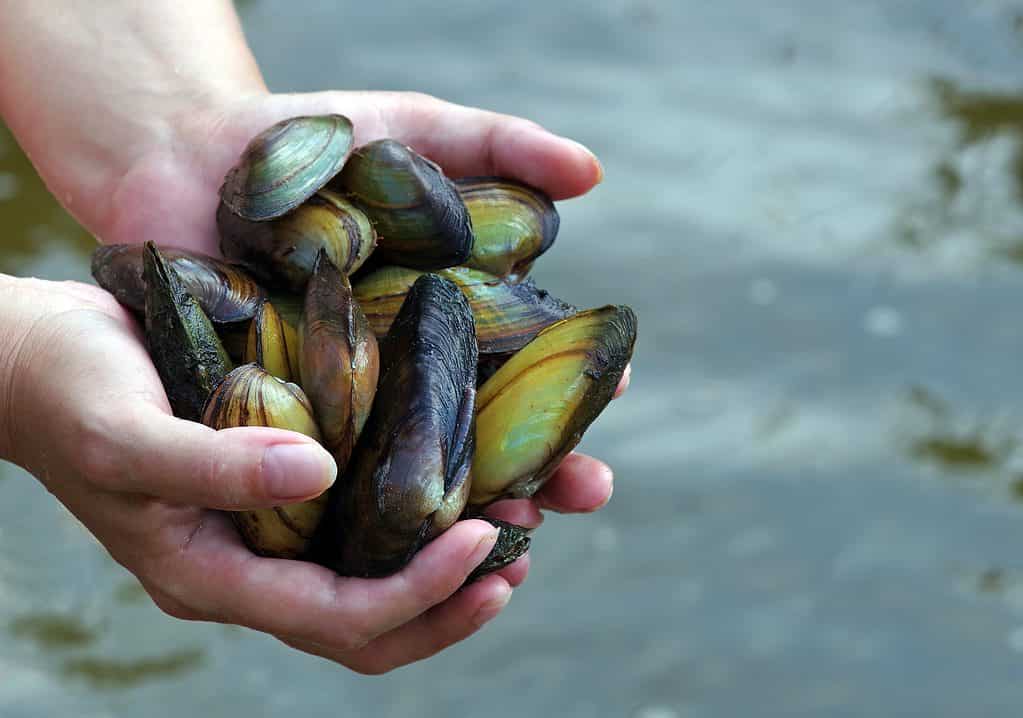
Freshwater pear mussels live in rivers and streams.
©KRIACHKO OLEKSII/Shutterstock.com
Freshwater pearl mussels (Margaritifera margaritifera) are also known as eastern pearlshells. Their average lifespan ranges from 86 to 102 years, but varies with environmental conditions. The oldest recorded freshwater mussel was 280 years old.
They are a native species of European rivers and streams and are found from Norway to Spain. You will have to hunt around to find them because they are partly buried in the substrate on stream beds. Their hard shells consist of two plates attached to a hinge.
Not all freshwater pearl mussels live this long! In fact, very few of them survive their first year. Most of them are washed away at the larval stage. What’s more, they do not reach sexual maturity until they are around 20 years old. Their slow metabolism is the reason for their extraordinarily long lifespan.
Greenland Shark (272+ Years)
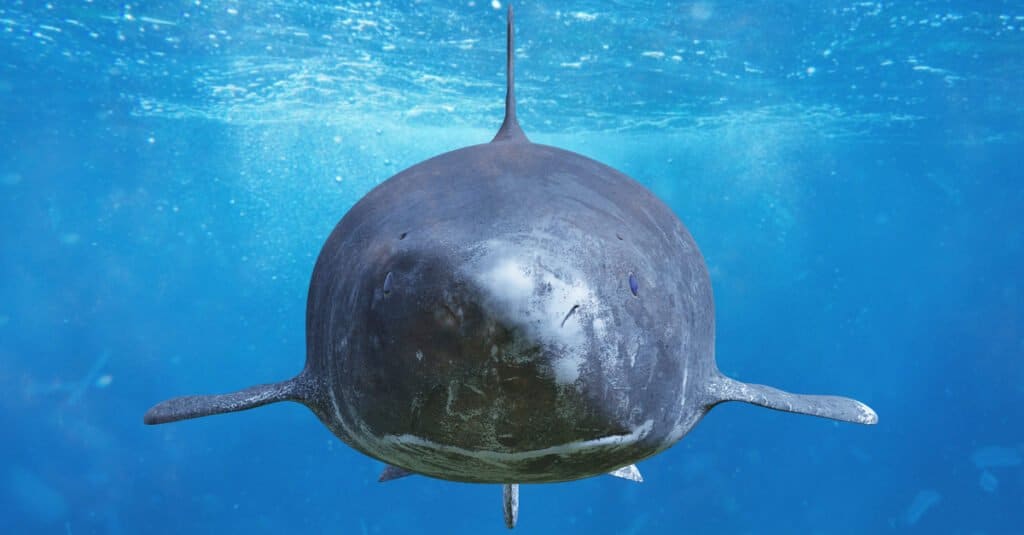
Greenland sharks were once killed and used to make machine oil.
©Dotted Yeti/Shutterstock.com
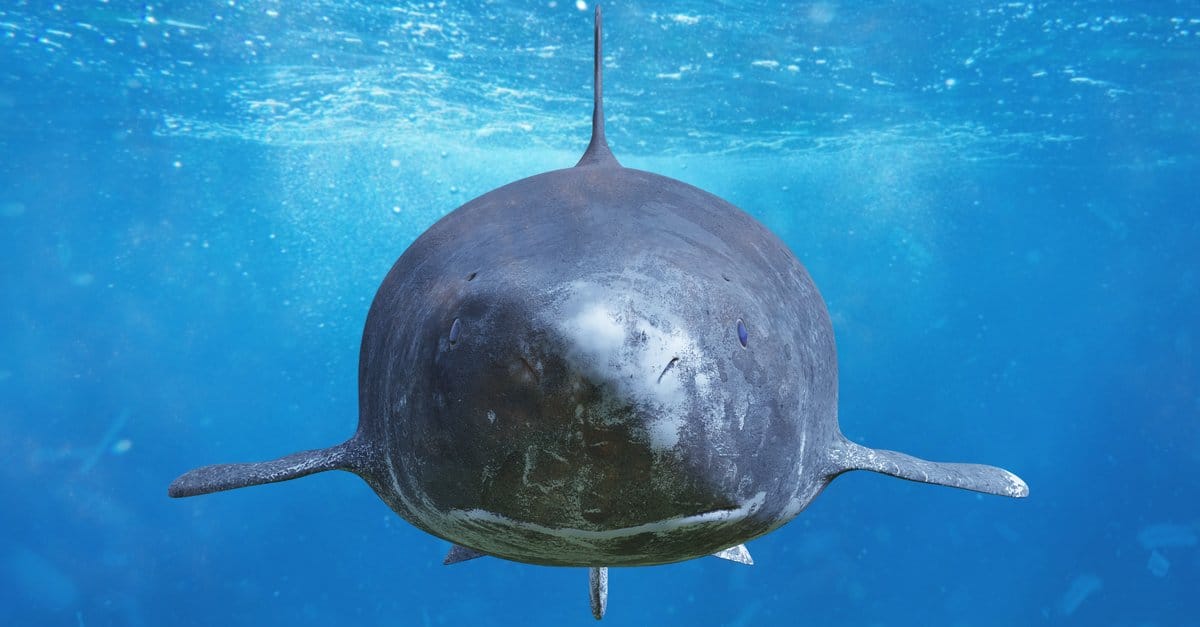
A 2016 study of Greenland sharks (Somniosus microcephalus)used eye tissue to estimate their age. The scientists estimated the oldest shark studied to be about 392 years old, with a possible age range up to 512 years. Greenland sharks are found in the north Atlantic from the coast of New England and Canada to Scandinavia. They are mainly found on continental and insular shelves. Generally, they move to deeper waters in the summer months. Their adaptation to colder waters means that they have a very slow metabolism, and this would help to explain their extreme longevity.
Tubeworm (300 Years+)
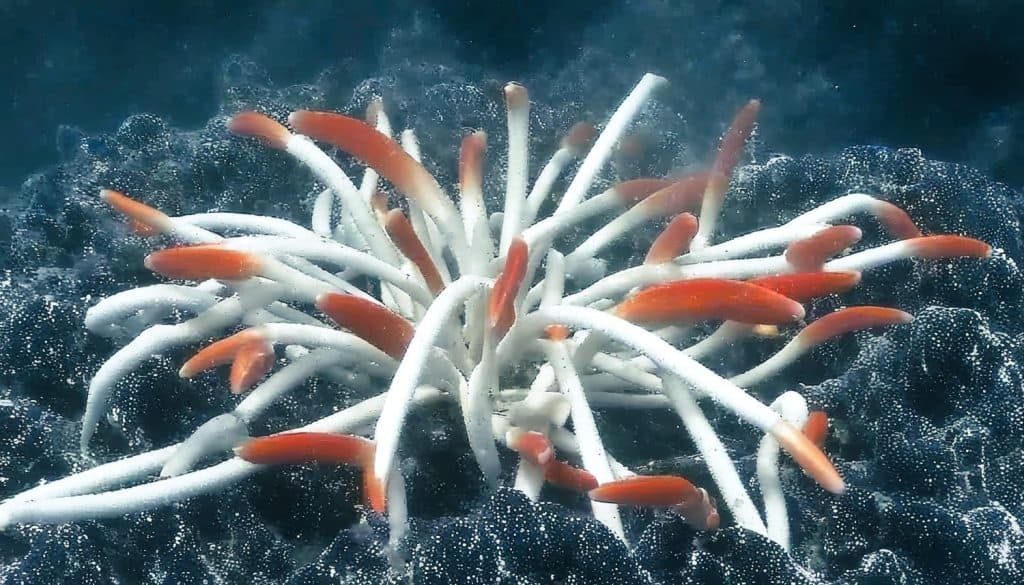
As their name suggests, tubeworms are tubular in shape.
©Gallwis/Shutterstock.com
There are several different species of tubeworms, but some are deep-water invertebrates that fix themselves to underwater surfaces near hydrothermal vents and cold seeps. Incredibly, they don’t have a mouth, stomach, or intestine! They rely on chemosynthetic bacteria living inside their bodies to provide them with nutrition. As their name suggests, they are tubular in shape, and some grow to 8 feet in length.
In general, scientists have found that many deepwater species live longer than their shallow-living relatives. This has been attributed to their lower metabolic rates. One species found in the Gulf of Mexico, Escarpia laminata, has an extraordinarily long life span, regularly achieving ages of 100–200 years with some individuals older than 300 years.
Ocean Quahog Clams (400+ Years)
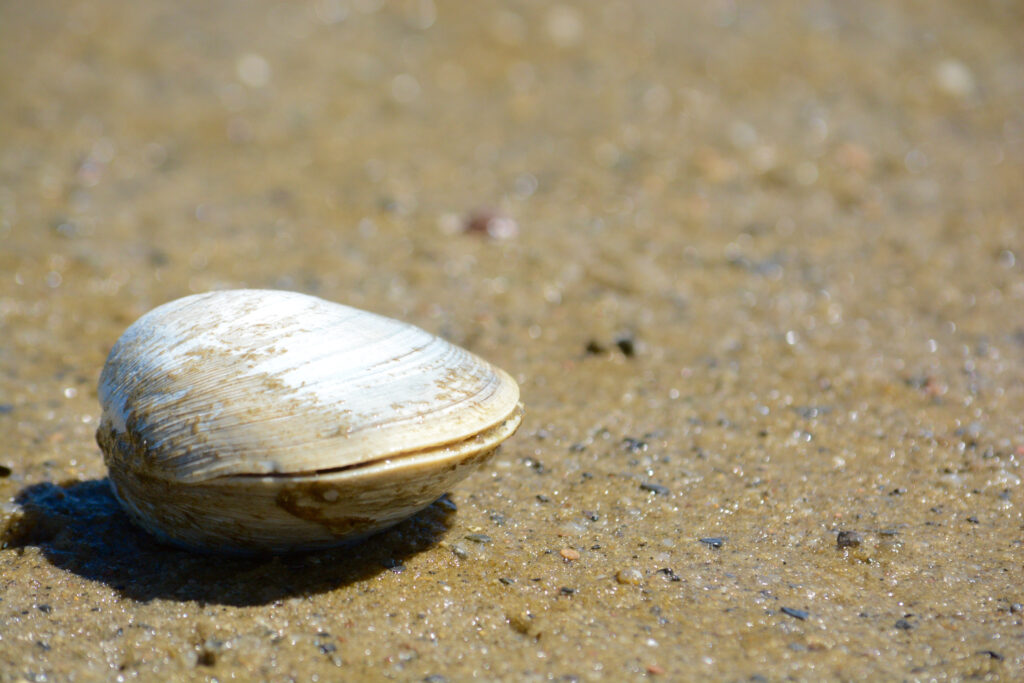
Quahog clams are hard-shelled invertebrates.
©Gabe Dubois/Shutterstock.com
Ocean quahog clams (Arctica islandica) are the longest living mollusk on the planet. They are a bivalve mollusk with two hinged, dull-grey shells that encase their body, reaching a maximum size of around 5.5 inches. These clams have a wide geographic range that includes the east coast of North America, the southern coast of Iceland, and around the British Isles. Here, they filter feed on organic matter from the water column using their siphons. Many individuals live for at least 200 years. However, one that was collected off the coast of Iceland in 2006 was estimated to be 405 years of age! The clam was named Ming because it was born during the Chinese Ming Dynasty, which lasted from 1368 to 1644.
Glass Sponge (10,000+ Years)
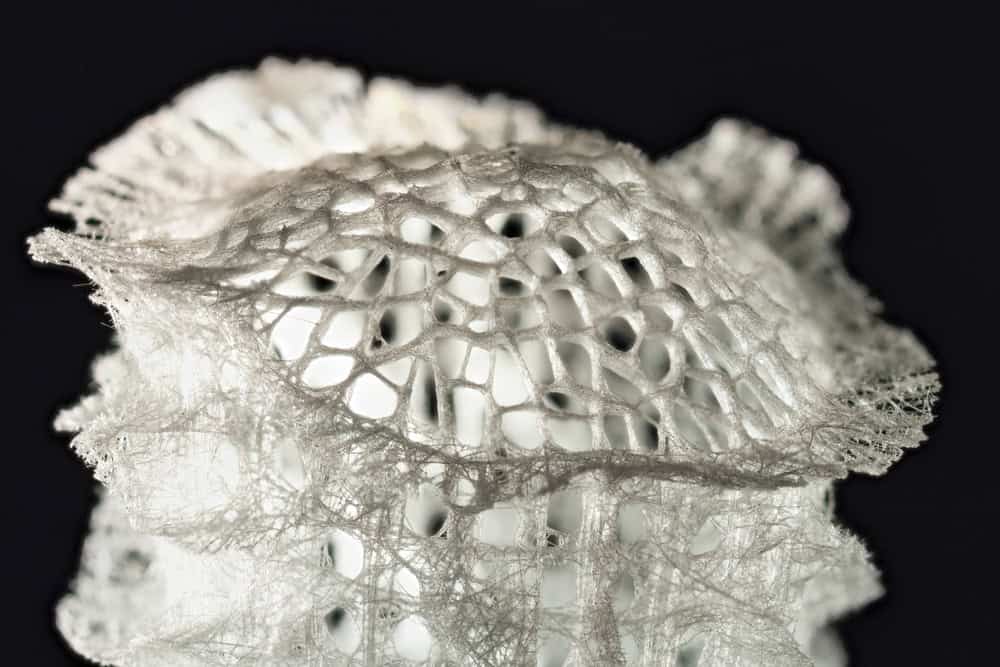
There are several species of glass sponge.
©Arctium Lappa/Shutterstock.com
There are many species of glass sponges (Hexactinellida) that live in deeper habitats throughout the world’s oceans. They have an upright shape with special structures at their bases for holding fast to the ocean floor. These are filter feeders that get their nutrition from detritus material and bacteria suspended in seawater.
Sponges live in colonies and stay in the same place for their entire lives. One species, Monorhaphis chuni, has been investigated in detail. It forms spicules (small needle-like structures) which can be over 9 feet long. One specimen was collected in the East China Sea, and modeling was used to estimate its age. The results were staggering! This sponge was between 8,000 and 14,000 years old!