
Quick Take
- Saltwater crocodiles are the world’s largest living reptiles.
- They ambush prey with camouflage and patience and glide slowly to avoid ripples before a rapid strike.
- Attacks start at the water’s edge and rely on surprise, then jaws hold prey with immense bite force.
In this viral video, a saltwater crocodile is in water, lying in wait and covered in algae. It then slowly sinks beneath the surface without making a ripple. It’s a short clip, but horrifyingly effective at evoking images of just what else might be lurking in that dark water unseen.
This clip is a great starting point to learn about an everyday survival skill that saltwater crocodiles depend on throughout their lives. These apex predators survive by combining camouflage, patience, and sudden power to take advantage of prey like fish, crabs, turtles, birds, and mammals. Understanding their behavior might just save your life one day.
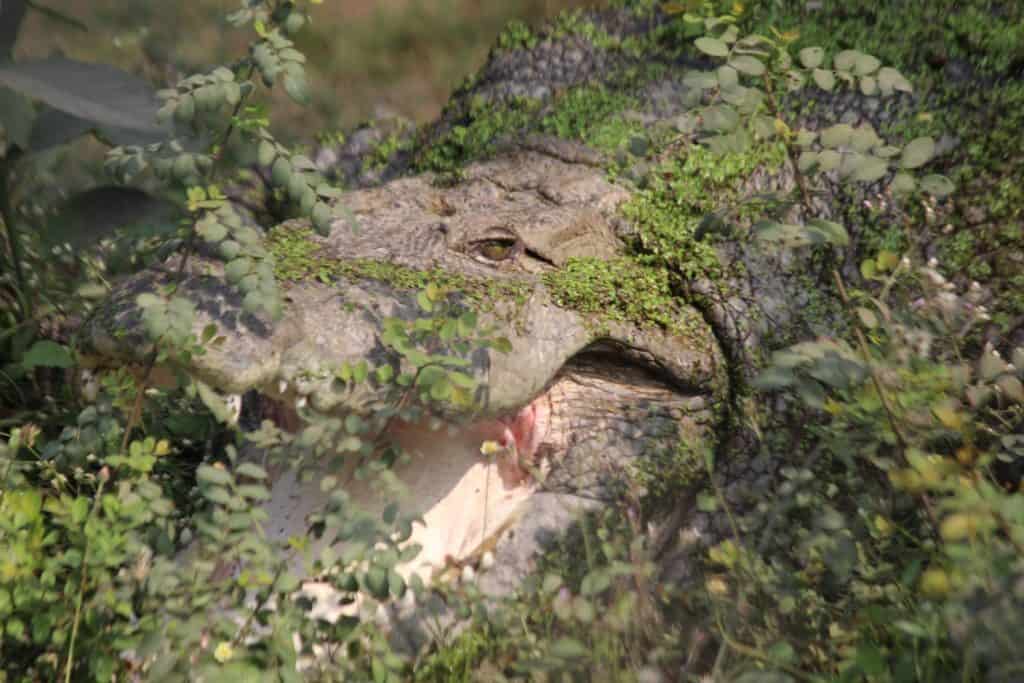
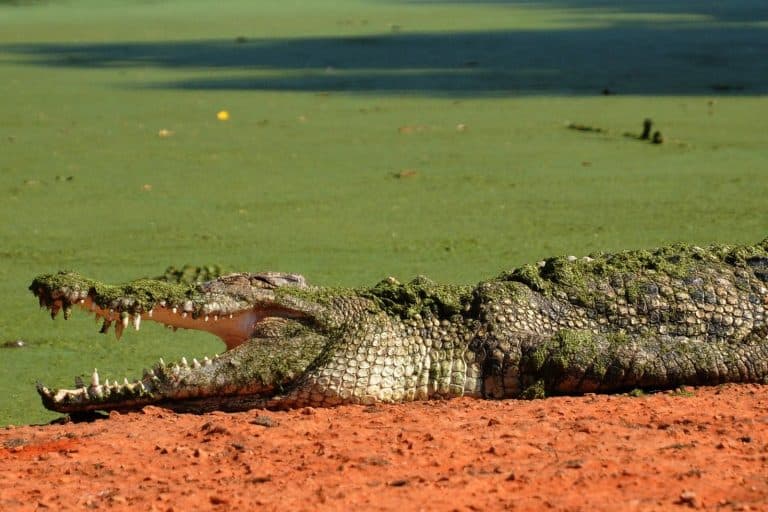
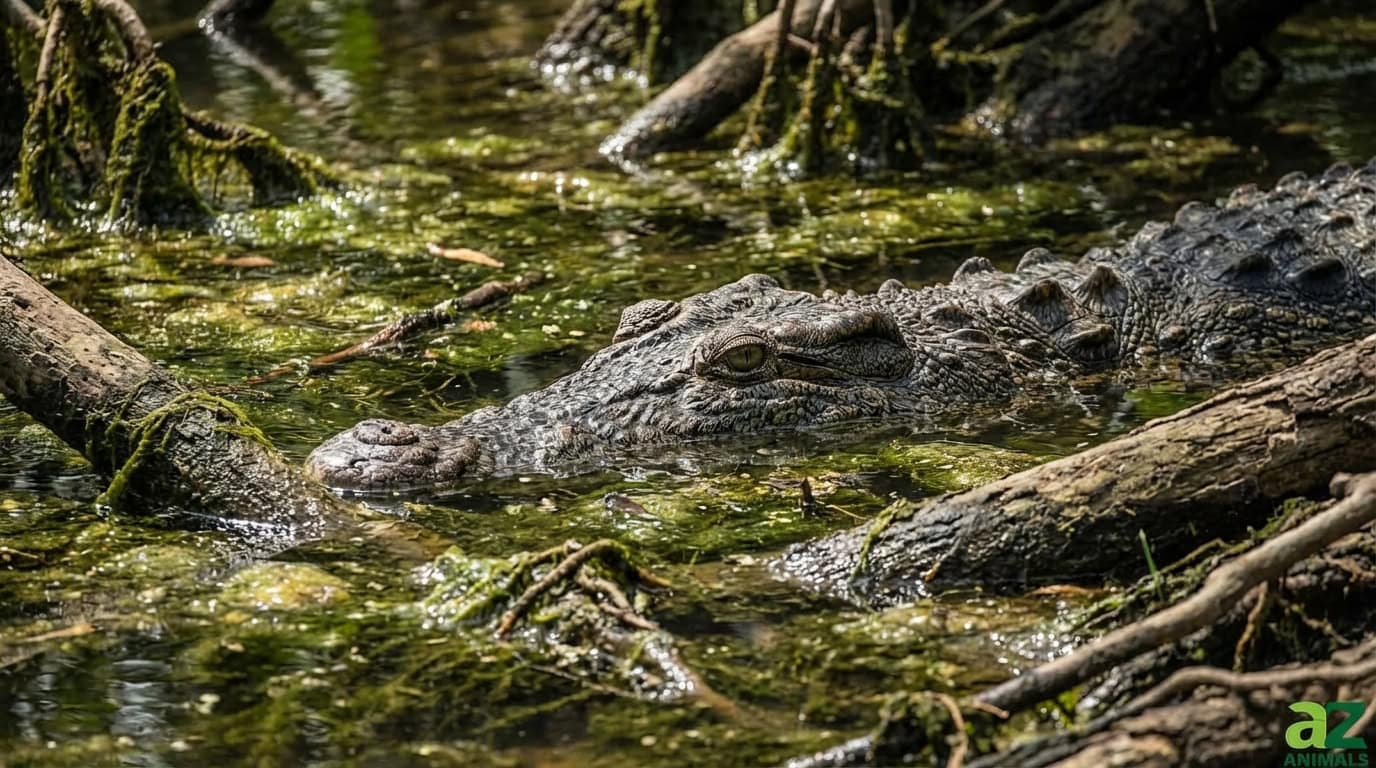
Despite their enormous size, saltwater crocodiles can be difficult to spot in the dappled light reflecting on water, foliage, and debris.
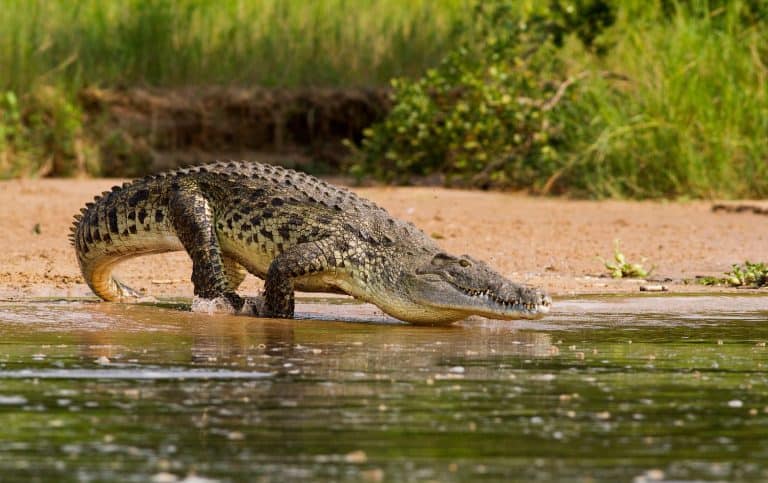
©sandipsaheb/Shutterstock.com
The Church Was Buzzing About It…
When I was a teenager, my family moved to a different town and started attending a new church. The first thing anyone said to us was not, “Hello, welcome to our church,” or “Are you visiting today?” Instead, an elderly lady we met in the parking lot asked, “Did you hear one of our church members was eaten by a crocodile?” We assumed she was confused. Crocodiles don’t usually eat people in the foothills of Appalachia. But several other people corroborated the details of the story.
A young woman from a family in the congregation had become a model and was on a photo shoot on a boat in Australia. It was a hot day, so she and a friend dove into the Prince Regent River near King Cascade, a known habitat for large and dangerous saltwater crocodiles. Tragically, a large crocodile attacked her, pulling her underwater and fatally injuring her before she could be rescued.
For this tragic outcome, many factors must align: the wrong place, the wrong moment, and a single, irreversible miscalculation. Still, if you travel in parts of the world where crocodiles or their cousins live, including parts of the Americas, Africa, Asia, and northern Australia, it helps to understand the risks these massive reptiles pose and why local warnings exist.
Where Do Saltwater Crocodiles Live?
Saltwater crocodiles have the broadest geographic range of any living crocodilian. They live in freshwater rivers, tidal estuaries, mangrove swamps, coastal shorelines, and open ocean routes. Unlike predators limited to land or sea, they move easily between them. A saltwater crocodile can hunt on a muddy riverbank, lie concealed beneath the surface of a river, or travel between islands by swimming through open water.
Their range spans the Indo-Pacific, including eastern India, Sri Lanka, Southeast Asia, Indonesia, Papua New Guinea, and northern Australia. Northern Australia, in particular, supports large populations thanks to warm temperatures, complex river systems, and extensive coastal wetlands.
This flexibility gives saltwater crocodiles unusual control over the spaces where land and water meet. Riverbanks used by mammals, waterways used by fish, and shorelines used by birds all fall within their reach. These boundary zones are where camouflage matters most. Instead of announcing their presence, crocodiles blend into them.
Built to Disappear
Saltwater crocodiles are massive animals, yet they are often difficult to see. Their coloration ranges from gray to brown to olive, closely matching muddy water, shaded banks, and floating debris. Their rough, uneven backs resemble logs or submerged roots. Light reflecting off water further breaks up their outline.
Their anatomy reinforces this concealment. Eyes and nostrils sit high on the head, allowing a crocodile to watch and breathe while the rest of its body remains submerged. Even when close, an observer may notice only what looks like a stick or a clump of vegetation.
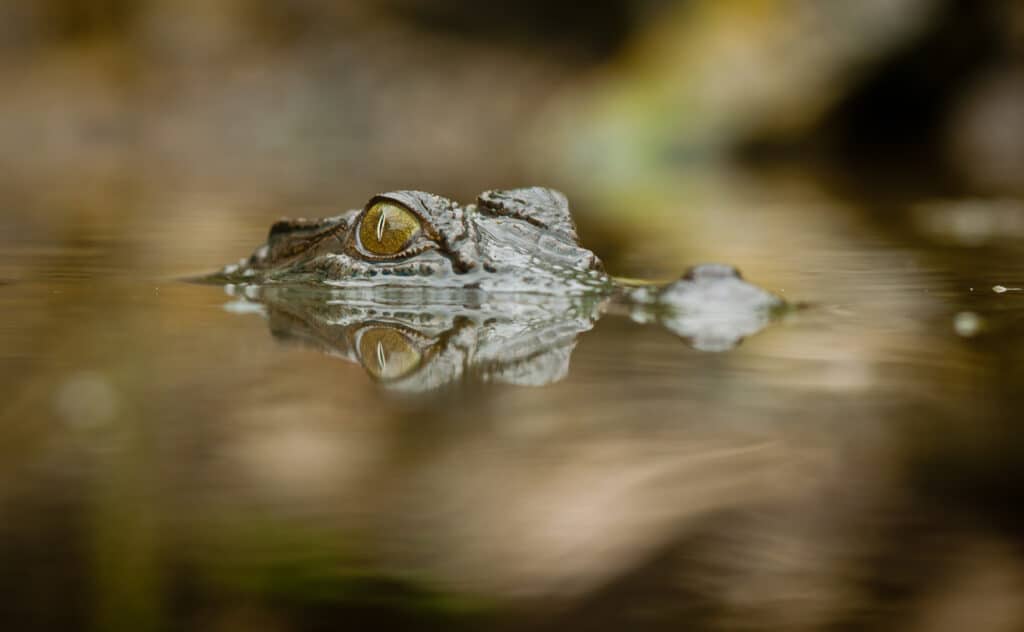
Saltwater crocodiles are patient, stealthy hunters.
©Johan Larson/Shutterstock.com
Movement is minimal. Crocodiles often allow currents to carry them, using small tail adjustments to maintain position without disturbing the surface. This slow glide, seen clearly in viral footage, is deliberate. It prevents ripples that could alert prey or people to their presence. This ability to remain unseen is not a rare trick. It is a daily requirement.
What They Eat and How They Hunt
Saltwater crocodiles eat almost anything they can overpower. Their diet includes fish, turtles, crabs, birds, snakes, wallabies, pigs, deer, livestock, and occasionally sharks or smaller crocodiles. Juveniles begin with insects and small aquatic animals, expanding their prey as they grow.
They do not chase prey over long distances. Instead, they wait. Crocodiles position themselves along animal pathways such as river bends, narrow channels, or shallow banks used for drinking. These are predictable locations where prey must approach the water. Some crocs are smart enough to balance sticks on their heads during bird nesting seasons to attract prey, which is a form of primitive tool use.
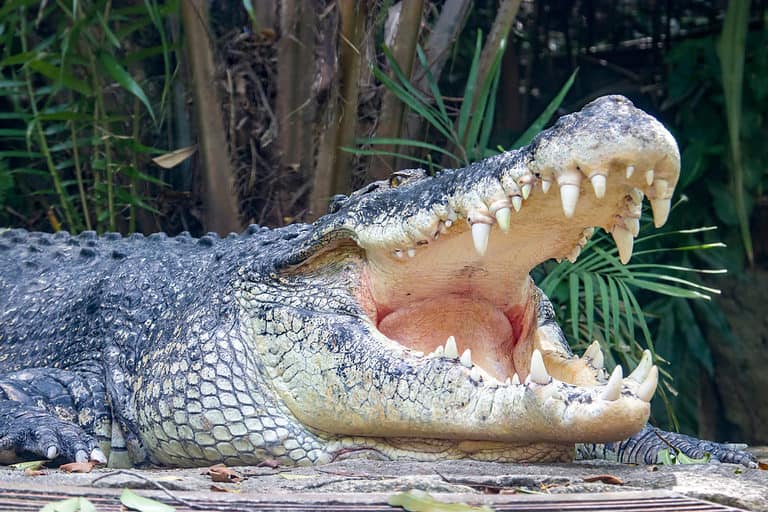
Camouflage allows the crocodile to remain unnoticed until the final moment. When prey enters range, the attack is sudden. A powerful tail provides a burst of speed, and the jaws close with extraordinary force. The teeth are designed to grip rather than cut, holding prey securely while the crocodile subdues it. Most attacks are over in seconds. Surprise is the deciding factor.
The Water’s Edge Problem
Nearly all serious crocodile attacks occur at the boundary between water and land. This zone offers concealment, cover, and a direct path to deeper water. A crocodile may lie pressed against the riverbed with only its eyes visible, watching victims approach.
When the strike comes, the crocodile can lunge several feet out of the water. Small mammals, birds, and even larger animals can be snatched before they even have a chance to react. Once grabbed, prey is often dragged underwater, where escape becomes difficult. This hunting style explains why people are most at risk when standing near shorelines, washing, swimming, or entering water without visibility. Calm water does not mean empty water.
How Often Do Crocodiles Kill People?
Globally, fatal attacks by saltwater crocodiles are uncommon, but they occur consistently in regions where people share waterways with them. Northern Australia and parts of Southeast Asia account for most incidents.
Deaths usually follow familiar patterns. People enter water in known crocodile habitats, approach shorelines at dusk or night, swim near fishing activity, or assume the absence of visible animals means safety. Alcohol, unfamiliarity with local conditions, and ignoring warning signs increase risk. Crocodiles do not seek humans as prey. Attacks happen because camouflage works. A person is mistaken for an animal or enters the strike zone without realizing it.

Many tragedies could be averted if people would take warning signs seriously.
©Photomika-com/Shutterstock.com
Safety depends on removing surprise. Staying well back from the water’s edge, avoiding swimming in rivers and estuaries, and obeying posted warnings greatly reduce risk. People should assume crocodiles may be present even if none are visible. Cleaning fish near shore, feeding wildlife, or allowing pets to approach water increases danger. Campsites should be set far from the shoreline, and boats launched with caution.
Giants That Hide in Plain Sight
The viral clip does not show unusual croc behavior; it shows a saltwater crocodile engaging in a longstanding hunting strategy. Remaining still, blending into its surroundings, and avoiding detection. These traits allow the species to dominate rivers, coastlines, and estuaries across the Indo-Pacific. They also explain why encounters with humans turn dangerous so quickly. By the time a crocodile is noticed, the conditions for surprise are already in place. Camouflage is not a curiosity in saltwater crocodiles; it is the foundation of their success, and the reason caution matters wherever people and crocodiles share water.