
Quick Take
- The very thing that makes Biscayne Bay seem unimpressive as a marine habitat is exactly why sharks depend on it for survival. Why shallow water matters →
- A decade of drone flights, ultrasounds, and DNA samples led scientists to a discovery about great hammerhead sharks that no researcher had ever formally documented on the U.S. East Coast. The hammerhead nursery discovery →
- The IUCN designation sounds like major protection, yet it doesn't actually change a single rule about what happens in the bay. What the IUCN listing changes →
- Young sharks and large predatory sharks share the same bay, and only a quirk of geography keeps the juveniles alive. How depth protects juveniles →
Biscayne Bay sits right against downtown Miami, bordered by condo towers, marinas and some of the busiest boat traffic in Florida. It is also, as of late September, formally recognized as globally critical habitat for sharks and rays. The International Union for Conservation of Nature added the bay, along with nearby waters off the southern Everglades and Tavernier Key, to the first worldwide map of locations essential to shark and ray survival, a project covering more than 1,000 sites using standardized criteria meant to apply anywhere in the world.
Thirteen Species, One Shallow Bay
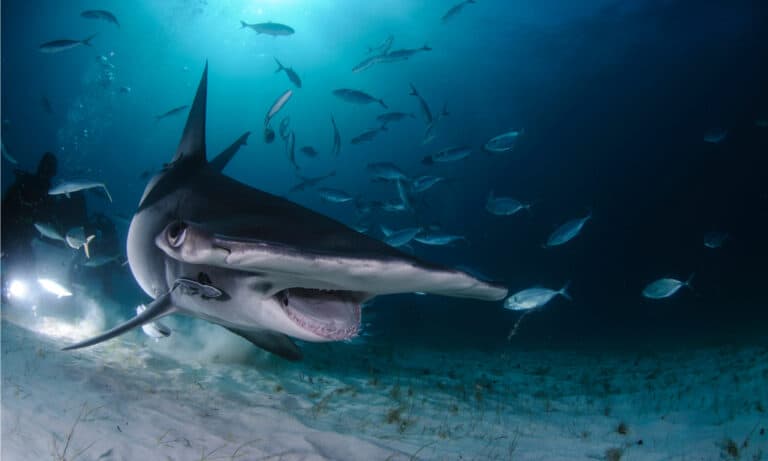
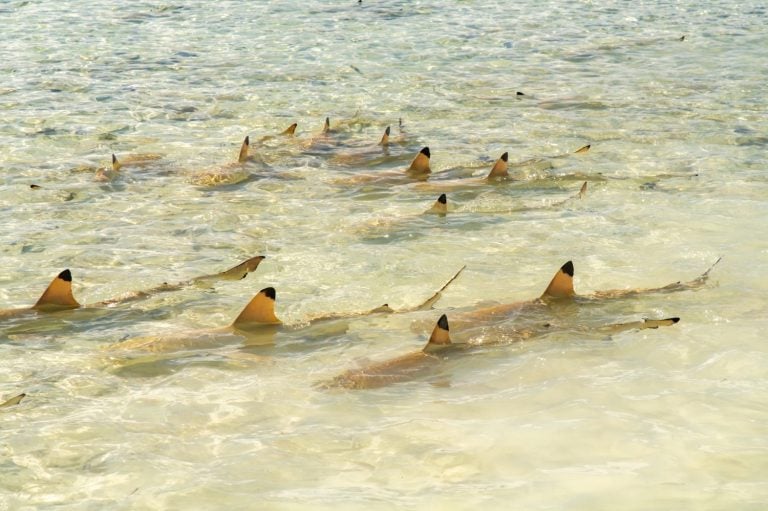
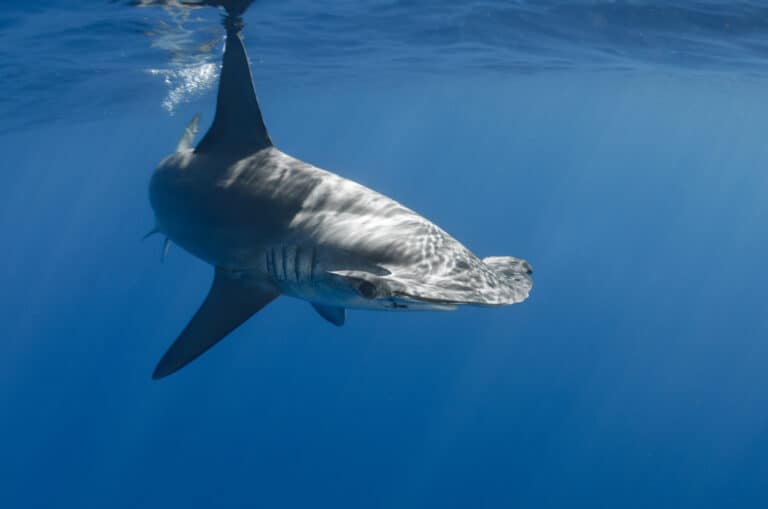
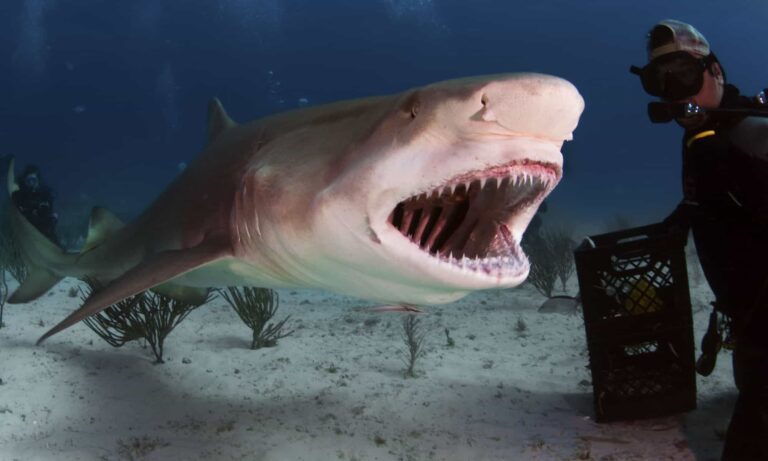
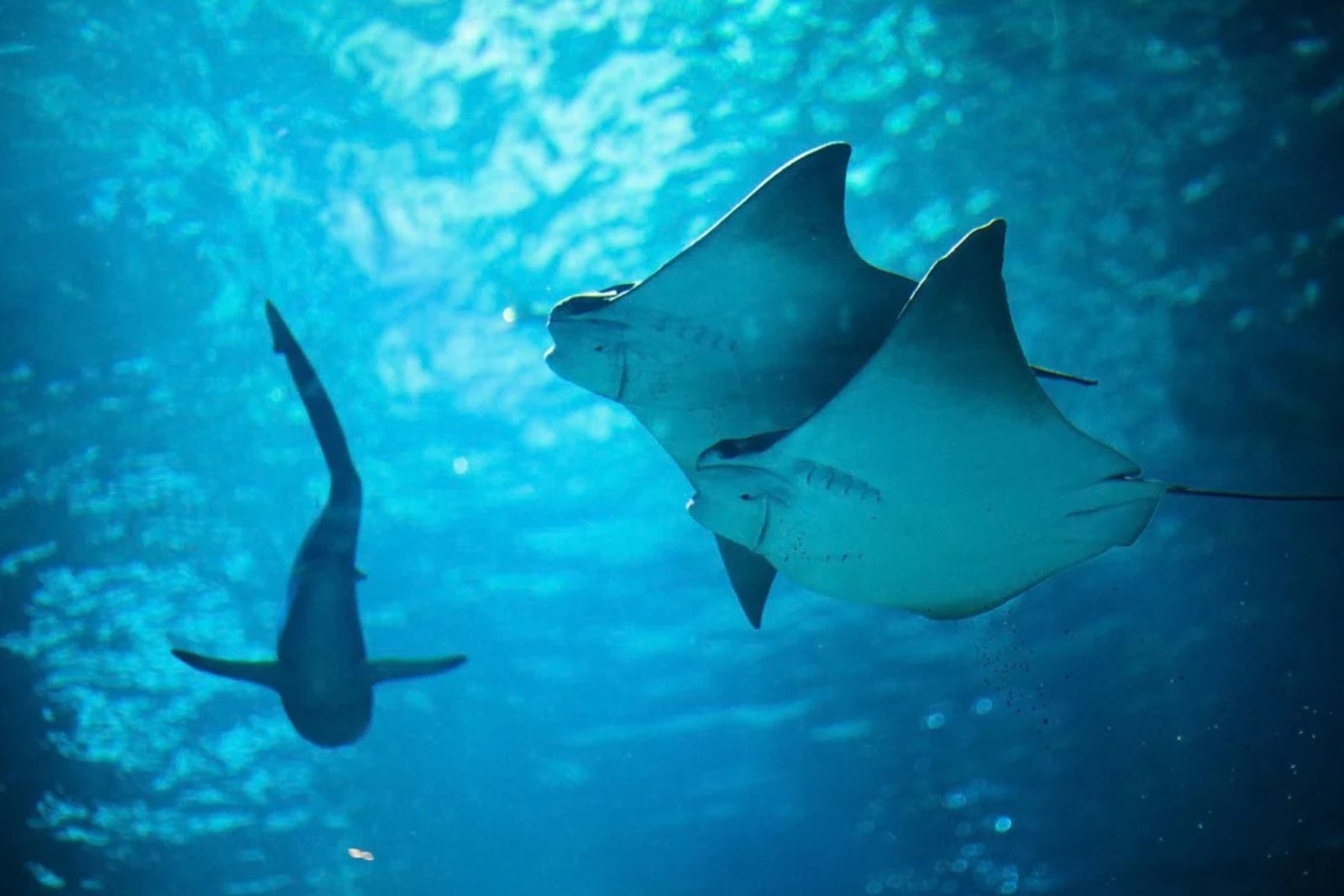
Researchers determined that Biscayne Bay’s shallow waters, laced with seagrass meadows and old reef remnants, serve as a nursery for 13 species of sharks and rays, eight of which are on the IUCN’s threatened species list. Pregnant and newborn bull, tiger, blacktip and sandbar sharks all use the bay, alongside juvenile great hammerhead sharks, a species the IUCN classifies as critically endangered. The bay holds the only formally documented great hammerhead nursery anywhere on the U.S. East Coast, according to WLRN. Nearby, white-spotted eagle rays rely on Tavernier Key as a rare refuge of their own.
Why Six Feet Of Water Matters So Much
The bay’s unglamorous average depth, just six feet, turns out to be exactly what makes it work. Catherine Macdonald, who runs the University of Miami’s Shark Research and Conservation Program, says sharks generally avoid very shallow water, which creates a kind of habitat separation that keeps young sharks safely apart from the larger predators that would otherwise eat them. “They don’t love spending their time in very shallow water for the most part,” Macdonald said, which is precisely why juveniles do.
Macdonald’s team built the case for the bay’s designation over nearly a decade of fieldwork, running ultrasounds on female sharks, checking for mating bites, flying drone surveys and collecting blood and DNA samples. A related study her program published, tracking 62 great hammerheads sampled between 2018 and 2025, found that juveniles depend on the bay’s shallow inshore habitats and limited prey for roughly their first two years before shifting to coastal reefs as sub-adults, according to a University of Miami report on that research. That narrow window of habitat and diet, Macdonald said, leaves juveniles “particularly vulnerable to human activity and environmental change.”
A Designation With No Teeth, Yet
The IUCN listing itself changes nothing on the water. It creates no marine preserve and imposes no new fishing restrictions, serving instead as a scientific flag that the bay matters more than its postcard setting might suggest. That matters because development pressure on Biscayne Bay keeps growing, including plans for three large marinas and proposed yacht slips at the shuttered Miami Seaquarium site that could reach 200 feet, close enough to the shallow bottom to disturb it.
Macdonald hopes the designation nudges that balance back toward caution. “Biscayne Bay is Miami’s backyard,” she said. “But it’s still critically important to a lot of different species of shark and ray.” For a bay most people know for boat ramps and waterfront views, the hope is that the label sticks before the construction does.