Quick Take
- The world's biggest hammerhead shark starts life in water so shallow a tall adult could wade through it, right next to one of America's most densely populated coastlines. See the shallow habitat →
- Scientists found a way to reconstruct exactly what these baby sharks have been eating, and what it reveals about their vulnerability is more alarming than the Critically Endangered label alone. Explore the diet analysis →
- Only about three juvenile great hammerheads are spotted here per year, which raises the question of why protecting this one shallow bay carries outsized weight for the entire Western Atlantic population. See the survey data →
- An official conservation label was just awarded to this nursery, but researchers say it may be the wrong thing to celebrate. Here is what actually determines whether the species recovers. What actually drives recovery →
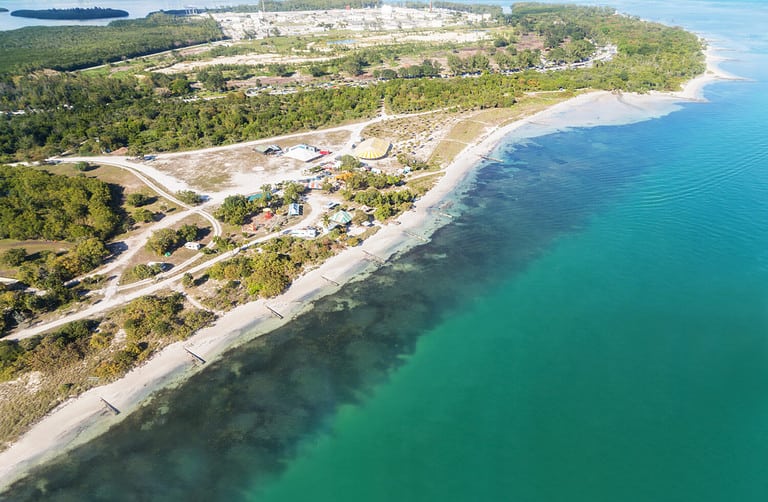
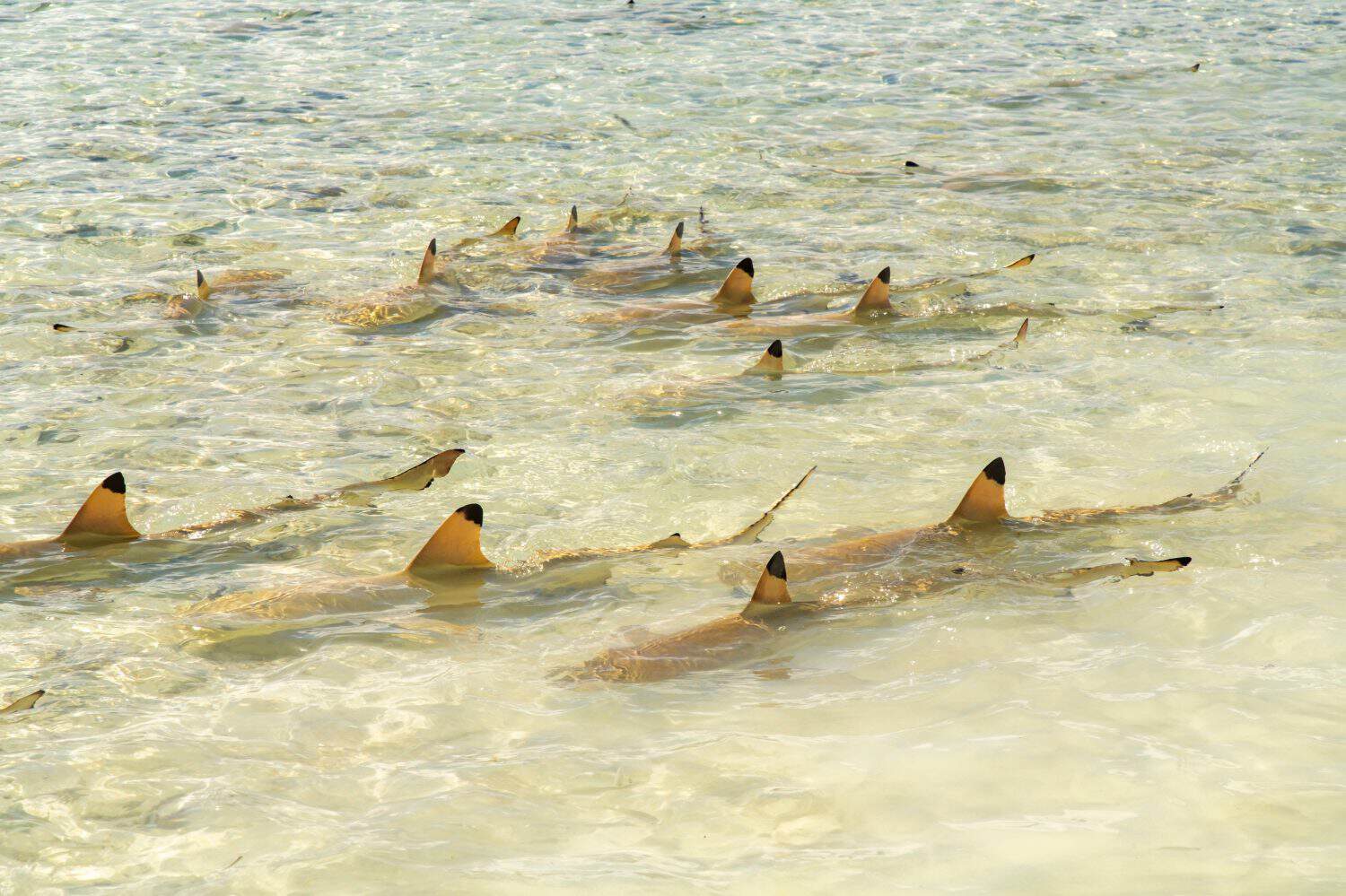
Right off the southwest tip of Key Biscayne, in water that averages about two meters deep, baby great hammerhead sharks are growing up. Their species is the biggest hammerhead alive, and it’s listed as Critically Endangered, the most serious warning a species can get short of extinct.
Biscayne Bay, right next to metropolitan Miami, is the only identified nursery for great hammerheads on the entire US east coast. The whole bay has now been named an Important Shark and Ray Area, a place scientists say nine kinds of sharks and one kind of ray use to reproduce. That’s a lot of company for a shark in this much trouble.
Six feet of water beside a city
The bay runs about 55 kilometers long and 13 across at its widest, and it averages only about 2 meters deep. That’s a little over six feet. A tall adult could wade a surprising amount of it with their head above water.
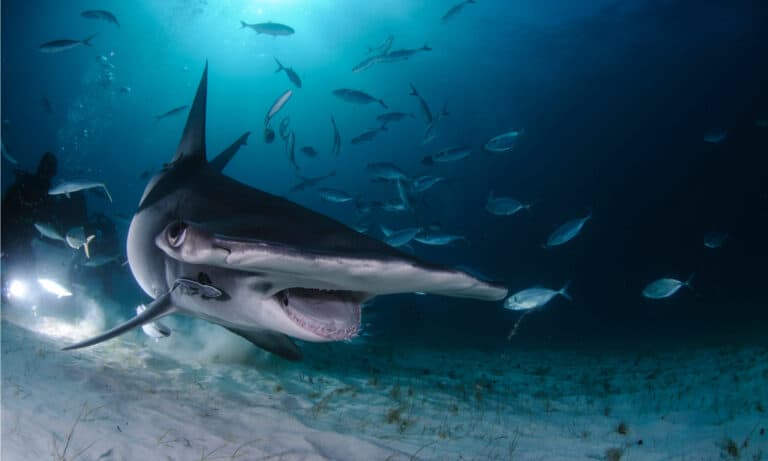
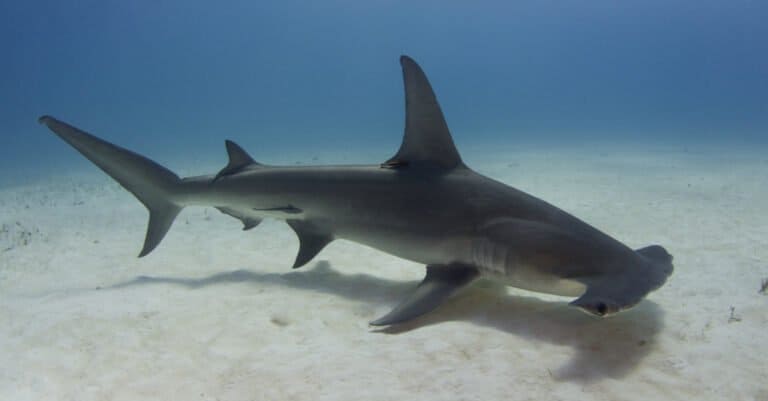
The shark that grows up in it can reach 20 feet long, roughly three grown adults lying head to toe. The biggest hammerhead in the world starts life in water barely deeper than a person is tall, with Miami right there on the shore.
Who else is growing up here
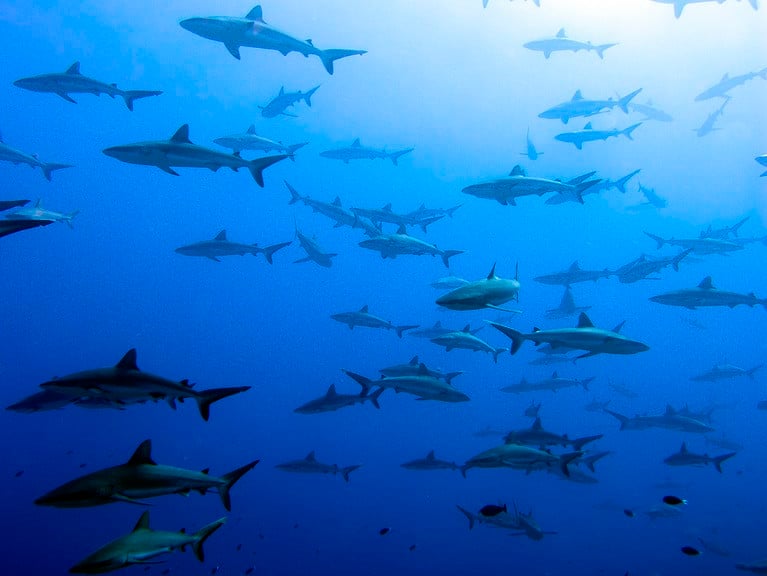
Researchers have been surveying the bay since 2016, and during the busiest years they were out on the water more than 80 days a year. Their records show tiger sharks, blacktips and bull sharks sharing the water. Atlantic nurse sharks were the most common catch by far, with 853 of them recorded.
Great hammerheads are the rare ones. Only 103 were caught in eight years, and just 24 of those were juveniles under three years old. That works out to about three baby hammerheads a year.
Plenty of sharks grow up in this bay. Hammerhead babies are the scarcest of them.
This nursery was found back in 2021
How a Nuclear Power Plant and Local Action Created the World’s Unlikeliest Shark Nursery
©Danita Delimont/Shutterstock.com
One thing to clear up: the nursery itself was identified a few years ago. A 2025 paper in the journal Ecology and Evolution, by John F. Hlavin and Catherine C. Macdonald, calls Biscayne Bay the first identified great hammerhead nursery on the US east coast and credits that finding to Macdonald and colleagues in 2021.
What’s new is the official Important Shark and Ray Area label, the decade of survey records behind it, and a study that finally asked what these baby sharks eat. I find that last question more interesting than the discovery itself.
A pinch of muscle tells you what a shark ate
Everything an animal eats leaves a faint chemical signature in its muscle. Take a tiny sample and you can work out roughly where its meals came from.
Hlavin and Macdonald did exactly that with 62 great hammerheads caught in Biscayne Bay and nearby coastal waters, ranging from pups shorter than a meter to adults nearly three meters long. Of the 34 young sharks, 23 came from the nursery spot off southwest Key Biscayne, and not one fully grown adult turned up there. Babies only.
One of the World’s Rarest Fish Is Making a Comeback in a Historic Florida River
©A-Z Animals
The smallest sharks ate almost entirely from inside the bay, and a big part of that was rays. Roughly three of every four bites a baby hammerhead took came from bay prey. By the time they reached about 125 centimeters long, around two years old, the bay’s share dropped to about one bite in three. They were eating fewer bay rays and more fish from the open coast.
The youngest sharks also had the narrowest menu. The researchers score how wide a range of prey an animal eats, and the babies’ menu came out roughly a quarter as wide as an older shark’s.
A pup born about half a meter long, roughly the length of your arm from elbow to fingertips, can grow more than half a meter a year in its first years. It does that on a very short list of foods.
Picky eaters in a bay that keeps losing its seagrass
A young shark that eats mostly one kind of food from one place is in trouble the moment that food or that place disappears. Biscayne Bay is an estuary of mangroves, seagrass beds, mud flats and small reefs, and those habitats have taken a beating from the city next door: building, overfishing, changes to the water itself, and die-offs of seagrass and coral.
Male vs. Female Sharks: 5 Key Differences
©Gino Santa Maria/Shutterstock.com
Living in this urbanized bay has already been linked to poorer diets in young sharks, and the authors think the bay’s severe seagrass losses are making that worse. Because the young hammerheads eat such a narrow, specialized diet, damage to the bay’s prey and habitat could hit them especially hard.
There’s a hopeful thread too. The first signs that Western Atlantic great hammerheads may be increasing have only recently appeared, and most of that population’s core habitat sits inside Florida’s own state waters. So what Florida decides about this one bay carries a lot of weight.
Researchers who study shark nurseries in general add a caution worth keeping in mind. Protecting a nursery matters, but the evidence keeps growing that what happens to sharks after they leave may matter just as much for whether a population recovers.
The bay decides
The babies are still out there in the shallow water off Key Biscayne, adding half a meter a year, filling up mostly on rays from a bay that keeps losing its seagrass. The bay now has an official label and ten years of records behind it, and that’s real. But a label doesn’t grow seagrass, and it doesn’t follow a two-year-old hammerhead once it swims out past the bay into open water.
15 Sharks in (and Near) Miami Beach
©Greg Amptman/Shutterstock.com
The only known east coast nursery for one of the ocean’s biggest sharks is a patch of shallow water beside a city. Whether it stays a nursery depends on what that city does next.