Quick Take
- Nuclear weapons testing was an environmental catastrophe, yet scientists found an unlikely silver lining hiding inside whale teeth. Nuclear fallout as a tool →
- Whale teeth were assumed to work like tree rings, but new radiocarbon tests revealed something unsettling about that long-held belief. Testing the tree-ring assumption →
- One killer whale's teeth told a completely different age than traditional counting methods, and the gap between the two estimates was jaw-dropping. The age gap revealed →
- A female killer whale named Lulu carried a radiocarbon signature that had nothing to do with nuclear bombs, and what it revealed about her private life was entirely unexpected. Lulu's Sellafield signature →
Everything leaves a trace, especially the radiation produced by nuclear weapons. Scientists can measure that low-level fallout in countless things: the rocks, the trees, and other parts of the environment. But what about whales‘ teeth? It may sound strange, but it’s true. Researchers from several Scottish universities and museums used complex radiocarbon dating techniques on whale teeth. They discovered that this method produced a sort of dental time machine, capable of measuring whale age with incredible precision.
Scientists have long known that whale teeth grow in a way that expresses longevity. This latest research, however, shows for the first time that while tooth layers form in a whale’s early to midlife, they become less reliable age markers as whales enter their twilight years. Though the proliferation of nuclear weapons in the mid-20th century and the testing of said weapons had terrible effects on people and the environment, there may be a silver lining: precisely measuring the longevity of whales. Let’s learn more about this latest study, how researchers used radiocarbon signatures to pinpoint elapsed time, and what it teaches us about the often-mysterious lives of some of Earth’s largest creatures.
Locard’s Exchange Principle
Edmond Locard’s forensic experiments made him both a legend and a pioneer in the field. He became known as the Sherlock Holmes of France. Perhaps his most enduring contribution to science was Locard’s exchange principle: when two items come into contact, they exchange something. Put more simply: every contact leaves a trace.
This incredible insight came well before the advent of microscopic science and modern forensics, yet it still holds true. Perhaps the most striking example of this principle can be found in nuclear weapons testing. In the mid-20th century, countless nuclear tests were conducted across the world. This produced radioactive fallout; some places had higher concentrations, but the entire world received a low-level trace of this activity, including the oceans.
Like the best science, this problem created an opportunity in disguise, one that Scottish researchers recently put to use with remarkable results.
Whale Tooth Layers
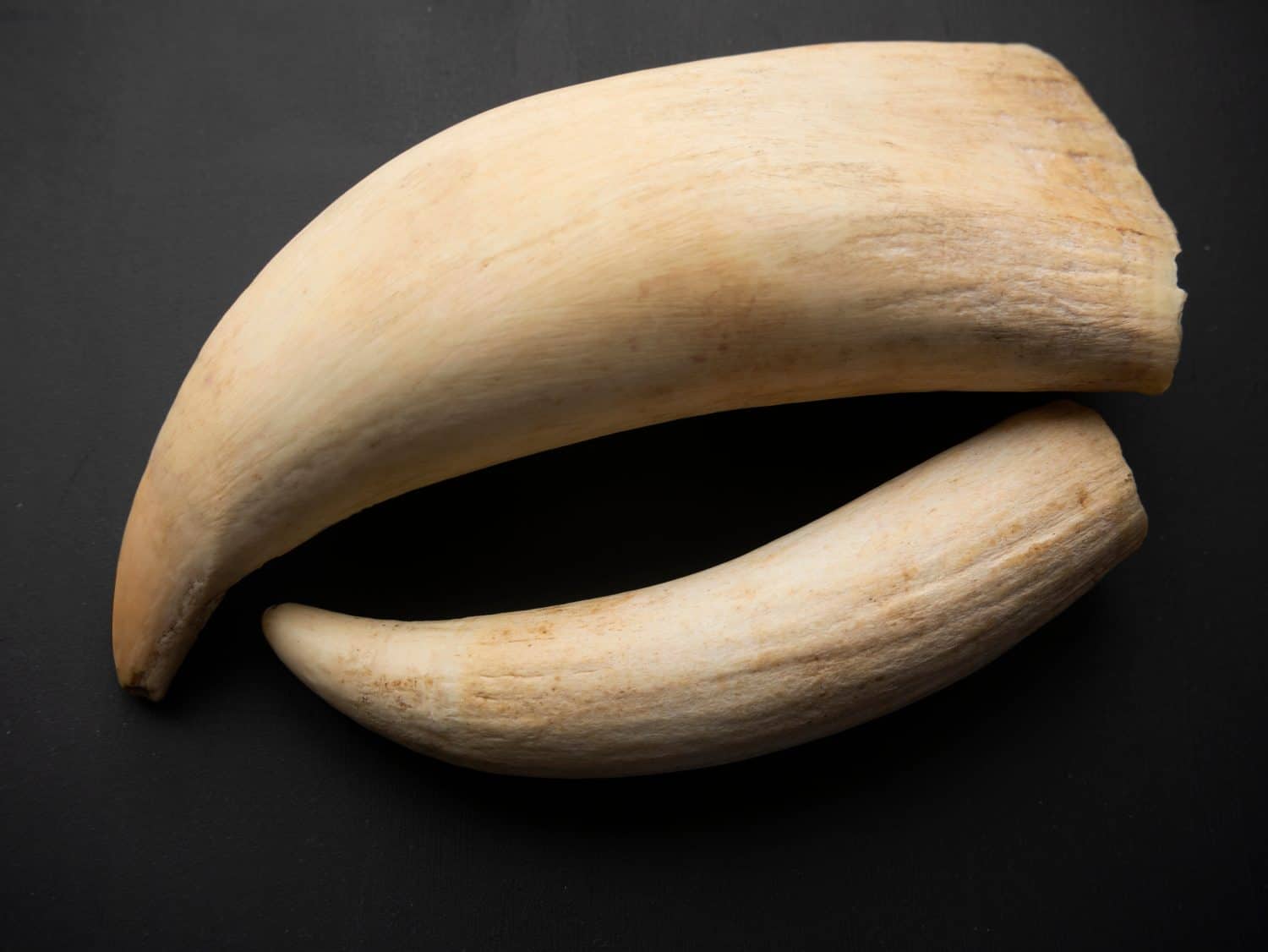
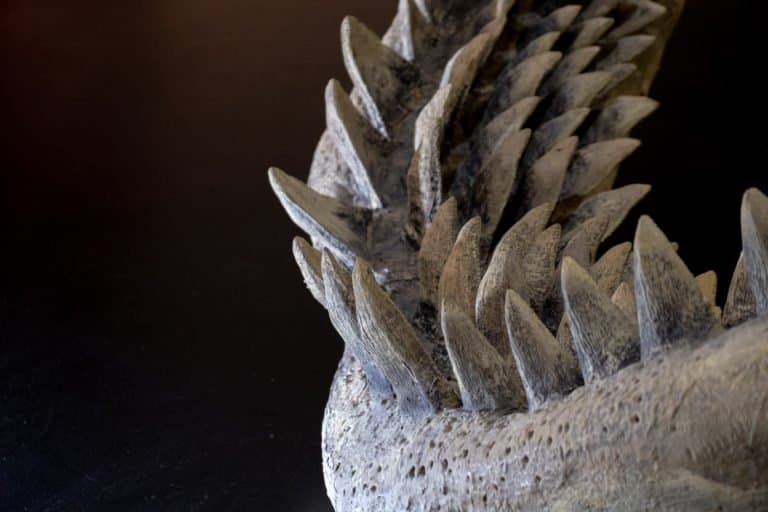
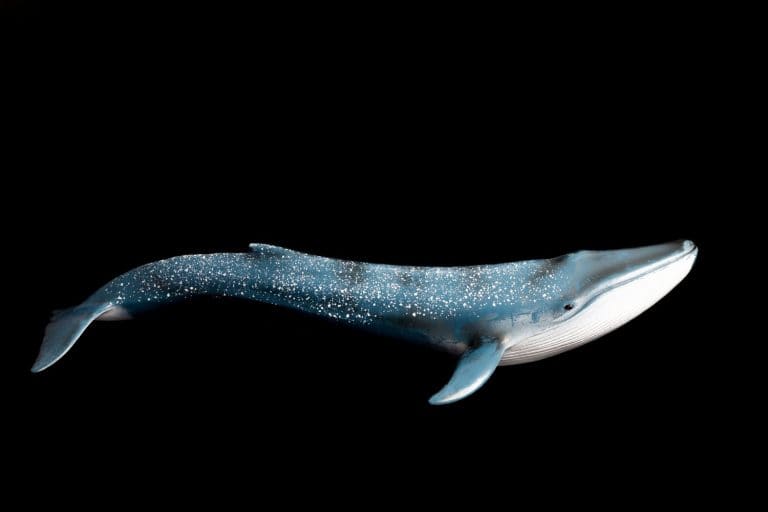
Scientists assumed whale teeth formed like rings on a tree. New research paints a more nuanced picture of the process.
©ldesignl/Shutterstock.com
Scottish researchers recently published a paper in the journal Frontiers in Marine Science. They analyzed teeth collected from two sperm whales and three killer whales found dead on the Scottish coast over previous decades. While scientists have long assumed that whale teeth grow like the rings of a tree, the researchers tested that assumption by measuring radiocarbon traces.
The paper’s lead author, Dr. Kieran Tierney from SUERC: Centre for the Isotope Sciences, had something of a personal quest to find answers. When he was six years old, his parents took him to see a large sperm whale named Moby off the Scottish coast. After seeing photos of that same whale dead on the shore several days later, Tierney began a lifelong quest to discover why Moby died and what kind of life he had. As Tierney told Phys.org, “Those questions have always stayed with me, and they have been a fundamental part of what has driven my career at the overlap of marine science and isotope research. To be able to hold one of Moby’s teeth 30 years later and do work that helps us understand a bit of the life he had is something I’m really proud of.”
Tests and Results
Using the Centre for the Isotope Sciences’ accelerator mass spectrometer, the research team tested the amount of radiocarbon found in each layer of the teeth of several whale subjects. The explosion of radiocarbon in the environment during the mid-20th century allowed the researchers to see when tooth layers formed, and whether growth happened before or after nuclear weapons testing. Beyond pure radiation, the team also tested stable carbon and nitrogen isotopes. This showed them how whale diets and feeding locations changed over the course of their lifetimes.
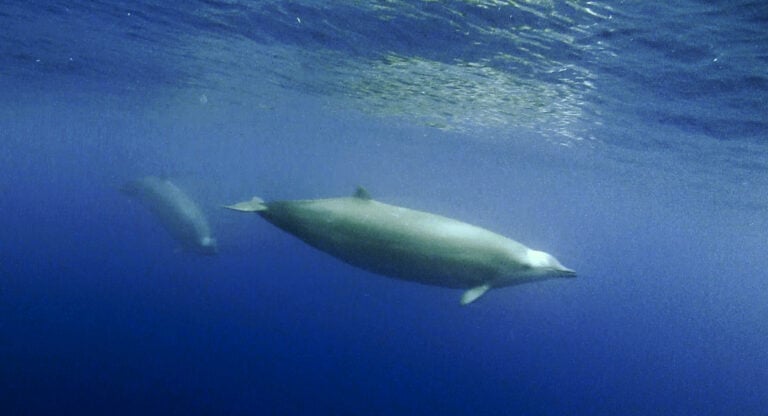
The results were interesting, to say the least. Tests showed that Moby the sperm whale was at least 43 years old at the time of his death in 1997; the earliest layers of his teeth formed before nuclear fallout spread across the oceans. The other sperm whale tested was younger than Moby when it washed ashore on an Orkney Island beach in 1994, as its tooth layer formations corresponded to the carbon-14 record. Both whales, however, showed rising nitrogen isotope values in their teeth with aging. This validates previous research that male sperm whales are born in subtropical waters before migrating to cooler, higher-latitude waters at a later age.
Teeth from a killer whale subject, stranded on South Uist island in 2015, revealed surprising data. Counting his tooth layers suggested he was around 50 years old at the time of death. The novel radiocarbon testing conducted by the team, however, suggested he was 65 years or older when he stranded on the South Uist beach. This would make him one of the oldest male killer whales on record.
Lulu and the Sellafield Signal

Testing of teeth from whales stranded on the Scottish coast showed surprising differences in diet.
©jimmonkphotography/Shutterstock.com
Perhaps the most surprising result involved teeth from Lulu, a female killer whale that died in 2016. While her teeth didn’t show any sign of nuclear weapons testing, they did show the distinct Sellafield signal. This trace was produced by the Sellafield nuclear reprocessing facility in northwest England and carried to the west of Scotland. The strength of this trace provides one of the first examples of civilian nuclear facility radiocarbon recorded in whale teeth.
Stable isotope testing showed that each of the study’s three killer whale subjects had different feeding habits. The Uist male and Shetland male teeth had lower nitrogen isotope values, suggesting they primarily subsisted on fish. Lulu’s teeth, however, had much higher levels, suggesting she primarily fed on marine mammals.
Though satisfied with the results, the research team, like proper scientists, encourages even more novel dating methods inspired by their research. As lead author Dr. Kieran Tierney explained to Phys.org, “By combining radiocarbon with stable isotope analysis, we can get a much richer picture of how these animals lived. We hope that this study adds a useful piece to our ever-growing understanding of the life histories of these two whale species.”