
Quick Take
- Achieving a winter survival state requires lowering the internal body temperature to exactly 37°F.
- Using English at the podium triggers a mandatory financial penalty for every word spoken.
- The February exit is counter-intuitively driven by social bonds rather than atmospheric forecasting.
- Identifying the correct scroll at the podium is necessary to herald the annual rite of spring.
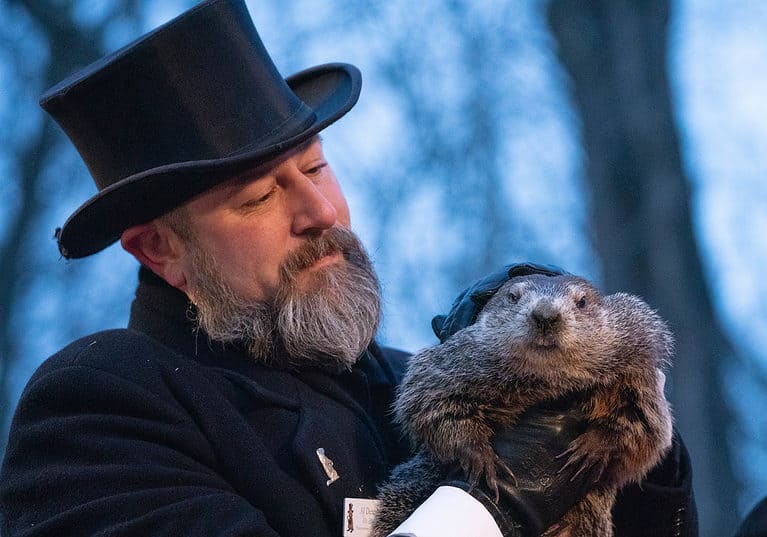
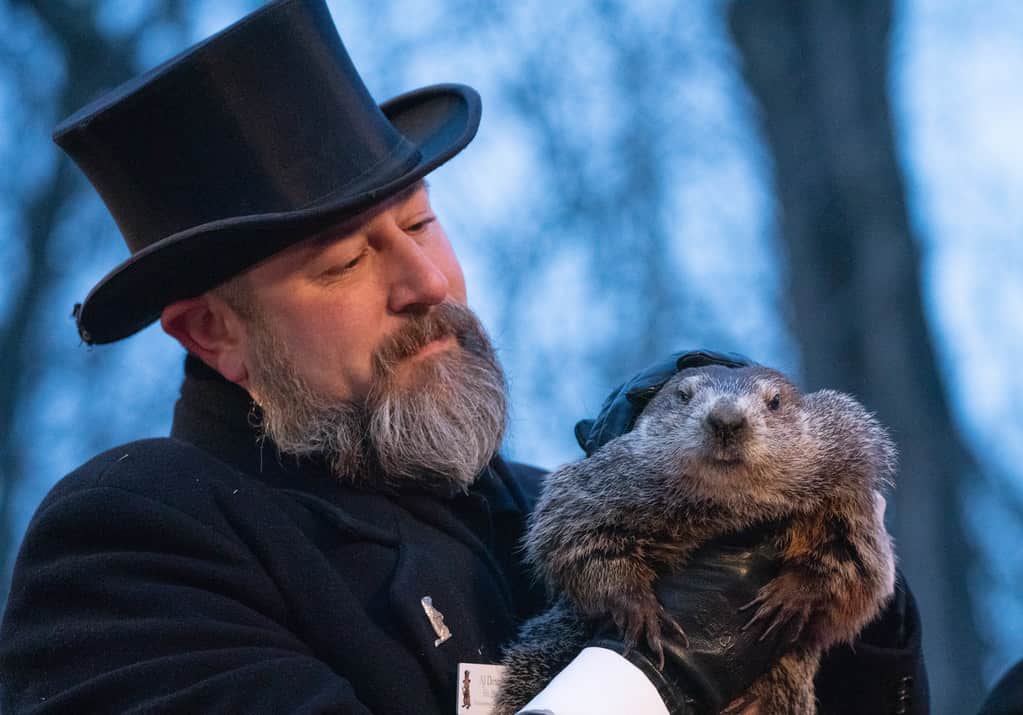
On the morning of February 2nd, a familiar scene took place. It featured a group of men in top hats and overcoats on a stage, one of them navigating a groundhog to choose one scroll or another from a podium. The groundhog leaned in one direction, prompting a man to grab the corresponding scroll and read its decree: There will be six more weeks of winter. Groundhog Day is one of the strangest, campiest traditions in American history. It’s also one of the longest-running.
The ritual seems simple enough: a groundhog emerges from its burrow, finally awake after a long winter hibernation period. As the legend goes, if the groundhog sees its shadow, it will return to its winter slumber, signaling another six weeks of winter. If not, the warm weather will appear soon. This yearly tradition is steeped in history and folklore—the kind that has survived centuries of transformation, relocation, and refinement. Let’s learn more about Punxsutawney Phil and why Groundhog Day is one of the quirkiest holidays of the year.
Meet the Groundhog
Every year on the second day of February, a crowd gathers in Punxsutawney, Pennsylvania. Several men in top hats gather around a groundhog burrow; one of them pulls out the groundhog, known as Punxsutawney Phil, and places it on a podium to pick spring or six more weeks of winter. While it may seem like a tradition grounded in superstition, there is some real science behind a groundhog’s movements in early February.
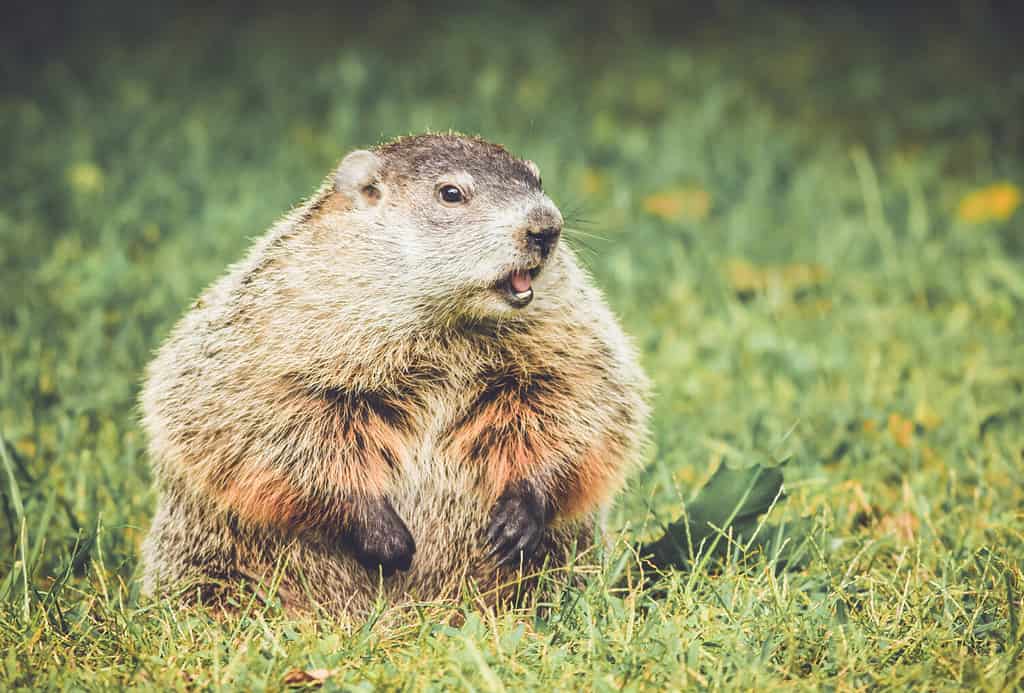
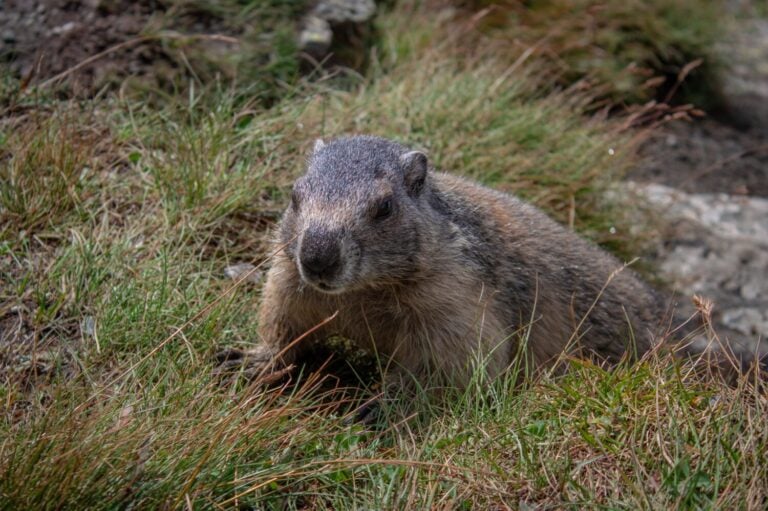
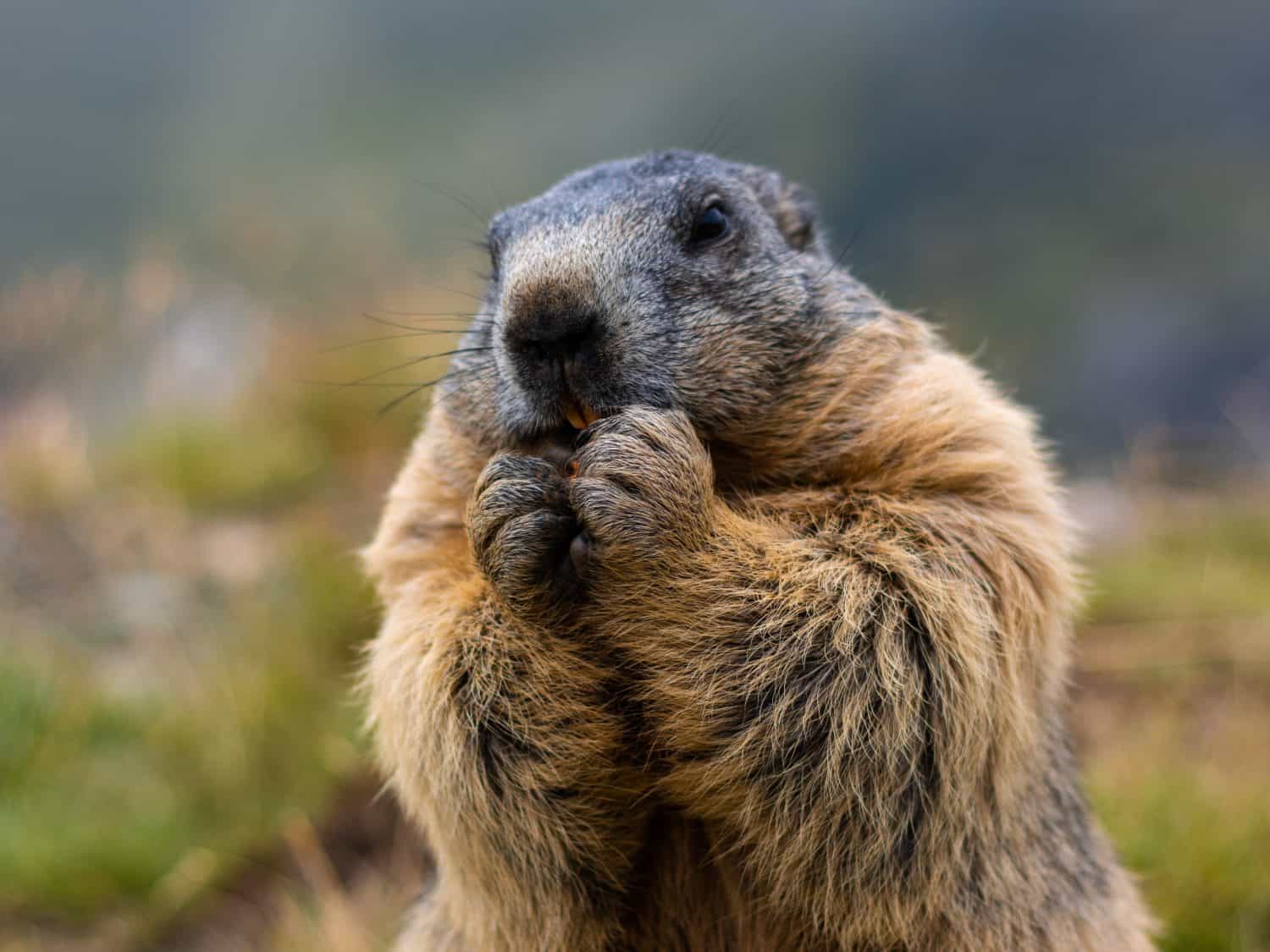
Groundhogs are a type of lowland ground squirrel in the marmot family, widely distributed across the eastern United States.
©Rabbitti/Shutterstock.com
Groundhogs, also known as woodchucks, land beavers, marmots, and even whistle-pigs, are rodents belonging to the family Sciuridae. As a type of lowland ground squirrel, groundhogs are found in much of the eastern United States, across Canada, and even into Alaska. They average 16-27 inches in length and weigh 4-14 pounds. Adapted for serious digging, groundhogs use their claws and short, sturdy legs to dig long burrow systems. Usually, groundhogs live at the edges of habitats, where woodlands meet fields and pastures. This often brings them into suburban areas. They are consummate herbivores, eating a wide variety of grasses, plants, and bark. They are known to feed so much in summer that they gain considerable weight by winter.
Fact vs. Fiction
An intelligent and relatively solitary creature, the groundhog can be heard emitting high-pitched whistles to alert companions to potential threats. As for the origins of Groundhog Day and the role groundhogs play in it, they are serious hibernators; their body temperatures drop from around 99°F to as low as 37°F during winter slumbers. Male groundhogs do indeed leave their burrows during early February because they are looking for love. Male groundhogs leave their burrows in early February to re-establish social bonds with potential mates. They typically visit and interact with several females before returning to their burrows for a few more weeks.
Holiday Origins

The Ancient Celts celebrated a holiday called Imbolc around the same time as Groundhog Day, which was partly used to predict the future based on the weather.
©Kiselev Andrey Valerevich/Shutterstock.com
February 2nd may seem like an arbitrary day, but its use for Groundhog Day has real origins in pagan and Ancient Celtic history. It’s the midpoint between the Winter Solstice and the Spring Equinox. The Ancient Celts celebrated this day as Imbolc, which they partially used to herald the first gasps of spring. Back then, before the concreteness of science, people looked to the sky, the land, and the weather to portend the future. The Ancient Celts would look to the weather for prognostication—if the day was clear and bright, it foretold the opposite—that winter wasn’t ready to leave just yet.
The spread of Christianity slowly transformed the pagan soothsaying day into a decidedly more saintly holiday: Imbolc became Saint Brigid’s Day, who is the patron saint of Ireland. On a wider scale, this became Candlemas, the feast for the purification of the Virgin Mary. The old English proverb regarding the holiday spoke to the enduring prognostication: “If Candlemas be fair and bright, Come, Winter, have another flight; If Candlemas brings clouds and rain, Go, Winter, and come not again.”
The most direct lineage to Groundhog Day comes from German folklore. Their traditions held that if a hedgehog or badger saw its shadow on Candlemas, it would go back into its hole, which signaled six more weeks of “Second Winter.” German settlers to the United States, sometimes called the Pennsylvania Dutch, brought traditions like the origins of Groundhog Day with them to the New World. The woods of Pennsylvania, however, lacked hedgehogs but had ample amounts of groundhogs. Since they vaguely looked like hedgehogs, the Pennsylvania Dutch made groundhogs their new winter prophets.
The First Groundhog Day
The earliest recorded mention of Groundhog Day is an entry in the diary of James L. Morris of Morgantown, a Pennsylvania Dutch Country, on February 2, 1840. Though Morris was Welsh, his diary entry was commenting on his Pennsylvania Dutch neighbors. He wrote, “Today the Germans say the groundhog comes out of his winter quarters and if he sees his shadow he returns in and remains there 40 days.”
However, the Groundhog Day that we all know and love is likely the brainchild of Clymer H. Freas. Clymer H. Freas, the city editor at the Punxsutawney Spirit in the mid-19th century, had the idea to turn the pastime of hunting and barbecuing groundhogs into a formal tradition. Then, a few years later, members of a Pennsylvania Elks Lodge started hosting a tongue-in-cheek ceremony. This included members who would go to nearby Gobbler’s Knob to consult a groundhog about the weather. They gave the chosen groundhog the name “Punxsutawney Phil.” Jokingly, the Elks lodge members began wearing formal suits and top hats to consult with their furry oracle.
Evolving Traditions
Like many traditions, Groundhog Day slowly evolved over the years, adopting more ritualistic elements and greater pomp and circumstance. The mere acknowledgment of the groundhog’s shadow became an elaborate affair. A group of well-dressed men stands on a stage, with the central figure holding a groundhog in his arms. He brings the groundhog to a podium and lets it sniff at two scrolls. The scroll that Punxsutawney Phil lingers over the most is selected by another man in a top hat, opened, and read aloud to the crowd.
For locals, this tradition takes on an almost religious fervor. Each year, hundreds of men gather in a hall to take an oath to the groundhog lodge and honor the animal of the hour. The Pennsylvania Dutch tradition remains strong here; every word spoken in English at the podium results in a fine for the speaker. Meanwhile, an eight-foot statue of a groundhog wearing a crown looms over the proceedings.
Widespread Adoption
Groundhog Day has grown into a national holiday, complete with different weather-predicting animals like ducks.
©jan ptacek/Shutterstock.com
It can be argued that Groundhog Day was a relatively local phenomenon until the release of the classic film “Groundhog Day,” which introduced the wider world to this strange, precocious holiday of prediction. Its inclusion into the National Film Registry in 2006 practically guaranteed the holiday’s endurance. Over the years, Groundhog Day has spread from a single groundhog in Pennsylvania to various prediction locations and animal soothsayers. Plenty of other places in the United States, including New York, Georgia, Wyoming, and Ohio, have groundhogs and even ducks that predict the weather. Plus, these other groundhogs have wild lore behind them.
The New York groundhog known as Staten Island Chuck, or Charles G. Hogg, lives in the Staten Island Zoo in New York City. People consider him to be one of the most accurate weather prognosticators, with an 85% accuracy rate. Despite his keen sense of prediction, Staten Island Chuck can also be unpredictable. For example, he once bit the New York City Mayor’s hand. Down south, the state of Georgia named its weather prognosticator General Beauregard Lee. He lives in a groundhog-sized mansion at Dauset Trails Nature Center in Jackson, Georgia.
A True Legacy
There is even a list of the different weather prognosticators around the United States. Interestingly, many of them are far better seasonal predictors than Punxsutawney Phil. Members joke that the same Phil has been looking for his shadow year after year since 1887, thanks to a special “groundhog nog.” In reality, the groundhog club switches out groundhogs as soon as they get too old to take part in the ceremonies. This strange, charming ceremony will likely continue for another century. In the end, it doesn’t matter what the weatherman says. It’s Punxsutawney Phil and other creatures like him who decide whether to herald the arrival of spring.