
Quick Take
- Managing survival in the 219,000-hectare Mana Pools requires escaping deadly, sinking mud pools.
- Applying considerable force creates a fatal risk when calves are pinned against steep banks.
- A safari guide discovered counter-intuitive tail communication never before recorded in elephant behavior.
- The newborn had to complete an exhausting directional navigation stage to survive the ordeal.
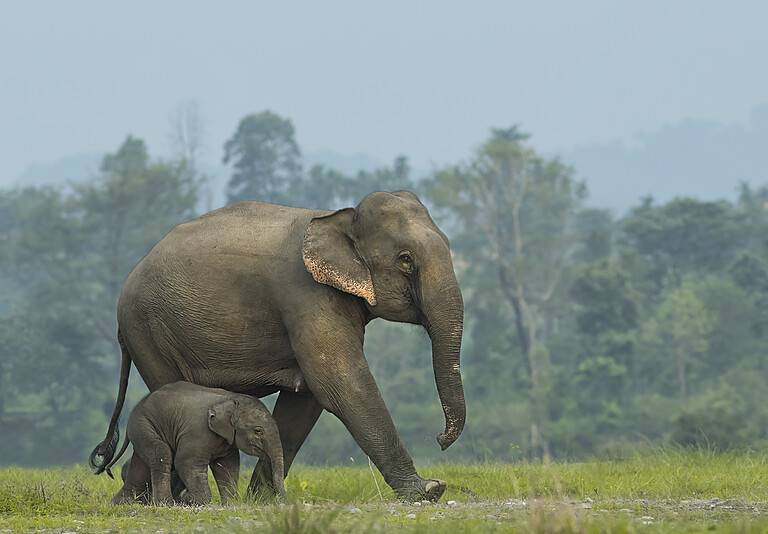
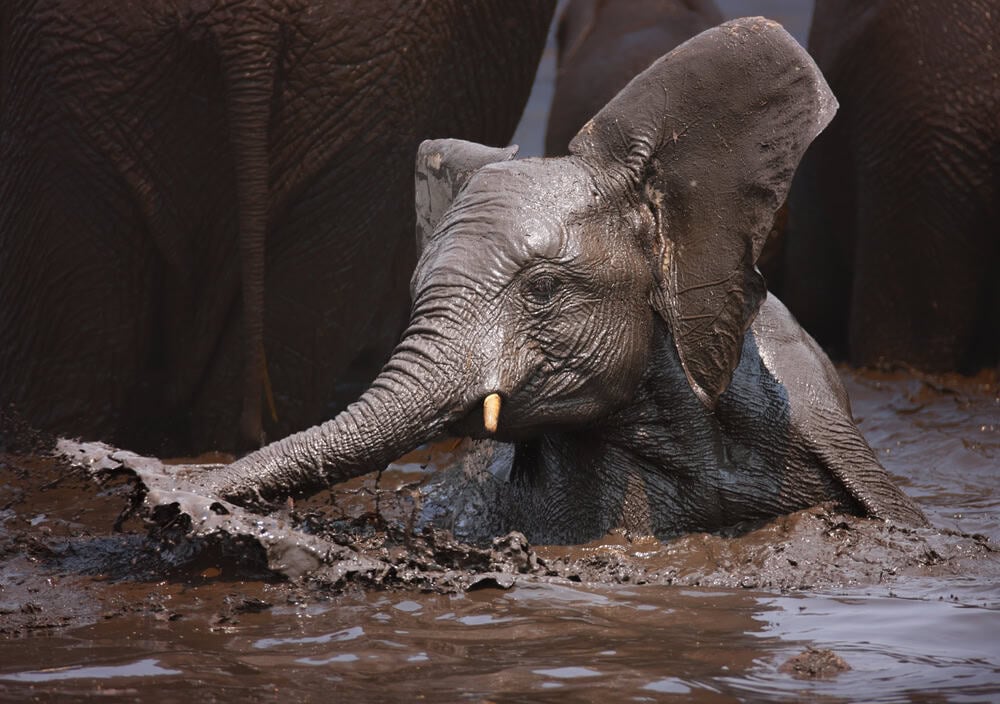
The Mana Pools in Zimbabwe is a 219,000-hectare wildlife conservation area and national park in the north of the country. In the rainy season, the floodplain turns into a series of lakes and muddy pools. The area is a UNESCO World Heritage site and a wetland of international importance. It is also home to herds of African elephants and their babies. As the Mom elephant in this Instagram Reel found out, the combination of deep, sinking mud and baby elephants can be problematic – to say the least! In the clip below, you get to see the dramatic moment when a baby elephant was almost lost in the treacherous mud, and his Mom had to use all her ingenuity to save him!
Dramatic Baby Elephant Rescue
The footage, narrated by one of the safari guides, begins with the newborn baby elephant clearly in trouble. He has slipped down a bank into the deeper mud and cannot get out. His mother is on her knees, trying to reach into the mud to help him out. However, even with her help, the bank is too steep for him to manage, and she is in danger of hurting him if she applies all of her considerable force.
She decides to lead him through the mud to the other side of the pool, where the banks are not so steep, and he will be able to walk out. To do this, she keeps him close to her at all times and communicates with him using her tail. She uses it to get information about where he is at all times and to indicate which direction he should go in. The guide tells us that this is the first time that he has seen a mother elephant use her tail for communication like this.
After a few nail-biting minutes, the mother and baby make it safely out of the mud. It was an exhausting ordeal for such a young animal who has hopefully learned his lesson! This touching but tense video captures just one of the many dangers faced by young animals before they reach maturity.
What Other Dangers Do Elephants Face?
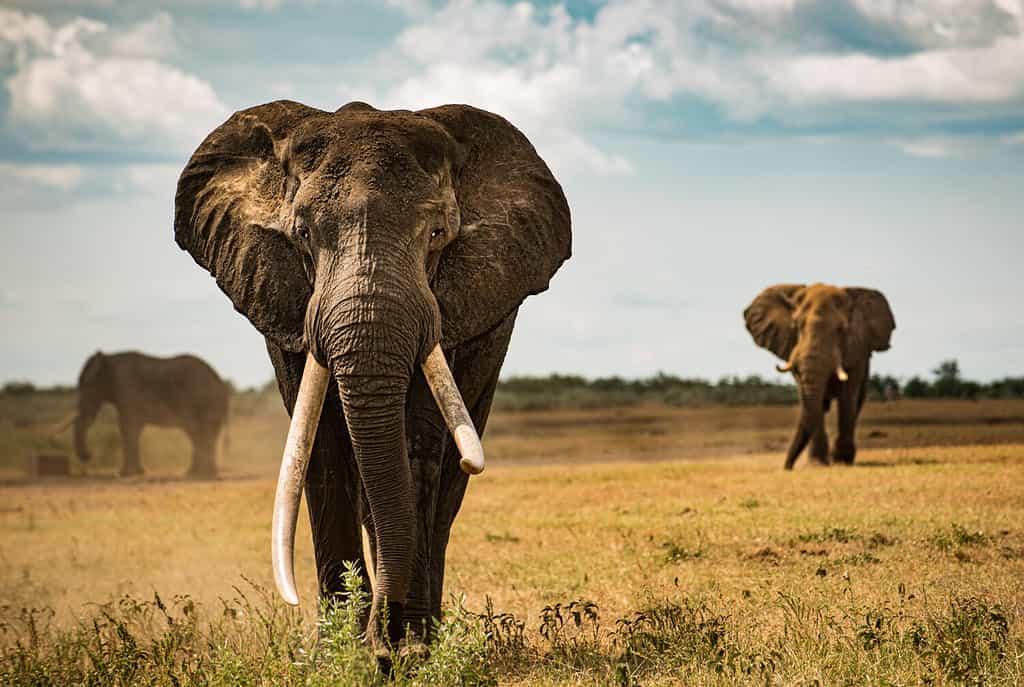
Elephants die from accidents, injuries, and poaching.
©Johann Mader/Shutterstock.com
African elephants in managed herds have a life expectancy of around 40 years, but it may be a little higher in the wild, and some may survive into their sixties or even seventies. Experts believe that elephants live as long as their teeth last. Once their final tooth falls out, they find it harder to feed, and most will die.
Lions hunt baby elephants – provided they can get past the mother! Adults are killed by accidental slips and droughts. When elephant bulls fight during the mating season, it can also result in fatal injuries. Sadly, poaching is another significant cause of elephant deaths.