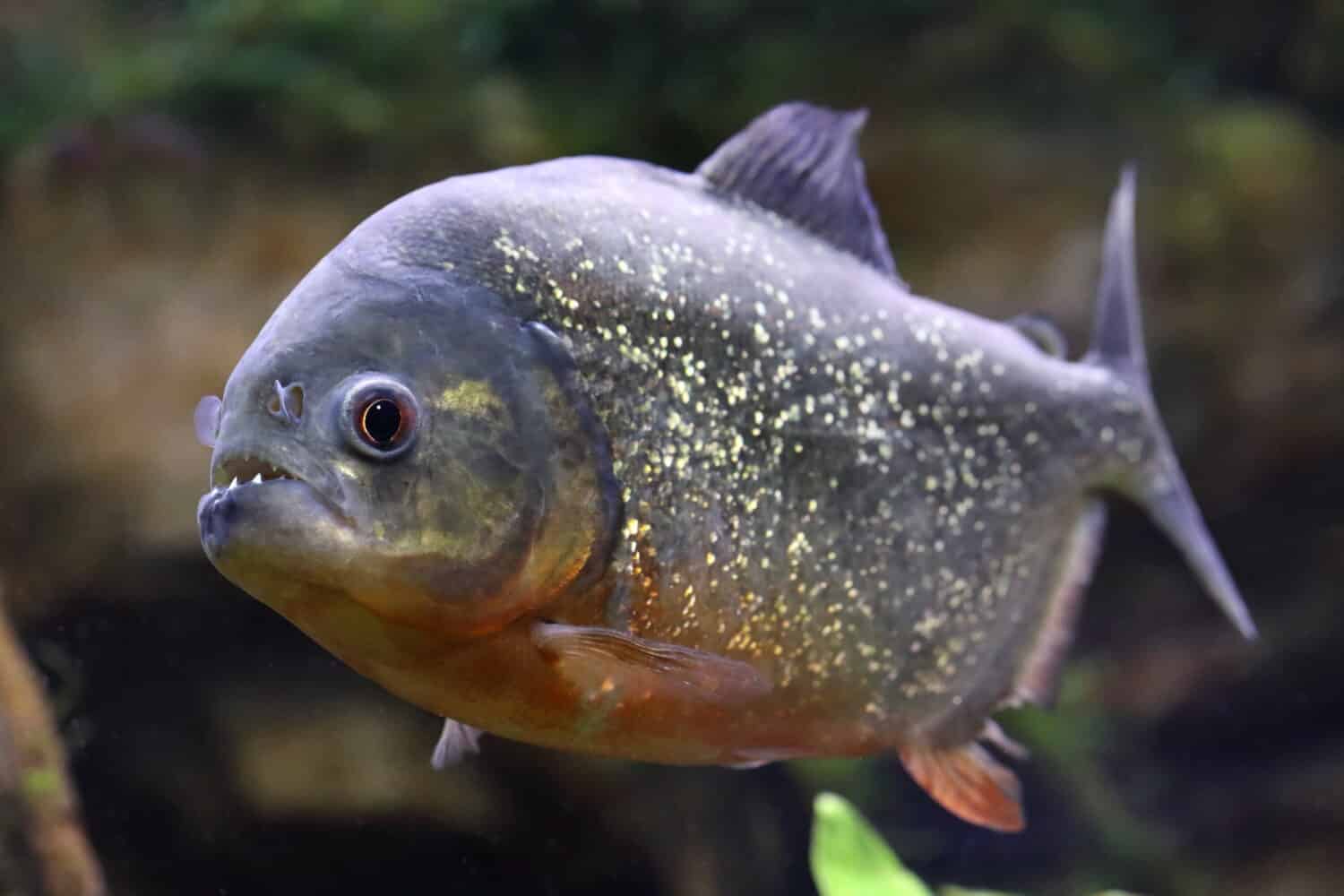

Nature is a beautiful thing. There is a world of plants and trees that give humans and animals life. There is also the world of animals. Creatures have roamed the Earth for millions of years, some of them are extinct, and some of them are still on this planet today. There are very bizarre animals in this world. Scientists discover new species of animals every year. These new species have confounded us when we first knew of their existence. There are animals out there that blow our minds. One such animal is the piranha. The piranha is an omnivorous fish that mainly lives in the fresh waters of South America, and its reputation as a ferocious fish has many wondering if they can and do eat humans? Let’s take a look at the five facts and three myths about these interesting and fascinating fish.
Myth #3
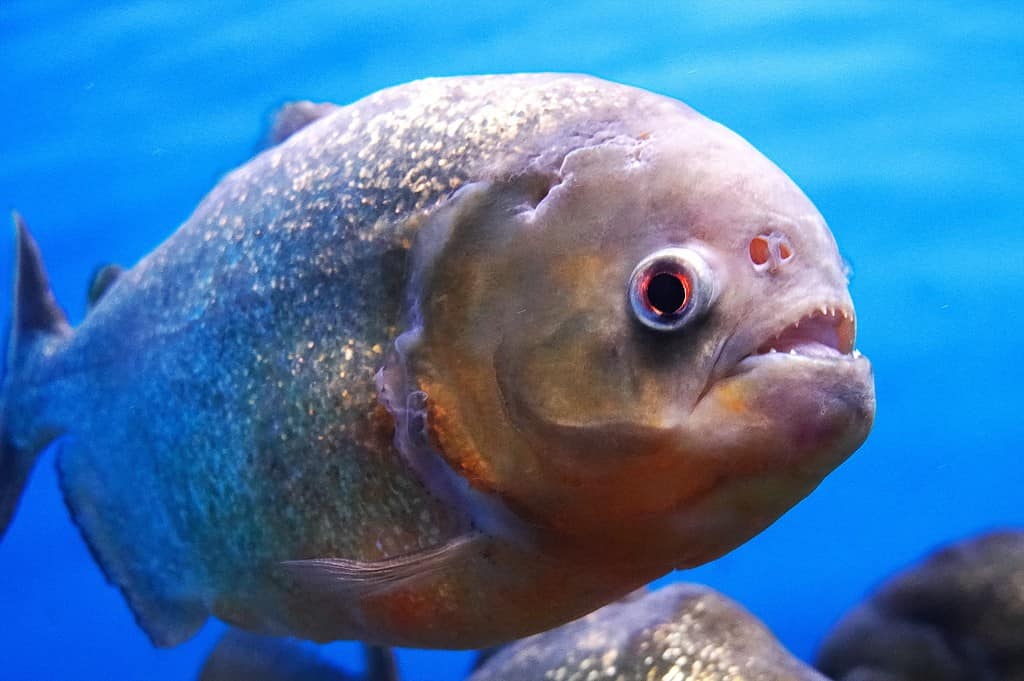
The 26th President Theodore Roosevelt is the main culprit in creating a bad reputation for piranhas.
©kata716/iStock / Getty Images Plus via Getty Images
Myth: Piranhas will eat animals much larger (such as a cow) than themselves in seconds. This is 100% false. However, all the movies have made piranhas into these evil creatures that eat anything, it all started with President Theodore Roosevelt. Roosevelt was a lover of the outdoors, and he went exploring in South America in 1913. He wrote a best-selling book about his travels that was published in a book called Through the Brazilian Wilderness in 1914. There, he described piranhas as ferocious creatures that can bite a finger off a human and eat large animals rapidly.
Myth #2
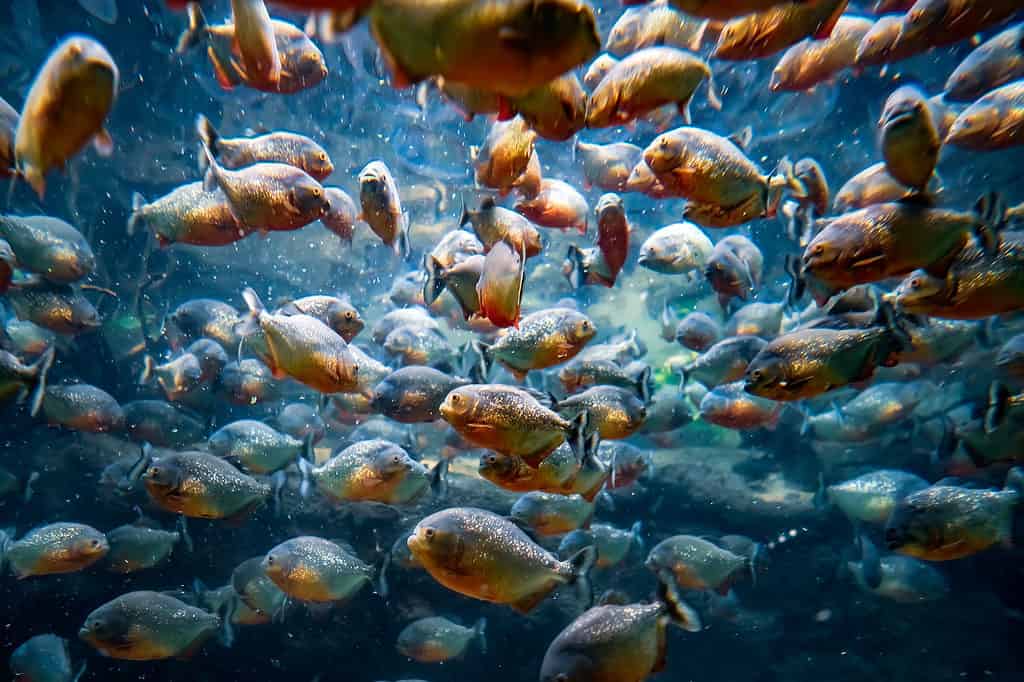
Piranhas are misunderstood creatures that have been characterized as deadly.
©Andrei Armiagov/Shutterstock.com
Myth: They will attack randomly and in packs. Unfortunately, piranhas are one of the most misunderstood fish on this planet. Movies have sensationalized the piranha’s behavior with other animals and humans. Piranhas usually keep to themselves and won’t really attack in packs. Interestingly enough, piranhas are omnivores that eat plants and seeds, as well as other insects, fish, and worms.
Myth #1
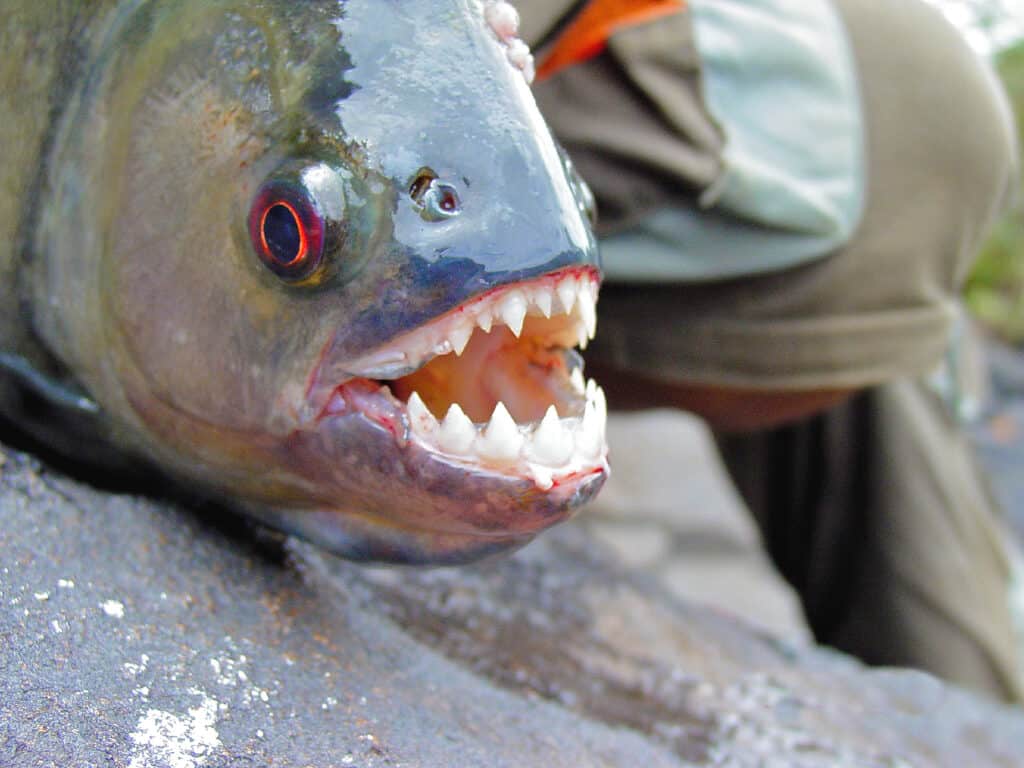
It’s not true that humans make up part of the piranha’s diet.
©The Jungle Explorer/Shutterstock.com
Myth: Piranhas can eat humans. Fatal piranha attacks on healthy humans are extremely rare, and the Hollywood depiction of piranhas instantly devouring people is false. Indigenous accounts and some documented incidents suggest that under certain circumstances (such as drought conditions, feeding frenzies, or victims who are already injured/drowning), piranhas can inflict fatal injuries or consume human tissue. However, such situations are very rare. So, it’s unlikely you’ll be eaten alive by a piranha. Nevertheless, b careful when approaching a piranha. It is important to note that this fish is attracted to blood, splashing, and noise, so keep that in mind when traversing the Amazon.
Fact #5
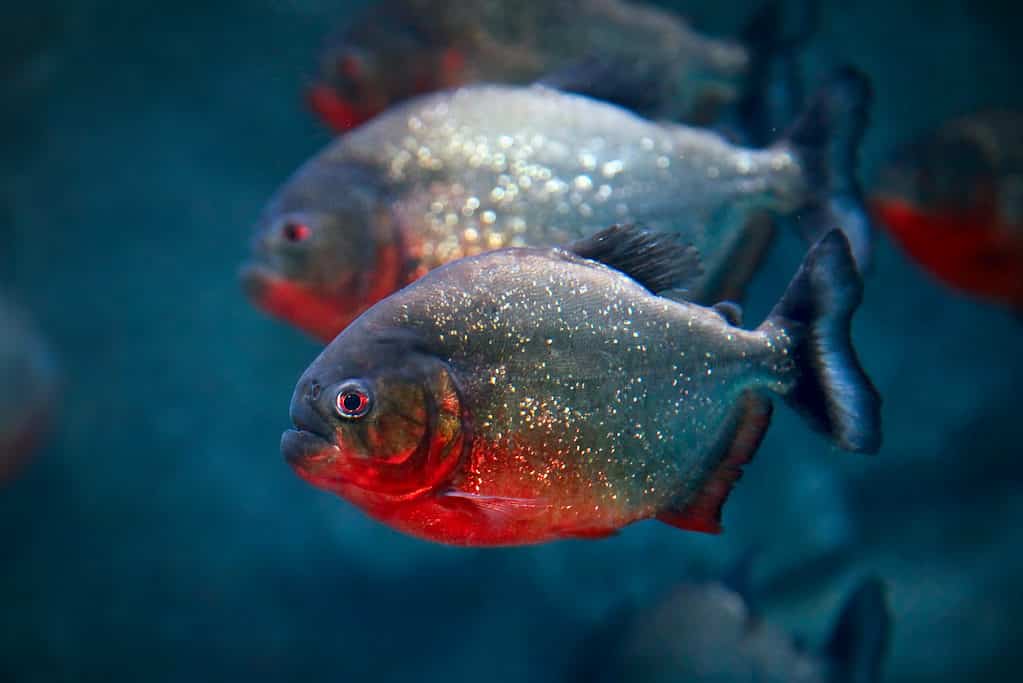
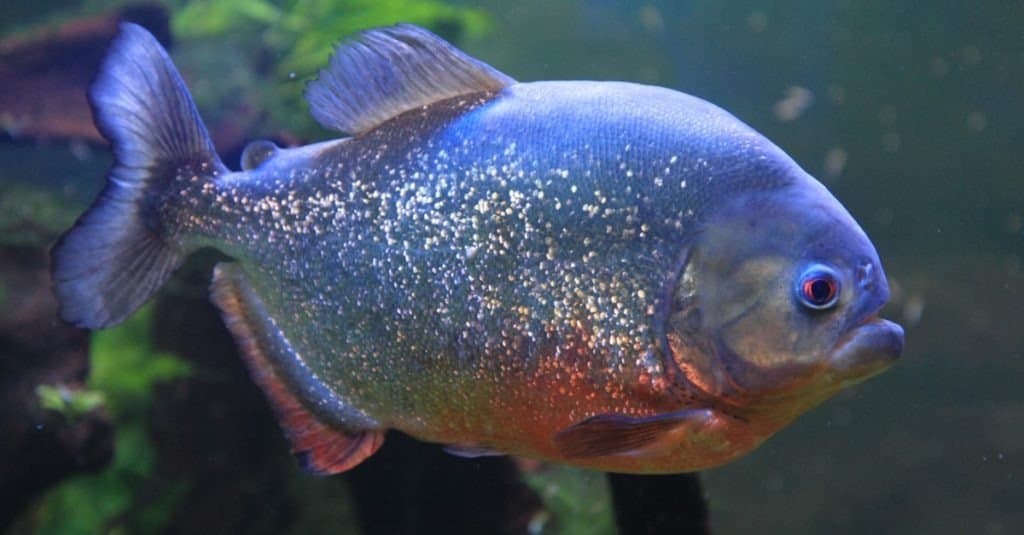
Piranhas can grow up to 14 inches long, whereas the red-bellied piranhas can grow to 20 inches long.
©Tatiana Belova/Shutterstock.com
Piranhas are known to bark. Yes, you read that right. Scientists have discovered that red-bellied piranhas make “calls” that are quite similar to barks. Usually, these barks are done as a protective measure against other fish piranhas encounters.
Fact #4
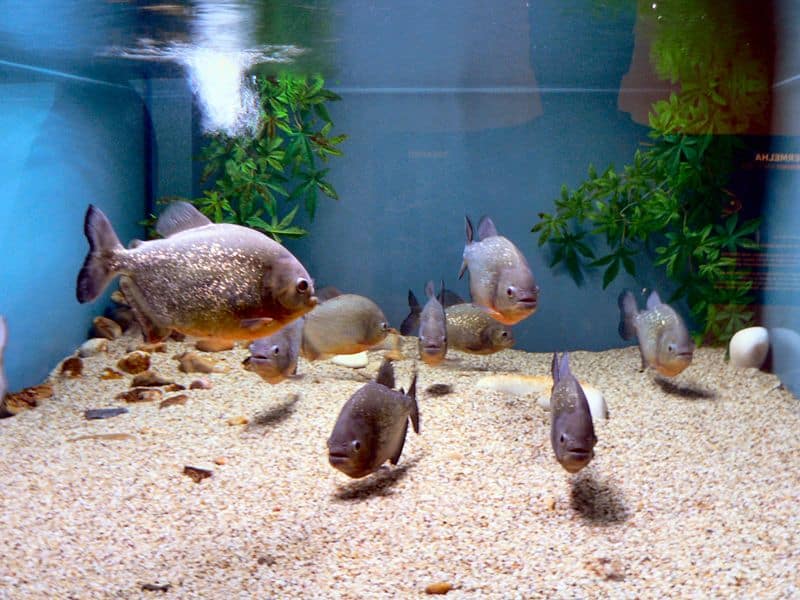
Piranhas should be kept alone or with a few other piranhas because they are known to be aggressive when there is a lot of fish.
©Paulo Juntas / Creative Commons - Original
Over the past few years, piranhas have been a very popular pet to keep in an aquarium. The red-bellied piranha is the most common species of piranha that people keep in aquariums. Even though keeping piranhas as pets is fine in some jurisdictions, they are illegal in several parts of the United States, as well as the Philippines where people can face up to four years in jail if caught.
Fact #3
Piranhas were discovered to be living in Bangladesh’s Kaptai Lake.
©Jirik V/Shutterstock.com
Although piranhas are omnivorous fish, it is known that they do eat each other sometimes. piranhas are, in a way, cannibals. Usually, many piranhas eat several grams per day, however, when those food sources are low where they are, scientists have discovered that piranhas have eaten a part of a fellow piranha. The most fascinating part about this is that sometimes the piranhas could be dead but sometimes they could also be alive.
Fact #2
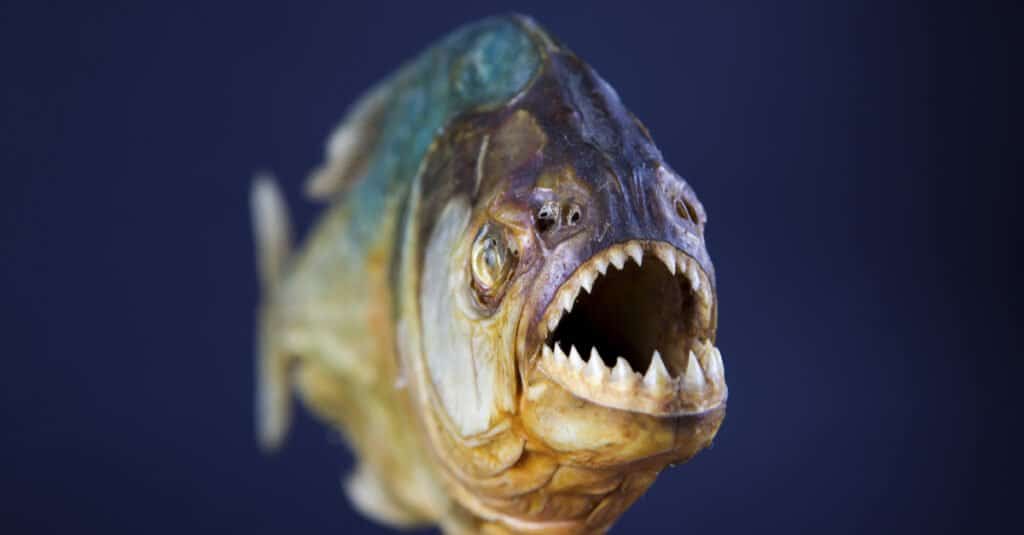
The number of species of piranhas is not known but can range from 30 to 60.
©simongee/Shutterstock.com
There are various species of piranhas and the largest one can actually bite with a force of 72 pounds. That is because it has strong teeth. The translation of piranha is “tooth fish” in the Tupi language. They have a total of 10, 4-millimeter teeth on each jaw. The piranhas usually shed their teeth, in sections, throughout their lifetime.
Fact #1
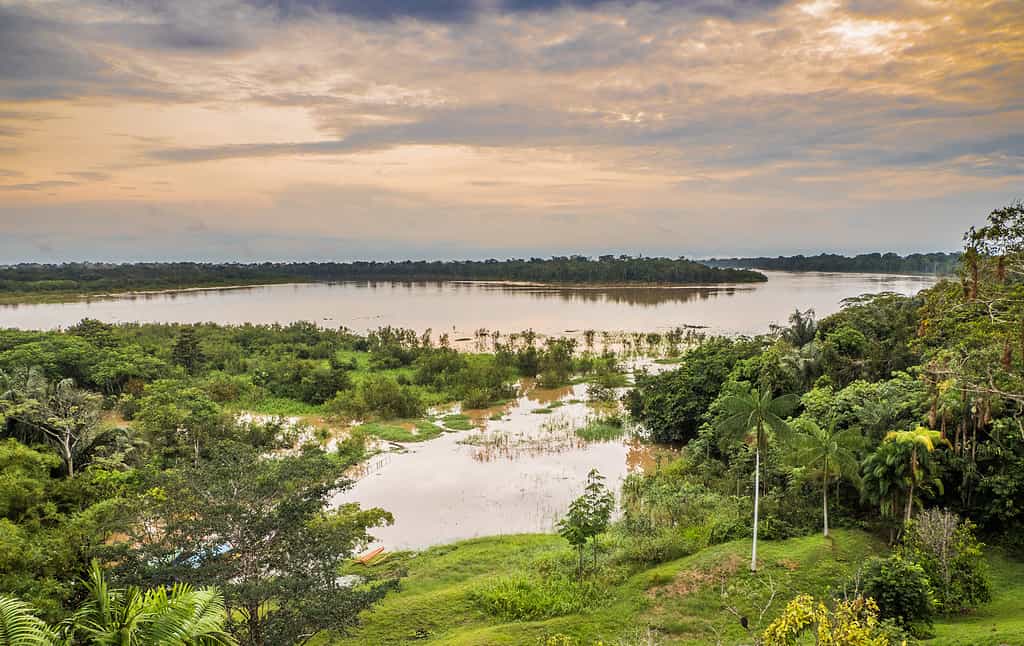
The piranha’s name comes from the Tupi people of South America and their language.
©12MN/iStock via Getty Images
Piranhas are fish that roam the fresh waters of South America. They are usually found in the Amazon River along with other fish. They are also found in the Amazon basin—the surrounding waterways, lakes, and rivers. Piranhas will most likely stay in one environment and don’t migrate to other parts of the river or lakes. Lastly, piranhas have lived in these waters for millions of years.