
Quick Take
- The bear could have climbed out anytime. Officers say it had a different plan.
- Minutes before the bear showed up, she got news that made its visit feel eerily personal.
- Relocation sounds like a happy ending, but Colorado's track record for moved bears might change your mind.
- This one sleepy bear was an early sign of a much bigger year. The numbers that followed are startling.
On Tuesday, May 5, 2026, Kristen Nedbalek left work and came home to Falcon, Colorado, where a black bear was sitting in the window well outside her basement. Colorado Parks and Wildlife (CPW) put it at 250 pounds.
Wildlife officers tranquilized the bear, carried it up her stairs and out the front door, and released it alive the next day, KKTV reported. The rescue came early in a year when Colorado’s bear reports hit a record high.
What did she find when she got home?
Nedbalek’s boyfriend told her about the bear, the Colorado Springs Gazette reported. Minutes earlier, she had learned her grandfather died in Texas.
“Four minutes after I found out, I got a text saying, ‘Hey, we have a visitor at our house’,” Nedbalek told KKTV. “It certainly seemed like it was his way of saying goodbye, since I wasn’t able to say goodbye to him.”
Neighbors joined her in the basement to watch through the window as the bear slept. “It would just kind of wake up, look around, and just kind of start knocking off again,” she told KKTV. “It was doing this really cute thing where it was just like, kind of holding on to its back leg, kind of like a cat does.”
See Colorado Parks and Wildlife’s post on X
Why was a bear in Falcon?
The Meridian Ranch area usually sees birds, rabbits and cats, the couple told the Gazette. This was CPW’s second bear relocation in El Paso County in about a week.
“Drought has reduced natural food sources across traditional bear habitat, pushing black bears into neighborhoods in search of calories,” CPW wrote on social media. A bear can smell food from five miles away.
“Every time a bear gets food from or near humans, whether from a bird feeder, a hummingbird feeder, or trash, it teaches the bear that people equal food,” Tim Kroening, CPW’s area wildlife manager for the Colorado Springs area, said in April.
Could it have climbed out?
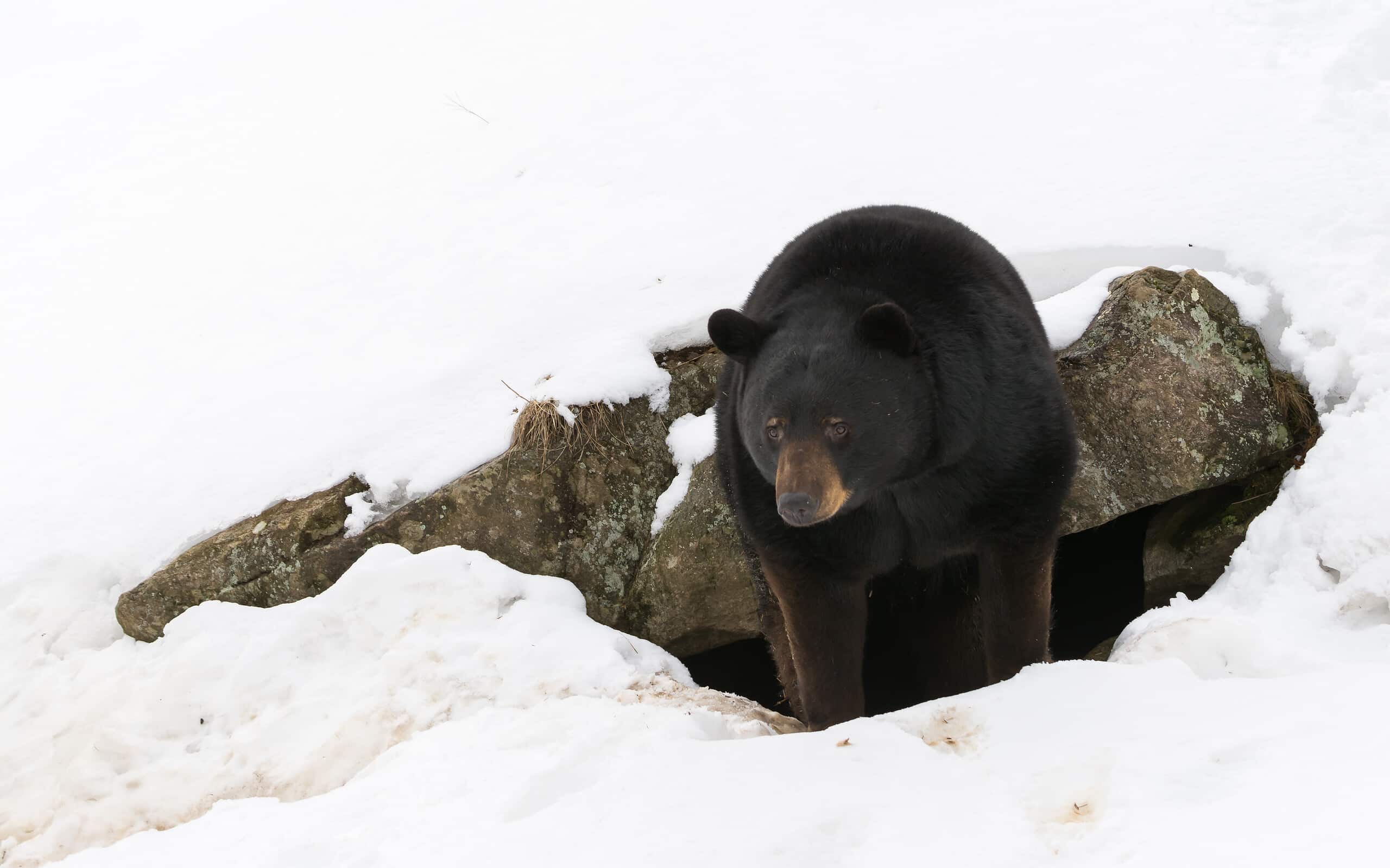
A black bear leaves its winter den. Colorado’s bears head back into dens as winter sets in. ©Suzan Johnson/Getty Images
©Suzan Johnson/iStock via Getty Images
Officers told Nedbalek the bear had the upper-body strength to lift itself out of the well and did not want to, the Gazette reported.
In an April release, Mark Vieira, CPW’s carnivore and furbearer program manager, described a spring phase called “walking hibernation,” when bears move slowly and eat almost only plants. Their bodies need to adjust after consuming nothing for “up to five or six months”.
How do you get a 250-pound bear out of a window well?
Officers brought the tranquilized bear through the window into the house and tied its legs before carrying it upstairs, according to KKTV. Three CPW officers and two other people did the lifting, the Gazette reported. The bear was then loaded into a trailer outside, according to KOAA.
CPW lists adult male black bears at around 275 pounds and females at about 175, with a range of 100 to 450 pounds depending on season, food supply and sex. At 250 pounds, the Falcon bear was close to the male average.
Where did it go, and could it come back?
Officers took the bear about three hours southwest of Colorado Springs, gave it a wake-up drug and released it on Wednesday, May 6. “Back to better bear habitat!” CPW posted after the release.
Colorado has handled nuisance bears under a two-strike directive since 1985, according to a study in the Wildlife Society Bulletin. Of 1,093 bears caught, marked and moved from 1987 to 2016, 53% were never reported again and 25% were killed for a second strike. Ear tags let officers recognize a relocated bear that returns, as they did in Boulder in 2023.
What happened to Colorado’s bears after that?
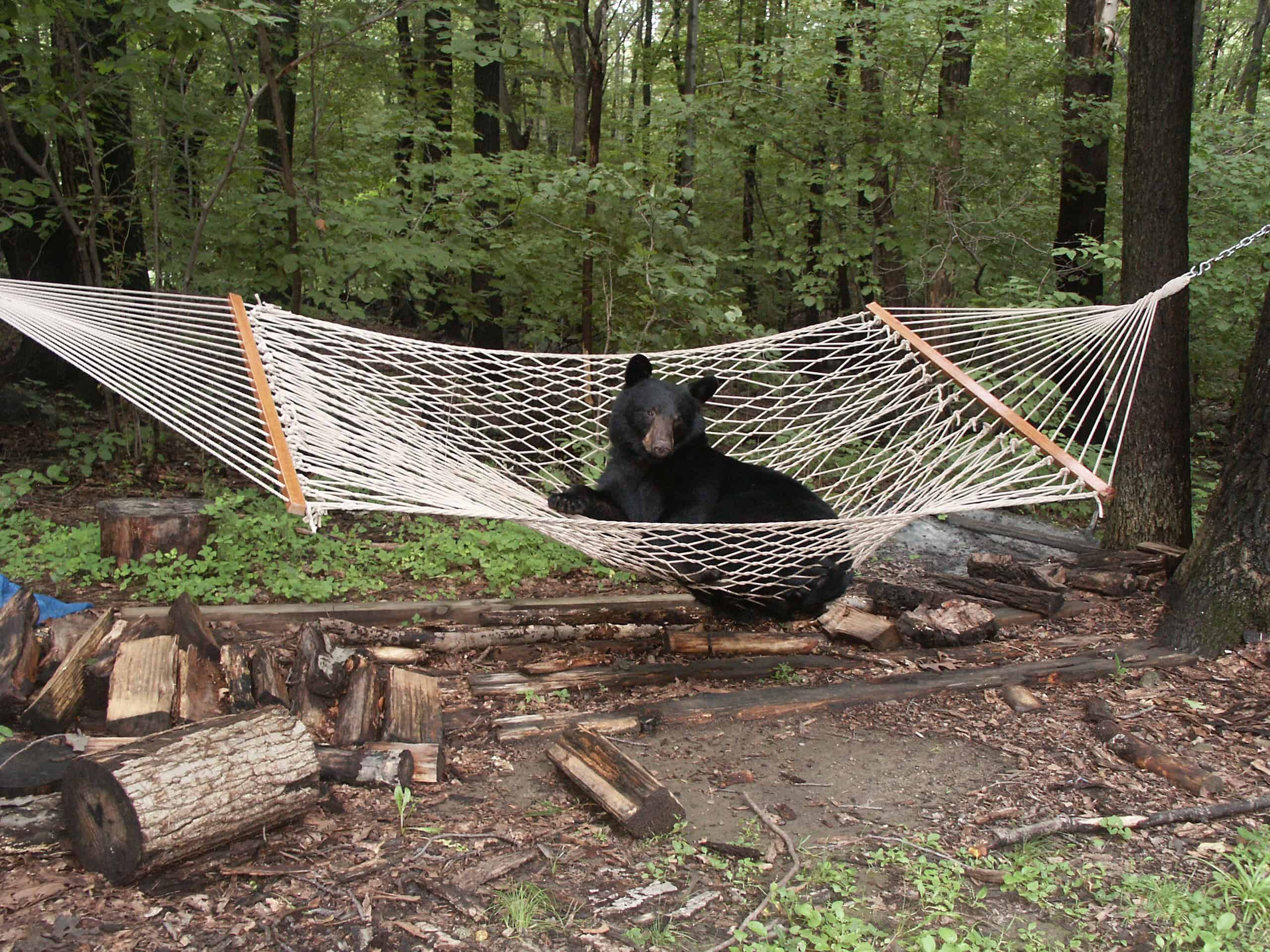
A wild black bear makes itself at home in a backyard hammock. ©Susan Kehoe/Shutterstock.com
©Susan Kehoe/Shutterstock.com
CPW’s preliminary count through Aug. 31 was 8,672 bear reports, up from 3,680 at the same point in 2025. CPW officer Travis Sauder told the Gazette in August that low snowpack and late freezes had made 2026 what the agency calls a “food failure” year.
8,672
bear reports through Aug. 31, up from 3,680 at the same point in 2025
In late summer and fall, bears enter hyperphagia, when they can spend up to 20 hours a day searching for food and eat up to 20,000 calories a day. Most Colorado bears stay active through early November.
A law that took effect Aug. 12 raised the fine for a third bear-luring offense from $2,000 to $5,000. CPW asks residents to remove bird feeders, secure trash, feed pets indoors, clean grills and lock doors and windows.
By the end of August, the agency had euthanized 294 bears and relocated 98, up from 83 and 33 at the same point in 2025.