
Quick Take
- One of the rescued pups bit its rescuer and wouldn't let go. His reply to it might surprise you.
- A retired logger tried something on a motionless pup that he's used on people before. Would it work on an otter?
- Release day brought a problem: the family was nowhere to be found. Was the pup ready to survive alone?
- A single piece of gear left on a dock set off the whole ordeal. What officials want you to do about it is simple.
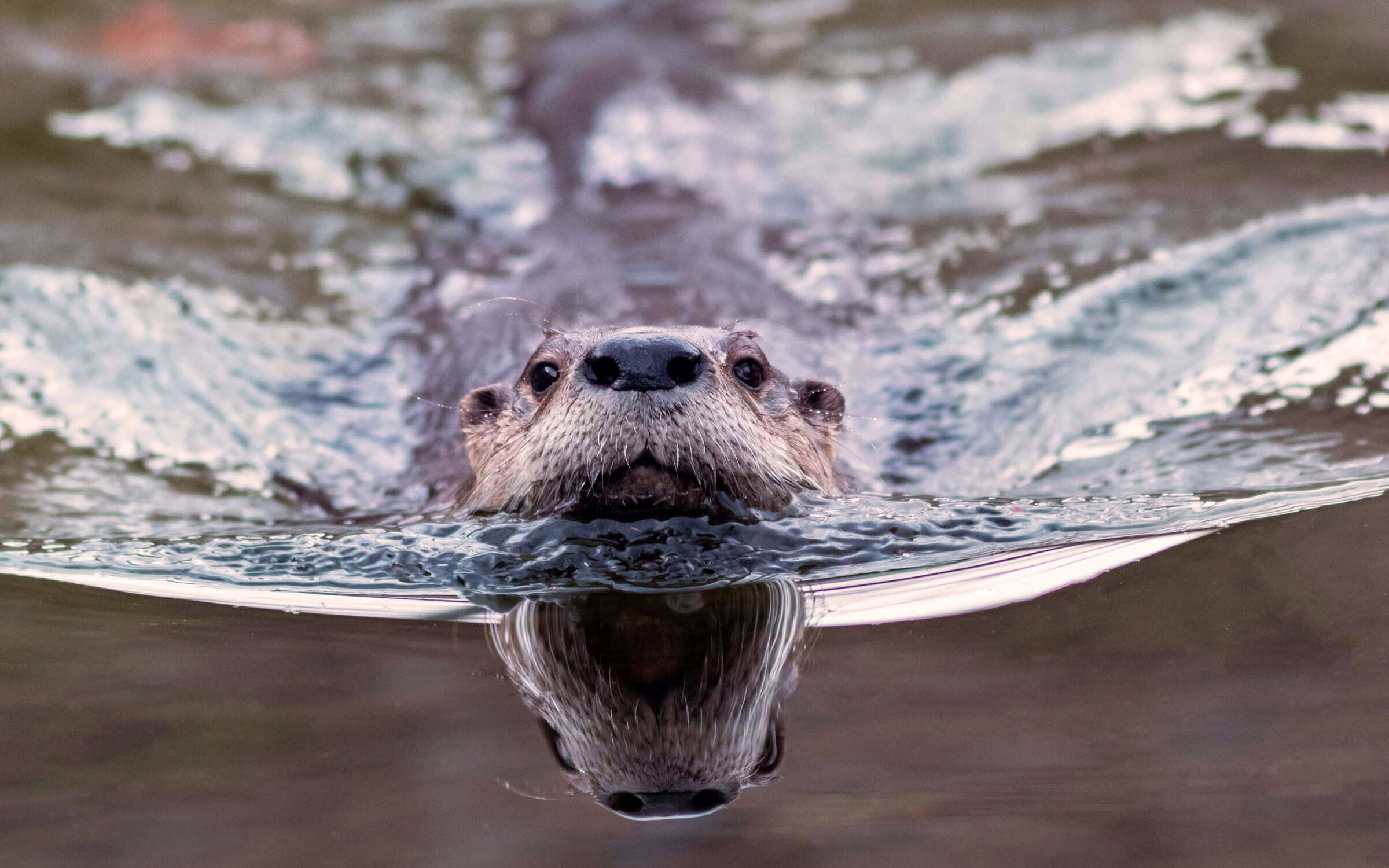
Robin Quirk saw what looked like a wet sock on the dock. It was a baby river otter, CTV News reported.
Quirk, who usually rescues birds of prey, built a shelter from materials lying nearby to keep those same birds off the pup. On expert advice, she kept it in her car overnight, then took a ferry and drove it to a wild animal rescue center. The pup slept the whole way, CTV News reported, and Quirk whistled to it, a melody she’d made up, the way a mother might sing a baby a lullaby.
“It’s a maternal feeling,” Quirk told CTV News. “You’re responsible for this life.”
The pup was alive because of Gordon Mellish, a retired logger and fisherman in Alert Bay, on Cormorant Island off northern Vancouver Island, British Columbia. On July 28, 2026, residents found three young otters tangled in a fishing net at the ‘Namgis Dock, Alert Bay RCMP said in a news release. The third had netting wrapped tightly around its neck, restricting its breathing.
Mellish spent 20 minutes pulling them from the water and cut two free, he told CTV News. The third wasn’t moving, and he gave it CPR until it breathed on its own. One of the two he’d freed had bitten his thumb and held on, he told The Canadian Press.
After about a week in rehabilitation, Quirk and Mellish released the pup on a beach in Alert Bay. Just before it swam off, Mellish told The Canadian Press, it turned back, looked him in the eye and nodded its head.
Later, someone sent Quirk a video of otters around the area, CTV News reported. She rushed to where it was recorded and started whistling the melody.
“I hear a rushing of water and then I looked down and there was this little otter looking up,” she told CTV News. “I said, ‘Oh, buddy! You’re alone.'”
Then a second baby otter appeared, then a third, followed by their mother, CTV News reported. “We reunited the family!” Quirk said. The RCMP wrote that the otter “was successfully reunited with its family in the wild”.
How do you give CPR to an otter?
Mellish told The Canadian Press he has saved at least 10 people with CPR. With the pup, he began with gentle chest compressions to pump water out.
When nothing happened, he knelt on the dock and picked the animal up, he told CTV News. “I wrapped my mouth around its mouth and nose and gave it a breath of life,” he said.
The bite came earlier, from one of the two pups that were still able to breathe. “The second one bit my thumb (and) held onto it for about three seconds, so that was nasty,” Mellish told The Canadian Press. “So I got at him and I told him, ‘Look, I’m trying to just rescue you.’ And he calmed down.”
Why was the mother still close by?
The two freed pups swam straight to their mother, who had been waiting nearby, the RCMP said. River otter young stay with their mother for about a year, according to the B.C. Ministry of Environment’s species summary. Litters run from 1 to 6 pups and average 2 to 3, with one litter a year.
Females with young also cover less ground than males or pairs, according to the ministry’s summary. In coastal Alaska, females’ summer home ranges averaged about 6 miles of shoreline, half the roughly 12 miles males used.
Could the pup feed itself?
On release day, the family couldn’t be located, Mellish told The Canadian Press. The SPCA told the group that a pup of 6 to 8 months could feed itself. River otter young first enter the water at about 7 weeks and are weaned at about 3 months, according to the ministry’s species summary, so a pup that age is months past nursing.
They set the cage down 20 feet from the water’s edge, Mellish told The Canadian Press. The pup circled it about five times before walking down to the water.
Why is a net on a dock a hazard?
The net had been left on the dock, an area local wildlife travels often, the RCMP said. Mellish told The Canadian Press that his niece and son-in-law heard “what sounded like babies crying” and ran to the end of the float. He told CTV News the third pup was wrapped so badly that it was motionless, with its head hanging in the water.
The detachment asked residents and visitors to properly secure and store fishing nets, ropes and other gear.