
Quick Take
- Achieve a 2-fold increase in predatory success by mastering a high-intelligence behavioral requirement.
- The 50/50 odds of hunting parrotfish alone create a critical energy drain for the grouper.
- Counter-intuitively, interspecies communication is no longer exclusive to humans or apes.
- The hunting party process is necessary to flush prey from hidden rock crevices.
Interspecies communication was once thought to be rare outside of humans and apes, but research has shown it occurs in a variety of animals, including birds, cetaceans, and even fish. Doing so requires a high level of intelligence, coupled with the ability to reach a mutual understanding. This could take the form of a vocal tone, a hand gesture, or even just a look. But as it turns out, this doesn’t just apply to land-dwelling animals.
When it comes to finding a meal, even fish are not averse to cooperating with other species. They might not have hands or voices, but scientists have discovered that they have another way to get their point across. And as outlandish as it sounds, some fish even use interspecies communication—known as referential gestures—to hunt their prey.
What Is a Referential Gesture?
In the animal kingdom, you can find anything from symbiotic relationships to parasitic alliances. The needs of certain animals can be mutually beneficial, which is how these behaviors originate. However, referential gestures exist outside these classifications. It’s a rare form of communication in which two species use a shared signal to communicate. In humans and apes, this could be spoken word, sign language, or common gestures.
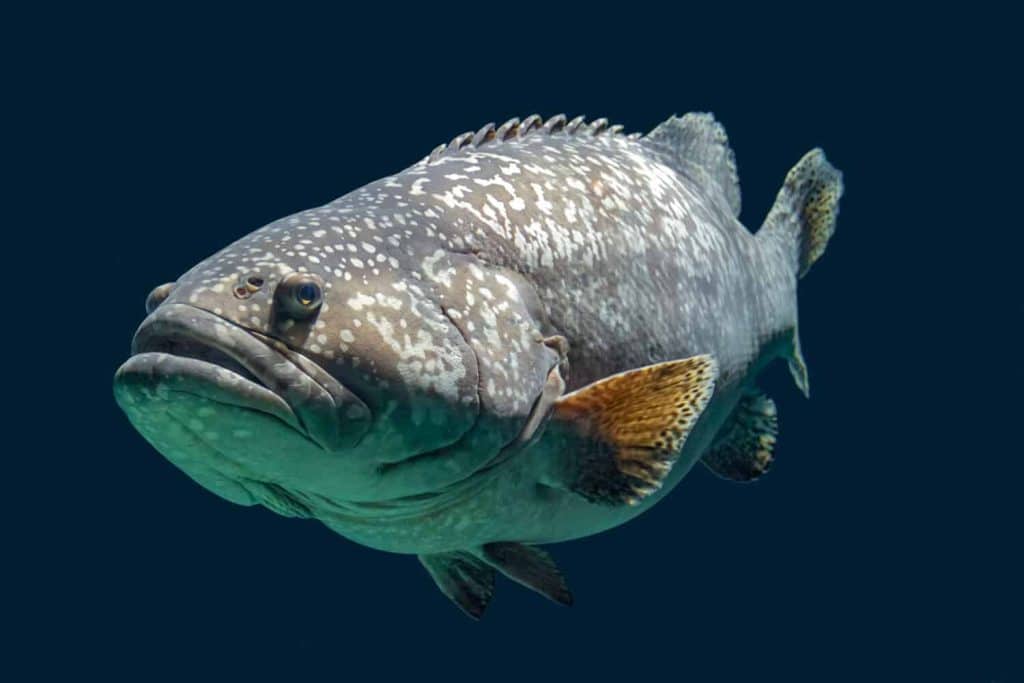
Groupers share prey in common with many coral reef predators, including giant moray eels.
©PRILL/Shutterstock.com
In corvid species, referential gestures are also seen in the form of mating gifts. Ravens may gift their partners food, twigs, or stones as a symbol of affection or commitment. It’s a form of nonverbal communication that indicates mutual respect. In many viral videos, ravens have also been observed giving similar gifts to human handlers. Those who feed them regularly may find odd trinkets left behind, which is a similar means of communication. The animal kingdom is full of surprises, and there is another unlikely species that uses a similar gesture to get what it wants.
Why Groupers Make the Best Hunting Team
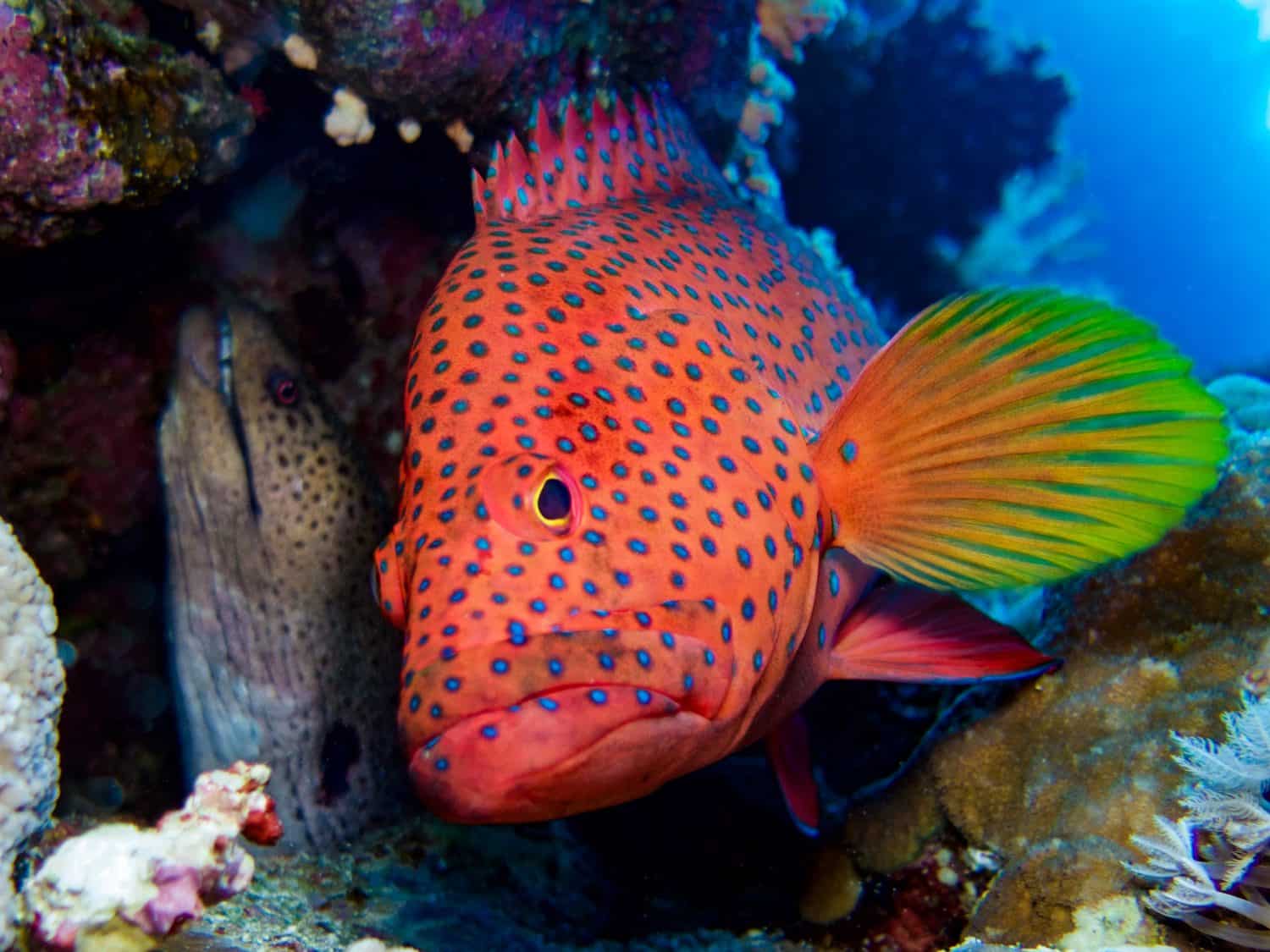
The difference between symbiotic relationships and referential gestures is that in the latter, neither party is dependent on the other. Fish can hunt just fine on their own, and, alternately, so can their partners. But when their skills are combined, their chances of catching prey are increased twofold. Groupers and coral trout, specifically, have developed a functionally similar tactic to the referential gestures seen in humans and apes, using body signals to communicate with hunting partners.
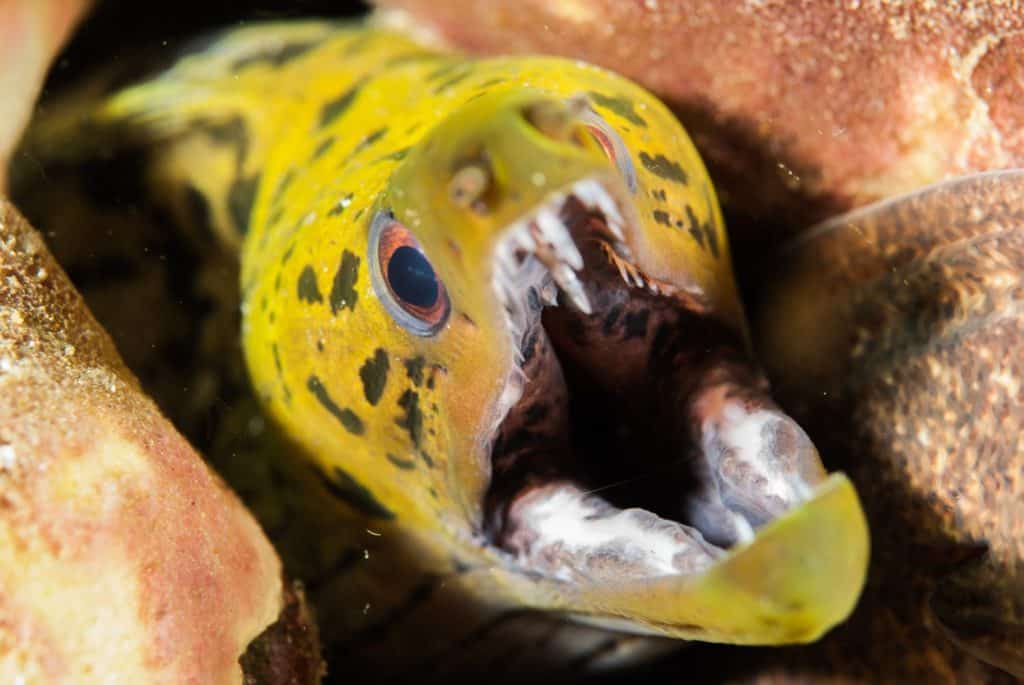
As skilled hunters, moray eels are proficient in ambushing prey from hidden crevices.
©fenkieandreas/Shutterstock.com
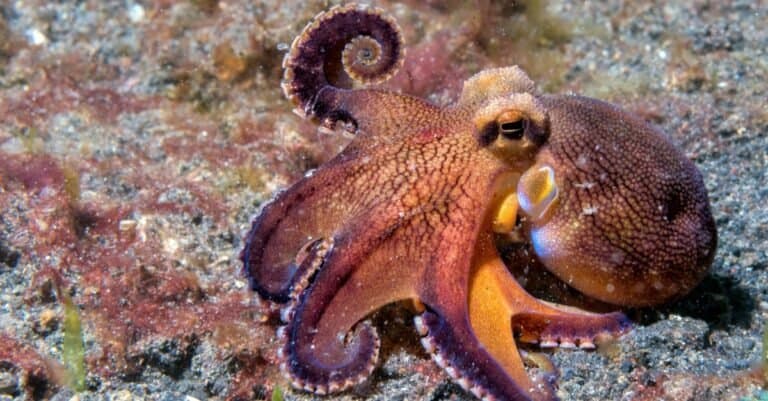
By using a “headstand” signal, groupers and coral trout can send messages to waiting partners. These partners are typically giant moray eels, Napoleon wrasses, or octopuses. Each of these species carries its own high level of intelligence, which is why they work so well with groupers and coral trout. When one of these fish rotates its body so that its head is facing downward, it becomes a neon sign saying, “Prey here!”
As the fish begins to shake back and forth, its partner—typically waiting in a nearby rock crevice—forces the prey out of hiding. Their tag-team hunting skills earn them dinner and save both species the effort of solo hunting. This referential gesture is as effective as pointing to a target, and it’s a highly evolved skill that few species have mastered. Underwater, it’s even more valuable, as prey can be ambushed from rock crevices and coral reefs.
Why Is Tag-Team Hunting Favored Among Certain Fish?
A grouper doesn’t have the intelligence to understand statistics, but at its core, it comprehends its odds. When ambushing prey, the odds of killing a crustacean or parrotfish alone are 50/50. If the prey escapes, the grouper wastes energy and time. By teaming up with a species that already dwells in the same place as its prey—such as a moray eel—its chances increase. Since the two often hunt the same prey, their cooperation is as logical as it is instinctive.
This is also what makes referential gestures or signaling so fascinating to observe among fish. While this highly intelligent process is second nature to large-brained vertebrates, it’s not exclusive to them. This means both groupers and coral trout have the forethought to understand that having an ally can increase their chances of finding food. Additionally, this means that natural predators such as moray eels and octopuses understand that lending a hand results in a meal for them.
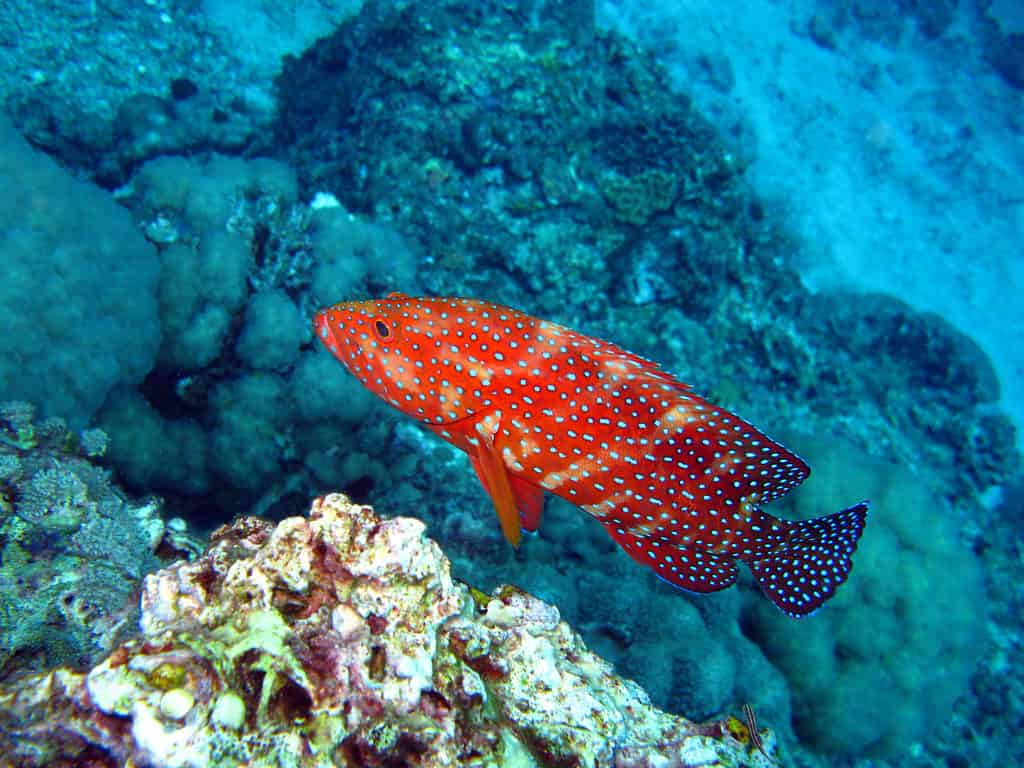
Coral trout have also been known to work with partners by using referential signaling.
©DiveSpin.Com/Shutterstock.com
The California Academy of Science refers to these teams as “hunting parties.” However, there is a caveat to this otherwise brilliant means of catching food. Once the signal has been given, the “listener” also has the opportunity to snatch the prey for itself. There is no sharing of meals over coral reefs, and by the time the prey has been flushed out, the fish and its partner go back to being enemies. It’s a risk that both parties are willing to take, and it typically comes down to which animal is quicker to the punch.