
Quick Take
- The Big Blue Octopus hunts alongside other fish and marine animals.
- These octopus respond to crowding and food-stealing fish with a single punch.
- Punches increase when hunts grow congested and chaotic.
- Plenty of other animals, like shrimp and primates, control social dynamics by punching as well.
Cooperative hunting across species lines is rare, but on coral reefs, octopuses sometimes make it work. That does not mean they have to like it, any more than you liked working on group projects in school alongside three deadbeats riding your coattails.
In several well-documented cases, octopuses hunt alongside fish, sharing the benefits of flushed prey and higher success rates. The arrangement functions smoothly until someone annoys the octopus. And as a general life lesson, this bears repeating: DO NOT ANNOY THE OCTOPUS. If a fish crowds prey or steals food, the octopus responds with a punch to the face. And there are seven more where that came from.
Octopuses are not the only creatures who let the intrusive thoughts win. Find out who else chooses violence as we take a deep dive into one of the most bonkers and quietly satisfying behaviors in nature: the sucker punch.
The Big Blue Octopus and Its Daytime Hunts
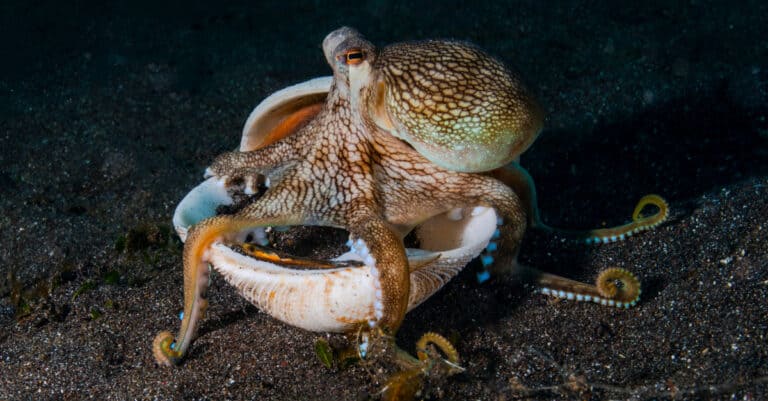
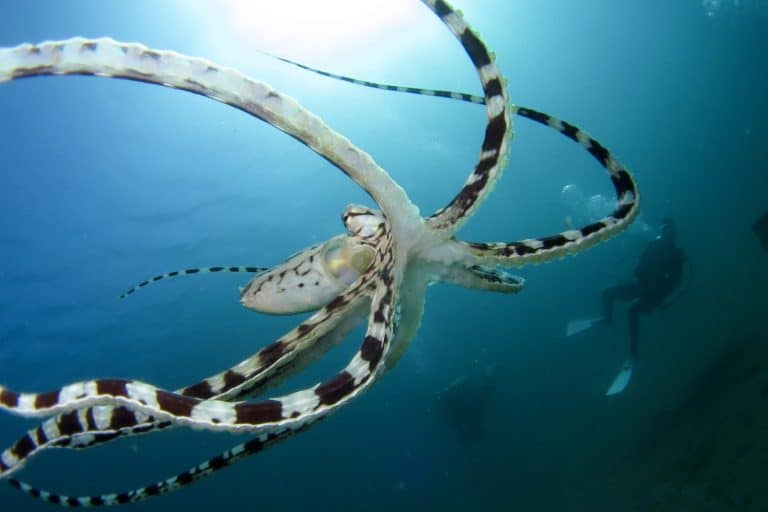
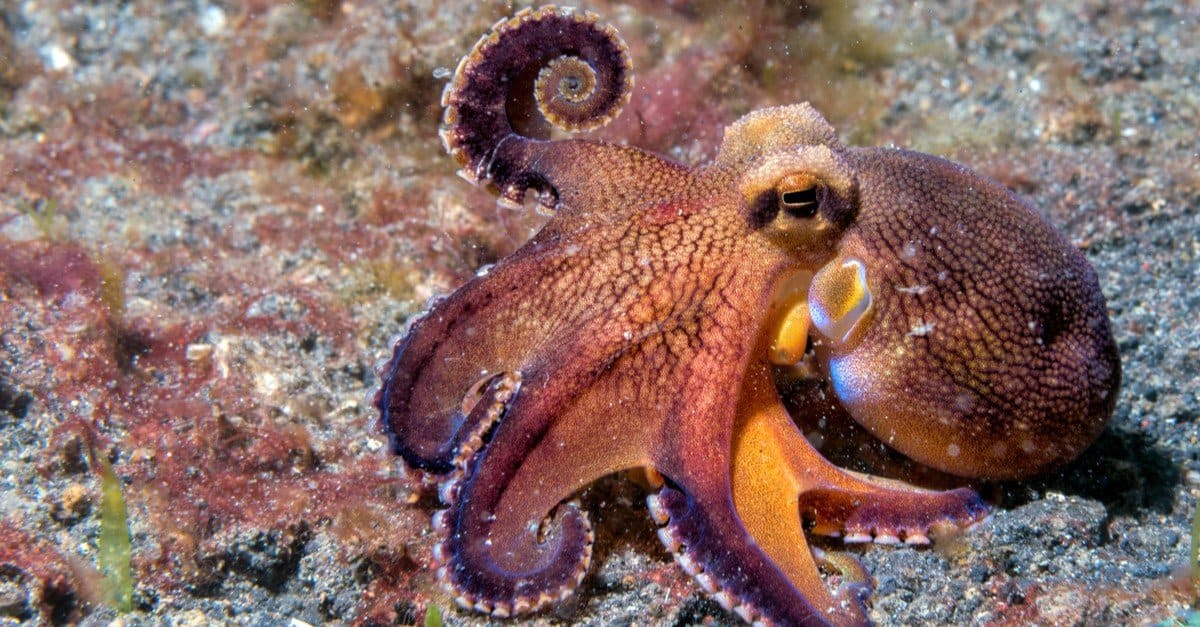
One of the ocean’s most enthusiastic enforcers is the big blue octopus, a daytime hunter that lives on shallow coral reefs across the Indo-Pacific. Unlike most octopuses, which prefer darkness, solitude, and minding their own business, this one hunts in broad daylight, out in the open, surrounded by fish, predators, and the occasional diver sticking his face into everyone’s business like a self-appointed HOA vice-president (see video below).
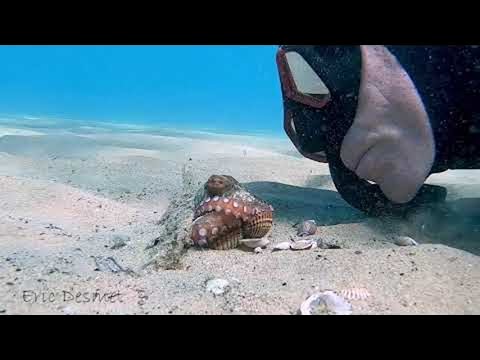
During a hunt, the octopus methodically works cracks and coral heads with its arms, digging out crabs, shrimp, and small fish that would very much prefer to stay hidden. When prey panics and bolts into open water, nearby fish are thrilled to take advantage. The octopus does the exhausting part. The fish reap the benefits. Everyone pretends this is teamwork. It’s not. Everyone knows the octopus is calling the shots… and sometimes dealing them out.
A Reef Full of Roles
These mixed-species hunts are not chaotic feeding frenzies. Everyone has a role in the undersea flow-chart.
Goatfish act as scouts, moving ahead and probing sand and rubble, lingering when they find something promising. Goatfish are rarely punched, because they actually do something useful. Performance review: meets expectations.
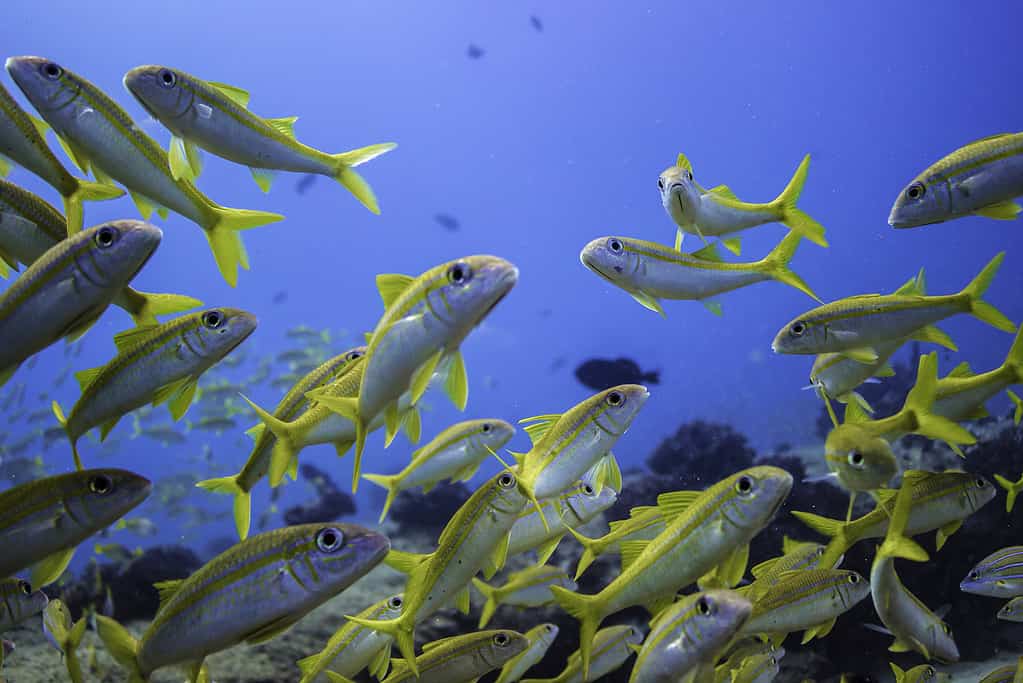
Goatfish scout out food for octopuses to flush out.
©Blueroomuwp/iStock via Getty Images
Groupers, on the other hand, take a more passive approach. They hover nearby, close enough to benefit and far enough to avoid responsibility. When prey explodes out of cover, groupers rush in, like lower-white-collar office workers when there’s left over birthday cake in the break room. When they crowd the octopus, it’s more than ready to throw hands to remind them who’s boss.
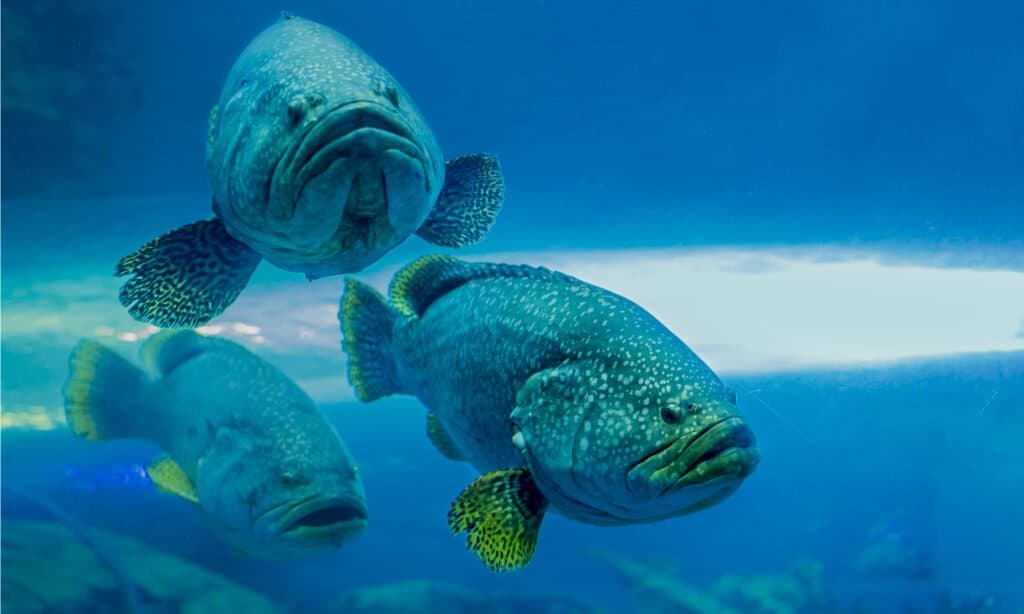
Groupers don’t contribute much but are always there when someone says “snacks.”
©Supermop/Shutterstock.com
“Partner Control”
But does the octopus really “punch?” Well, technically, it is a fast flick of a tentacle that startles the fish and shoves it away. The strike makes the fish back off from what it was doing, drift to the edge of the group, and briefly reconsider its life choices. The octopus regains access to prey and space. The hunt continues like nothing happened.
Researchers call this behavior “partner control,” which is a phrase that honestly screams for a phone call to HR. Fish almost never retaliate, because they need the octopus more than the octopus needs them. Classic power imbalance. Hostile workplace vibes. Just like you learned about in that orientation video when you got hired.
Spite or Strategy?
The internet likes to pretend these punches are the result of sheer spite, but there’s more to this behavior than revenge. These “punches” happen more often near food, and they are aimed at fish that crowd prey or steal it. Punches increase when hunts grow congested and chaotic, while fish that search, signal, or stay out of the way are mostly ignored. The strikes are brief and controlled. There is no escalation, no meltdown, no team debriefing, no conflict management workshop; just smackin’ who needs smackin’ and getting back to work. This kind of consistency points to strategy, not temper. It’s about restoring access to prey and space with the least amount of effort possible.
That strategy also complicates the idea that octopuses are strictly antisocial loners. While that label often fits, these hunts show a more flexible approach. The octopus tolerates partners when they help, corrects them when they interfere, and remembers who behaves and who does not. Intelligence shows up here in an unromantic form: situational control. This is not puzzle-box cleverness or abstract planning. It’s real-time behavioral management under pressure. The octopus tracks contributions, identifies freeloaders, and applies immediate consequences with surgical precision. No friendships, no alliances, just a temporary operation with clear rules: help, don’t crowd, don’t steal. When those rules are broken, correction is swift. It’s not emotion winning out over reason. It’s reason enforcing boundaries, very efficiently, with eight arms and zero patience.
Other Animals That Punch
Octopuses are not alone in lashing out with limbs to manage conflict, space, or cooperation.
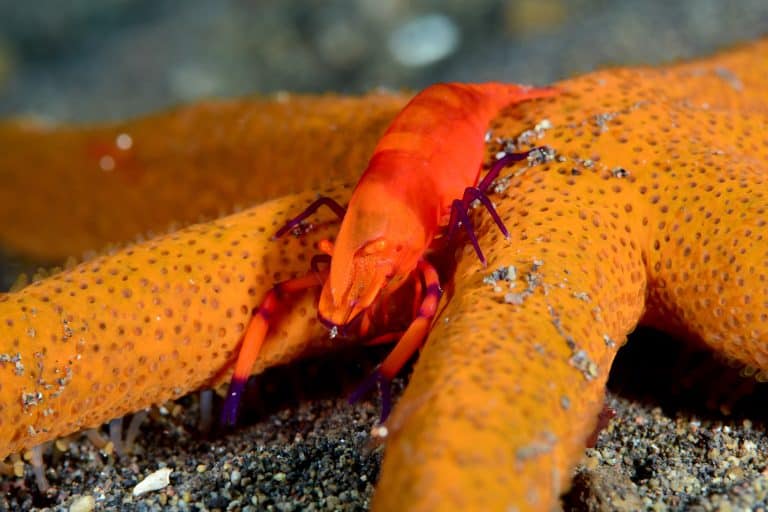
Mantis shrimp throw the fastest punches on Earth, accelerating their clubbed limbs so quickly that they create shockwaves capable of cracking shells even when they miss. The force can shatter snail armor, stun prey, and end disputes instantly. When mantis shrimp fight rivals, there’s little posturing and no patience. These punches are not warnings or negotiations. They are final decisions delivered at physics-breaking speed.
Chimpanzees punch, slap, and swing during dominance disputes, using fists and forearms to reinforce rank. Most conflicts start with noise and displays, but when contact happens, it is intentional and controlled. A single punch often serves as a warning backed by the shared understanding that things could escalate fast.
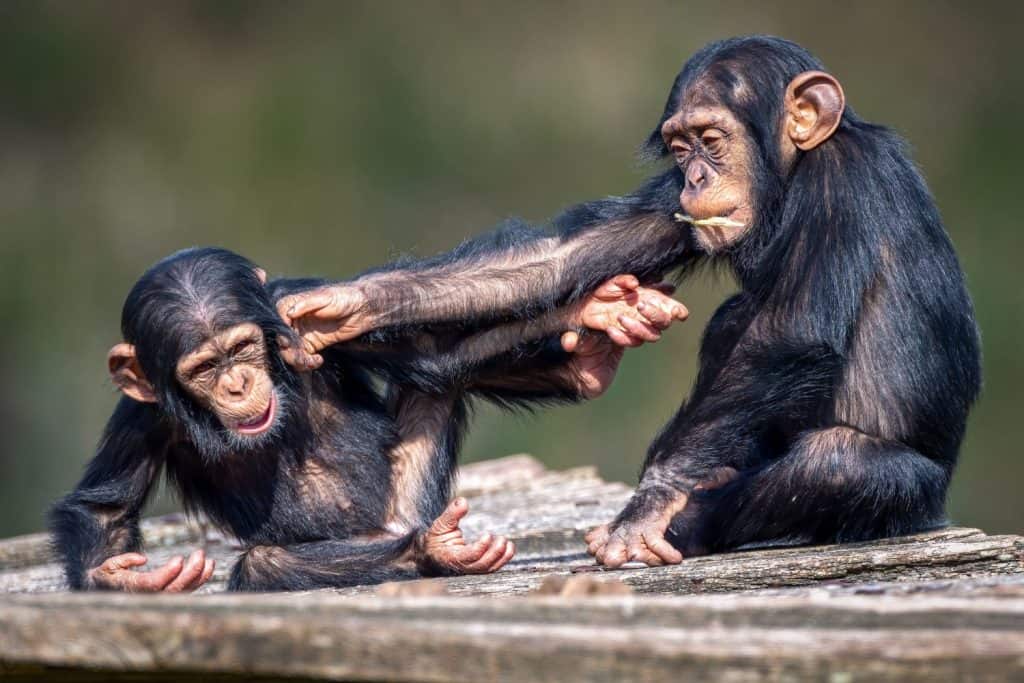
Smackdown! Young or old, chimps don’t pull any punches.
©Wirestock Creators/Shutterstock.com
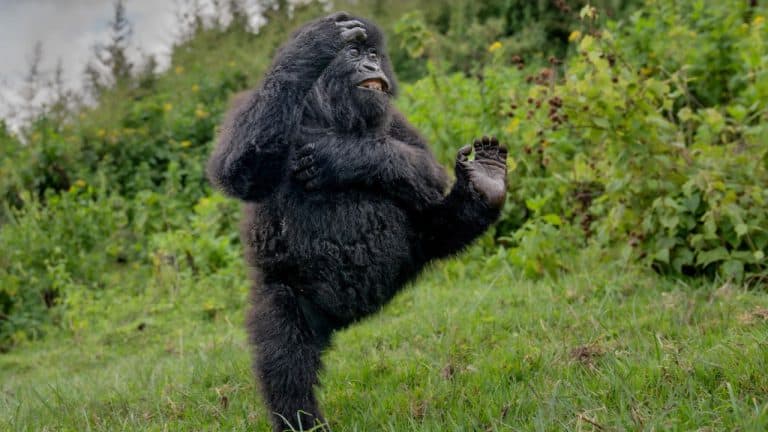
Gorillas possess immense strength and can deliver blows far more powerful than any human boxer. Physical strikes usually appear within larger dominance displays like charges and chest beating. When a punch or slap does land, it can end a conflict immediately.
Boxer crabs carry live sea anemones in their claws and punch with them, letting the anemones do the stinging. The crab gains a weapon without needing strength, while the anemones get mobility and food. What looks like a pair of fuzzy pom-poms turns out to be a surprisingly effective deterrent. Violence, cheerfully outsourced. Rah rah rah!
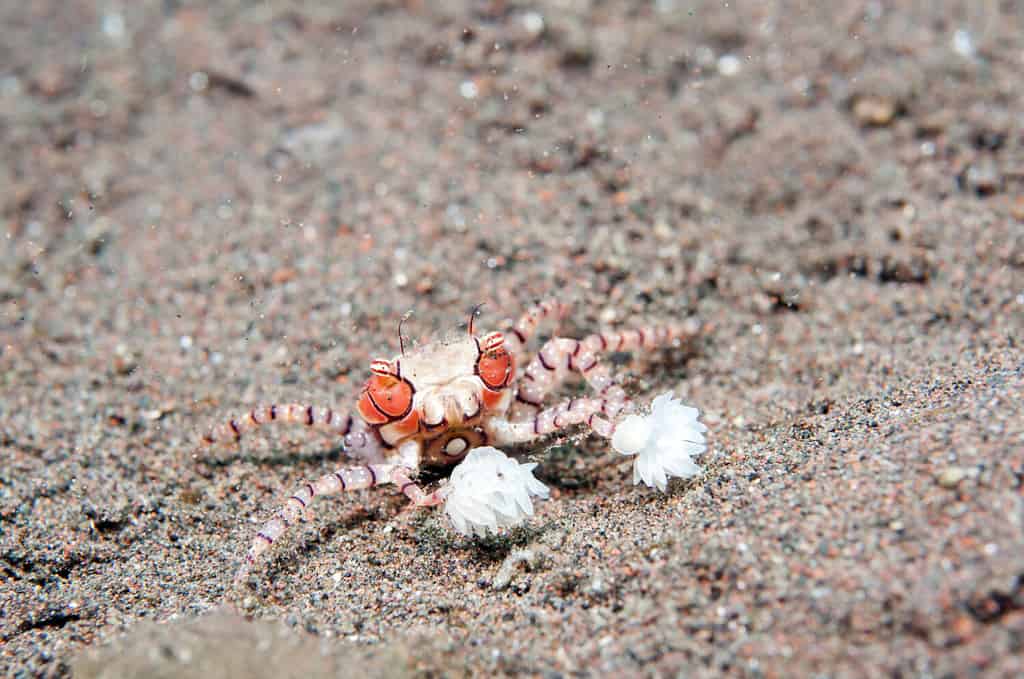
A boxer crab holding two stinging sea anemones as cheerful little weapons to “motivate” enemies.
©Jung Hsuan/Shutterstock.com
Kangaroos and wallabies are mixed martial artists that punch and grapple with their forelimbs to control balance before unleashing powerful kicks. The punches help position opponents and keep them close, setting up the real damage. Once the kicks land, the fight can end fast. Punching here is not the finale. It’s the setup.
So across species, punching shows up as a fast way to say move, stop, or knock it off.
Back to Nature

Animal behavior brings out flashes of self-recognition in us.
©Pheelings media/Shutterstock.com
People find this relatable and funny because it maps surprisingly cleanly onto human group dynamics. Everyone has lived through a “team effort” where one person does the work and others hover, waiting to benefit. Watching an octopus physically enforce what most humans only fantasize about taps into a shared, petty little joy: consequences.
There’s also something deeply satisfying about how clean it is. No speeches, no passive aggression, no meeting afterward to “circle back.” Just a quick smack and back to business. It feels like the animal version of the intrusive thought winning, but in a way that’s oddly responsible and effective. The humor comes from recognition. The laughter comes from relief. Somewhere deep down, a lot of people wish human work followed the laws of nature a little more… as long as they’re not on the receiving end of it.