
Quick Take
- Ferruccio Pilenga established the Italian School of Water Rescue Dogs (SICS) after his Newfoundland dog saved his daughter from drowning.
- Rescue units combine a dog’s raw towing power with a human handler’s medical expertise using a “dolphin technique.”
- Newfoundland dogs are skilled at water rescue due to their webbed feet, water-resistant coats, and an intuitive ability to feel dangerous riptides through their paws.
- Certified teams undergo 12 to 18 months of “special forces” training to save dozens of people simultaneously in high-stakes environments.
On some of Italy’s busiest beaches, an elite canine rescue force patrols the shoreline. These powerful Newfoundlands, Labradors, and golden retrievers work with human lifeguards to form incredible “six-legged” rescue teams. This unique program, officially recognized by the Italian government, has grown from a single act of heroism into one of the most effective coastal rescue systems in the world.
The History of Italy’s Canine Lifeguards
Ferruccio Pilenga founded the Scuola Italiana Cani da Salvataggio, or Italian School of Water Rescue Dogs (SICS), after his Newfoundland, Mas, saved his daughter from a lake over 20 years ago. This act of heroism inspired Pilenga to create a formal training program for canine water rescue dogs. Since its founding in 1989, SICS has expanded across Italy. Today, 300 to 350 certified “six-legged” units (one dog and one handler) patrol the country’s 30 busiest beaches. They famously leap from helicopters and speeding boats to save swimmers in distress.
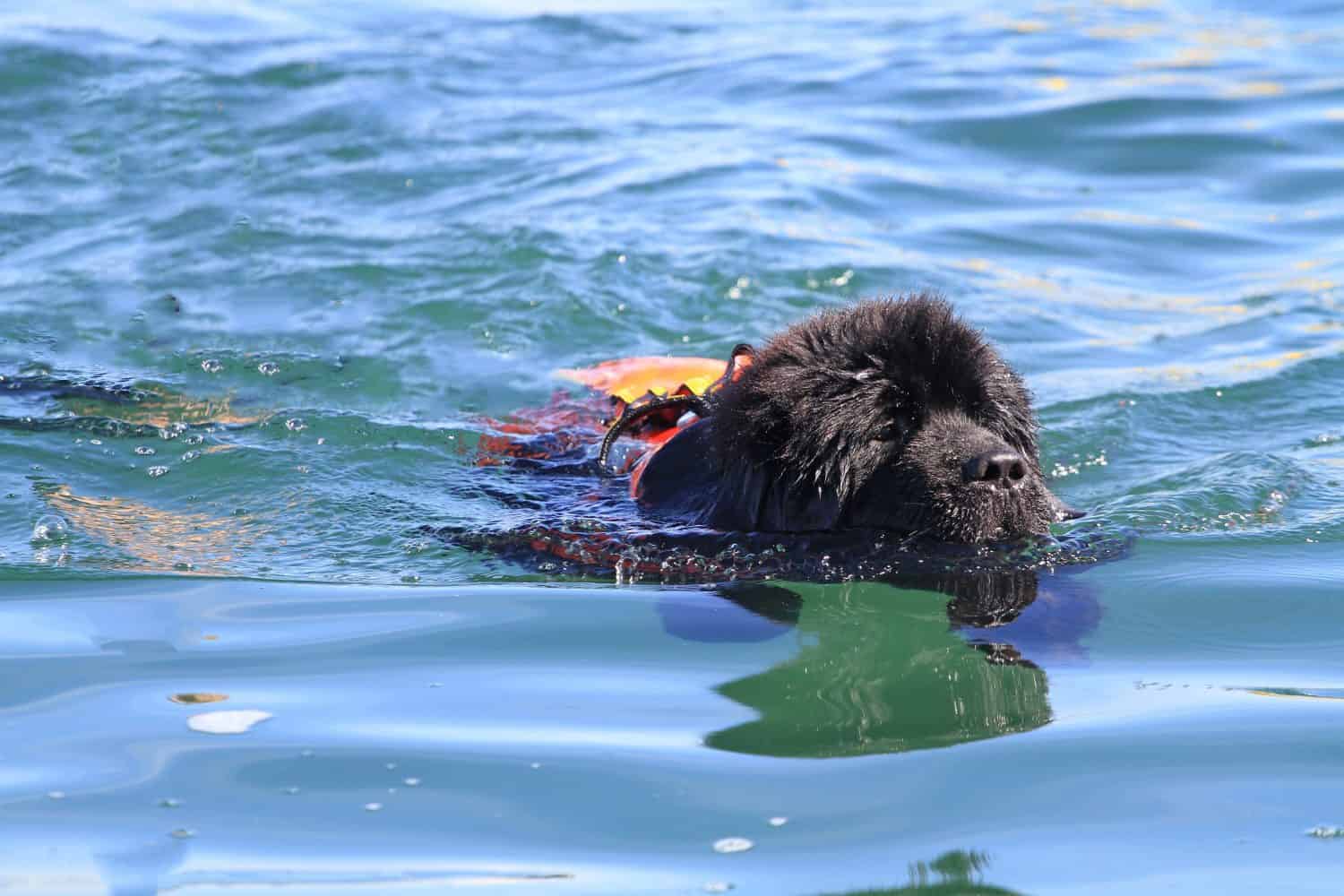
Newfoundland dogs can weigh 100 to 150 pounds.
©Da Silva Emmanuelle/Shutterstock.com
What Is a “Six-Legged” Rescue Unit?
A “six-legged” rescue unit is a specialized team consisting of one trained dog and one human handler. Rather than working as two separate entities, they operate as a single, integrated force to maximize their efficiency in the water.
By dividing the labor, the team can accomplish much more than a human lifeguard could alone. The dog provides the propulsion, stability, and raw towing power needed to navigate challenging waters. The handler conserves physical energy during the swim, allowing them to stay fresh and focused for high-stakes tasks like stabilizing the victim and providing immediate medical care.
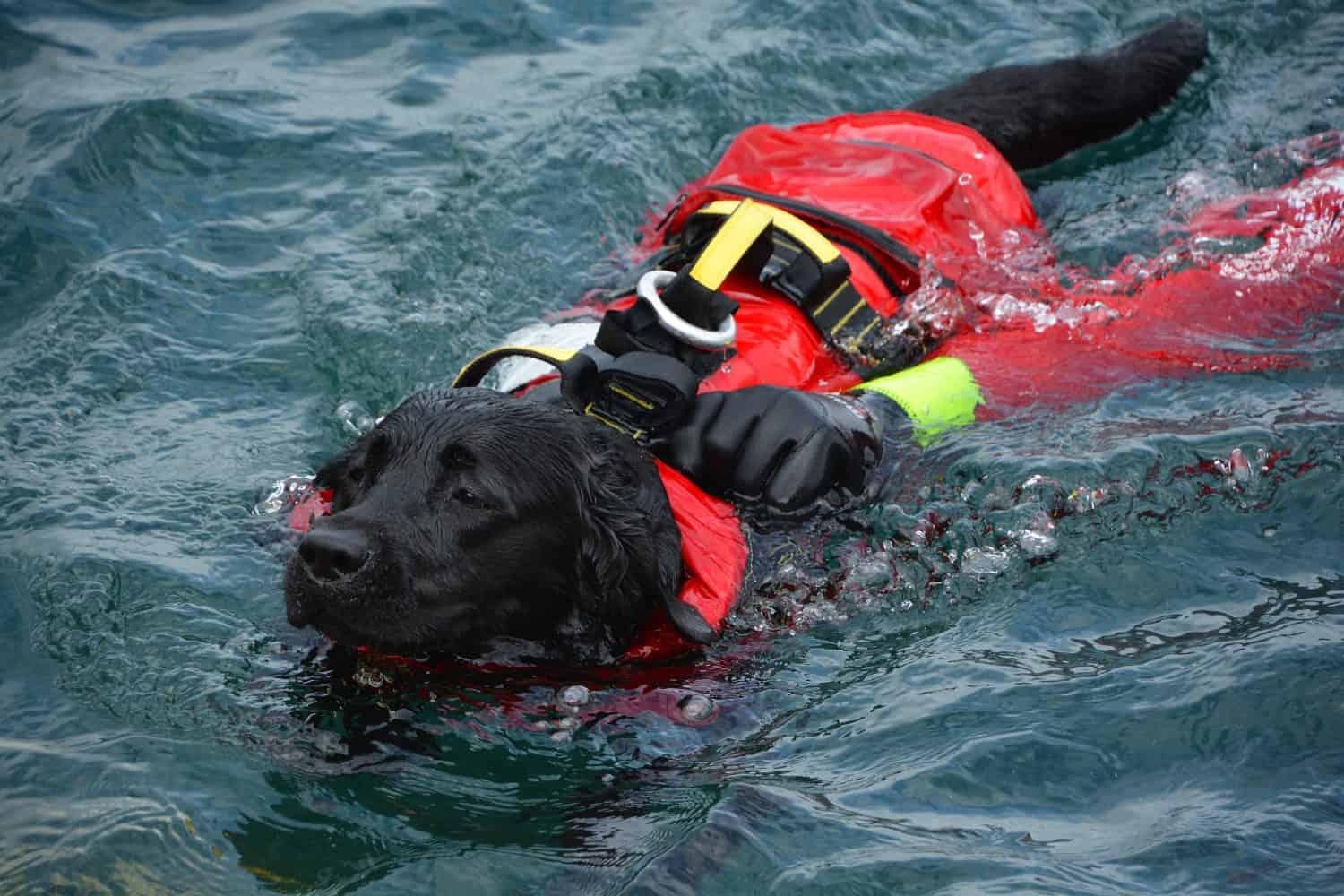
The key to this collaboration is a method known as the dolphin technique. As the rescue unit approaches a person in distress, the handler holds onto the dog’s harness and allows the animal to pull them through the water. This ensures the handler arrives at the scene alert and physically ready to perform the actual life-saving maneuvers.
Why the Newfoundland Is the Ideal Breed for Rescue Work
While any dog over 66 pounds is eligible to train with SICS, Newfoundlands, Labradors, and golden retrievers are the preferred breeds for this type of rescue work. Newfoundlands, in particular, are evolutionarily built for the sea.
Their paws feature extended skin between the toes that creates webbed feet. These act as natural paddles to provide the massive surface area needed for swimming and towing heavy loads. Additionally, their double coats function much like biological drysuits. A coarse outer layer repels water, while an oily undercoat provides insulation and helps keep the dog buoyant in cold water.
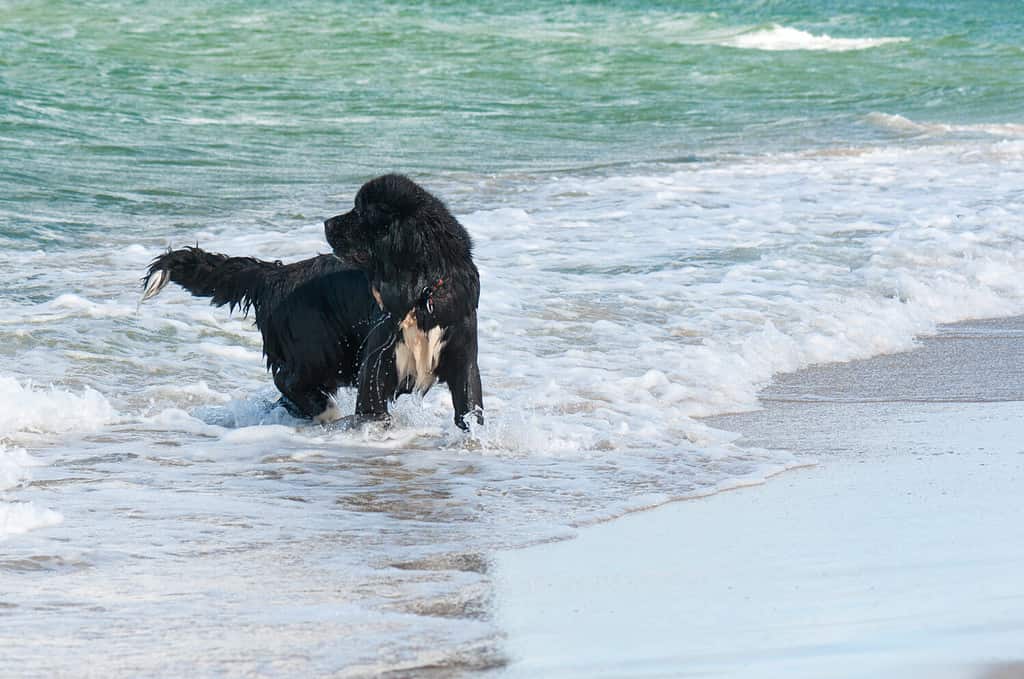
Newfoundland dogs originated on the island of Newfoundland in modern-day Canada.
©TheHighestQualityImages/Shutterstock.com
Bio-Engineered Lifesavers
Pilenga often classifies his canine recruits by their physical “engines.” While retrievers are the agile “petrol cars,” Newfoundlands are the “diesels.” Newfoundlands are prized for their massive lung capacity and raw strength. These traits make them the primary choice for heavy lifting and long-distance towing. In contrast, Retrievers are fast and have excellent maneuverability. This allows them to excel in rapid-response situations and complex environments.
Beyond their physical differences, both types of dogs can actually feel water movement through their paws, which allows them to detect dangerous riptides that are invisible to the human eye. This natural intuition guides the dogs along the most efficient path back to shore, preserving vital energy for both the rescuer and the victim.
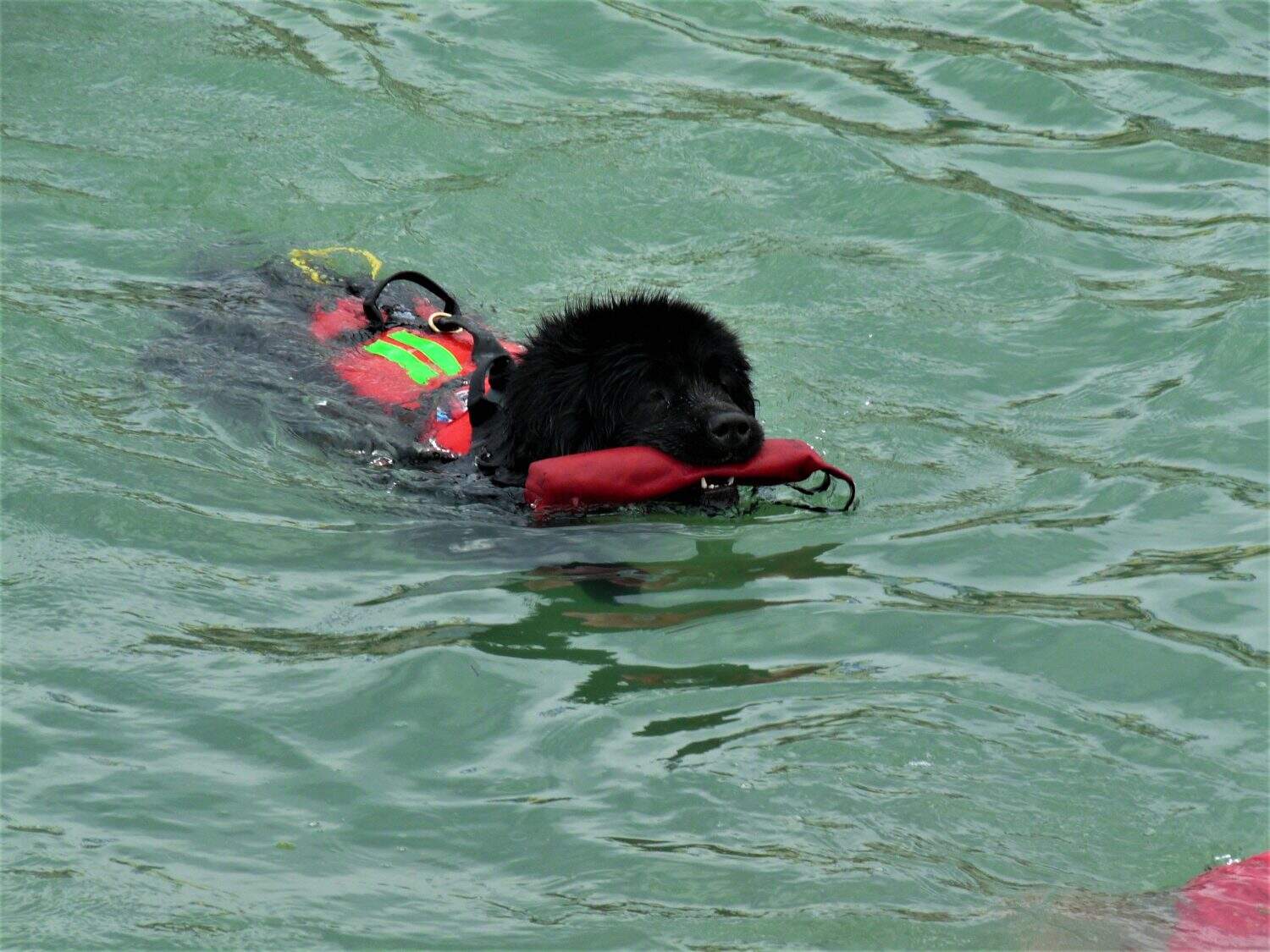
The Newfoundland is one of the world’s largest dog breeds.
©goumi/Shutterstock.com
The physical power of these rescue dogs is far beyond human capabilities. While a human lifeguard might struggle to pull a single person against a current, these dogs can pull up to three people through the water at once and are capable of towing small boats with several passengers.
Reef, a four-year-old Newfoundland stationed near Milan, represents the elite standard of these animals. She carries a legendary pedigree as the granddaughter of Mas, the dog whose heroism inspired the founding of the SICS. As a lead instructor, Reef represents the peak of the breed’s potential. She can pull up to 40 times her own body weight and is capable of swimming for miles without any signs of exhaustion.
Specialized Deployment and Modern Tactics
What truly elevates these rescue dogs from family pets is their rigorous special forces training. The SICS curriculum is designed to push the boundaries of traditional lifeguard work, preparing each “six-legged unit” for high-stakes scenarios where every second counts.
A central part of this tactical training is the Dolphin System. In a standard rescue, a human lifeguard is often breathless from swimming out to the victim, making it difficult to tow them back to shore. SICS addresses this challenge by using the dog as a living engine; the human handler holds onto the dog’s harness while the animal provides propulsion. This ensures the human remains rested and focused, ready to perform immediate medical interventions or water resuscitation as soon as the pair reaches the person in distress.
The Certification and Training Process
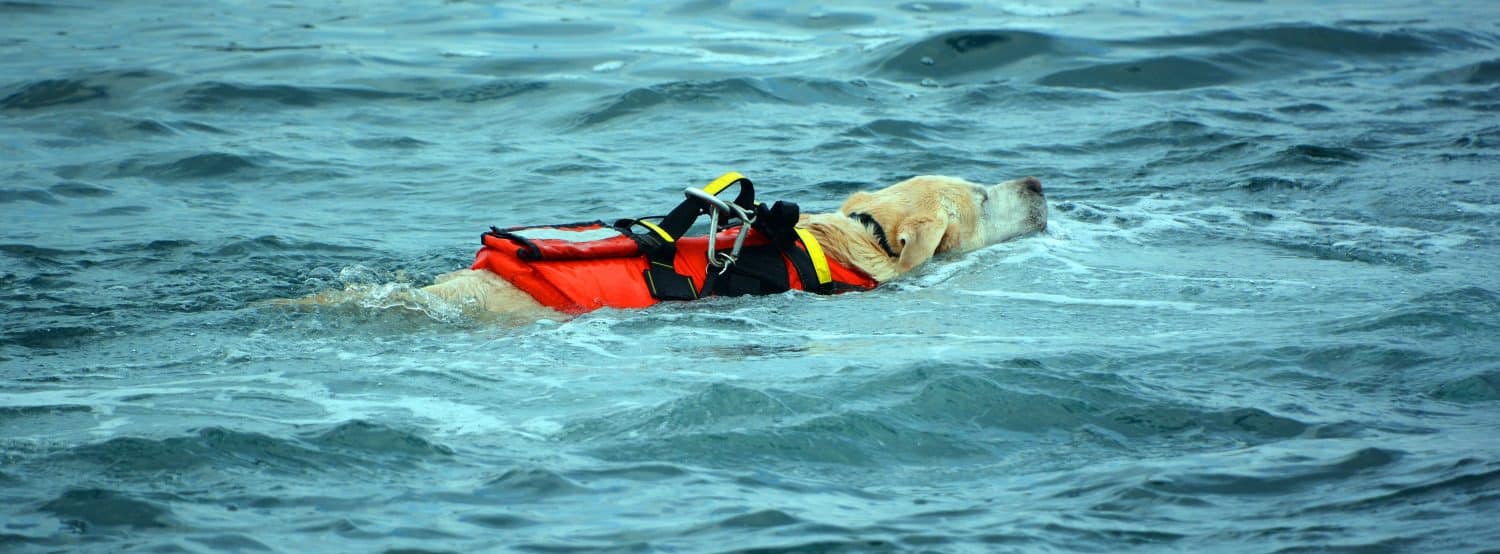
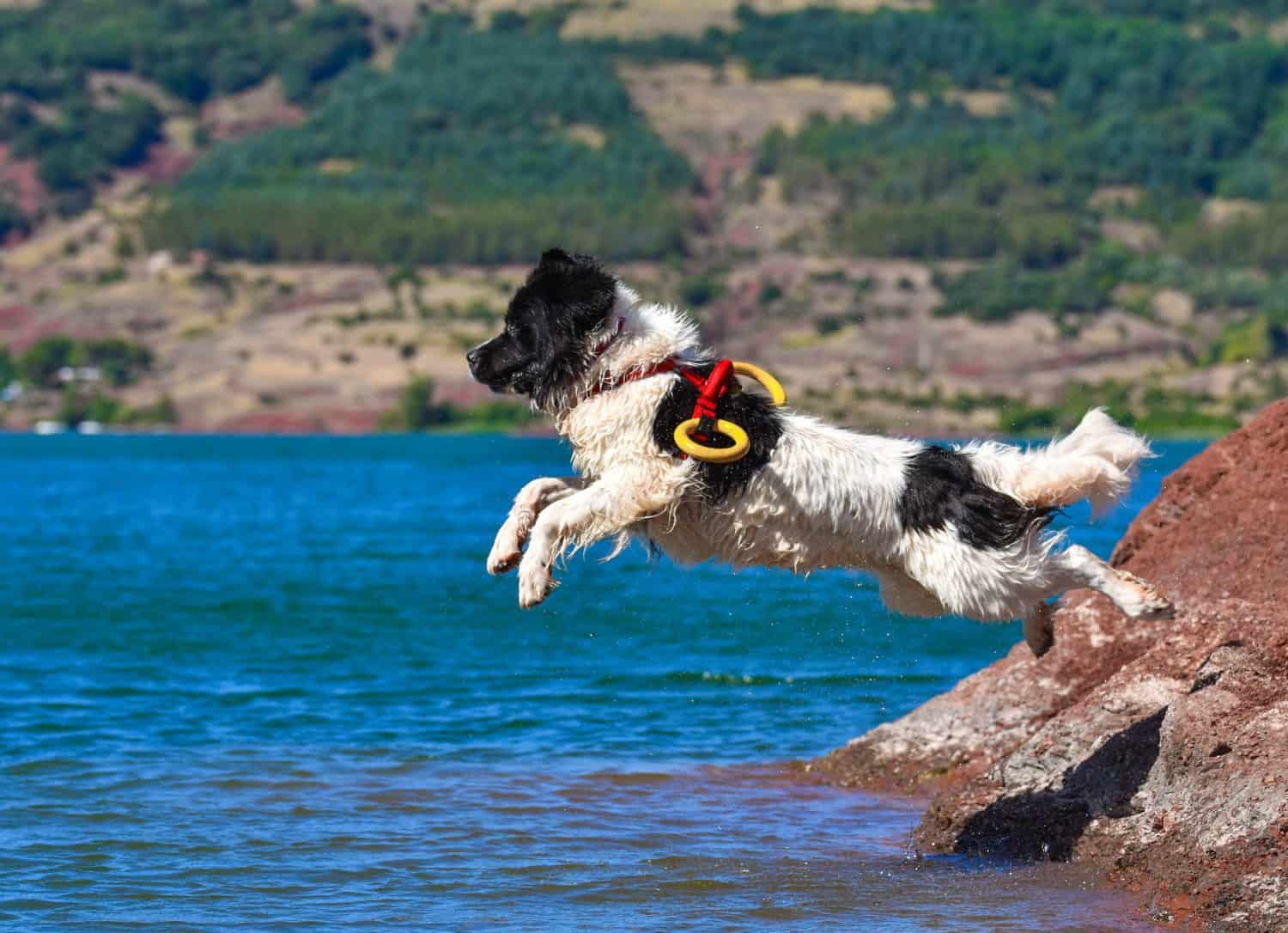
Italy’s water rescue dogs are trained to jump from helicopters and speeding boats.
©meunierd/Shutterstock.com
As the only European organization partnering with the Italian Air Force for annual helirescue courses, SICS prepares dogs to leap from helicopters hovering several yards above the sea. This enables rescue teams to avoid dangerous surf and reach victims offshore more quickly. Additionally, these dogs are trained to dive from speeding Coast Guard vessels, maintaining perfect composure until the moment they hit the water.
Becoming a certified rescue unit is a rigorous process, requiring 12 to 18 months of intensive training. This culminates in a grueling final exam that tests flawless obedience, physical stamina, and complex scenarios. Teams must remain focused and composed even amid crashing waves and chaos, complete long-distance swims of up to 20 minutes, and successfully manage simulations involving multiple victims at the same time.
However, the work doesn’t end with a license. To ensure the 300-plus units patrolling Italy’s coast remain the world’s “gold standard,” teams must pass a mandatory exam every year. This constant training ensures that every dog and handler remains sharp, skilled, and ready for any emergency.
Real-World Results
Today, roughly 350 certified units from the SICS program patrol 30 of Italy’s busiest beaches. While the Coast Guard handles thousands of calls, these “six-legged units” are directly credited with saving 20 to 30 lives every year.
When not patrolling the beach, many of Italy’s rescue dogs visit schools and hospitals to educate and provide emotional support.
©meunierd/Shutterstock.com
A standout example occurred in 2021 when three dogs — Mya, Mira, and Eros — rescued 14 people (including eight children) who had been swept 300 feet offshore. The dogs pulled the entire group to safety in just 15 minutes, a task that likely would have been impossible for human lifeguards alone.
Italy is currently the only nation that grants official government certification to canine lifeguards. However, the success of founder Ferruccio Pilenga’s methods has sparked an international movement. In the United States, the American Academy of Canine Water Rescue in Massachusetts now uses SICS techniques. Programs have also been launched in Germany and Switzerland to reduce drowning rates in lakes and rivers. The Azores and Canary Islands use SICS methods to deploy specially trained dogs, known as “intelligent lifebuoys,” in the Atlantic.
Despite its elite status, SICS is a volunteer-driven non-profit organization. These handlers and their dogs volunteer their summer months to protect the public. Whether they are performing the “dolphin technique” or leaping from helicopters, their work proves that the bond between a human and a dog is a powerful, life-saving force.