
Quick Take
- Brown bears can be infected with multiple tapeworms at once.
- Brown bears get infected with tapeworms thanks to eating salmon.
- Tapeworms can grow up to 30 feet long in the brown bear’s intestines.
- It is completely common for brown bears in Alaska to be infected with tapeworms.
Wild bears are prone to contracting parasitic infections. Some of the most common are intestinal parasites. In most cases, healthy bears tolerate parasites well and rid themselves of them before any real toll is taken on their bodies, leaving none the wiser that they were ever infected.
However, the same cannot be said for brown bears that become infected with tapeworms. These worms can reach 30 feet in length and protrude several feet from the rear of the bear. Those who witness this may have the thought, “Hey bear! You’ve got a little something hanging out of your…” but the bears do not seem to mind. Instead, they carry on, living their lives, oblivious to what is coming out of their rearends.
A Brown Bear Casually Walks Down the Road with a Massive Tapeworm Protruding from its Rear
It is not uncommon for animals in the wild to contract parasitic worms. But an extra-long tapeworm protruding from the backside of a brown bear is a startling sight. It’s not an image for the faint of heart, but, as an Instagram post from rawrszn pointed out, it is part of nature.
Recently, a video was taken of a brown bear walking down the side of the road in Alaska. However, the bear itself was not the star of the show. Instead, all eyes were on what was coming from the bear’s rear. Trailing the brown bear were several feet of tapeworm.
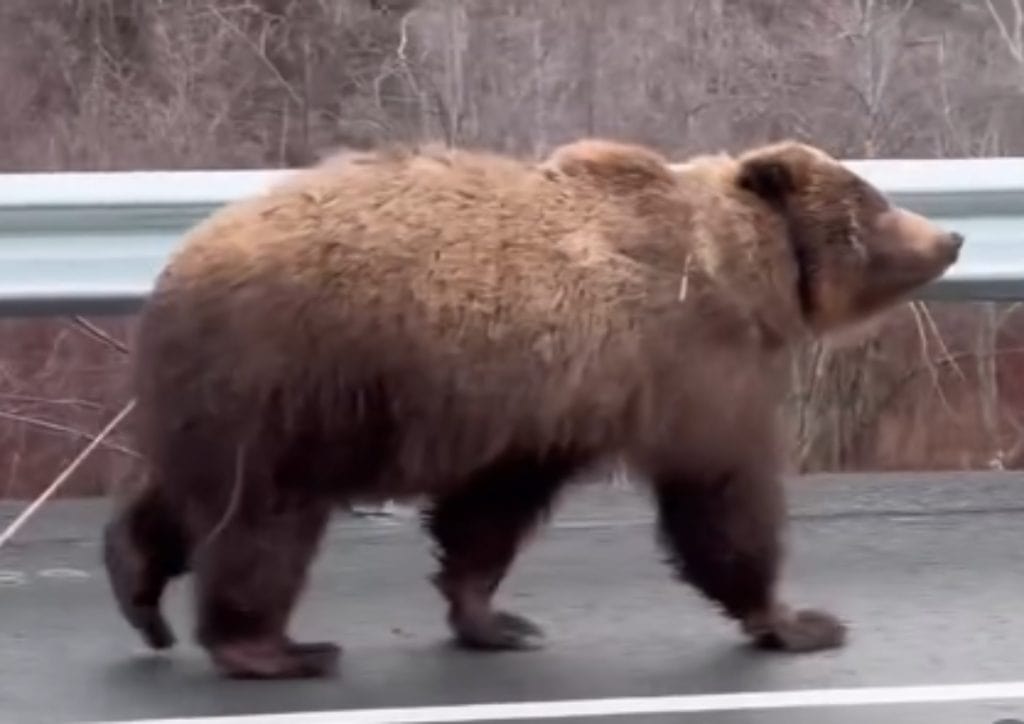
A brown bear is walking down the road with a tapeworm trailing from its rear.
© – Original
The tapeworm does not appear to bother the brown bear. As the post pointed out, the presence of the tapeworm does not even indicate that the bear is ill.
“While the sight can be unsettling,” rawrszn explains, “their presence does not automatically indicate poor health.”
The brown bear did not appear underweight or low on energy. It did appear to have a collar, however. Therefore, it is not out of the realm of possibility that wildlife officials may be monitoring the situation to determine whether this particular bear expels the tapeworm naturally or whether intervention is needed.
Tapeworms Are Not Uncommon for Brown Bears in Alaska
Tapeworms are very common in brown bears. This is especially true for bears who live in Alaska, as their diet predisposes them to tapeworm infection.

It is not uncommon for brown bears to be infected with tapeworms.
Brown bears can be infected with multiple tapeworm species simultaneously. The particular tapeworm that infested the brown bear in the video can reach 30 feet or longer. As seen, not all of the tapeworm will remain in the bear’s body at all times. Portions of the tapeworm’s body live outside the bear.
It is unclear how many tapeworms can infect a single bear. However, as the parasite is broken into segments and falls from the bear’s body, it can infect others. This is how tapeworm infestations become so prevalent in a single habitat, moving from one host to the next with little effort needed to do so.
How Do Brown Bears Get Tapeworms?
In Alaska, brown bears have an affinity for salmon. During the summer and fall, when fish populations are large and salmon are easy to catch, the risk of contracting tapeworms increases. This is why more bears are seen with long tapeworms trailing from their rear this time of year than at any other time.

Brown bears get infested with tapeworms as a result of eating infected salmon.
©JirkaVo/Shutterstock.com
The particular species of tapeworm that grows to excessive lengths within the brown bear’s intestine is the broad fish tapeworm. This tapeworm is not directly eaten by the bears. Instead, it must be consumed by other creatures before it has an opportunity to infect brown bears.
Broad fish tapeworms lay their eggs in waterways. The eggs are then eaten by crustaceans. These crustaceans are then eaten by salmon. When bears consume the fatty fish, they become infected with the parasite. Not all salmon have eaten the crustaceans that consumed tapeworm eggs. Therefore, not all brown bears will contract an intestinal tapeworm as they attempt to bulk up before hibernation. Those who do, however, will show signs of infection.
How Tapeworms Affect Brown Bears in the Wild
Tapeworms do not usually have the impact on brown bears that they do on domestic animals. Only in severe cases do bears experience substantial health impacts. However, there are signs that brown bears are dealing with an intestinal infestation, both when observed directly and when they are nowhere to be found.
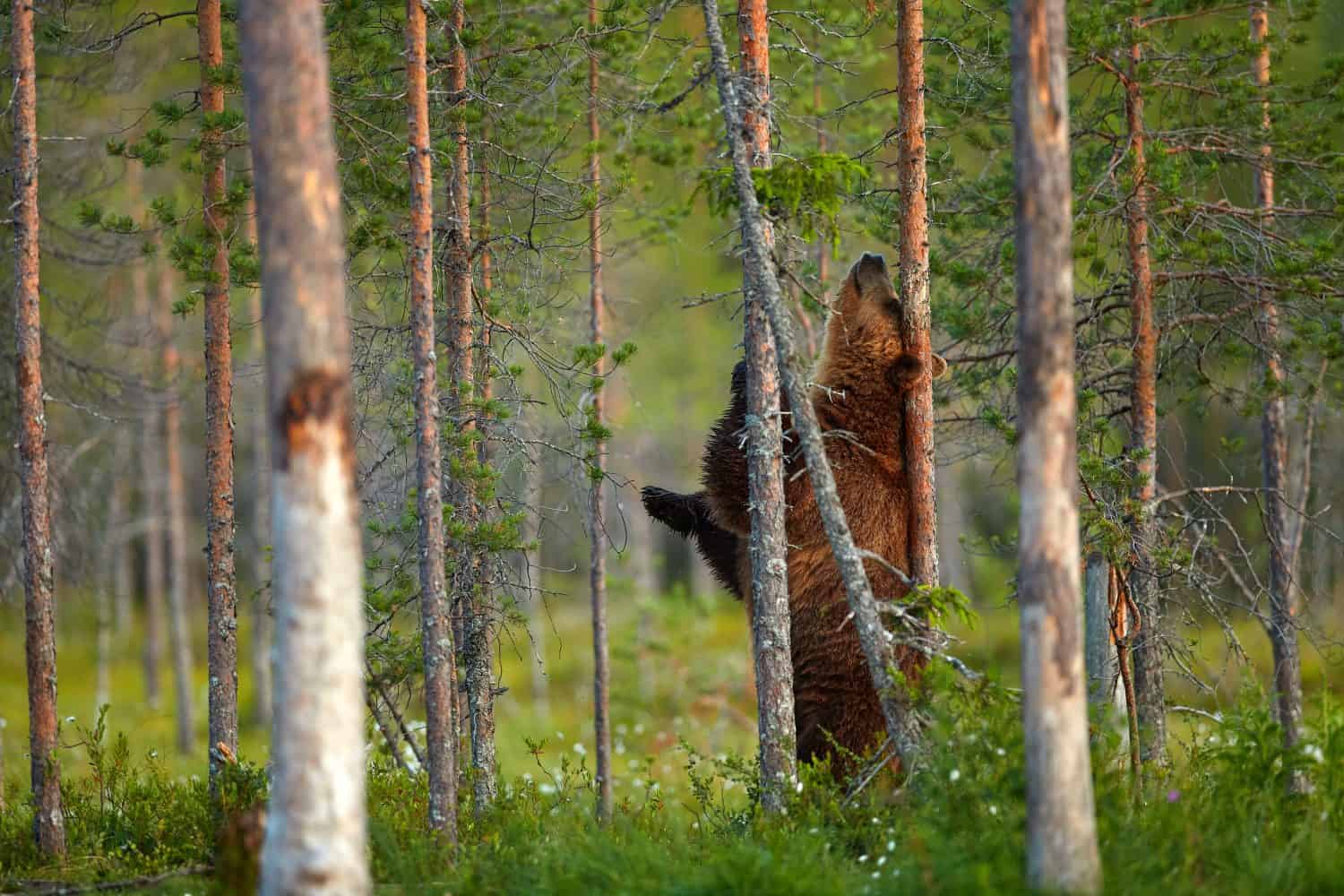
Scratching the rear on a tree can indicate a tapeworm infestation.
©Ondrej Prosicky/Shutterstock.com
Some of the most common signs that a brown bear has indirectly consumed tapeworms include:
- Individual tapeworms observed in bear feces
- Bears rubbing their rears on trees
- Bears consistently shaking their rear ends
- Weight loss
- Lethargy
- Diarrhea
If bears appear to be suffering, such as through massive weight loss or a hugely distended stomach, wildlife officials may step in to help. This process involves administering dewormer by scattering it in the bear’s environment. The goal is to get enough dewormer in the bear to kill the tapeworms. As the tapeworms die, they will be expelled in feces. Brown bears will begin to feel better, gain weight, and have more energy once the energy-zapping tapeworms are removed.
Can Brown Bears Die from Tapeworm Infestations?
Brown bears have developed tolerance for living with tapeworms, as the two have evolved together. Is it a nuisance to be infested with the parasitic worms? Absolutely. Will the worms cause the bear to die? Generally speaking, no.
For a brown bear to be in lethal danger due to these parasites, it would need to be severely infested with tapeworms. This typically does not happen. Instead, the brown bear’s small intestine eventually rids itself of the pests. This phenomenon can be seen in the expulsion of portions of the worm in feces. Though it takes time, with a small infestation, the bear’s body will eliminate the tapeworm.

Brown bears typically will not die after contracting tapeworms.
©Just dance/Shutterstock.com
However, if a brown bear has a large number of tapeworms, there can be health consequences. Tapeworms can cause malnutrition, compromise immune function, and induce lethargy. In some instances, the worms are uncomfortable, making it difficult for brown bears to move through their habitat as they normally would.
In worst-case scenarios, these tapeworms cause internal damage. Tapeworms can cause both blockages in the bear’s body and long-term harm. If this occurs, the chances of the bear dying from an infestation increase.
Though it’s shocking to see such a long parasite dangling from a brown bear’s rear end the condition is usually harmless. It is simply a short-term price brown bears pay for enjoying a salmon-rich diet.