
Quick Take
- Equine medical insurance sounds like a straightforward add-on, yet there's a structural rule that prevents you from buying it the way you'd expect. See the add-on requirement →
- Horse insurance premiums aren't a flat rate, and what your horse does on weekends could dramatically change what you pay. See how use affects premiums →
- Most horse owners plan for medical and mortality coverage, but there's a policy type designed for a loss that has nothing to do with death or injury. Explore breeding capacity coverage →
- The sticker price of horse insurance can be misleading, and the real cost depends on a factor most new owners overlook entirely. See what drives the real cost →
Owning a horse provides physical and mental benefits. Grooming and riding offer an excellent full-body workout, while managing a horse’s daily routine builds valuable life skills, including a sense of responsibility, discipline, and patience. Because equine veterinary care can be incredibly expensive, it is recommended that horse owners have medical and liability insurance policies. Continue reading to learn more about equine insurance and its associated costs.
Types of Horse Insurance Coverage
Horse owners can choose from a wide variety of distinct insurance options and policies to protect their animals as well as their pocketbooks. Like human health and life insurance, horse insurance offers a range of options that can be tailored to a horse owner’s budget and needs. Popular policies include full mortality insurance, major medical and surgical coverage, loss of use policies, and equine liability insurance.
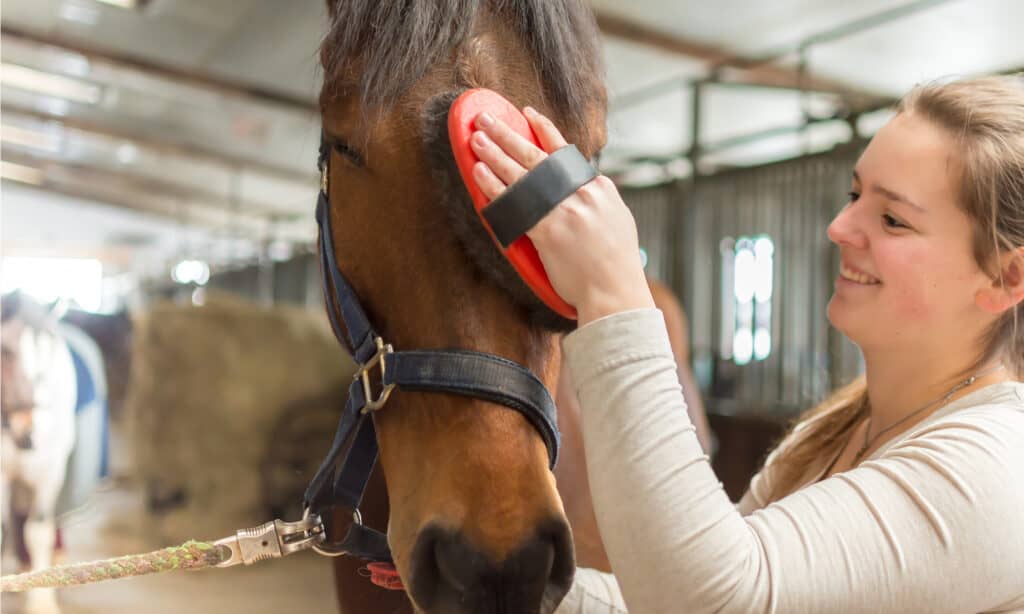
In addition to being beloved pets, horses are a significant financial investment. Equestrian insurance can help defray the cost of their medical care.
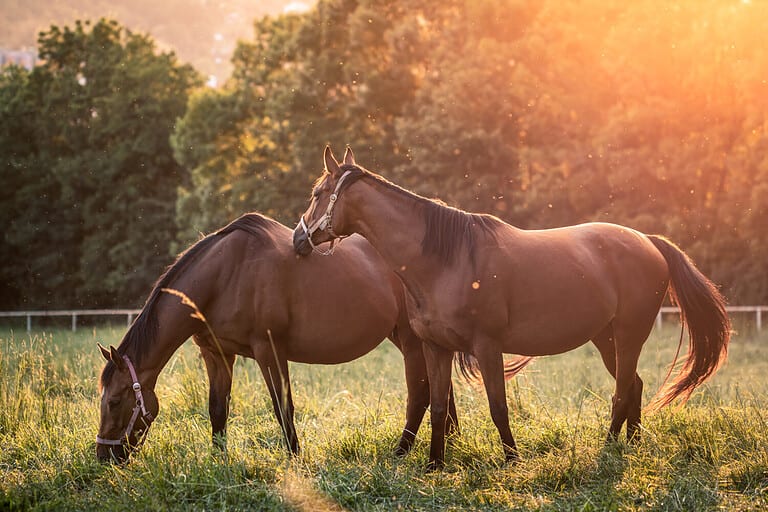
©Tanja Esser/Shutterstock.com
Mortality/Theft
A full mortality and theft policy is life insurance for your horse, covering death from illness, injury, natural disasters, humane euthanasia to end suffering, and theft. Some full mortality policies also cover $2,500 to $5,000 of emergency colic surgery.
The average yearly cost is not a flat fee but rather a percentage of the horse’s value, generally costing between $280 and $450 per year. The exact rate fluctuates based on the horse’s age and use, making policies for lower-risk activities like pleasure riding and dressage less expensive, while policies for higher-risk disciplines such as eventing or barrel racing are more costly.
Major Medical
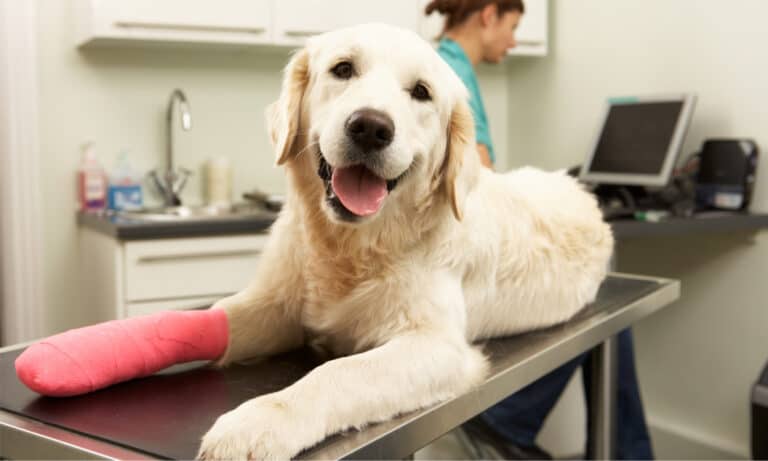
Equine major medical insurance is similar to human health insurance, helping owners afford unexpected medical costs. However, equine major medical operates more like a hybrid between human healthcare and property protection policies. Like human insurance, it covers diagnostic imaging (X-rays and MRIs), hospitalization, surgery, and prescription medications following a sudden illness or injury after a deductible is met. However, equine policies exclude pre-existing conditions, routinely place age limits on coverage (often capping eligibility around 15 to 20 years old), and have an annual maximum payout limit. Some of these policies have co-pays, while others have deductibles averaging $300 to $500 per claim. Equine major medical cannot be purchased as a standalone plan; it must be tacked on as an endorsement to a foundational full mortality policy.
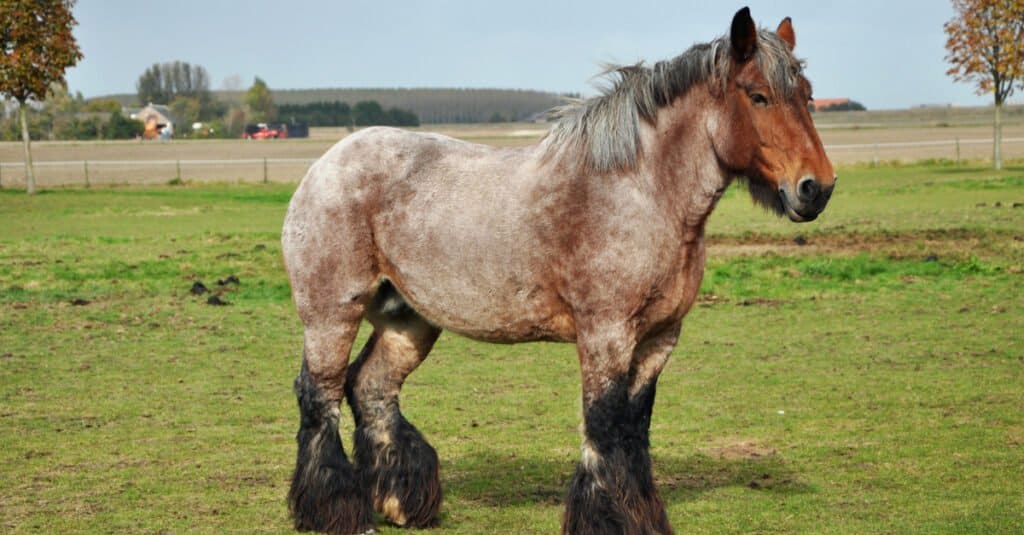
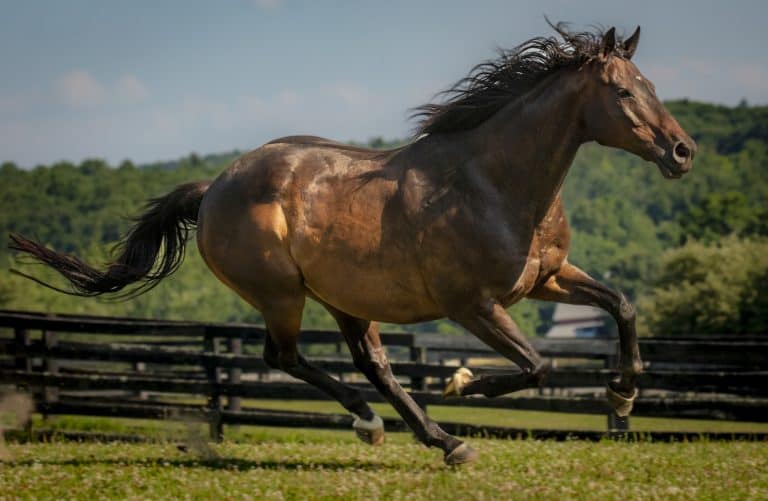
A mortality/theft policy will reimburse you if your horse passes away or is stolen while insured.
©defotoberg/Shutterstock.com
Equine major medical insurance cannot be purchased on its own; it must be added as an endorsement to a full mortality policy.
Equine mortality and major medical insurance are purchased exclusively from private-sector commercial insurance agencies. However, no matter which state you live in, the legal and structural requirement that major medical must be attached to a full mortality policy remains the same. Private equine underwriters across the country use this same framework, meaning you cannot buy standalone medical coverage for a horse from any standard U.S. underwriter.
On average, a major medical endorsement for a horse costs between $200 and $850 per year as an add-on to a full mortality policy.
Accident Sickness Disease (ASD)
Investing in breeding stallions is covered by ASD insurance. If a stallion’s capacity to breed is lost as a result of an accident, illness, or infection, the policy reimburses the owner for the stallion’s insured value. The horse’s potential as a sire must be demonstrated before coverage can be purchased.
For an active breeding stallion, underwriters typically require documented breeding records proving the horse’s viability, including proof that he has mated successfully in at least one prior breeding season.
Colts or horses being transitioned into breeding can still qualify for ASD prospect coverage. However, since they lack a breeding track record, the insurance company will require a complete veterinary evaluation to establish viability before approving the policy.
The premium rate for an ASD endorsement typically starts around 0.4% of the horse’s insured value, though rates may vary by provider and policy details. Like other endorsements, ASD must be bundled with a baseline full mortality policy.
Loss Of Use
Loss of use insurance for horses is coverage designed to protect owners financially if a horse becomes permanently unable to perform its intended function due to injury, illness, or disease. For sporting horses (such as racehorses or eventers) and show horses (like hunters or jumpers), this insurance mitigates the financial risk of career-ending injuries, often reimbursing a fixed percentage, typically 50% to 75%, of the horse’s insured value when it can no longer compete at its designated level.
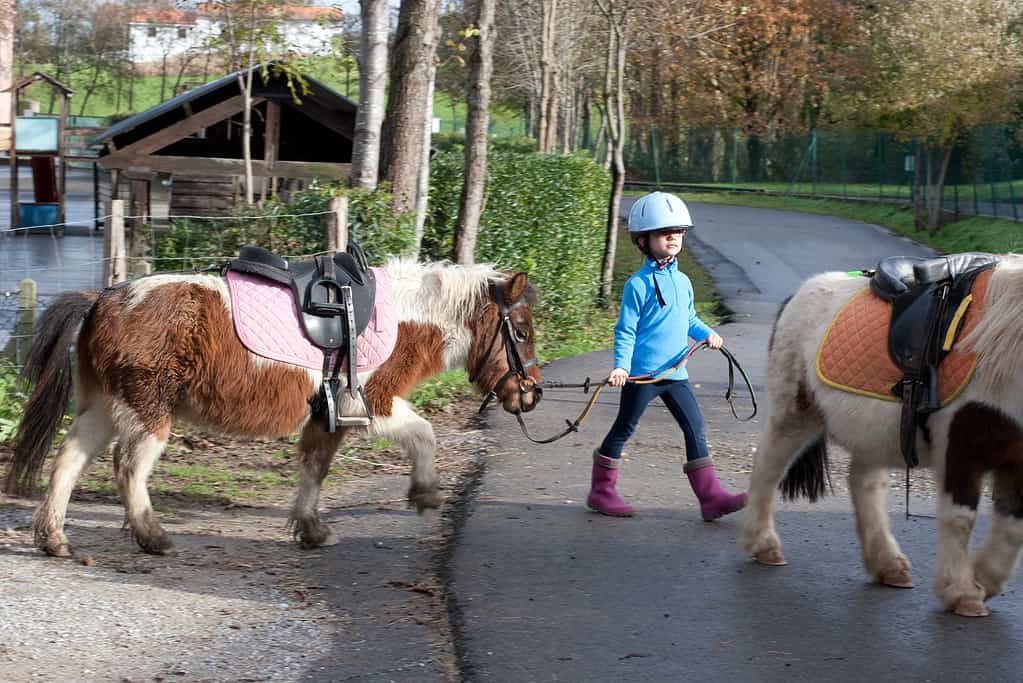
Loss of use policies can apply to many different types of working horses and ponies.
©ASIFE/iStock via Getty Images
For working horses (such as ranch, herding, or police horses), the policy safeguards the owner’s livelihood by covering the loss of an animal essential to daily labor and operational productivity. Even for novelty horses (including rare breeds, trick horses, or specialized exhibition animals), loss of use coverage is vital, as a physical limitation can instantly strip away the traits or training that give the animal its specific commercial or entertainment value.
On average, a loss of use policy costs between 2.5% and 3.5% of the horse’s total insured mortality value, with typical annual premiums ranging from $250 to $1,750.