
Quick Take
- Warning signs ask drivers to stay alert, yet there is a more fundamental reason they can never fully prevent wildlife collisions, no matter how attentive the driver. See why signs fall short →
- No two wildlife crossings are built the same way, and the reason has nothing to do with budget or terrain. Explore species-specific design →
- Getting a crossing built requires one ingredient that strong science alone can't provide, and that ingredient is not money. See what else is needed →
- Wildlife crossings have earned support from lawmakers on both sides of the aisle, though the reason has little to do with conservation. Discover the real appeal →
Every year, roads interrupt the daily and seasonal movements of wildlife, often with deadly consequences. Deer, elk, bears, mountain lions, turtles, and countless other animals are forced to cross highways that cut through habitat and migration corridors. The result is not just a conservation problem. Wildlife-vehicle collisions put people at risk, damage vehicles, raise insurance costs, and strain public infrastructure budgets.
That is why wildlife crossings have gained traction as one of the most practical and effective tools for reducing roadkill and improving driver safety.
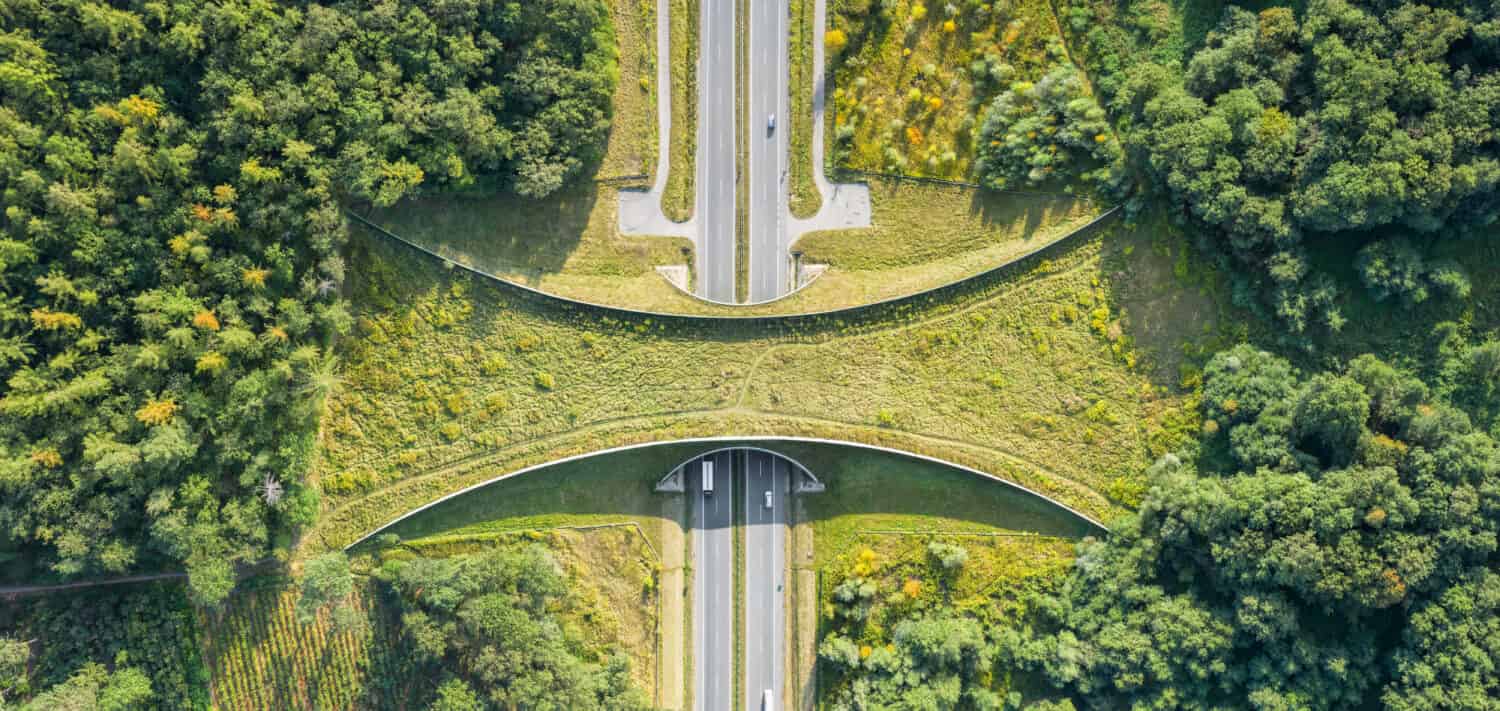
Unlike warning signs that ask drivers to stay alert for sudden animal movements, wildlife crossings are designed to change the landscape itself. Overpasses, underpasses, culverts, and connected fencing create safer routes for animals and allow traffic to flow without interruption.
Continue reading

Carson Barylak, Senior Campaigns Manager (Science policy, communications, and education specialist), IFAW
Why Wildlife Crossings Work Better Than Warning Signs
Carson Barylak, Senior Campaigns Manager at IFAW, says that this difference is exactly what makes crossings so effective.
“Crossings are uniquely successful because they do not rely on completely reshaping the behavior of either animals or people,” Barylak explains. “Well-designed wildlife crossings, in contrast, allow both animals and people to continue their respective ‘commutes’ as planned.”
This principle matters because even attentive drivers cannot predict every wildlife encounter. A flashing sign may help in some situations, but it still depends on human reaction time, visibility, and the unpredictable behaviors of animals near roadways.
“The effectiveness of warning drivers, including with signage, relies on drivers’ ability to see and understand the signs, know what can be done to offset relevant risks, and change their speed and attention in response,” Barylak says. “Even where drivers are aware of collision risks and take precautions, no amount of attentiveness can eliminate the possibility of an animal entering a roadway quickly and unexpectedly.”
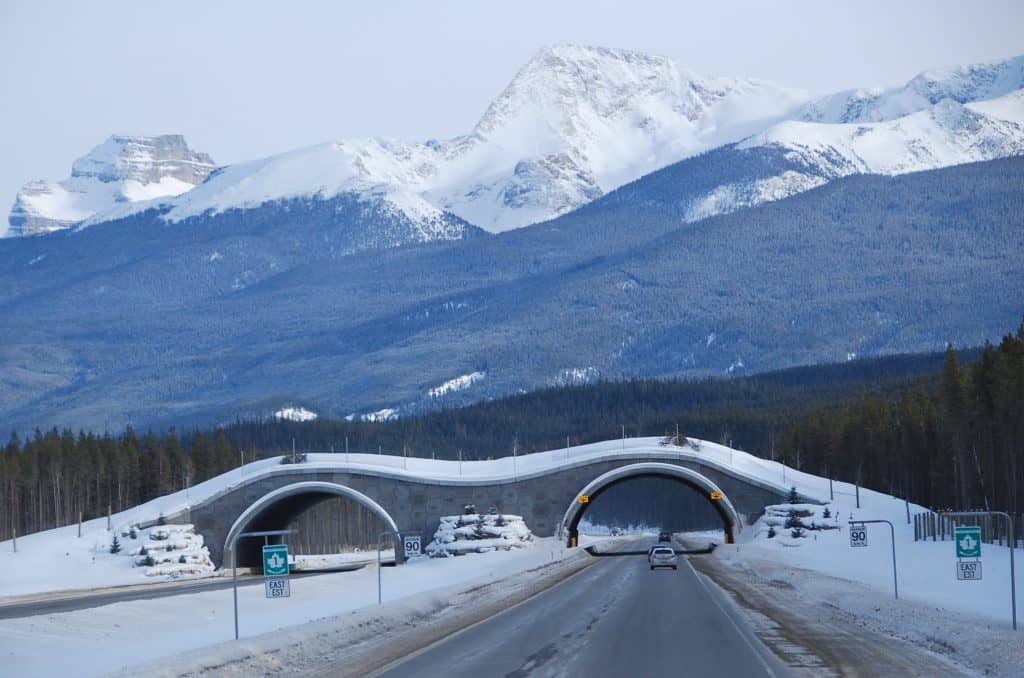
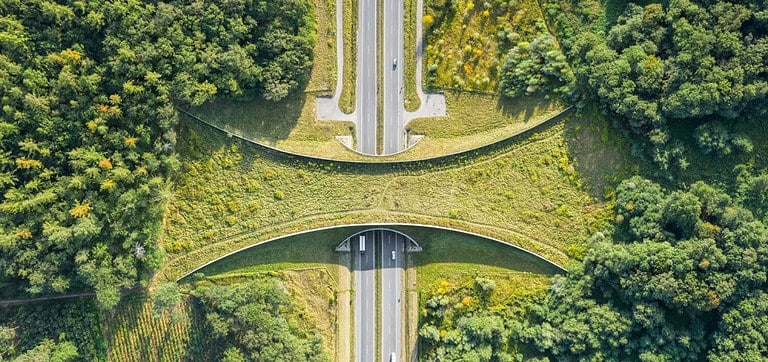
Wildlife crossing along the Trans-Canada Highway from Lake Louise to Banff, Banff National Park, AB, Canada
Data Determines Where Crossings Should Be Built
Wildlife crossings work best when placed where animals already travel. That makes data essential.
Researchers and planners consider wildlife-vehicle collision hotspots, migration routes, animal behavior, landscape features, and local road conditions before deciding where a crossing should be placed. The goal is not just to build a structure but to build the right structure in the right place for the species most at risk.
“Examining data on animals’ movement and migration patterns, as well as the frequency and distribution of wildlife-vehicle collisions, helps ensure that wildlife crossings are constructed to be as effective as possible in safeguarding animals and people,” Barylak says.
Research Shapes the Design for Different Species
This information influences nearly every design decision. Some species prefer overpasses, while others adapt well to underpasses or culverts. Factors such as width, vegetation, fencing, and access points all play a role.
“This data helps planners decide whether to build an overpass or an underpass, determine the structure’s ideal width, adjust exclusionary fencing specifications, and customize many other design details,” Barylak says. “Indeed, this data-driven approach means that every wildlife crossing is one-of-a-kind.”
Fencing is especially important because a crossing alone is not enough if animals can still wander onto the adjacent roadway. Exclusionary fencing helps guide wildlife toward safer passages and away from vehicle lanes, increasing the likelihood that both animals and drivers avoid dangerous encounters.
Building a Crossing Takes More Than Good Science
But even when the science is strong, getting a wildlife-crossing project built can take years of collaboration.
Barylak puts it simply: “The short answer is teamwork.”
Turning a scientific recommendation into a real project requires coordination among transportation departments, wildlife agencies, legislators, researchers, nonprofit organizations, local communities, and, often, private donors. Journalists, photographers, and public advocates can also play an important role by helping communities understand what is at stake.
Major Projects Show What Collaboration Can Achieve
One widely watched example is the Wallis Annenberg Wildlife Crossing in Los Angeles County, a major project intended to reconnect habitat fragmented by one of the busiest freeways in the United States.
“To fund this significant infrastructure project, both Congress and California’s legislature have made substantial appropriations, reinforced by contributions from charitable organizations, corporations, and individual donors,” Barylak says. “The effort also relies on expertise and oversight from state wildlife and transportation agencies, along with research and data collection facilitated by the National Park Service.”
This broad-based support helps explain why wildlife crossings are increasingly seen as smart infrastructure investments rather than niche conservation expenditures. When successful, they protect wildlife, reduce collisions, and create measurable public benefits.
Funding and Logistics Still Slow Projects Down
Still, obstacles remain. Funding is often the biggest challenge, especially in regions where transportation dollars are already stretched. Projects can also face delays due to permitting, planning reviews, material availability, weather, right-of-way concerns, or shifting political priorities.
“As with any significant infrastructure project, securing funding is challenging; accordingly, it is essential that communities engage elected officials, express support for wildlife crossings, and ask that crossings be made a priority,” Barylak says.
Even so, Barylak argues that public support has become a powerful driver in advancing these projects.
“Establishing wildlife corridors can help to restore entire ecosystems and support the very survival of declining species, all while keeping drivers safe on the road,” she says. “Such an ambitious undertaking comes with inevitable obstacles, but the public enthusiasm and advocacy have proven powerful enough to overcome them.”
The Best Policies Share a Few Common Traits
The most successful wildlife-crossing policies tend to share a few key traits. They are rooted in strong science, supported by stable funding, and designed with long-term monitoring in mind. They also account for the needs of local species and often include required structural elements like fencing.
“Successful policies favor scientific rigor, reflect resource needs and limitations, and account for lessons learned from established crossings,” Barylak says.
That practical, evidence-based approach is one reason wildlife crossings are gaining broader support across the political spectrum. Their benefits extend beyond supporting biodiversity. They also appeal to drivers, insurers, transportation agencies, and elected officials looking for proven safety investments.
As with any significant infrastructure project, securing funding is challenging; accordingly, it is essential that communities engage elected officials, express support for wildlife crossings, and ask that crossings be made a priority.
Carson Barylak, Senior Campaigns Manager at IFAW
Why Support for Wildlife Crossings Is Growing
“Federal and state legislators from across the political spectrum are increasingly interested in and enthusiastic about wildlife crossings because, in addition to support from constituents, there is an ever-growing list of success stories as crossings are established across the U.S. and around the world,” Barylak says.
For communities considering their first project, that growing track record matters. It offers proof that wildlife crossings are not merely experimental or feel-good projects, but proven infrastructure tools with real-world benefits.
“Documented, precipitous declines in wildlife-vehicle collisions, coupled with effective use by priority species at existing wildlife crossings, provide reassurance that constructing new ones is a sound investment,” Barylak says. “A safe bet not only for wildlife and drivers but also for advocates and elected officials.”
Wildlife Crossings Offer a Practical Path Forward
As roads continue to fragment habitat, the pressure to find workable solutions will only grow. Wildlife crossings do not solve every problem, but they offer a rare policy solution: one that is practical, evidence-based, and beneficial for both animals and people.