
As a pet parent to three pugs, I am all too familiar with the increasing cost of pet medical treatment. Vet bills have risen significantly, and a recent report revealed that over half of pet owners have chosen to skip necessary vet care or decline treatment. The study, conducted by PetSmart Charities and Gallup, found that, of the 52% of people who declined care, 7 in 10 said it was because they couldn’t afford it or didn’t believe the care was worth the cost.
I have never purchased pet insurance in the past, but recent high vet bills for our elderly pug have had me rethinking that decision. Our pug is 13 years old, has arthritis, severe skin allergies, and was recently diagnosed with a collapsing trachea. He gets monthly shots for arthritis and allergies, and is now on several medications to help with his trachea. He’s had pneumonia twice and multiple X-rays to check on his lungs. Although we know the day may come when we have a tough decision to make, this little guy still enjoys his life. He eats all his meals with enthusiasm, goes for short walks, and enjoys frequent naps on the couch or his cozy dog bed.
Although we have decided not to put him through surgery or other invasive treatments, we want to do everything we can to keep his final time with us as comfortable as possible. The sad reality is, this is expensive. I can’t help but wonder, should we have bought pet insurance for him years ago when he was still young, before he had pre-existing conditions? And should we consider insuring our two younger pugs, who are only two and six years old?

Pugs are lovable clowns, but they can have a variety of health issues.
©Dancestrokes/Shutterstock.com
Should You Buy Insurance For Your Older Pet?
You may have heard that you can’t buy pet insurance for older pets. Although you can find insurance companies that will cover elderly pets, there is no policy out there that covers pre-existing conditions. In our case, most of our pug’s medical treatment would not be covered because he has so many pre-existing conditions. If your older dog doesn’t have pre-existing conditions, it may be worth checking into. But note that most plans will be priced higher based on age.
How Does Pet Insurance Work?
Similar to health insurance for people, pet insurance is meant to cover the costs of vet bills when you pay a monthly premium. Plans differ based on how much they cover. Most work much like human health insurance, with deductibles where you pay out of pocket until reimbursement kicks in. There are also exclusions for what each plan will cover.
Depending on each plan, most will cover accidents and illness. Most also offer optional wellness plans, which increase your monthly premium. Unlike human health insurance, for most plans, you will need to pay the vet yourself, and the company will reimburse you. Vets do not directly bill insurance companies.
Costs For Insurance Plans Vary by Breed, Age, and Location
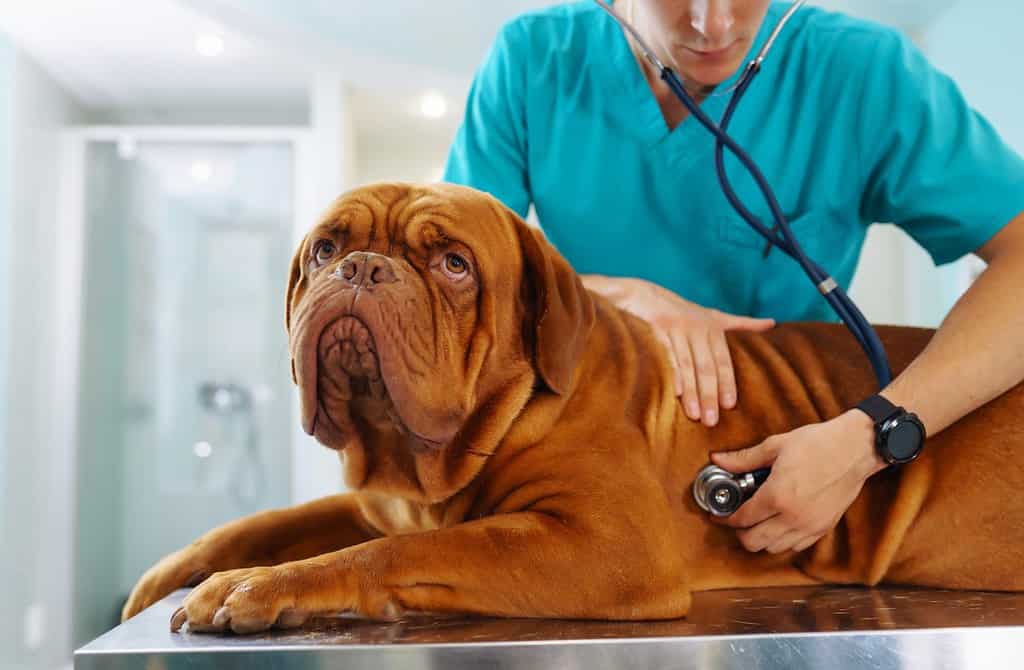
Dogues De Bordeaux are one of the more expensive breeds to insure.
©maxbelchenko/Shutterstock.com
Several factors can affect the price of your plan. Aside from age, plans also vary by breed and location. According to a report from CBS News, English Springer Spaniels, Miniature Yorkshire Terriers, and Goldendoodles are among the cheapest breeds to insure. On the more expensive side are Newfoundlands, Dogues De Bordeaux, and Jack Russell Terriers. As you would expect, breeds that tend to have fewer hereditary issues and longer life spans are cheaper to insure.
Pricing Plans for 5 Popular Pet Insurance Companies for a Two-Year-Old and Six-Year-Old Pug
To give you an idea of general costs, using NerdWallet’s top five-rated pet insurance companies that were available in my local area, I obtained quotes for my two younger dogs. Both are purebred pugs; one is two years old and the other is six years old. Note that the breed of your dog, where you live, and your dog’s age will affect rates. Pugs are known to be prone to health problems and are likely more expensive to insure than many other breeds. As of November 2025, I was quoted the following premiums for my 2-year-old and 6-year-old pug. (Note: you can adjust coverage to lower or raise the monthly premium. For example, increasing the annual deductible will lower monthly premiums.)
Spot Pet Insurance (5-star rating via NerdWallet)
Spot’s Plan:
- Accident plus illness
- $10,000 annual limit for reimbursement
- 90% reimbursement rate
- $500 annual deductible
Premium:
- 2-year-old pug: $64.54 per month
- 6-year-old pug: $103.64 per month
Bonus: 10% off for multiple pets.
Pumpkin Pet Insurance (5-star rating via NerdWallet)
Pumpkin’s Peace of Mind Plan:
- Accident plus illness
- $10,000 annual limit for reimbursement
- 90% reimbursement rate
- $500 annual deductible
Premium:
- 2-year-old pug: $64.40 per month
- 6-year-old pug: $105.11 per month
Bonus: Dental is covered without needing to buy an add-on.
Embrace Pet Insurance (4.6-star rating via NerdWallet)
Embrace’s Plan:
- Accident plus illness
- $10,000 annual limit for reimbursement
- 90% reimbursement rate
- $500 annual deductible
Premium:
- 2-year-old pug: $56.29 per month
- 6-year-old pug: $80.56 per month
Bonus: May cover curable pre-existing conditions.
FIGO Pet Insurance (4.4-star rating via NerdWallet)
FIGO’s Plan:
- Accident plus illness
- No annual limit for reimbursement
- 90% reimbursement rate
- $500 annual deductible
Premium:
- 2-year-old pug: $81.13 per month
- 6-year-old pug: $137.75 per month
Bonus: Unlimited maximum coverage for reimbursement.
Fetch Pet Insurance (4.1-star rating via NerdWallet)
Fetch’s Plan:
- Accident plus illness
- $10,000 annual limit for reimbursement
- 90% reimbursement rate
- $500 annual deductible
Premium:
- 2-year-old pug: $63.39 per month
- 6-year-old pug: $103.92 per month
Bonus: Dental and gum disease treatments are covered without the need to purchase a wellness plan.
Pet Insurance Versus a Pet Savings Account
Another option to cover pet healthcare costs is setting money aside each month in a savings account in lieu of paying premiums to an insurance company
©PRESSLAB/Shutterstock.com
Pet insurance can be pricy. But if you know you want to do all you can to help your furry friend if they get into a catastrophic accident, it may be worth it to be reimbursed for an expensive trip to the emergency vet. However, another option is to consider setting up a savings account and paying yourself the same amount of premium you would pay an insurance company.
The upside is that you aren’t limited to what conditions and treatments a plan may allow. If your pet remains healthy and you never need to use your savings, you haven’t lost anything. However, it takes time to build up a savings account, and if your pet has a serious illness or injury early on, you may not have enough money to cover it. Pet insurance may also cover more expenses than you could save on your own. Vet bills can easily reach thousands of dollars. Finally, it takes discipline to consistently save money and avoid spending it on other expenses. Life can get in the way, and you may find yourself using your pet’s savings account for other necessary expenses.
Final Tips When Shopping for Pet Insurance
In summary, there is much to consider when purchasing pet insurance. The following tips can help you choose the right plan if you decide pet insurance is something you want for your pet.
- Get multiple quotes and be sure to compare plans.
- Find out if your rates will go up as your pet ages. According to Consumer Checkbook, the rising cost of premiums each year can make it a bad deal overall to buy pet insurance.
- Consider taking out a plan early before your dog or cat is diagnosed with pre-existing conditions that insurance won’t cover.
- Check to be sure your vet is in the network.
- Read the fine print to make sure you know what is and isn’t covered. For example, many pets need dental care as they age, but not every plan includes dental coverage.
- If a high-cost vet bill would strain your finances, it could be better to purchase insurance, as long as you thoroughly research and understand what you are getting.