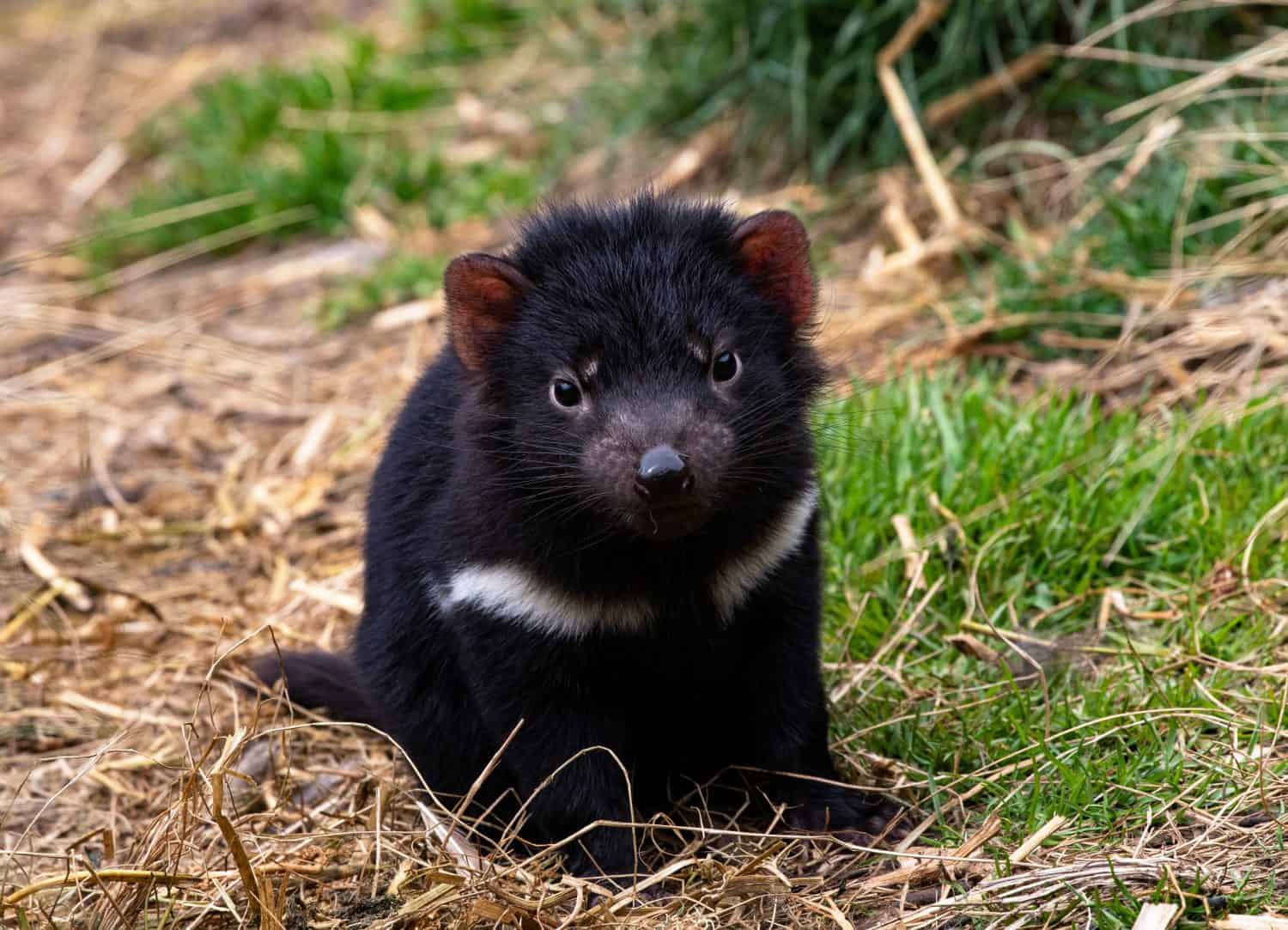

If your first thought when you hear “Tasmanian devil” is a whirlwind cartoon character that spins into chaos, you’re not alone. For decades, Warner Bros.’ Looney Tunes creation defined the global image of this wild little carnivore. And after all, having the word “devil” in your name can’t be easy. The real animal, however, is far more complex … and today, far more celebrated.
Once branded a menace to farmers and a nuisance to settlers, the Tasmanian devil has staged one of the greatest PR comebacks in the animal kingdom. Feared and nearly hunted out of existence, it is now a conservation icon, a tourist draw, and a source of Australian national pride. So how did this marsupial go from villain to VIP?
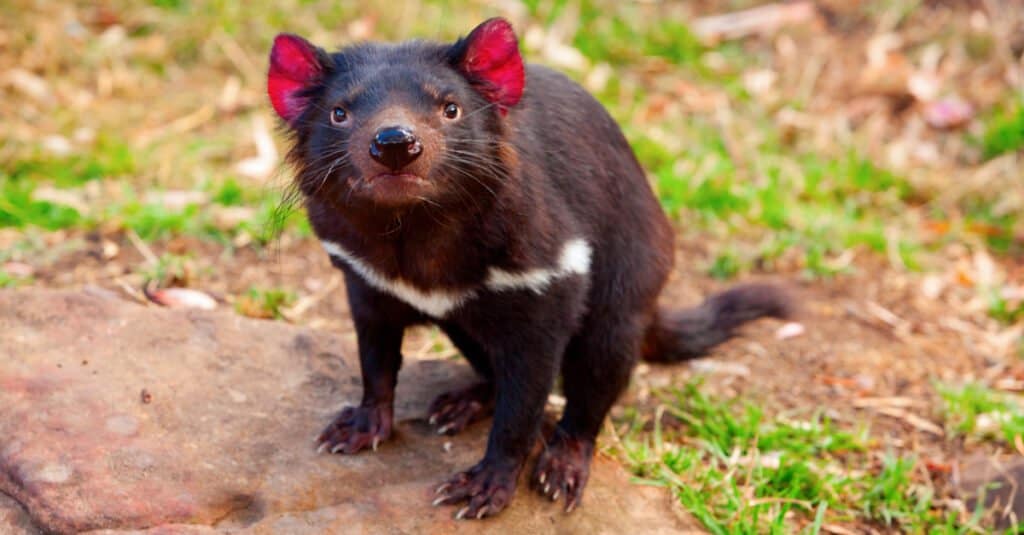
If your only Tasmanian devil reference is a Warner Bros. cartoon, keep reading!
©Oleksii G/Shutterstock.com
The Tasmanian Devil’s Early Reputation
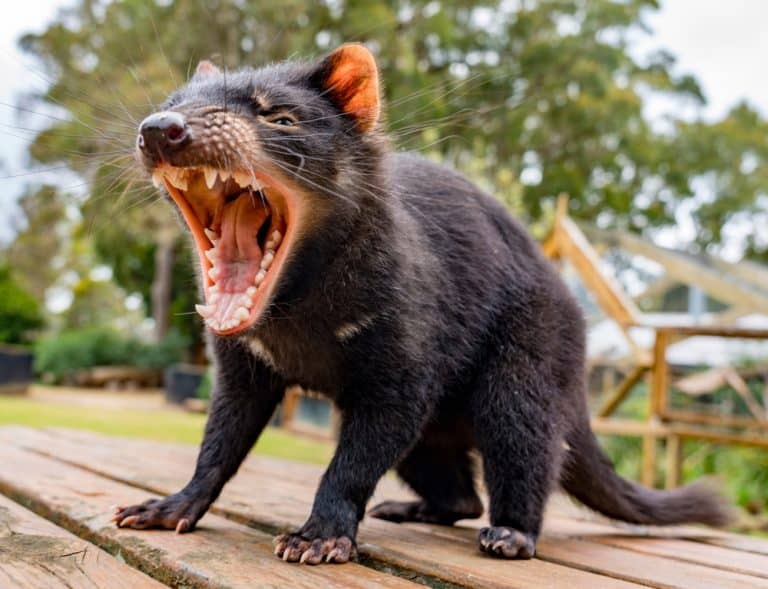
Early European settlers in Tasmania didn’t exactly roll out the welcome mat for devils. With their bone-crunching jaws, blood-curdling screeches, and nocturnal scuffles that sounded like bar fights in the bush, devils terrified newcomers. Farmers accused them of raiding poultry and killing livestock. In reality, devils are mostly scavengers, but perception won out.
By the late 1800s, bounties were placed on devils. They were poisoned, trapped, and shot. Their population plummeted, and by the mid-20th century, they were considered a species that was better off gone.
Fun fact: Early settlers mistook the devils’ screeches for demons in the bush. Turns out, it was just dinner table drama!
Spinning Toward Fame … As a Cartoon
In 1954, Warner Bros. introduced the world to Taz, the Tasmanian Devil. Though short-lived in his earliest appearances (he was briefly banned for being “too violent”), the character endured and became a global pop-culture figure. Taz didn’t exactly do the species any favors in terms of dignity, but he did accomplish something important: he made “Tasmanian devil” a household name.
Suddenly, people outside Australia (people who had no idea Tasmania was an island south of the Australian mainland) had the animal on their radar. While the cartoon version bore little resemblance to the real marsupial, it sparked curiosity. That curiosity would later be critical in mobilizing support for conservation.
Fun fact: Real devils don’t spin like tornadoes (sorry, Taz fans). But the cartoon did make them famous!
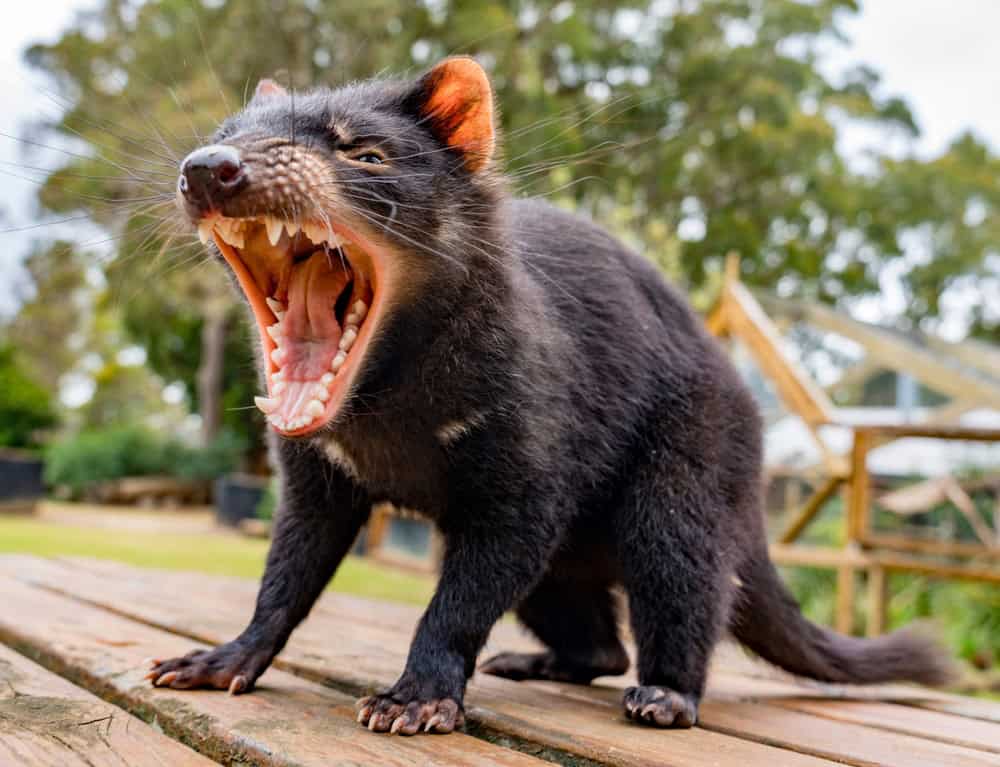
Say hello to Australia’s scrappiest underdog, caught mid-snarl.
©MindStorm/Shutterstock.com
The Turning Point: From Villain to Victim
In the late 20th century, the Tasmanian devil’s story began to shift. Ecologists recognized their role as crucial scavengers, controlling disease spread by cleaning up carcasses. Farmers, once sworn enemies, discovered that devils mostly ate what was already dead rather than attacking sheep or cows.
But the real turning point came in the 1990s with the emergence of Devil Facial Tumour Disease (DFTD), a contagious cancer that swept through populations and wiped out up to 90% of devils in some areas. For the first time, people worried less about devils being a threat and more about them disappearing entirely.
Fun fact: DFTD has decimated wild populations, but research shows some devils may be developing resistance.
The narrative flipped, and the devil was no longer a pest but a victim in need of protection. Conservation programs, captive breeding efforts, and research centers were established, and Australians rallied behind their misunderstood marsupial.
National Pride & Global Attention
Today, Tasmanian devils are firmly entrenched in Australia’s cultural identity. They are featured on logos, school mascots, tourism campaigns, and conservation merchandise. Seeing a devil in the wild is now a brag-worthy bucket-list item for both locals and international visitors.
Tasmanians in particular have embraced the devil as an emblem of resilience. The once-maligned scavenger has become a rallying symbol for conservation, reminding people that even the roughest-looking species deserve a chance.
Fun fact: Pound for pound, a devil’s jaw strength rivals that of a lion. They can crunch through bone like it’s a potato chip.
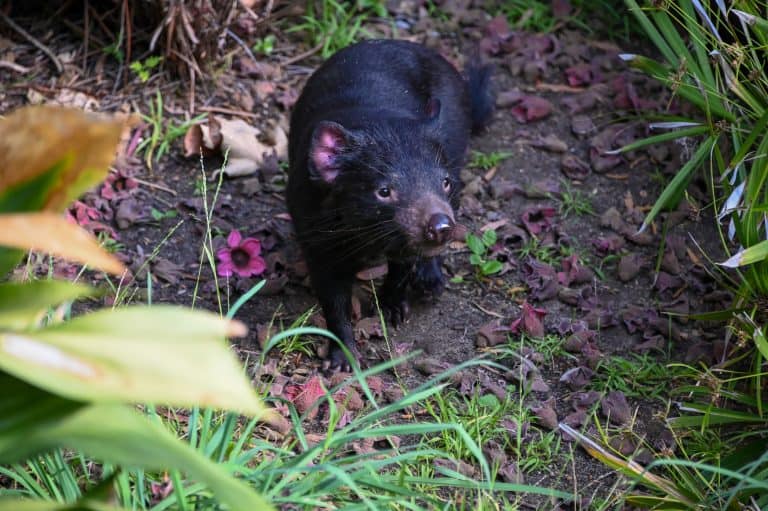
It’s not hard to see why: devils are undeniably charismatic once you get past the growls. With stocky builds, whiskery faces, and a tendency to squabble loudly over dinner like siblings at Thanksgiving, they’re surprisingly relatable.
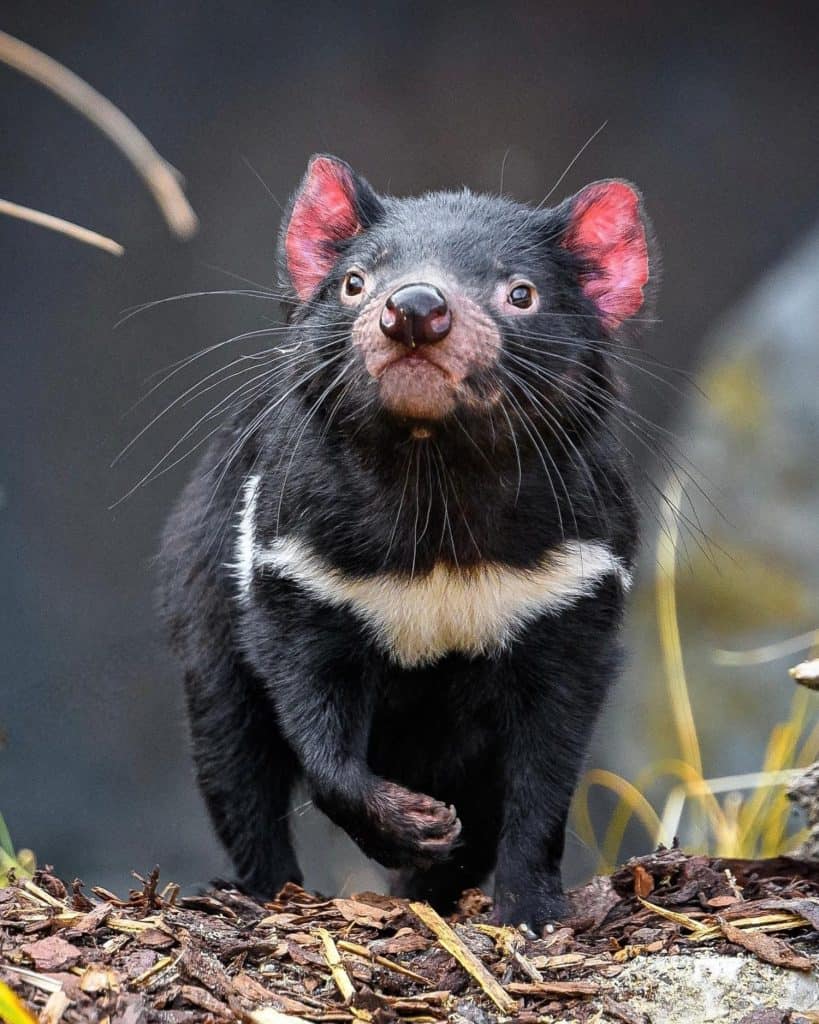
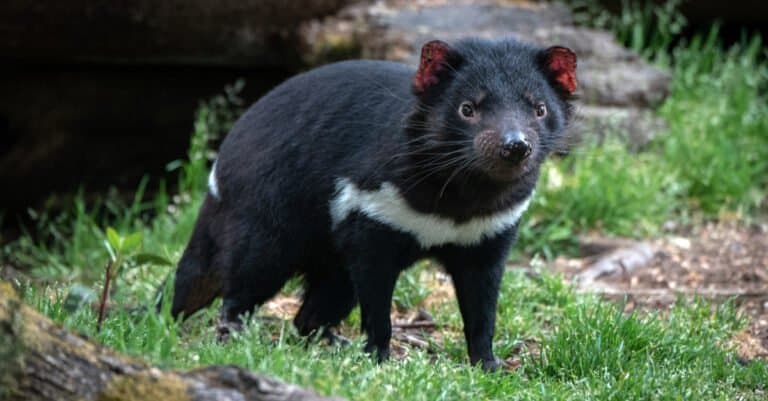
Cute? Yes. Stronger than it looks? Absolutely!
©Mariam Maa/Shutterstock.com
Ecotourism: Devils as Ambassadors
One of the biggest forces behind this reputation glow-up is ecotourism. Sanctuaries such as Devils at Cradle in Tasmania invite visitors to see devils up close, learn about their behavior, and even hear the infamous screeches in person (earplugs optional). These experiences don’t just entertain; they educate.
Visitors leave with a newfound appreciation for the animal’s ecological role. And, in true modern fashion, they post about it online. A selfie with a Tasmanian devil? Instant Instagram gold. That kind of visibility fuels support for conservation and funding for research.
Even mainland Australia has joined the effort. In 2020, Tasmanian devils were reintroduced into a fenced reserve in New South Wales, marking their first presence on the mainland in thousands of years. Media coverage was global, and suddenly the “world’s largest carnivorous marsupial” was back in the spotlight, but this time as a conservation success story.
The Tasmanian Devil’s Media Makeover
The media has played a huge role in transforming the devil’s image. Documentaries have shown their tender side, from mothers caring for joeys in pouches (like kangaroos!) to the social bonds formed at feeding time. News outlets highlight their ecological importance and the race to combat DFTD.
Even children’s books and educational programs now paint Tasmanian devils as important and endearing, rather than as snarling monsters. The shift is subtle but powerful: when kids grow up seeing an animal as a hero, they grow into adults more inclined to protect it.
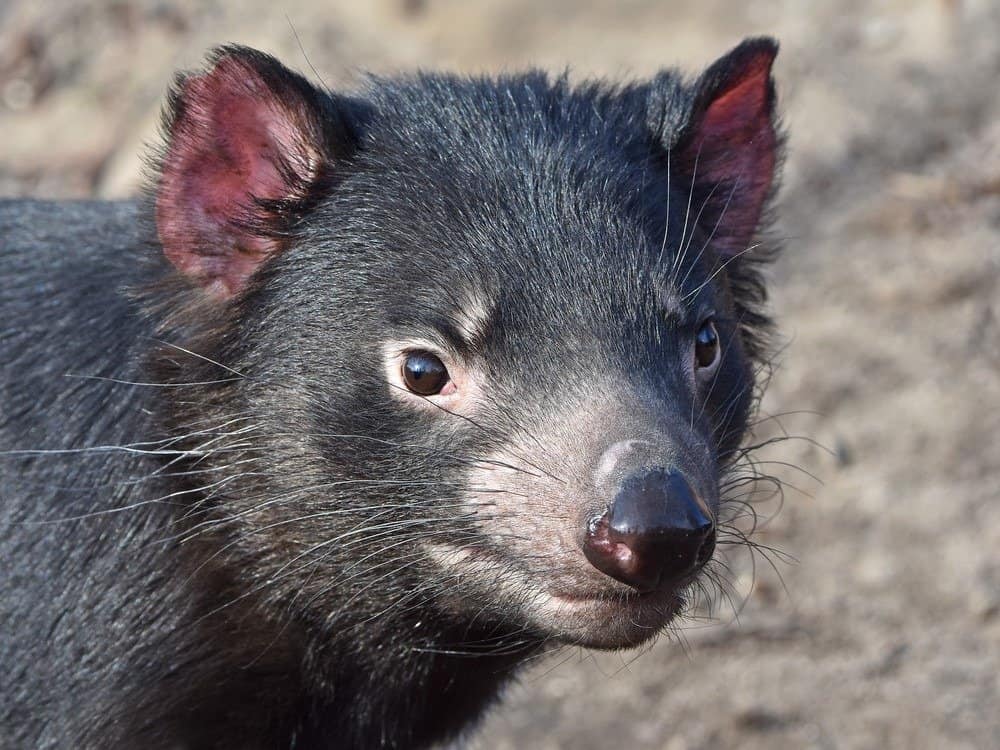
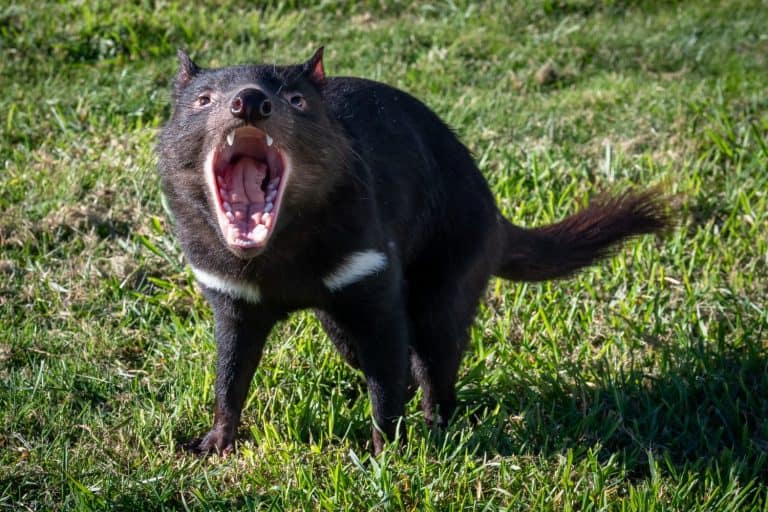
Tasmanian devils are making a comeback thanks to research and ecotourism.
©Dennis Jacobsen/Shutterstock.com
The Devil We Know Today
So where does that leave us? The Tasmanian devil of 2025 is not the demon of folklore or the wild cartoon caricature we’ve come to know. It’s a survivor, a symbol, and a bit of a celebrity.
Conservation challenges remain. Devil Facial Tumour Disease is still present, though research and breeding programs have produced some hope for resistant populations. Habitat protection and roadkill reduction are ongoing battles. But public opinion is firmly in the devil’s corner now, and that support is perhaps the most powerful tool of all.
Moreover, the devils are a living reminder that nature’s “villains” often turn out to be vital players in their ecosystems. Remove scavengers, and disease spreads. Remove predators, and prey populations explode. The devil, once despised for its table manners, is in fact helping keep Tasmania’s natural balance intact.
Fun fact: Only a few years ago, the Toledo Zoo in Ohio discovered that the Tasmanian devil glows under ultraviolet light. They’re biofluorescent, meaning they absorb ultraviolet light and re-emit it as a visible blue glow around their snout, eyes, and inner ears.
On a human level, the devil’s story offers a lesson in humility. We were quick to judge, quick to fear, and slow to understand. It took a crisis to open our eyes to their importance. Now, with the devil as a conservation symbol, Australians (and the world) are showing that it’s never too late to rewrite a reputation.
So the next time you see a Tasmanian devil — whether in the wild, at a sanctuary, or spinning across your TV screen in cartoon form — remember the makeover story behind that snarl. This marsupial has proven that even the devil deserves its due!