
If you want proof that size isn’t everything, look no further than the Tasmanian devil. This scrappy, sharp-toothed marsupial might weigh less than your average house cat, but pound for pound, its bite ranks among the most powerful in the animal kingdom. That’s not an exaggeration. This little creature can crunch through bone, hide, and sinew with a force that could give a lion a run for its money.
So, how does a ten-pound devil pack such a punch? Let’s sink our teeth into the science behind one of nature’s most impressive jaws.
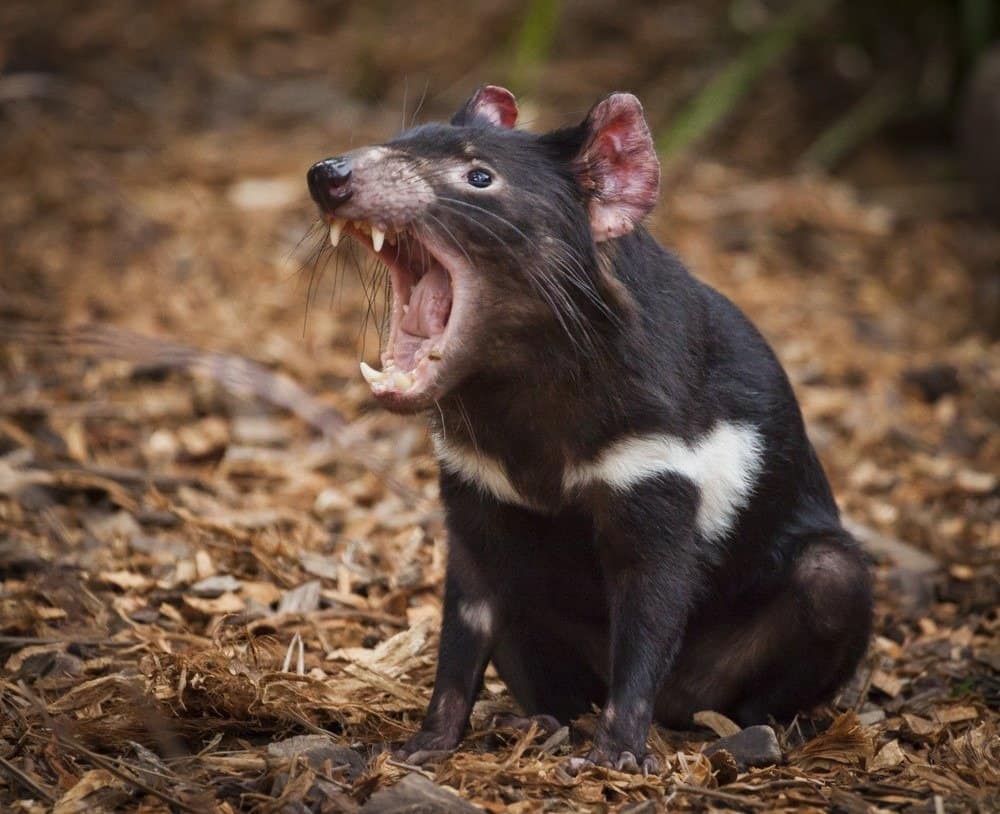
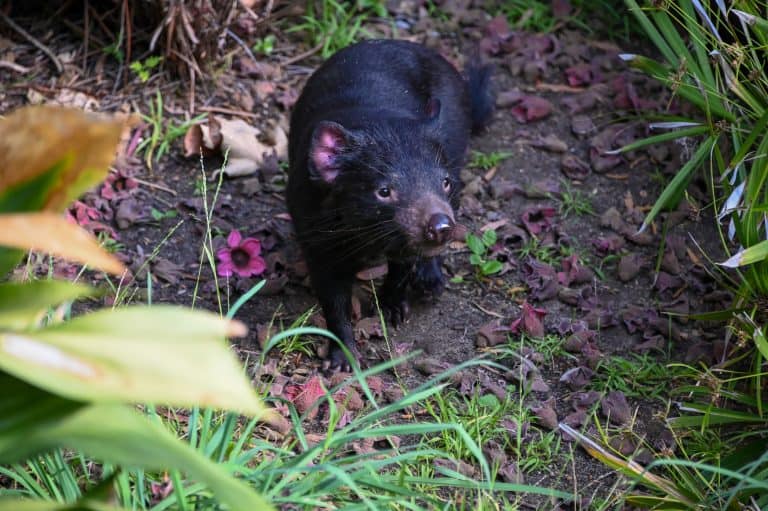
Behind the Tasmanian devil’s cute exterior lies one of nature’s strongest jaws.
©Jason Benz Bennee/Shutterstock.com
Small Package, Big Bite
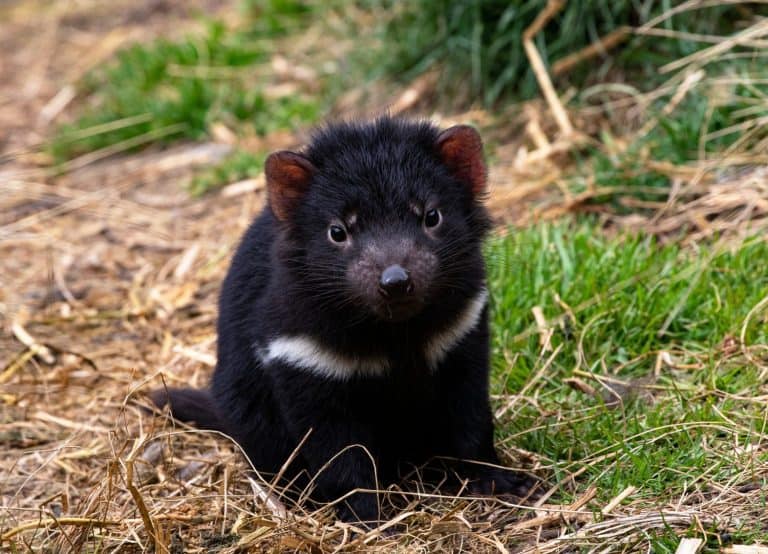
Tasmanian devils (Sarcophilus harrisii) are built low to the ground, muscular and solid, with wide heads and jaws that seem just a bit oversized for their bodies, and that’s no accident. Their entire design screams “chew everything.”
They don’t chase down gazelles or drag wildebeests through grasslands. Instead, they’re opportunists. These scavengers make the most of what they find. In the Tasmanian bush, that often means leftovers: carcasses, bones, and whatever bits larger animals can’t be bothered with. Their bite has evolved not just to tear meat, but to pulverize the toughest parts of their meals, such as bones, tendons, and joints.
When you compare their body weight to the strength of their bite, the numbers are wild. Measured in simple physics, the pressure per square inch that a devil can exert rivals that of big cats several times their size. Translation: this little marsupial could, if it wanted, crush your hiking boot like a stale pretzel.
A Skull Built for Power
If you were to hold a Tasmanian devil skull in your hands (though please don’t unless you’re a licensed biologist), the first thing you’d notice is how compact and stocky it is. Unlike the long, slender skulls of many carnivores, the devil’s cranium is short and deep, allowing its jaw muscles to attach at the perfect angle for maximum leverage.
It’s an engineer’s dream in miniature. The devil has short levers for power, wide muscle anchors for strength, and reinforced ridges to handle serious pressure.
When a devil bites, there’s almost no energy wasted. Every muscle fiber is efficiently aligned for crushing.
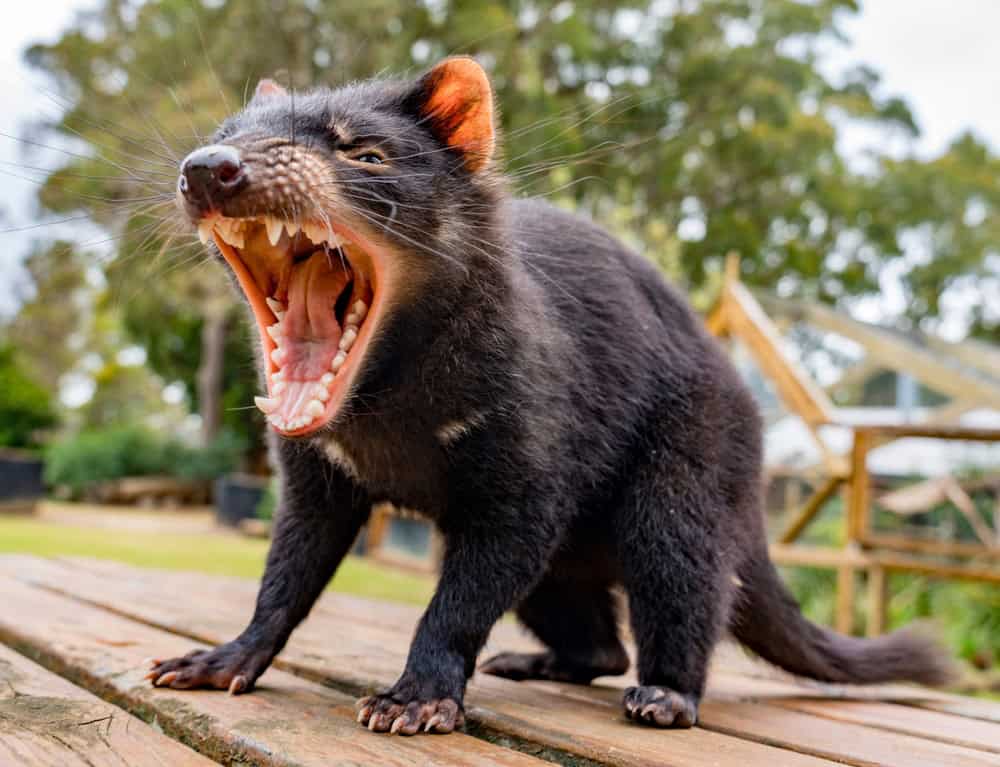
And then there are the teeth. The front incisors grip and slice, while the molars and premolars in back flatten and crack bone like natural nutcrackers. The devils even have a bit of overbite action that lets them shear tendons with scissor-like precision.
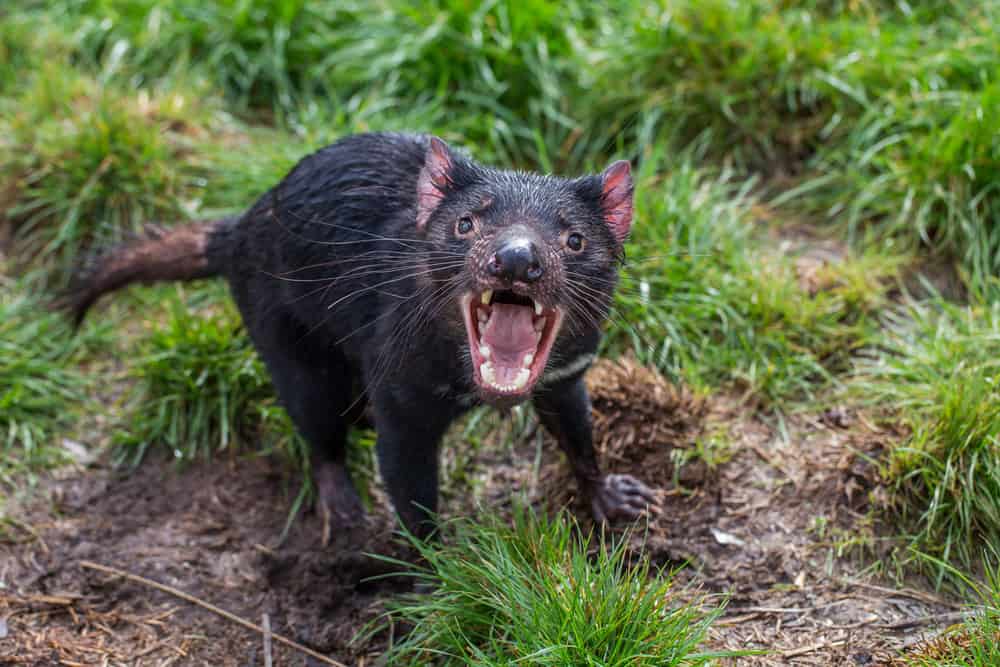
The Tasmanian devil’s bite means business!
©Sander Groffen/Shutterstock.com
Why Those Little Devils Need a Bite Like That
Here’s the thing about living at the bottom of the food chain in Tasmania — the menu isn’t exactly plentiful. Devils can’t afford to be picky eaters.
Their powerful bite allows them to consume almost every part of their meal. Bones provide calcium and fat-rich marrow, cartilage offers protein, and even the hide can be chewed and swallowed. Very little goes to waste, which is key for survival in an environment where food can be scarce.
But their bite isn’t just about eating; it’s about social survival, too. Tasmanian devils are famously noisy diners. When a group gathers around a carcass, the soundtrack is a chorus of growls and screams that could rival scenes from a horror film. They use their jaws as both tools and weapons. The devil with the strongest bite is often the one who gets first dibs, and that’s motivation enough to keep those jaw muscles in top form.
And here’s the kicker: Tasmanian devils reach that strength early. By the time they’re about one year old, their jaw muscles are already capable of handling adult-level strain. Impressive!
The Evolutionary Payoff
So why invest so much evolutionary energy into bite strength? Simple … it pays off. Tasmanian devils aren’t particularly fast or stealthy. They don’t rely on agility or endurance to find food. Instead, their niche depends on endurance of a different kind: being able to eat what others can’t. Essentially, they are the kings and queens of leftovers!
That kind of adaptability means they can thrive even when competition is tough. While other scavengers might pick off the soft tissue and move on, devils stay to gnaw through the parts no one else is capable of consuming. It’s a strategy that ensures they can get nutrients from nearly any food they find.
It also explains their survival story. When other carnivorous marsupials disappeared from Australia’s mainland, devils endured in Tasmania. Their ability to exploit hard-to-use resources gave them an edge. Strong jaws equal steady meals.
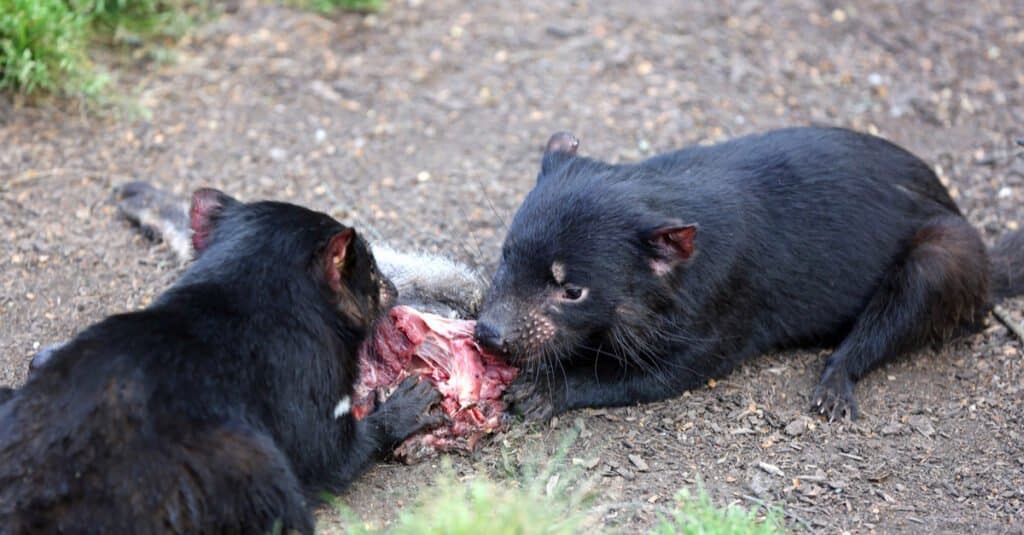
When everyone else leaves the table, the Tasmanian devil digs in. Strong jaws mean no scrap goes to waste.
©Bernhard Richter/Shutterstock.com
Bite First, Ask Questions Later (But Usually Just Yawn)
Interestingly, their impressive bite isn’t just practical; it’s also part of how they communicate. During confrontations, devils often yawn wide to flash their teeth. This exaggerated “threat yawn” isn’t a sign of fatigue; it’s more like, “See these? You sure you want to test me?”
In many cases, the display alone is enough to settle disputes without actual biting. It’s an efficient way to avoid injury. After all, even the most powerful jaws are no good if they’re broken!
Built for Toughness
Their lifestyle also demands durability. Devils spend much of their time outdoors in rough terrain, dragging carcasses, digging, and occasionally wrestling over food. A weaker jaw or fragile bone structure wouldn’t allow them to survive for long. Their skulls are slightly flexible in just the right ways, helping to absorb shock when biting through something unyielding.
That resilience extends to their teeth. While many carnivores’ teeth are dull or break with age, devils’ teeth continue to wear evenly, staying sharp enough to slice through skin and sinew well into adulthood.
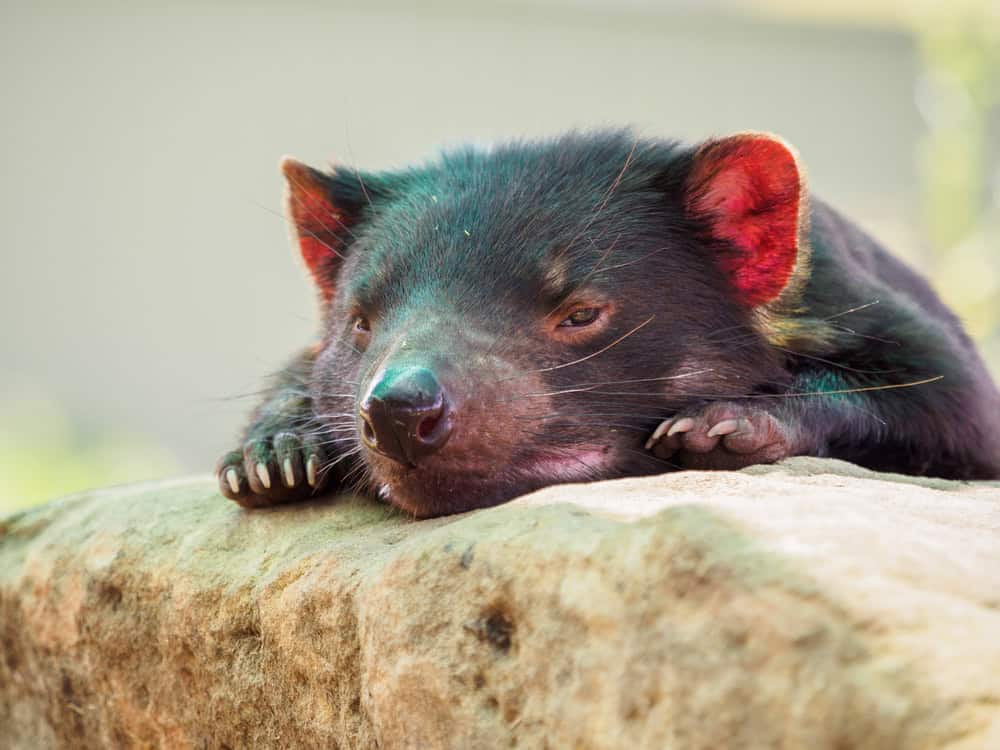
Built for survival, the Tasmanian devil reminds us that even the smallest creatures can leave the biggest mark.
©Gapvoy/Shutterstock.com
The Bite That Tells a Bigger Story
All of this jaw strength paints a bigger picture about nature’s ingenuity. The Tasmanian devil isn’t just a feisty scavenger. Every inch of its anatomy, from the width of its skull to the curve of its molars, serves a purpose in keeping it alive in a challenging environment.
It’s also a reminder that power doesn’t always come in massive packages. The devil’s design shows how evolution prizes efficiency: a smaller animal that can generate extraordinary force without burning unnecessary energy.
Tasmanian devils might look like scruffy little gremlins, but their biology tells a different story. It’s one of precision, strength, and survival. And in their case, the bite isn’t just worse than the bark … it’s the reason they’re still here.