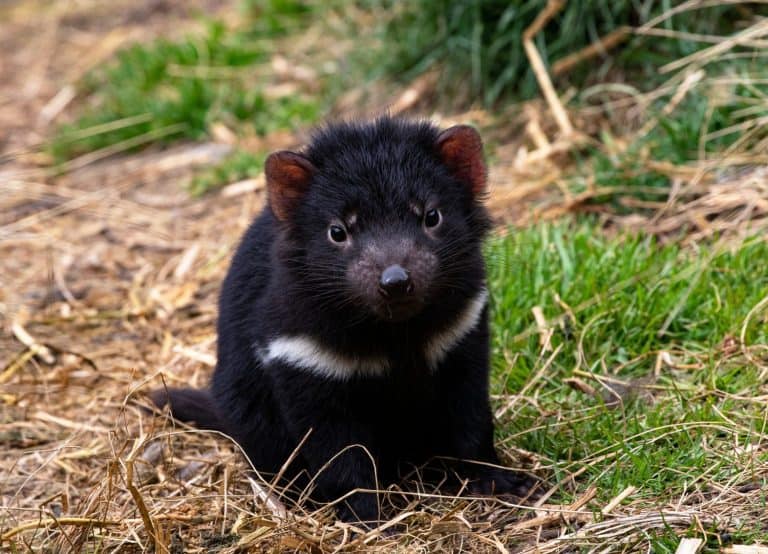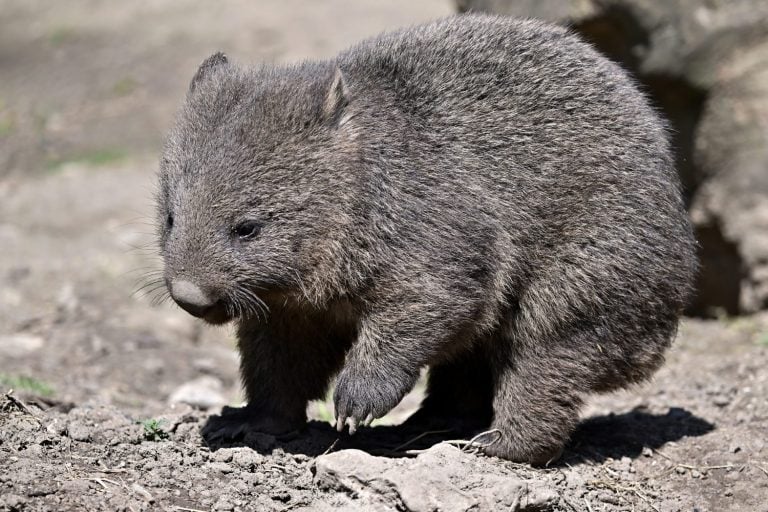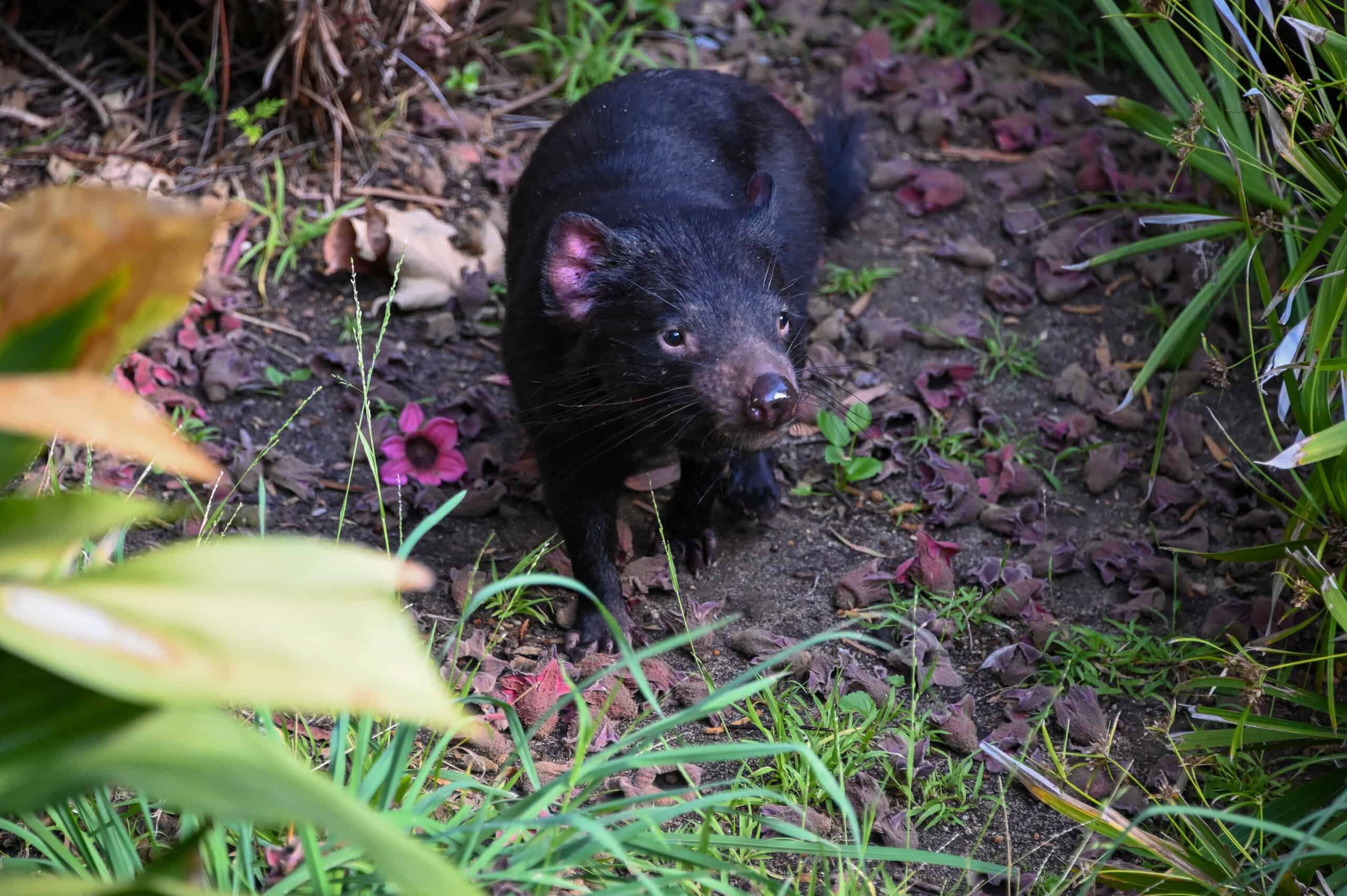

The Los Angeles Zoo recently welcomed two new Tasmanian devils to its collection, Danny Zuko and Crush. Both males were bred by Aussie Ark, a New South Wales conservation organization on a mission to preserve Australia’s threatened species. The duo’s arrival was a collaboration between the zoo and the Australian government, and it marks the first time in five years that the zoo has housed these popular marsupials.
According to Candace Sclimenti, Curator of Mammals at the Zoo, “Australia is home to so many unique species, and wildlife plays a pivotal role in Australian culture. We are honored to provide an experience that will help people better understand these wonderful animals and the challenges they face in the wild. It will be exciting to see our guests connect with this endangered species.”
Many zoo visitors may only know Tasmanian devils from Looney Tunes cartoons of decades ago. Taz the Tasmanian Devil was a popular character, whirling about like a tornado in search of his next meal. While his grouchy presence didn’t do much to boost the real devil’s reputation, Taz did accomplish one important thing besides entertaining a generation of children. He introduced one of nature’s most interesting animals to audiences around the world.
The Tasmanian Devil: From Annoyance to Icon
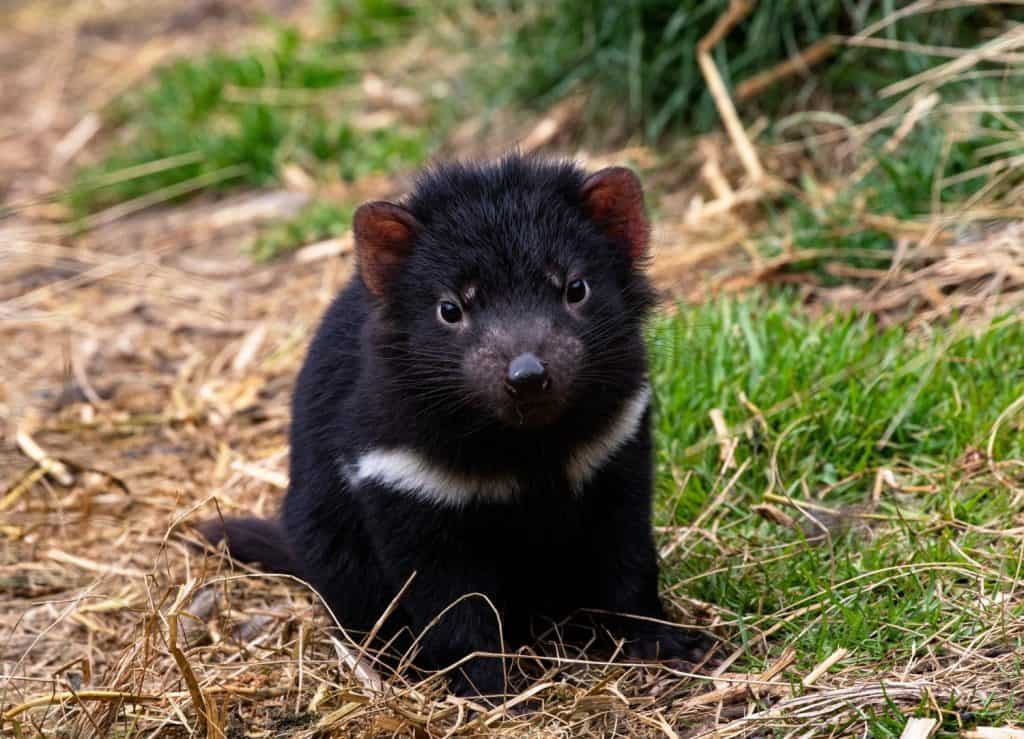
Tasmanian devils were once considered pests by European settlers on the island of Tasmania.
©Florence-Joseph McGinn/Shutterstock.com
If your only knowledge of Tasmanian devils comes from cartoons you watched as a kid, you’re not alone. For decades, most awareness of these carnivorous marsupials came from a tornado-like dervish named Taz that whirled across our TV screens on Saturday mornings. For better or worse, the cranky and perpetually hungry Looney Tunes version of the Tasmanian devil shaped our collective understanding.
But there’s more to these little devils than what cartoon Taz portrayed. Native to the island of Tasmania, located off the coast of Australia, Tasmanian devils have a complicated history. Early settlers to the region claimed devils raided poultry flocks, and bounties were implemented in the 1830s to remove the threat. Devil populations dwindled until 1941, when laws were enacted to protect them and prevent extinction.
Those early concerns about poultry devastation turned out to be mostly unfounded. Devils, while carnivorous, are scavengers and prefer to feed on carcasses rather than pursue live prey. In fact, today’s devils are viewed as environmentally helpful to farms and the bush, since they clean up the carcasses that would otherwise be a source of disease. Another benefit is that devils help keep blowfly populations down by removing food sources for maggots.
We are honored to provide an experience that will help people better understand these wonderful animals and the challenges they face in the wild.
Candace Sclimenti, Curator of Mammals at the Los Angeles Zoo
DFTD: A New Threat
Efforts are being made to control the deadly Devil Facial Tumor Disease impacting devil populations in the wild.
©Gapvoy/Shutterstock.com
Despite laws protecting them, devils soon faced a new threat. Devil Facial Tumor Disease (DFTD) is a fatal condition that first appeared in Tasmania’s devil population in 1996. The disease causes tumors to form on the devil’s face and body. It is transmitted between devils through bites during mating and socializing.
The disease is found throughout Tasmania and has had a devastating effect on wild populations. Thanks to prevention, control, and management efforts by the Tasmanian Department of Natural Resources and Environment, healthy populations are slowly being reintroduced into the wild.
Fun Facts About Tasmanian Devils
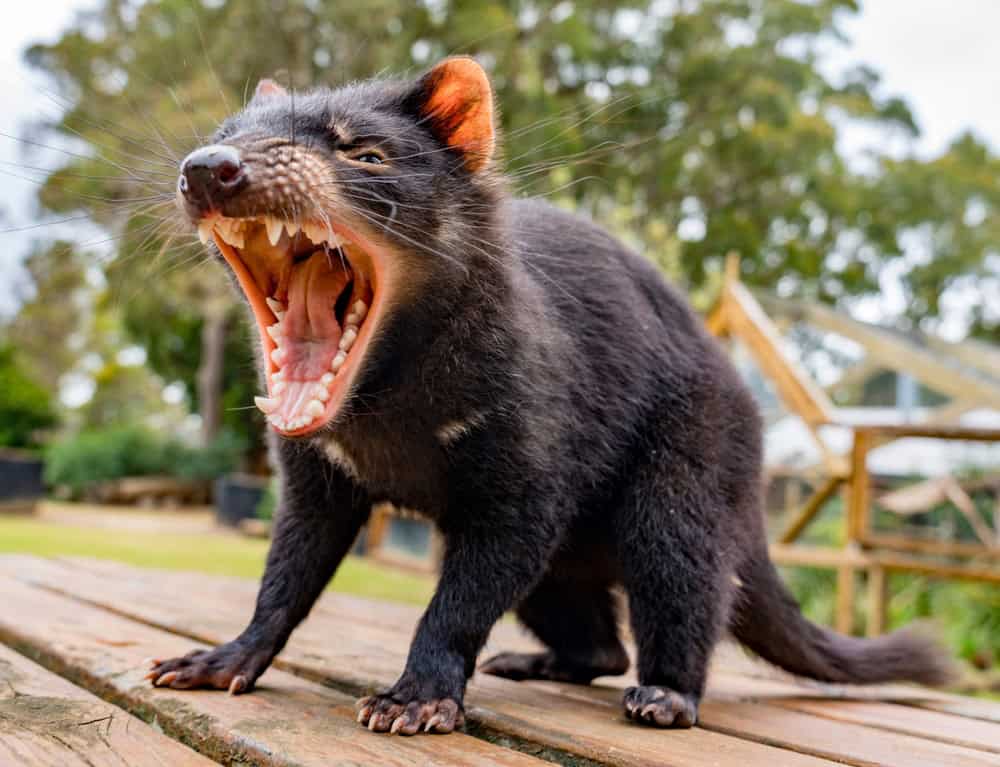
Devils “yawn” to appear more ferocious to predators.
©MindStorm/Shutterstock.com
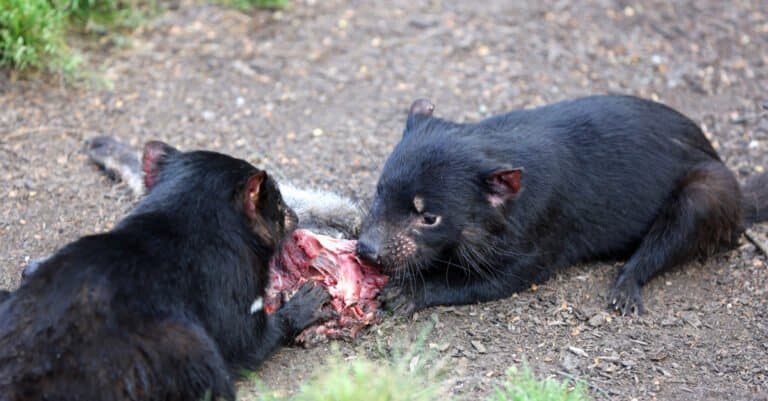
Devils make quick work of their meals. They can open their jaws up to 80 degrees and deliver a bite with enough force to crush bones. Devils have one of the strongest bite forces relative to the size of any mammal worldwide. They have also been known to put that power to use in other ways, including biting through metal cages.
Devils also leave nothing to waste, consuming every part of their prey. If they don’t finish the meal in one sitting, they are often found napping inside the rotting carcass. This gives them a head start on finishing the meal once they wake up. They can eat up to 40 percent of their body weight each day.
Devils make intimidating sounds. These include goosebump-inducing shrieks, screeches, and growls that earned them their “devil” nickname. Since they’re nocturnal, they often make these noises in the dead of night, adding an extra element of terror to their noisy repertoire. But there’s a serious purpose behind their screams. Solitary by nature, they use their intimidating vocalizations to communicate and scare off predators.
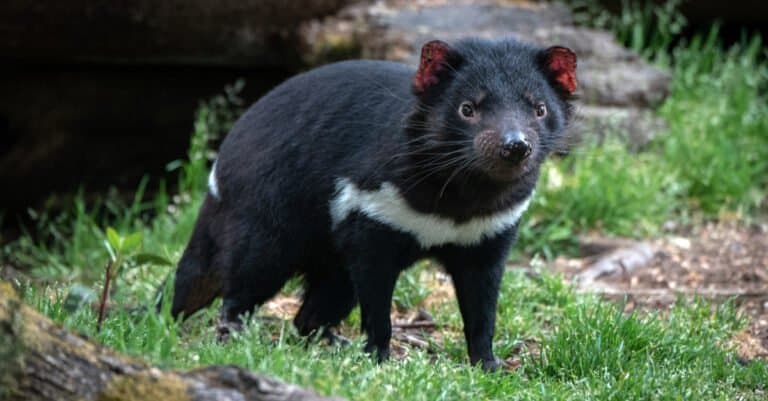
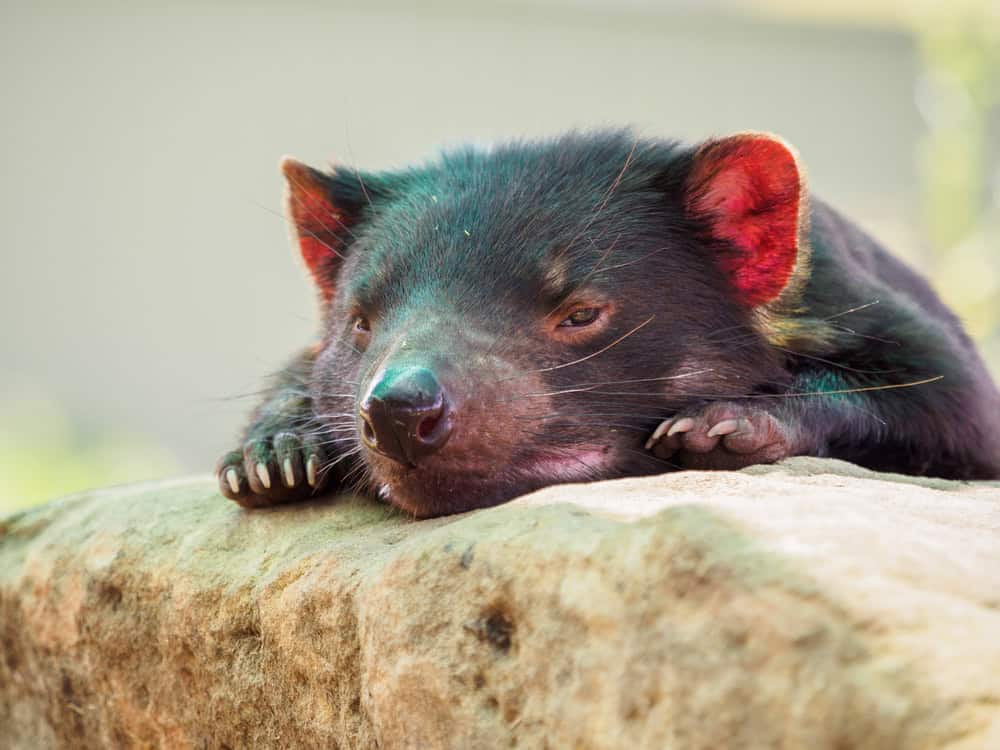
Devils are shy and rarely pose a threat to people unless threatened. When they are, they yawn to display their razor-sharp teeth, which makes them look fierce. In reality, this behavior is a sign of fear and anxiety, not aggression. Besides their intimidating tooth display, the devil’s ears will also turn a brighter red thanks to a vast network of blood vessels they flood as a reflex.
Where to Find Devils
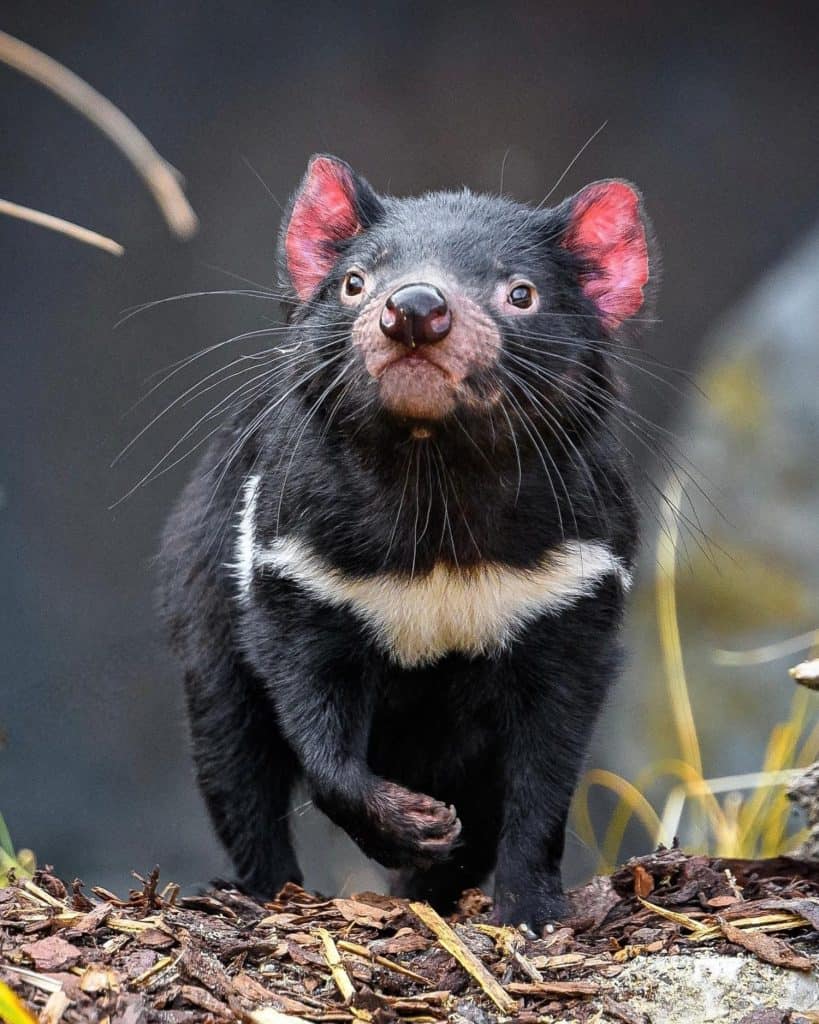
Devils are the largest remaining carnivorous marsupials in the world.
©Mariam Maa/Shutterstock.com
In the wild, devils are only found on the island of Tasmania. Thousands of years ago, they were also present on mainland Australia, but for unknown reasons, that population went extinct. In Tasmania, devils are found from coastal areas to the mountains. While they prefer dry forests, woodlands, and coastal scrubland, they are also occasionally spotted in the island’s urban areas.
If you want to see devils in real life, the good news is that you don’t have to trek across the globe or hike through the wilderness to find them. The Tasmanian devils at the LA Zoo are permanent residents and can be seen daily, weather permitting, in the Animals of Australia exhibit. Since their zoo debut in late July, Danny Zuko and Crush have quickly become fan favorites.