
Quick Take
- The Arabian death stalker's weakest feature is actually the clearest signal that you're in serious danger, and most people would read it completely backwards. Weak pincers, deadly signal →
- When the film crew closed in, the scorpion didn't run. That tells you everything about what it's packing. See what the venom packs →
- Scientists know surprisingly little about this scorpion's venom, yet local knowledge paints a chilling picture of what it does to the human body. Venom effects on the body →
- There's a physical trait on this scorpion's tail that earns it a second, equally ominous nickname. It's even visible from a distance. Spot the telltale tail trait →
In this Brave Wilderness YouTube clip, you are transported to a desert in Dubai – otherwise known as scorpion country. Under the cover of darkness, the intrepid team goes in search of the giant Arabian death stalker. This is not a creature you should venture too close to unless you know what you are doing. Even so, it’s exciting to get such an up-close view of its ferocity!
What Do We Know About the Arabian Death Stalker Scorpion?
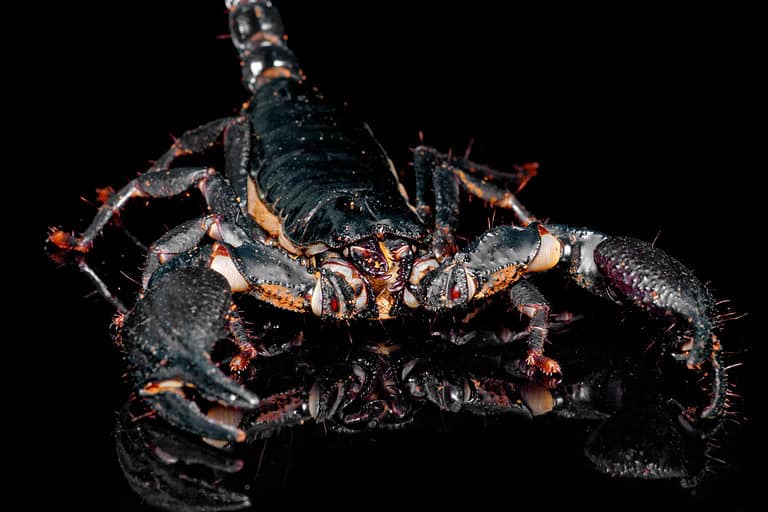
These creatures have not been widely studied and are still quite mysterious. We know that they are one of the Old World scorpions, and they are found on the Arabian Peninsula. The species was first described in 1932, and there have been sightings of these scorpions in several parts of the United Arab Emirates, Oman, Iran, and Saudi Arabia. These are nocturnal animals that fluoresce under UV light. Their exoskeleton envelops their segmented bodies, providing both protection and structural support. It also stops them from dehydrating in their arid habitat.
They are a member of the Buthidae family, which is the largest family of scorpions, of which around 20 are medically important. This means that they are potentially lethal to humans. The sting of the Arabian death stalker (Apistobuthus pterygocercus) can be deadly.
Telltale Signs of Toxicity
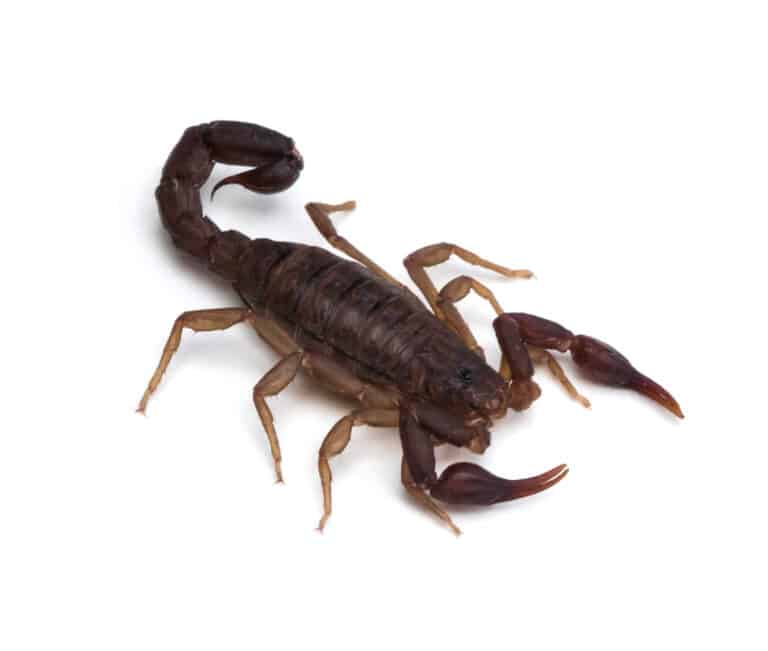
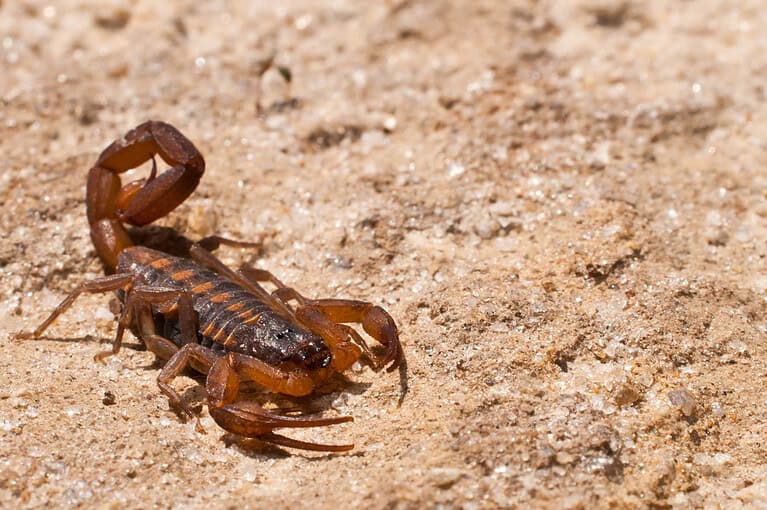
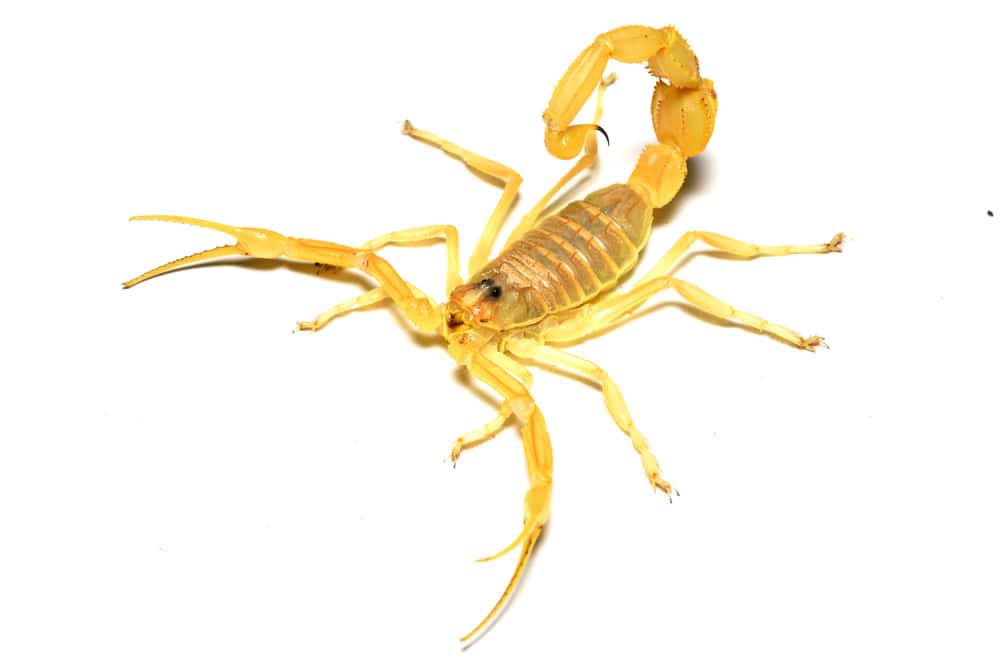
The deadly scorpion in this clip had some ‘red flags’ when it comes to toxicity. Firstly, it has weak pincers, which indicates that it does not need powerful front limbs – it has a much more effective weapon at the rear of its body. Also, when the filmmakers came across it, the scorpion did not attempt to scuttle away. It was confident that it could cope with whatever threat was approaching!
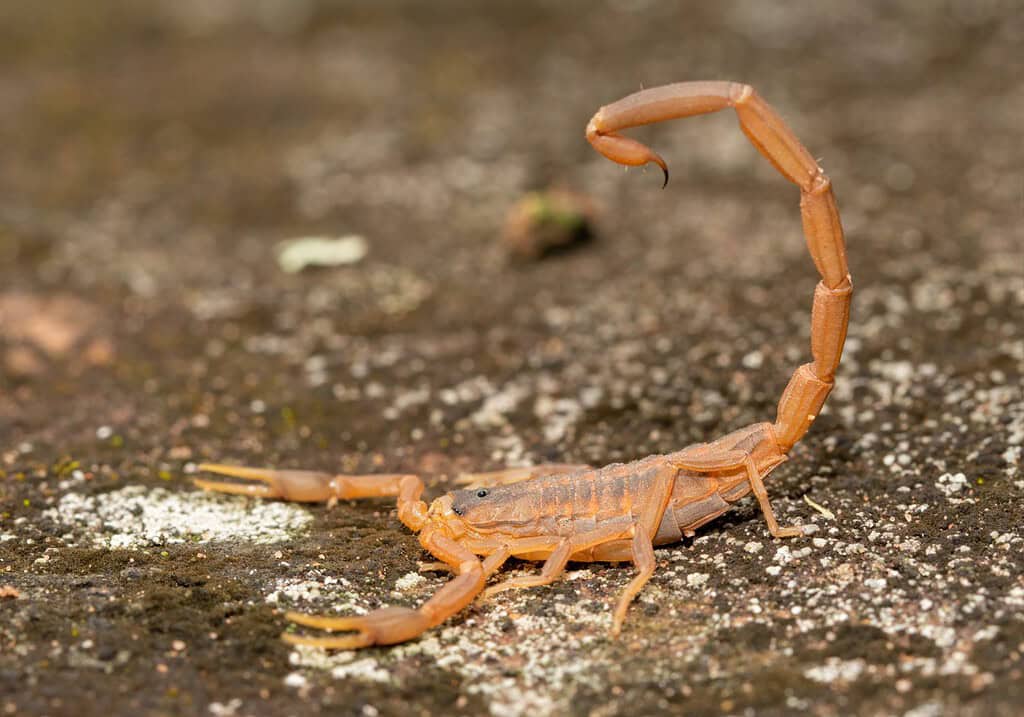
Scorpion stings can be deadly.
©Sari ONeal/Shutterstock.com
A bulbous portion towards the end of its tail gives it the alternative name of shield tail scorpion. Perhaps the most incredible part of this clip is a close-up shot of the creature’s telson, the last tail segment that contains the stinger. In this case, it is huge!
Little information is known regarding the chemical makeup of this creature’s venom. Local knowledge, however, confirms that it can be deadly. We do know, however, that other Buthidae scorpions produce toxins that hyperpolarize nerves and slow inactivation. This causes painful nerve firing that can last for hours and is not something you’d want to experience in the middle of the desert!