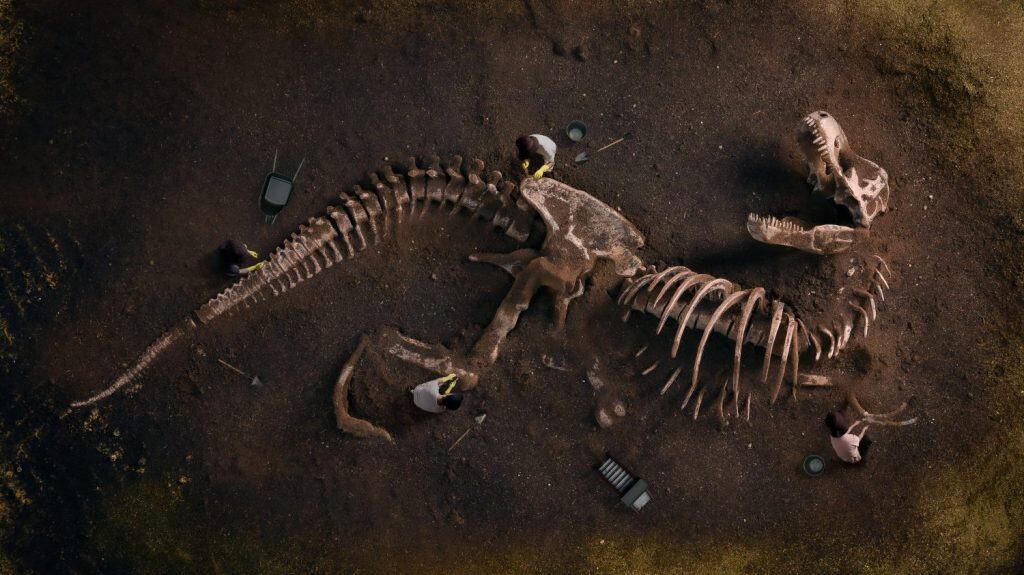
The Bible describes a creature with bones like iron bars and a tail like a cedar tree, yet scholars still can't agree on what animal it actually was. Explore Behemoth's description →
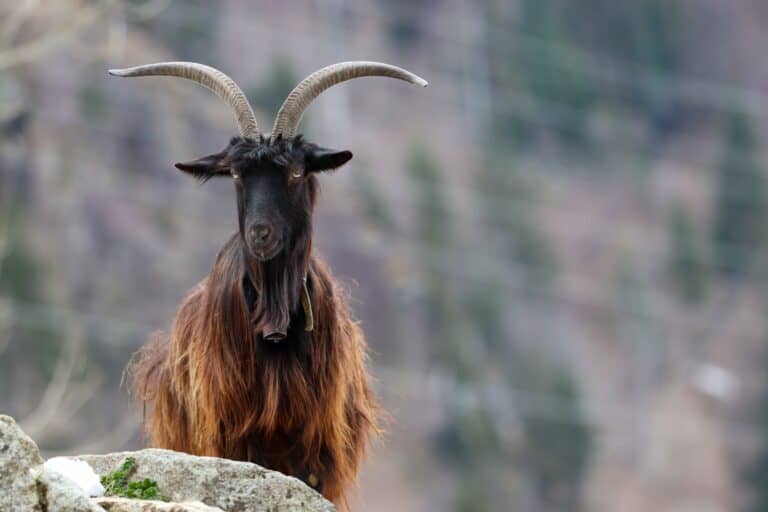
Leviathan breathes fire, has multi-headed forms, and weapons can't pierce its scales. So why does one psalm say God made it just to play? Unpack Leviathan's paradox →
Most people debating these creatures as dinosaurs or dragons are missing the point entirely, according to a pastor with 25 years in ministry. Hear the pastor's view →
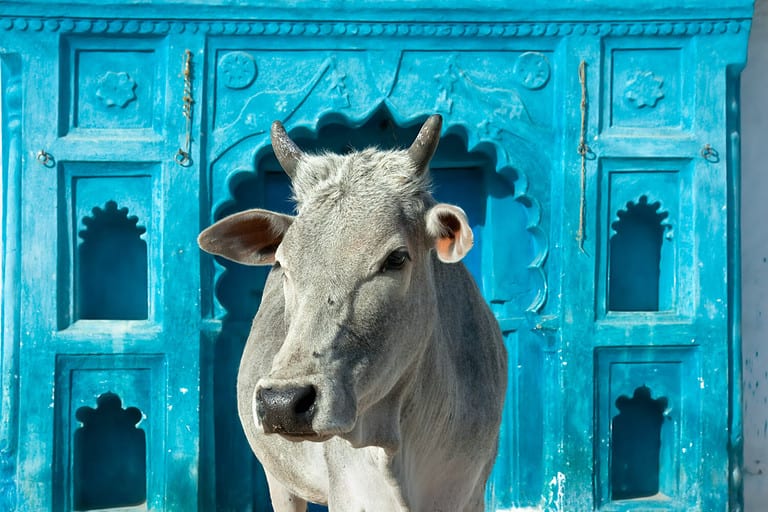
One biblical word quietly shifts meaning from 'real serpent' to 'cosmic dragon' to 'hostile empire' depending on where you find it. Trace Tannin's shifting meaning →
The Bible often mentions familiar animals like sheep, doves, and donkeys. Yet mixed into its poetry and prophecy are stranger creatures that do not fit neatly into modern categories. These beings appear in creation hymns and visions about judgment. Readers have debated them for centuries. Were they real animals, mythic monsters, or symbols that point to something deeper? This article looks at three of the most discussed: the Behemoth, the Leviathan, and the Tannin. Each one shows how Scripture uses powerful images to talk about God, creation, and chaos.
A Christian Interpretation
Pastor Mario J. Radford, Growth Point Church, Lexington, Kentucky.
To frame a Christian reading of these passages, we consulted Pastor Mario J. Radford, founder and lead pastor of Growth Point Church in Lexington, Kentucky. A graduate of Kentucky State University, he has served in ministry for 25 years, produced music for national platforms, appeared in the film “Get on Up” with Chadwick Boseman, and authored the children’s book What If.
Pastor Radford shares his perspective on the mysterious creatures of the Bible: “Debating whether these are dinosaurs misses the point. These passages are symbolic portraits of God’s astonishing creation. Read them as potent poetry, not a zoological manual. Do not chase a single definition; ask what the creature stands for in that verse: a power of evil, a common animal, or a hostile nation. In context, the steady message is that God holds authority over every threat.”
Behemoth is a symbol of uncontrollable, primordial strength that is entirely beyond human realms.
Pastor Mario J. Radford
Behemoth: Giant of the Earth
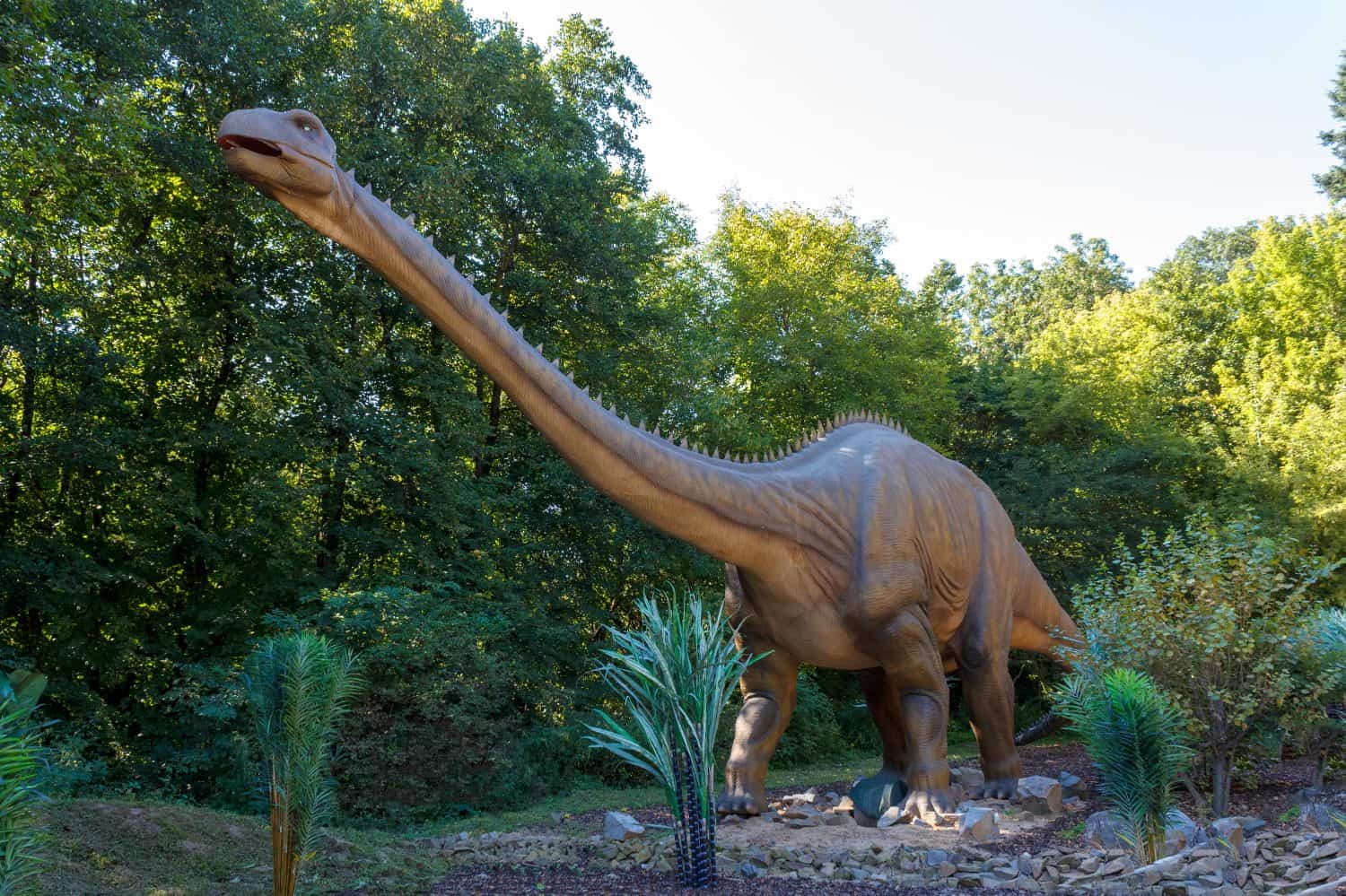
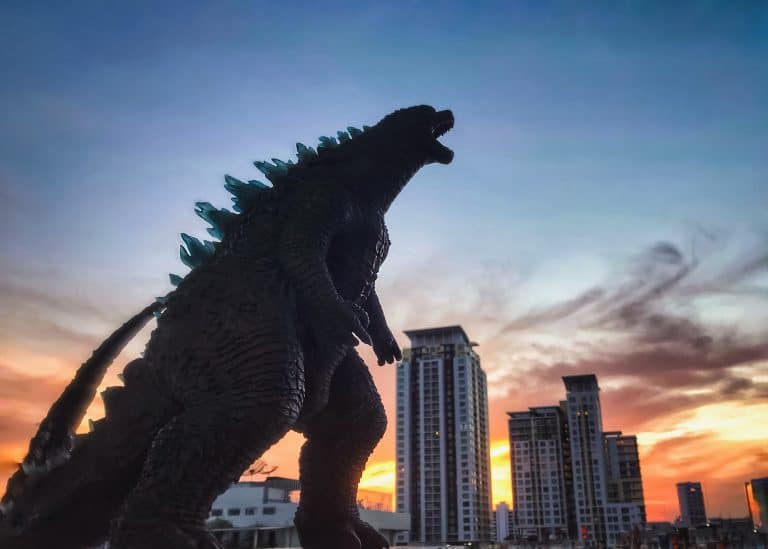
In the Bible, descriptions of “behemoth) have some similarities to a dinosaur.
Behemoth appears in chapter 40 of the Book of Job, a work in the Hebrew Scriptures included in the Christian Bible that explores human suffering and divine wisdom. Near the end, having lost everything despite living a good life, Job challenges God’s justice. God replies with a description of the great wonders of the natural world that show his power and wisdom. One of these is called “behemoth.” It eats grass like an ox, is massively strong, and has bones and limbs like bars of bronze and iron. It has a tail like a cedar tree and is at ease in the river, even when it floods. It’s portrayed as the greatest animal that no human can capture or control.
Some say it sounds most like a hippo or elephant, but the details don’t fully match either animal. Others suggest it is a sauropod dinosaur that survived into the human era. To Radford, those suggestions miss the point. “Behemoth is a symbol of uncontrollable, primordial strength that is entirely beyond human realms. Its context gives it a deep resonance for believers: God shifts our focus from ‘Why am I suffering?’ to ‘Who is God?’ by pointing to a creation that Job could never expect to master. It’s a sobering reminder that trust is the appropriate reaction to mystery since God’s wisdom functions on a scale that is well beyond our comprehension.”
Leviathan: Terror of the Deep
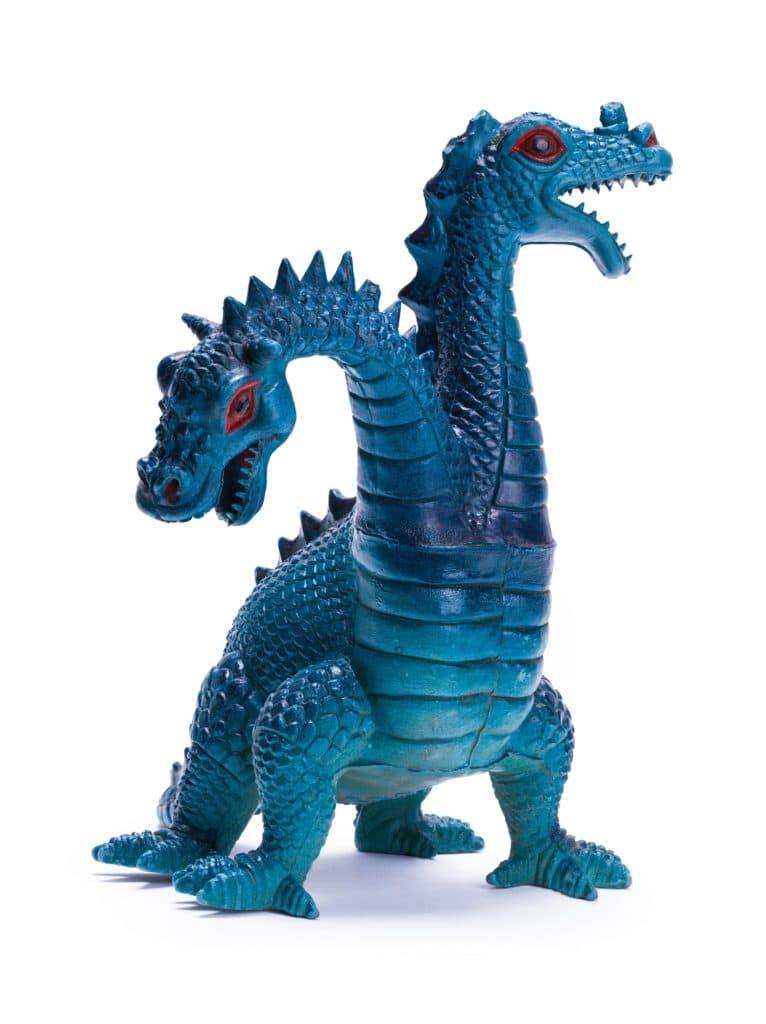
The biblical leviathan is described as the most fierce and powerful animal on earth. This toy version… not so much.
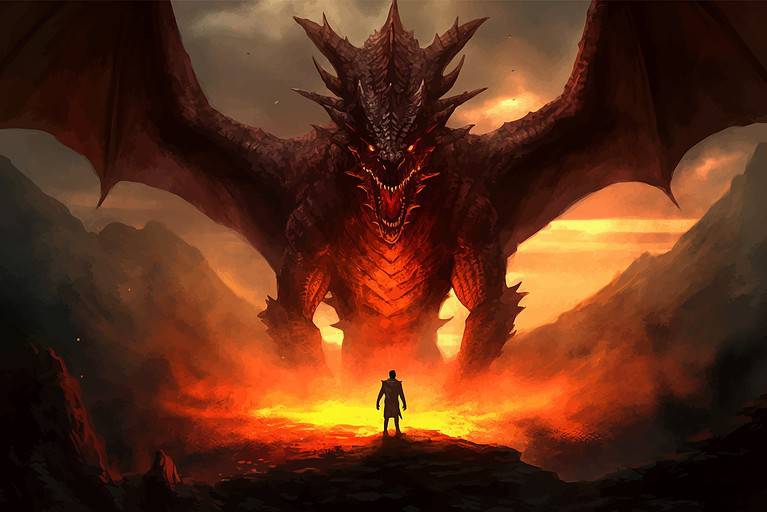
Leviathan is described as a massive sea creature in the biblical books of Job, Psalms, and Isaiah. In Job 41, it is described as having tough scales, a fearsome mouth, and even belching fire and smoke. Weapons cannot penetrate its scales; the waters churn behind it. People can’t control it, but Psalm 74 says God crushed its heads, in the plural: an intriguing detail. (Check out these real examples of two-headed animals). Isaiah 27 calls it the twisting serpent that the divinity will strike down one day. Despite all its mighty power, the author of Psalm 104 says that the creator made it to “play” in the sea, which shows how small it is in comparison to the greater Earth.
Bible scholars have done in-depth research on this mysterious beast, stumped by the animal’s unique description. The closest modern creatures we can imagine are whales or crocodiles, but even a combination of those doesn’t explain the ability to breathe fire. Is this a dragon? Were dragons once real?
“Not at all,” says Pastor Radford. “In order to comprehend Leviathan, one must acknowledge that it is a powerful symbol rather than a living being. The water was frequently portrayed in the ancient Near East as the domain of disorder. That chaos is personified in literature by Leviathan. Its profound significance is that God faces, subdues, and dominates the most dreadful powers of chaos and destruction. It represents God’s ultimate triumph over all hostile and evil forces that oppose his people. This is a fundamental source of solace for believers: the God they worship is not just a loving benefactor, but a powerful fighter who vanquishes the most profound disorder.”
Tannin: The Ancient Dragon
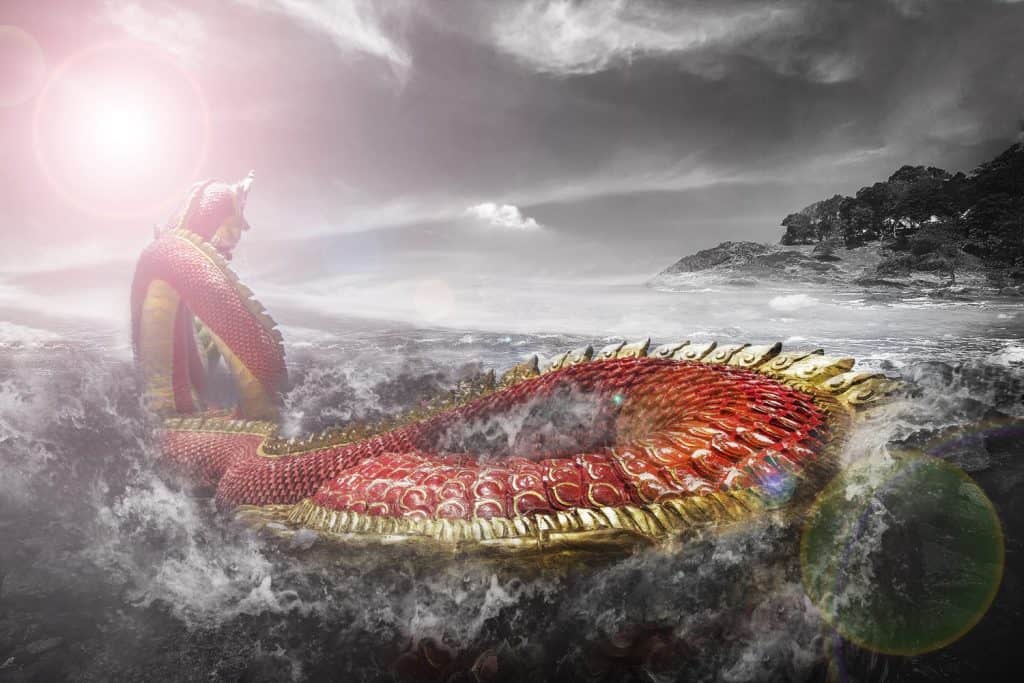
The biblical tannin are described as great sea serpents.
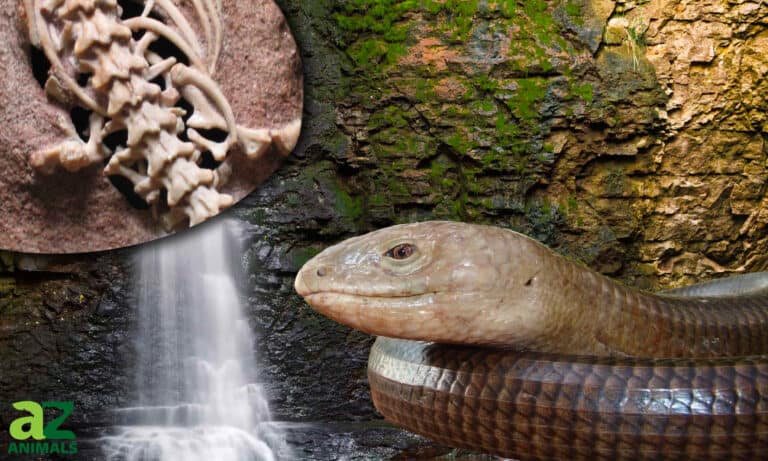
The Tannin is less famous than Behemoth or Leviathan, but it appears at key moments in the Old Testament. The plural tanninim shows up in Genesis (1) as “great sea creatures,” and the word can mean serpent, sea monster, or dragon depending on context. In Exodus (7), Aaron’s staff becomes a tannin that swallows the magicians’ staffs, showing God’s power over Egypt’s signs. The prophets use tannin for arrogant empires, Ezekiel calls Egypt a tannin thrashing in the Nile (29), and Isaiah recalls God cutting down the sea monster in His rescue (51). Psalm (74) echoes this, praising God for crushing the heads of the tanninim, much like the line about Leviathan.
But Leviathan and tannin aren’t the same creature. Leviathan is a specific sea monster with vivid traits in Job, Psalms, and Isaiah. Tannin is a broader Biblical word that can mean serpent, dragon, or sea monster in general. You even see them side by side in Psalm 74 (tanninim in v.13, Leviathan in v.14). It’s best to think of Leviathan as one famous example within the larger tannin category.
“Across the Bible, the Tannin shifts with the genre,” explains Pastor Radford. “In narrative it’s likely a real serpent used as a sign; in poetry and prophecy it becomes a metaphor for oppressive empires or primeval chaos. Its journey from created creature to God’s instrument over Egypt to a symbol of cosmic evil that God vows to defeat shows God’s dominion over every threat, whether political, spiritual, or natural.”
When we place Behemoth, Leviathan, and Tannin side by side, a pattern appears. Behemoth stands for the might of the land. Leviathan stands for the restless power of the sea. Tannin is the flexible symbol that can slide between serpent, dragon, and sea beast. The Bible presents vivid poetic descriptions of these creatures inside a larger claim about God. Behemoth is strong, but God made it. Leviathan breathes fire, but God can play with it like a toy. Tannin thrashes, but God crushes its heads. The message is that danger is not final. Creation is larger than we imagine, more powerful than we can control, but it, and we, are not outside of providential care.
It’s easy for modern people to shrug off these kinds of stories. We don’t hunt dragons or fear what lies beyond the map. Yet these ancient creatures still hit a nerve. We face our own demons: forces outside our control, like natural disasters, wars, economic shocks, and personal crises. The names change; the feeling doesn’t. Envisioning those pressures as monsters gives us some distance. We remember they haven’t finished us off, and we feel grateful for everyone who helped pull us through. And in the end, we often discover we have more tools than we thought: inside us, around us, and maybe even above us, to continue keeping those threats at bay.
Drew is a college professor and freelance writer who graduated from the University of Virginia. His travels have taken him to 25 countries and 44 states, where he has enjoyed learning about wildlife in a wide range of environments. In addition to his love of animals, he enjoys scary movies, landscaping, strategy games, and philosophical discussions over a cup of coffee. He is also an emotional support human to a neurotic Spanish Water Dog and a hyperactive Chihuahua mix.
Thank you for reading! Have some feedback for us?
Contact the AZ Animals editorial team
Thank you for your feedback!
We appreciate your help in improving our content.
Our editorial team will review your suggestions and make any necessary updates.
There was an error submitting your feedback. Please try again.